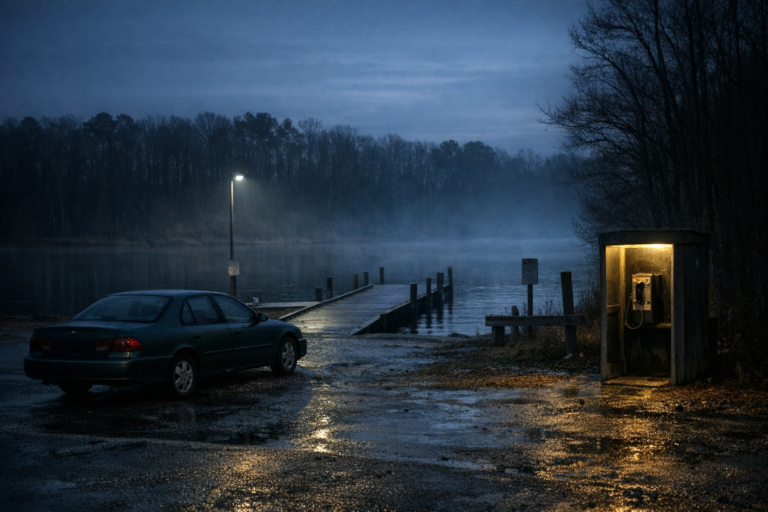

By the time the light started to thin over Oak Park Station, the search had already become something darker than a family scare. A four-year-old boy had been outside only moments earlier, close enough that someone should have heard him, seen him, called him back inside. Then the red dirt went quiet. The mound where he had been playing stayed where it was. His family stayed where they were. But Gus Lamont was suddenly nowhere.
The disappearance of Gus Lamont became one of Australia’s most haunting recent missing-child cases because it seemed to break the basic rules of a search. He vanished from his family’s remote South Australian property near Yunta on September 27, 2025, and despite a huge response, investigators were left with almost no physical trail to follow. Cases like this keep pulling readers back because the central question is so brutally simple: how does a child disappear from open land and leave almost nothing behind?
That feeling of a last known moment suddenly collapsing into mystery is part of why so many readers end up deep in disappearances where everything seems to break at the final visible point. The Lamont case belongs in that same terrible category, because almost every known fact leads back to one ordinary evening and one stretch of ground that should have given investigators more than silence.
The Last Evening Anyone Can Clearly Describe
Police said Gus was last seen at about 5 p.m. on Saturday, September 27, 2025, at Oak Park Station, roughly 40 kilometres south of Yunta in South Australia’s remote north-east. He was four years old. He had long blond curly hair. He was wearing a grey sun hat, a cobalt blue long-sleeve shirt with a yellow Minion on the front, light grey pants, and boots.
Those details matter because in a disappearance like this, the smallest ordinary fact becomes part of the final frame. He was not a teenager who left in a car. He was not an adult who could disappear on purpose. He was a young child outside near the home, playing in the sand and around a dirt mound in the kind of place where the landscape can feel open until you realize how quickly distance starts swallowing everything.
Family members looked for him before emergency services were called. That gap matters too. In a city, a child can move through streets and yards and still leave witnesses. In the outback, a child can pass beyond one line of sight and immediately enter a world of scrub, uneven ground, fading tracks, and huge spaces that stop cooperating almost at once. By the time police arrived that night and used a helicopter with infrared capability, they still had not found him.
The next day the search widened. Trail bikes, ATVs, SES crews, drones, mounted police, water operations, and later hundreds of personnel would be used in one of the largest searches South Australia had seen. Early on, investigators said they believed Gus had likely wandered off. At that stage, they publicly did not think he had been abducted. That shaped the first urgent hours: find the route, find the tracks, find the place a four-year-old might have stopped, hidden, fallen, or become trapped.
Timeline of Events
- September 27, 2025: Gus Lamont is last seen around 5 p.m. at Oak Park Station near Yunta. His family reports him missing that night. A police helicopter with infrared assists in the first search.
- September 28–30: Police, SES volunteers, trail bikes, drones, mounted units, and local community members search the property and surrounding country.
- October 1: Investigators reveal a footprint found about 500 metres from the homestead. At first it appears potentially important because the boot pattern is said to resemble what Gus was wearing.
- October 2–4: Police release Gus’s photo and continue searching with drones and infrared. The footprint is later ruled out as unrelated to Gus.
- October 13–16: An expanded ground search covers about 95 square kilometres and still finds nothing.
- October 31: Police drain a dam roughly 600 metres from the homestead. Nothing significant is found.
- November 24–26: Historical mine shafts on the property are searched. Again, no new evidence is publicly announced.
- January 14–15, 2026: Police execute a warrant at Oak Park Station and seize items including a vehicle, a motorcycle, and electronic devices for forensic testing.
- February 5, 2026: SA Police say a person living at Oak Park Station is now considered a suspect after investigators identify inconsistencies and discrepancies in timelines and statements. Gus’s parents are specifically said not to be suspects.
That timeline is part of what makes the case so unsettling. It did not stay a straightforward missing-child search. It shifted. First there was urgency. Then there was exhaustion. Then there was the slow, uncomfortable move from open-land rescue logic toward major-crime scrutiny.
Why the Search Became So Difficult So Fast
At first glance, a remote sheep station can look open enough that a child should be easy to find. But searchers were not dealing with a football field. They were dealing with a huge piece of country shaped by scrub, dust, changing light, hidden depressions, water points, rough tracks, and the sheer cruelty of scale. A child can be visible one second and effectively swallowed by terrain the next.
The outback also punishes delay. Heat strips energy fast. Night drops temperature. Footprints degrade. Search zones get wider with every hour. And once enough people, vehicles, and equipment flood a property, the landscape becomes harder to read. Tracks overlap. Disturbance spreads. Any clean trail from the first minutes begins to disappear beneath the effort to recover it.
That is why the footprint found around 500 metres from the homestead seemed so important. For a moment, it looked like the first real directional clue. Then investigators said it was not connected to Gus after all. In practical terms, that meant the case snapped back to almost nothing. No confirmed route. No confirmed final location. No confirmed item trail. Just the fact that he had been there, and then he wasn’t.
That kind of collapse is what makes wilderness disappearances so different from urban ones. In a case like DeOrr Kunz Jr.’s disappearance, readers keep circling the same question: how can a child vanish in a place where the search should have narrowed things down? The Lamont case creates the same pressure. Every search action that should have reduced the mystery instead made the silence feel louder.
What Doesn’t Add Up
- No confirmed trail: For a child said to have likely wandered, investigators never publicly established a reliable track leading away from the homestead.
- The footprint failed: The one clue that looked promising was later ruled out, leaving the search without a workable direction.
- Huge searches, no recovery: Ground sweeps, drones, dam draining, and mine-shaft searches still produced no public breakthrough.
- The case changed shape: Police moved from early confidence that abduction was very unlikely to later treating the disappearance as a major-crime matter involving a suspect.
- Timeline pressure: By February 2026, investigators said they had found inconsistencies and discrepancies in the versions of events given to police.
That final point is where the case stops feeling like a pure land-swallowed-him mystery and starts feeling more unstable. Publicly, police have still not announced what happened to Gus. They have not announced a body recovery. They have not announced an arrest. But once investigators say they are testing seized devices and vehicles, and once they identify a resident of the station as a suspect, the story changes. The question is no longer only where could a child have wandered. It becomes: what in the timeline made police stop trusting the original picture?
That does not answer the case. It just moves the center of gravity. And in missing-child cases, that shift is devastating, because it changes how every earlier moment gets re-read. Was the initial search focused on the right ground? Did the first version of events send resources in the wrong direction? Did the size of the property become a genuine obstacle, or did it also provide too many places for uncertainty to hide?
The Search Zone, the Terrain, and the Problem of Visibility
One reason the Gus Lamont case still holds attention is that it sits at the intersection of two frightening ideas. The first is that a child can wander a surprisingly short distance and become almost impossible to recover in remote terrain. The second is that a case can look like a tragic accident until the timeline itself starts fraying.
Searches around Oak Park Station expanded from the immediate homestead area to much wider sections of country. Police drained a dam about 600 metres from the homestead, searched mine shafts, used trackers, drones, mounted teams, and large-scale ground sweeps. If Gus had moved in one clear line and remained exposed, you would expect the land to answer back with something. A hat. A shirt. A confirmed print line. Instead, it stayed stubbornly blank.
That is one reason cases like Dulce Alavez’s disappearance or Morgan Nick’s disappearance keep their grip in a different setting: when a child vanishes fast, every minute before clarity arrives becomes part of the mystery forever.
🔎 Related Investigation:
If this case pulled you deeper into the mystery, continue into:
Why This Case Still Gets Attention
The Gus Lamont case does not get easier the longer you look at it. It began as a feared wandering case, then the searches failed, then the strongest clue failed, and later the police publicly shifted toward major-crime suspicion. That progression leaves readers with two hard possibilities: either the outback swallowed a child so completely that a massive search still could not recover him, or the truth was closer to the homestead than the first version suggested. Either way, the silence from that evening still has not been broken.
FAQ
What happened to Gus Lamont?
Gus Lamont disappeared from Oak Park Station near Yunta, South Australia, on September 27, 2025, after last being seen around 5 p.m. Police first believed he had likely wandered away, but despite extensive searches he was not found. In February 2026, investigators said a resident of the property had become a suspect after inconsistencies were identified in timelines and statements.
Is the Gus Lamont case still unsolved?
Yes. Publicly, the case remains unsolved. Police have not announced a recovery of Gus, and no final explanation has been confirmed.
Did police think Gus Lamont was abducted?
Early in the investigation, police said abduction was considered but appeared very unlikely, and search efforts focused on the idea that Gus had wandered off. Later, the case shifted into a major-crime investigation after detectives said they found discrepancies in the timeline and identified a suspect.
What was the footprint found in the search?
Investigators revealed that a footprint found about 500 metres from the homestead seemed at first to match the pattern of Gus’s boots. Later, police said that footprint was not related to him, which removed one of the few apparent clues in the case.
Why does the Gus Lamont case still get so much attention?
Because it combines several of the most haunting elements in a disappearance case: a very young child, a remote landscape, a huge unsuccessful search, and a later shift toward possible inconsistencies in the story given to investigators. It feels unresolved on every level.
🔎 If this story stayed with you, the author suggests these real cases next:
- A vanished child and a campsite timeline that still refuses to settle
- The disappearance cases where the final visible moment becomes the whole mystery
- The playground disappearance that turned a public place into a permanent question
- The summer-night child disappearance that never stopped haunting Arkansas
- A last known emergency call that still leaves more questions than answers
Explore more Disappearances stories here:
Sources referenced in reporting and follow-up coverage: ABC News Australia timeline, Adelaide Now follow-up reporting, The Sun update on search phase changes, and News.com.au reporting on misinformation around the case.