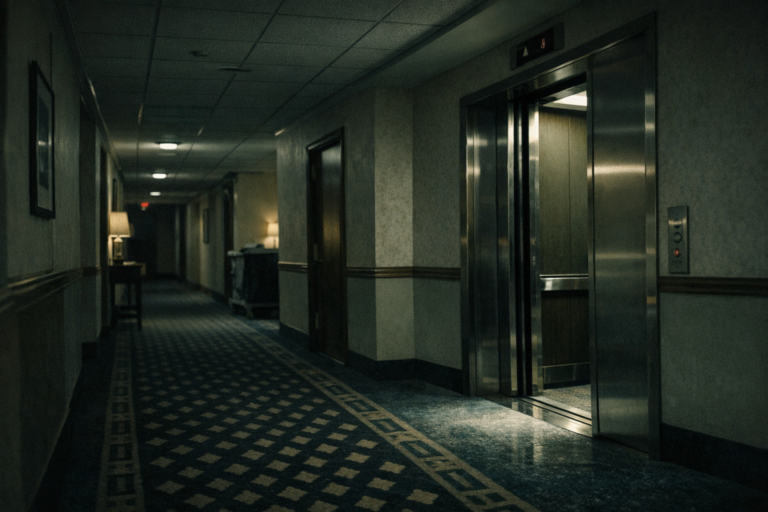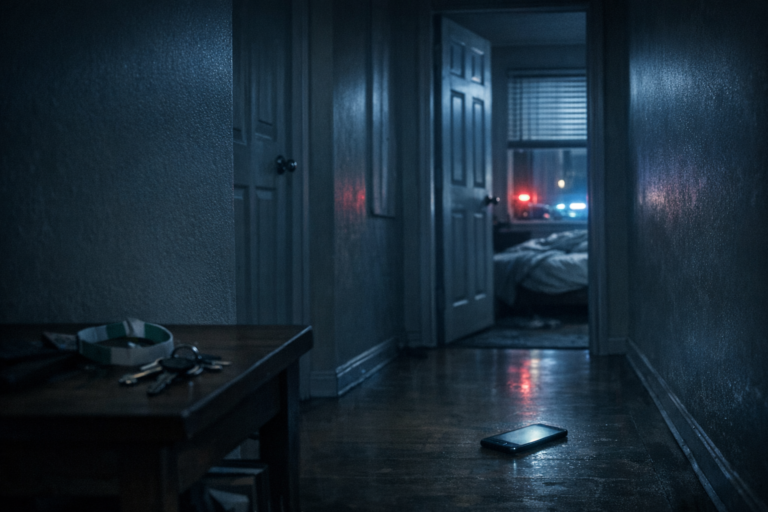

On the evening before she disappeared, Fiona Pender was doing the kind of ordinary, hopeful things that make this case so hard to sit with. She had been shopping for baby clothes. She spoke with her mother. She was seven months pregnant and moving toward a future that felt close enough to touch. Then, by the next day, that future was gone.
Fiona Pender was a 25-year-old woman from Tullamore, County Offaly, who vanished on August 23, 1996. Because she was heavily pregnant when she disappeared, the Fiona Pender disappearance still holds a particular weight in Ireland: it was not just the loss of a young woman, but the disappearance of a mother and the child she was expecting at the same time.
Cases like this keep resurfacing because one small domestic timeline can hide a lifetime of unanswered questions. If that kind of fracture stays with you, this broader look at disappearances where the final timeline still was not enough shows how often one ordinary last-known moment becomes the part no one can ever fully explain.
Before she became one of Ireland’s most haunting missing-person cases, Fiona was known as bright, sociable, and stylish. She had worked as a hairdresser and as a model, and had also spent time in London before returning to Ireland. By the summer of 1996, the next chapter of her life seemed to be taking shape in a much more personal way. She was expecting a baby boy, and her family later said she was excited and looking forward to becoming a mother.
That detail matters because it cuts directly against the easy theories that often attach themselves to a disappearance. The image that stayed with people was not of someone preparing to vanish, but of someone preparing for a birth.
On August 22, 1996, Fiona spent time with her mother and bought baby clothes. They talked about the child she was carrying and the things that still needed to be done before he arrived. Nothing about that day suggested a break from reality was coming. The final known contact that has remained central to the case was an ordinary conversation with family. That normality has always been part of what makes the story feel so cold. There was no dramatic farewell. No obvious last scene. Just one more day, and then the silence.
According to the account given at the time, Fiona was last seen at about 6 a.m. on August 23 by her partner, who said he left their flat on Church Street in Tullamore to go to work on his family’s farm. Later that day, a friend called to the flat and got no answer. Fiona’s family eventually realized something was badly wrong. She had not turned up where they expected. She had not been in touch. For a woman in the last stage of pregnancy, that silence escalated quickly from strange to frightening.
When investigators and relatives tried to reconstruct that morning, they were left with the most dangerous kind of missing-person timeline: a very small one. Fiona had supposedly been at home in bed early that morning. After that, there was nothing certain. No confirmed witness who saw her walking through town. No reliable public sighting. No verified reason for her to disappear on foot. The closer people looked at those few hours, the less room there seemed to be for an innocent explanation.
Timeline of Events
- August 22, 1996: Fiona spends time with her mother and shops for baby clothes. Family members later describe her as happy and looking forward to her baby’s arrival.
- Night of August 22: Fiona is at home in the Church Street flat in Tullamore she shares with her partner.
- About 6 a.m., August 23: Her partner says he last saw Fiona in bed before leaving for work.
- Later that day: A friend visits the flat but gets no answer.
- August 24: Fiona is reported missing by her family.
- Late August 1996: Gardaí begin large searches involving waterways, tracker dogs, air support, and public appeals. No trace of Fiona or her unborn child is found.
- 1997: Fiona’s partner, his father, and three sisters are arrested for questioning and later released without charge.
- 2008: A makeshift cross in woodland triggers another search after claiming Fiona was buried there. Nothing is recovered.
- 2010s: Further leads tied to witness information and claims made by a later partner of the prime suspect lead to more focused searches, again without recovery.
- May 2025: Gardaí upgrade the case to a murder investigation and carry out fresh searches in County Offaly after receiving what reports described as credible new information.
- End of May 2025: The searches conclude without the recovery of human remains.
The first investigation moved with urgency. Gardaí searched waterways including the Grand Canal and the Tullamore River. Tracker dogs were used. Air Corps support was brought in. Maternity hospitals in Ireland and the UK were notified, because investigators still had to leave open every possibility, including the one that Fiona might somehow surface alive and close to giving birth.
But the case never developed the kind of evidence that gives a family something solid to hold on to. Instead, it produced fragments. A local witness said he saw two men carrying what looked like a rolled carpet from Fiona’s flat and putting it into a four-wheel-drive vehicle around the time she disappeared. Another witness reported nearly being forced off the road by a four-wheel-drive vehicle heading at speed toward the Slieve Bloom Mountains that same night. These details did not solve the case, but they shaped the direction of suspicion from very early on.
That is where the relationship context becomes unavoidable. Fiona’s partner consistently denied responsibility and said he did not know what happened to her. In 1997, he, his father, and three sisters were arrested for questioning and released without charge. Over the years, Irish reporting continued to identify him as the long-standing prime suspect in Garda thinking, but suspicion is not proof, and proof is exactly what this case has been missing from the start.
What Doesn’t Add Up
- No convincing sign of voluntary disappearance: Fiona was seven months pregnant, had recently been shopping for baby clothes, and was described by family as excited about the child she was expecting.
- A tiny and vulnerable timeline: If the 6 a.m. last-sighting account is accurate, the window in which she disappeared is narrow and difficult to explain casually.
- Witness reports pointing toward removal: Statements about a rolled carpet and a speeding four-wheel-drive vehicle have never been fully resolved in public.
- No confirmed trace afterward: No verified sightings, no recovery, and no sign that she built another life somewhere else.
- Repeated search areas without closure: Multiple searches over the years suggest investigators believed specific information had value, yet none produced Fiona’s remains.
One of the most haunting later developments came in 2008, when a rough cross was found in woodland in the Slieve Bloom area with Fiona’s name on it and a message claiming she was buried there. Gardaí searched but found nothing. Even so, reports later indicated investigators did not treat the cross as a simple prank. It felt like one more piece of information drifting up from the same dark place: enough to disturb the case again, not enough to end it.
Years later, another significant line of inquiry developed when a woman linked to the main suspect reportedly told investigators abroad that he had threatened her and claimed to have killed Fiona. According to Irish reporting, she also said he brought her to a wooded area while they were on holiday and indicated Fiona was buried there. That information led to further searches near Rosenallis, again involving specialist techniques, and again no body was found.
By then the damage to the family was impossible to separate from the case. Fiona’s mother, Josephine Pender, became one of the most recognizable figures connected to unsolved disappearances in Ireland because she never stopped pushing for answers. Fiona’s father, Sean, later died by suicide after struggling under the weight of the loss. Josephine died in 2017 without learning what happened to her daughter or grandchild. That means the case is no longer only about a disappearance. It is also about what long uncertainty does to the people left behind.
🔎 Related Investigation:
If this case pulled you deeper into the mystery, continue into:
Why This Case Still Gets Attention
Part of it is the pregnancy. People can feel, almost physically, the wrongness of a woman so close to childbirth simply vanishing. Part of it is the setting. Fiona did not disappear on a remote highway or during a dangerous trip abroad. She vanished from the orbit of home, routine, and domestic expectation. Those cases linger because they suggest the threat did not come from the outside unknown, but from somewhere much closer.
In 2025, the story changed again. Gardaí upgraded the inquiry to a murder investigation and launched fresh searches in County Offaly after receiving what Irish media described as credible and highly significant new information. Search teams examined farmland close to Killeigh and then land south of Clonaslee. The operation had the feel of something serious and carefully planned. But by the end of May 2025, the searches concluded without the recovery of human remains.
That is why Fiona Pender’s name still appears whenever people discuss cases where the final domestic window may contain the whole truth. It also fits naturally beside broader examinations of disappearances whose minute-by-minute timelines still do not close and cases that break at the last known moment. In each one, the haunting part is not that nothing is known. It is that just enough is known to show where the truth should begin, and not enough is known to force it into the light.
The most likely broad explanation, based on the public direction of the investigation, is that Fiona did not leave to start over and did not simply wander into an accident. Gardaí have for years treated the case as one in which she was probably killed and concealed. That does not answer the key questions of when, where, how, or by whom in a legal sense. But it explains why the case has remained active and why renewed searches keep returning to the same core possibility: someone removed Fiona from her life, and someone has protected that secret ever since.
FAQ
What happened to Fiona Pender?
Fiona Pender disappeared from Tullamore, County Offaly, on August 23, 1996, when she was 25 years old and seven months pregnant. She has never been found, and Gardaí now treat the case as a murder investigation.
Was Fiona Pender pregnant when she vanished?
Yes. Fiona was seven months pregnant and expecting a baby boy. That is one reason the case remains so emotionally powerful in Ireland, because two lives were lost into the same silence.
Is the Fiona Pender case still unsolved?
Yes. Despite multiple searches, witness statements, arrests for questioning, and a formal murder investigation, no one has been convicted and Fiona’s remains have not been recovered.
Who was the main suspect in Fiona Pender’s disappearance?
Irish reporting over the years has repeatedly identified Fiona’s partner at the time as the long-standing prime suspect in Garda thinking, but he has denied responsibility and no charge has secured a conviction in the case.
Why did the case return to the headlines in 2025?
In May 2025, Gardaí upgraded the case to a murder inquiry and carried out fresh searches in County Offaly after receiving new information described in reports as credible and highly significant. Those searches ended without finding human remains.
🔎 If this story stayed with you, the author suggests these real cases next:
- Cases where the evidence seems to lean in one dark direction
- Disappearances where the final trace should have solved everything
- Minute-by-minute cases that still end in a blank space
- Stories where the last known moment became the whole mystery
Explore more Disappearances stories here: