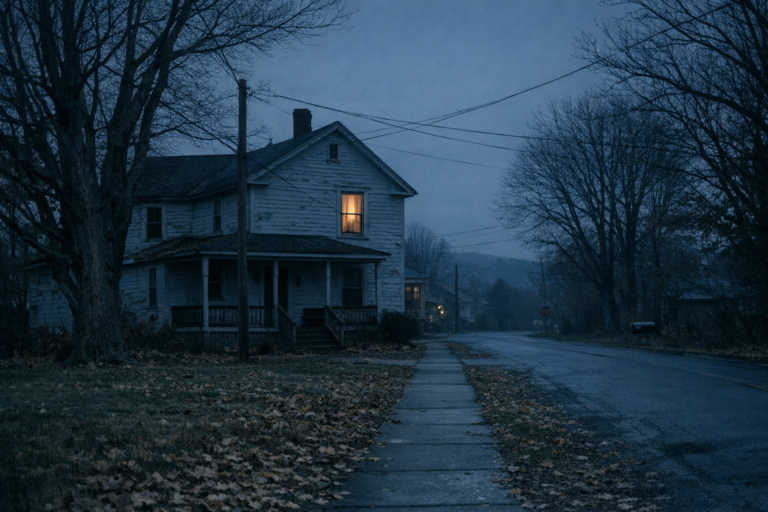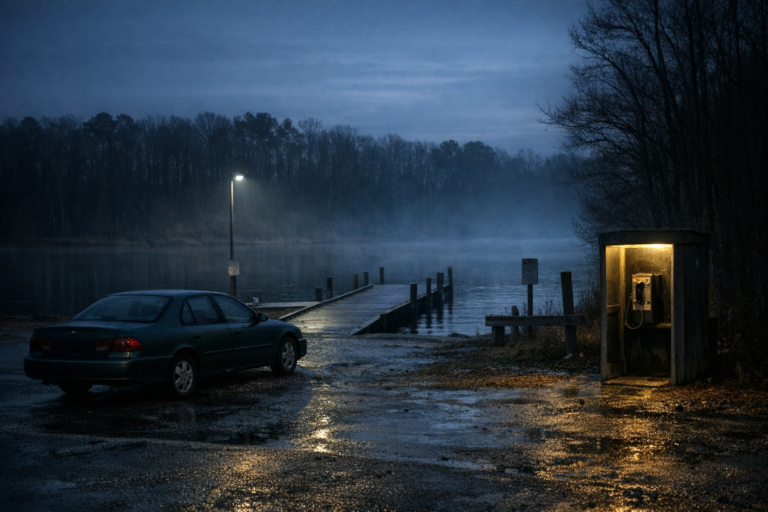
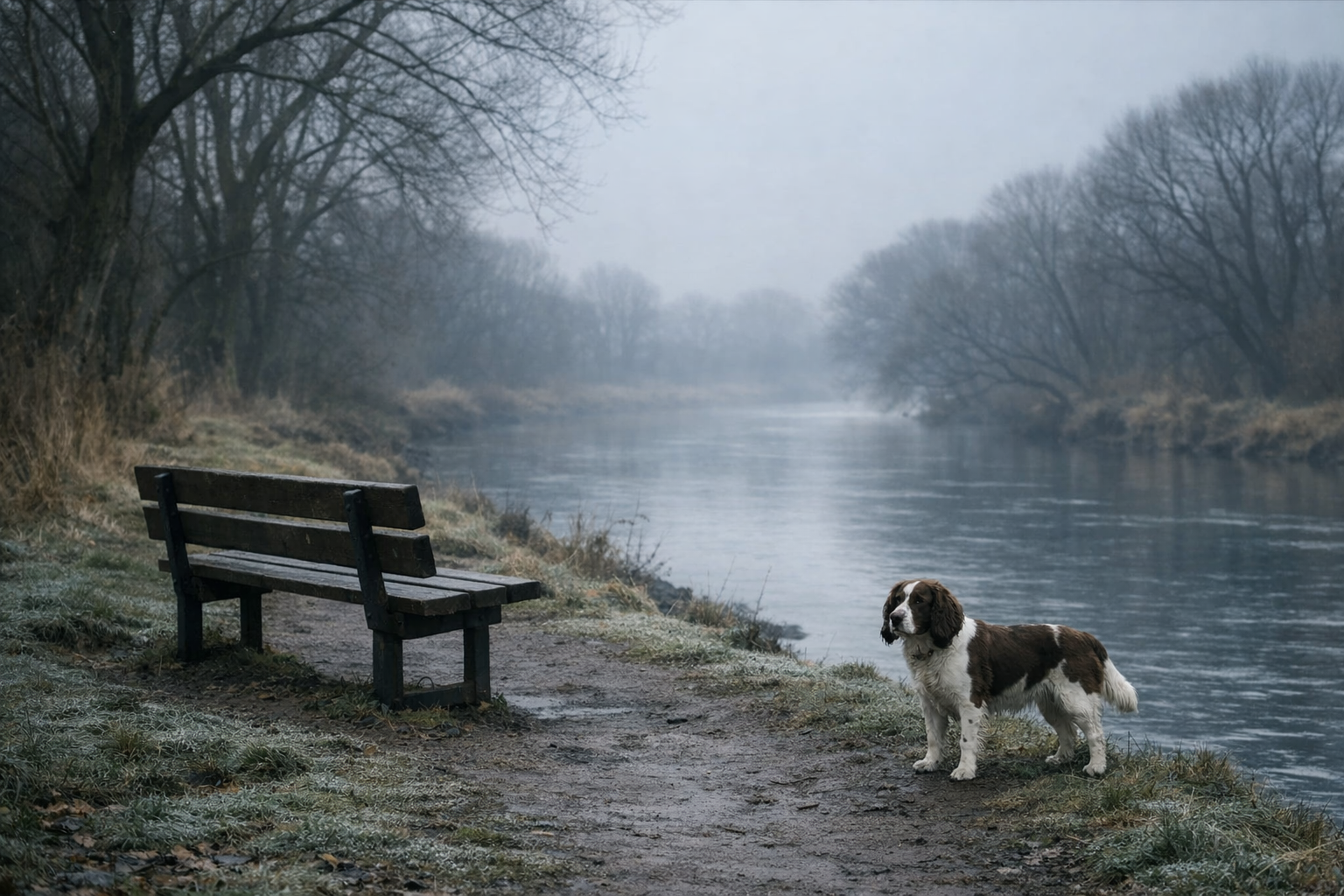
The river did not look dangerous that morning.
It looked like the kind of place where a routine could carry you without effort — school drop-off, a dog walk, a work call, a few messages, then home. The path beside the River Wyre was quiet, familiar, and ordinary in the most deceptive way possible. And then, inside a window of minutes so narrow it still feels unreal, Nicola Bulley was simply gone.
Her phone was still there. The work call was still open. Her dog was loose but nearby. The bench was empty. The river moved on as if nothing had happened at all.
What happened to Nicola Bulley? The unsolved disappearance timeline that gripped Britain before the case reached its conclusion
Nicola Bulley’s missing person case became one of the most debated disappearance stories in recent memory because it began with an ordinary school-run morning and collapsed into a vanishing point that seemed almost too small to believe. Even after her body was found, the riverside timeline, the missing minutes, and the public fracture over what likely happened kept the case at the center of national argument.
That is part of why Nicola Bulley’s story landed so hard. Like the unresolved office-parking-lot mystery in the Jennifer Kesse disappearance, it turned an everyday setting into a place people could not stop replaying in their minds.
Nicola Bulley was 45 years old, a mortgage adviser, a partner, and a mother of two. On the morning of January 27, 2023, she followed what should have been a completely forgettable routine. She dropped off her children at school, drove a short distance to St Michael’s on Wyre in Lancashire, and took the family dog, Willow, for a walk along the river. That ordinary setup is exactly why the Nicola Bulley disappearance still feels so unnerving to so many readers.
Nothing about the opening of that morning suggested that it would become one of the most heavily scrutinized missing person cases in Britain. That normality is what gave the case its force. People were not looking at some dramatic midnight disappearance or a wild remote landscape. They were looking at a village path in daylight, a woman on a work call, and a half hour that seemed too ordinary to hide disaster.
By 8:53 a.m., Nicola had sent an email. At 8:57, she texted a friend about a playdate. At 9:01, she joined a Microsoft Teams call for work, with her camera and microphone off. She was still moving through the kind of multitasking rhythm millions of people know well: parenting, walking the dog, and staying connected to work all at once.
Then the timeline tightened.
A witness reported seeing Nicola around 9:10 a.m. on the riverside path. About twenty minutes later, her phone was found on a bench, still connected to the work call. Willow was nearby. Reports said the dog’s harness was found off, adding another strange, much-discussed detail to the scene. The call itself remained active until around 9:30. At about 9:33, another dog walker found the phone and raised the alarm.
That is the interval that split public opinion: not a long night, not a vanished road trip, not an empty highway stretching for miles — just a brief riverside sequence between a normal walk and an empty bench. The whole case seemed to turn on a handful of moments nobody could fully witness.
Timeline of Events
- About 8:40 a.m. — Nicola Bulley drops off her children at school.
- 8:53 a.m. — She sends an email to her employer.
- 8:57 a.m. — She texts a friend about arranging a playdate.
- 9:01 a.m. — She joins a Microsoft Teams work call with her camera and microphone off.
- About 9:10 a.m. — A witness reports seeing her on the riverside path with Willow.
- About 9:20 a.m. — Her phone is believed to be near the riverside bench.
- 9:30 a.m. — The Teams call ends.
- About 9:33 a.m. — Another dog walker finds Nicola’s phone on the bench and Willow loose nearby.
- Later that morning — Police begin treating the case as high risk and launch a major search.
- February 19, 2023 — Nicola Bulley’s body is found in the River Wyre, about a mile downstream.
Once police arrived, the scene produced an immediate theory and an immediate emotional problem. Investigators quickly said their working hypothesis was that Nicola had entered the river. On paper, that made sense: the river was right there, the dog was found nearby, and there was no early sign that she had left the area by road or met with a third party.
But to many people watching, that explanation felt too clean for a scene that seemed so unfinished.
The bank was not giving up obvious signs of struggle. No one had clearly seen her enter the water. Her phone being left on the bench while the call remained connected felt eerie in a very modern way, as if a digital heartbeat had kept going after the human timeline ended. And when early searches did not locate her, the doubt only deepened.
This is where the case stopped being just a local disappearance and became a national fixation. Social media seized the empty bench, the unlocked phone, the dog, the river, the missing body, and the narrow time window. Every detail was re-examined, reinterpreted, and turned into a competing theory. Some people believed she must have slipped and fallen. Others insisted the scene did not fit that at all. The case became not just a mystery, but a public argument about how mysteries are built in the first place.
The police position remained largely the same. They said there was no evidence of suspicious activity, no sign of third-party involvement, and no evidence that Nicola had left the immediate riverside area. Search teams combed the River Wyre and nearby land using divers, drones, helicopters, dogs, and specialist support. The effort was extensive. And yet that only sharpened the disbelief when nothing was found.
The longer the river gave up nothing, the more the public fracture widened. Friends and family expressed doubts about the police theory. Outside experts were brought in. Private search teams examined parts of the river. Commentators, influencers, and self-appointed online investigators began descending on the village. What should have remained a family tragedy turned into a spectacle.
That part of the Nicola Bulley case still matters because it showed how a modern missing person story can split in two at once. One track is the real investigation. The other is the public imagination, which can move faster, speak louder, and become harder to control than the facts themselves.
What Doesn’t Add Up — and why the case fractured so badly in public
- The time window was extremely small. Nicola appeared to move from a routine dog walk to total disappearance in a span of roughly twenty minutes.
- The phone remained behind. A device still connected to a work call made the scene feel immediate and strangely interrupted rather than finished.
- Willow was loose nearby. The dog’s presence suggested a sudden break in routine, but not a clear explanation of how that break happened.
- Early searches found nothing. For many observers, that absence became the fuel for alternative theories.
- The setting felt too visible. A daylight disappearance in a familiar village path felt harder for the public to accept than a disappearance in wilderness or at night.
But the most haunting part of this case may be how ordinary its geography was. Nicola did not vanish from a cliff edge, an isolated forest, or a foreign city. She disappeared on a route that looked manageable, local, and knowable. That is what made the story so emotionally sticky. It suggested that catastrophe does not always announce itself with a dramatic setup. Sometimes it waits inside a routine people trust.
The fragile interval between ordinary routine and irreversible absence. Nicola Bulley’s case is remembered less as a long-form whodunit than as a collapse of normality. One minute she was a mother on a school morning, sending emails and joining a work call. Soon after, the landscape held only objects — a bench, a phone, a dog, a riverbank — and those objects had to tell the story without her.
Cases like this also attract endless replay because they invite readers to imagine themselves into the missing minutes. People ask the same questions over and over because they can picture the scene so clearly. Did she approach the water for the dog? Did she slip? Was there some sudden medical event? Could the river have concealed more than people expected? Each question grows out of the same emotional fact: the setting looked survivable right up until it wasn’t.
The public noise around the case also changed how it was experienced. As the search continued, online speculation became so intense that it started distorting the atmosphere of the investigation itself. Videos, theories, amateur interpretations, and criticism of police handling turned the riverside into more than a search site. It became a stage. That mattered because the story people were consuming was no longer only about Nicola Bulley. It was about suspicion, media behavior, privacy, and whether the public can still process uncertainty without turning it into entertainment.
Why This Case Still Gets Attention
- It began with a routine everyone recognizes. School drop-off, dog walk, work call — then a disappearance.
- The visual details were unforgettable. The bench, the phone, the dog, and the riverside path formed a scene people could replay instantly.
- The theory split never really settled emotionally. Even when the legal conclusion arrived, many people were still arguing with the timeline in their heads.
- The media storm became part of the case. Public speculation and police criticism turned it into a story about modern true-crime culture as much as a disappearance.
Eventually, on February 19, 2023, Nicola Bulley’s body was found in the River Wyre, about a mile downstream from where she had last been seen. An inquest later concluded that her death was accidental and consistent with drowning.
That finding answered the official question of how she died. But it did not erase the emotional shape of the case. People had spent weeks living inside the missing minutes, turning the riverside path into a puzzle. Once that happens, a conclusion does not always end the debate in the public mind. It simply changes the kind of argument people have with the story.
For some, the outcome confirmed what police had said from the start: that the simplest explanation, however painful, was the correct one. For others, the long search, the delayed recovery, and the storm of speculation left behind a lingering sense that the case never stopped feeling fractured. Even when the answer arrives, a timeline that once broke apart in public can remain emotionally unresolved.
That is why Nicola Bulley’s story still draws attention. It was not just about disappearance. It was about the terrifying speed with which an ordinary life can pass from routine into absence, and how modern audiences respond when the physical evidence is sparse but the emotional scene is vivid. In that sense, the case stands beside other disappearances that continue to trouble readers not because every fact is unknown, but because the final visible moments feel too small to hold the weight of what followed.
The River Wyre sequence remains haunting for that reason. A school morning. A dog walk. A silent work call. An empty bench. And then a national argument built around the cruelest kind of gap — a gap measured not in years or miles, but in minutes.