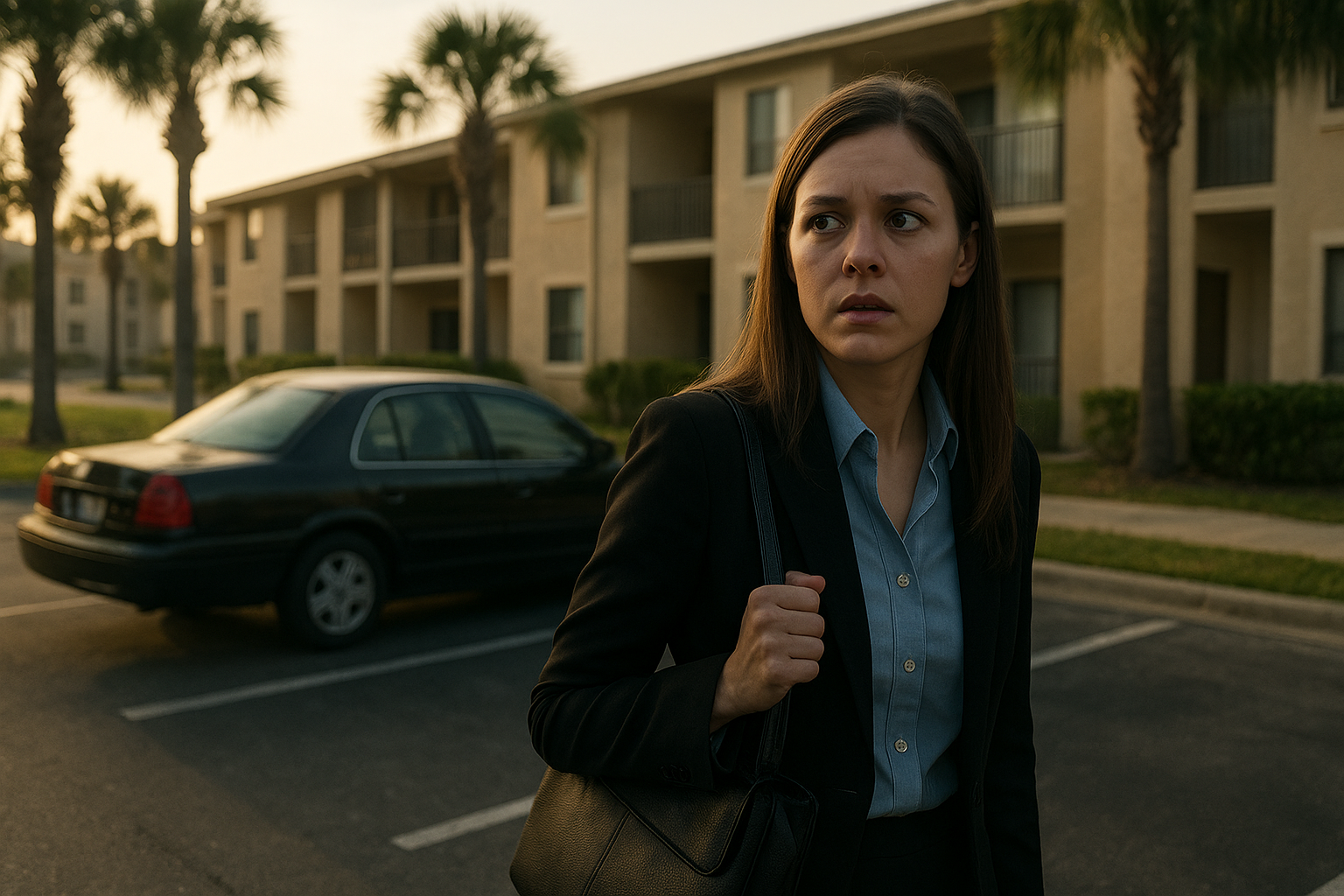
By the time anyone realized Jennifer Kesse was missing, the most important part of her day was already gone.
Not the whole day. Just the narrow strip of morning where everything seems too ordinary to matter. A shower. Clothes set out. Makeup on the bathroom counter. A car key in hand. The short walk from a condo door to a parking space. In most lives, those are invisible minutes. In Jennifer Kesse’s case, they became the empty space everything else would orbit forever.
Jennifer Kesse disappeared from Orlando, Florida, on the morning of January 24, 2006, while leaving for work. Her case remains one of the most searched unsolved disappearances in America because it has everything that should have helped solve it: a tight timeline, a recovered car, and surveillance footage of the person who moved it. And still, nearly two decades later, the story breaks apart at the exact point where the answer should begin.
That is part of why this case still lands so hard. Like other disappearances caught on surveillance footage, Jennifer’s story feels as if modern life should have trapped the truth somewhere inside it. Instead, the cameras, timestamps, and routines only made the mystery sharper.
The Morning the Timeline Went Dark
Jennifer Kesse was 24 years old, organized, dependable, and building an adult life that seemed to be moving exactly as planned. She had a job in finance, a condo at Mosaic at Millenia in Orlando, and had just returned from a trip with her boyfriend to the U.S. Virgin Islands. She came home Sunday night, January 22, 2006, went back to work Monday, and ended that night with ordinary phone calls to her father and boyfriend. Nothing in those conversations suggested danger.
But the setting around her would matter later. Mosaic at Millenia was still partly under construction, with workers moving in and out and some units unfinished. It felt inhabited, but not fully settled. On Tuesday morning, January 24, Jennifer should have left for work at roughly the same time she always did. Instead, she disappeared somewhere between getting ready and arriving at the office.
When her family reached her condo, the scene looked interrupted rather than destroyed. There were signs she had showered, clothes had been laid out, and her car was gone. It looked like a normal morning that had been cut short in the smallest possible window.
The Walk No One Saw
One of the most persistent ideas in the Jennifer Kesse disappearance is also one of the simplest: whatever happened likely happened fast.
If Jennifer was taken at or near her condo, then the window may have been measured in seconds. She would have walked a short distance to her car in a place that was familiar enough to lower her guard and open enough to seem safe. That kind of setting matters. It is not a backwoods trail or a deserted highway. It is the kind of everyday environment people move through while thinking about work, errands, and the rest of the day ahead.
That ordinary setting is what makes the case feel so close to home. It belongs to the category of disappearances where the vehicle was recovered but the person was not, but Jennifer’s case carries an extra layer of dread because the likely point of contact was so domestic and so brief. A parking lot. A condo walkway. Morning light. The kind of place where people assume danger would be seen if it happened.
Investigators looked hard at the condo complex and at the people who had access to it. Some reporting over the years has pointed to Jennifer feeling uncomfortable around certain workers at the property, though no theory built from that has ever been fully proven. That is the shape of this case again and again: plausible suspicion without a clean conclusion.
When the Car Reappeared
Jennifer’s black Chevy Malibu was found abandoned at another apartment complex about a mile from her condo. It was not hidden far away. It was close enough to make the whole case feel as if the answer should be nearby too.
But the recovered car did not unlock the mystery. It deepened it. Jennifer’s phone, purse, and keys were missing, and the vehicle raised more questions than it answered about where the encounter began, who moved it, and how much planning went into whatever happened that morning.
The Surveillance Figure Everyone Can See and No One Can Identify
Security footage from the apartment complex where Jennifer’s car was found captured the person who parked it.
That sentence still sounds like the beginning of a solved case.
Instead, it became one of the cruelest details in modern disappearance history. The video system recorded still images every few seconds as the person walked past a fence. And in what feels almost impossible the first time you hear it, each frame blocked the person’s face behind a fence post. Again and again. Not blurred by motion. Not barely missed once. Hidden at the exact moments investigators needed most.
Law enforcement tried to sharpen the footage and estimate the person’s build and height. But the result never became what surveillance evidence is supposed to become. The figure stayed a figure.
This is the heart of the Jennifer Kesse mystery. The camera saw the person. The footage preserved the movement. But the face, the one detail that could have changed everything, kept slipping behind those bars.
Timeline of Events
- Sunday, January 22, 2006: Jennifer returns to Orlando after a vacation with her boyfriend.
- Monday, January 23: She goes to work, speaks with family, returns home, and has a normal evening phone call with her boyfriend.
- Tuesday morning, January 24: Jennifer is believed to prepare for work but never arrives.
- Later that day: Concern grows when she cannot be reached and misses work without explanation.
- Her family checks the condo: The scene suggests she had been getting ready that morning; her car is missing.
- Shortly after: Her black Chevy Malibu is found abandoned about a mile away at another apartment complex.
- Key evidence emerges: Surveillance footage shows an unidentified person parking the car and walking away, but fence posts block the face in every usable frame.
What Doesn’t Add Up
- The missing time window is small. Jennifer’s routine was consistent, which suggests the disruption happened quickly and close to a known part of her morning.
- The vehicle was moved, not destroyed. Leaving the car nearby created evidence, but not enough evidence. That choice feels either careless or strangely confident.
- The surveillance figure is both visible and hidden. It is one of the rare cases where the likely suspect is on camera, yet the footage still withholds identity.
- Important personal items vanished with Jennifer. Her phone, purse, and keys being gone complicates easy explanations and suggests control over both her movement and the evidence trail.
- No theory explains every piece cleanly. A worker, a stalker, an opportunistic abductor, or an off-property encounter can each explain part of the story, but none settle all of it.
What Still Blocks the Case
The biggest obstacle is that the most important evidence remains incomplete.
There is no confirmed witness who can place Jennifer in a final, uncontested moment after she left for work. There is no definitive forensic breakthrough from the vehicle that has publicly solved the chain of events. There is no identified person from the surveillance footage. And there is no single theory that explains the morning, the car, and the evidence trail without leaving something unresolved.
That is why the case still pulls people back. It feels answerable. It looks answerable. Even now, it seems like one overlooked witness or one person finally talking could break it open. And yet it has stayed just beyond reach for years.
That is also why Jennifer Kesse is often mentioned alongside cases like Brian Shaffer and Tara Calico, stories where the last known evidence feels vivid enough to promise an answer but never quite delivers one. The closeness of the evidence is part of the wound.
Why This Case Still Gets Attention
Some disappearances fade into abstraction with time. Jennifer Kesse’s does the opposite. It keeps tightening.
Part of that is because the setting is so familiar. She did not vanish at sea or in an isolated forest. She disappeared on a weekday morning while doing what millions of people do without thinking. Part of it is because her family never let the case become background noise. And part of it is because the surveillance footage has become one of the most haunting images in disappearance history: a person caught on camera at the exact point they should have been caught clearly, and yet somehow shielded every time.
Cases like this reshape how people look at routine. Parking lots. apartment walkways. the short distance between a front door and a car. The Jennifer Kesse disappearance is not just a mystery about one woman. It is also a reminder of how little space there can be between a normal morning and a life becoming a permanent question.
That is why readers who go down this case often continue into other broad-daylight and vehicle-linked mysteries, from Amy Lynn Bradley to the wider Unsolved Disappearances Archive. The stories are different. The feeling is the same. The answer seems like it should be close. It never is.
FAQ
What happened to Jennifer Kesse?
Jennifer Kesse disappeared on the morning of January 24, 2006, while leaving for work from her Orlando condo. Investigators later found her car abandoned about a mile away, but Jennifer herself was never located.
Was Jennifer Kesse caught on camera?
Jennifer herself was not clearly captured in a final confirmed moment, but the person who parked her car was recorded on surveillance footage. The problem is that fence posts blocked the person’s face in every crucial frame, making identification extremely difficult.
Is the Jennifer Kesse case still unsolved?
Yes. The Jennifer Kesse disappearance remains unsolved. Despite major public attention, years of investigation, and the unusual amount of surviving evidence, no one has been definitively identified or charged in connection with her disappearance.
Why is Jennifer Kesse’s case so famous?
The case is widely known because it combines a tight timeline, a recovered vehicle, and surveillance evidence that seems like it should solve the mystery but does not. That mix makes it one of the most haunting unsolved disappearance cases in the United States.
Continue exploring:
- The cruise ship disappearance where the sightings never stopped feeling possible
- The roadside Polaroid that turned one missing-person case into a lasting nightmare
- The bar exit mystery where a man seemed to vanish inside the camera’s blind spot
- The disappearance cases where being seen was somehow not enough
- A deeper archive of timelines, footage, sightings, and cases that still refuse to close
More Disappearances stories: