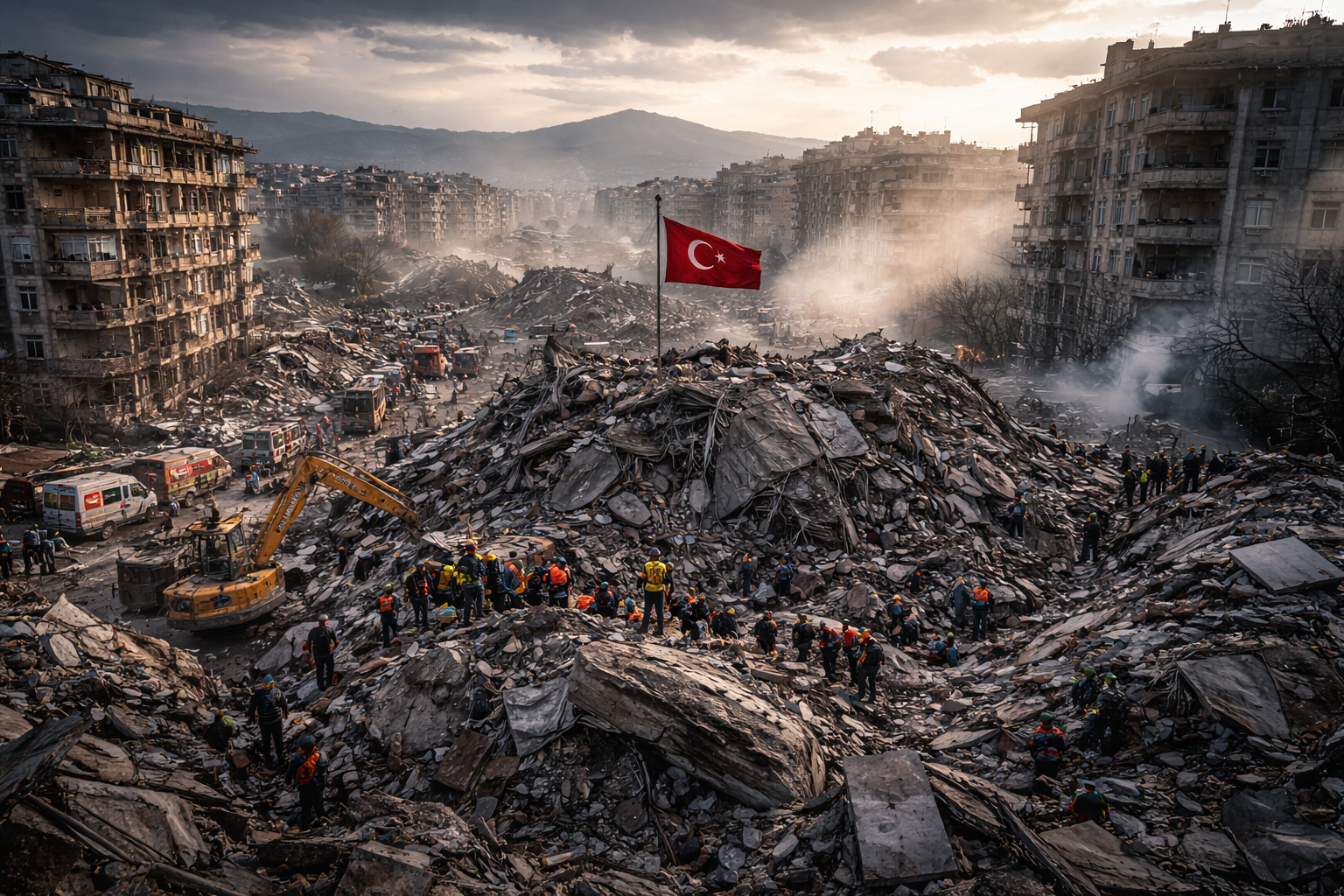
When a massive earthquake reduced an apartment building to rubble, a mother and her three children disappeared beneath thousands of pounds of concrete. For more than three days, no one knew they were alive. Their rescue ultimately depended on a nearly impossible combination of luck, discipline, and one rescuer who stopped long enough to listen.
In February 2023, following the devastating earthquakes in southern Türkiye, a mother and her three children survived for more than 72 hours inside a tiny air pocket beneath their collapsed apartment building. By conserving energy, rationing a small bottle of water, remaining calm, and repeatedly tapping on a metal pipe, they were eventually located by rescuers who had nearly moved on to another section of the ruins.
What Happened?
Just after 4:17 a.m., families across southern Türkiye were asleep when one of the most destructive earthquakes in modern Turkish history struck without warning.
Inside a modest apartment, Leyla had only recently tucked her three children into bed. Minutes later, the floor began to vibrate.
At first it felt like a passing truck.
Then the walls flexed.
Glass shattered.
Furniture toppled.
Within seconds, the entire building folded in on itself.
There was no time to escape.
The family disappeared beneath layers of broken concrete, twisted steel, and shattered furniture.
When the noise finally stopped, Leyla couldn’t see a thing.
She wasn’t sure if she was alive.
Then she heard the word every parent hopes to hear.
“Mama?”
One child.
Then another.
Then the third.
Against extraordinary odds, all four had survived the collapse.
Rescuers would later discover that several enormous slabs had fallen against each other in a way that created what engineers call a **void space**—a narrow pocket that protected them from being crushed.
Unfortunately, surviving the collapse was only the beginning.
The Long Wait Underground
The air was thick with dust.
The temperature dropped steadily.
Every movement risked shifting unstable debris.
When Leyla discovered a partially filled plastic bottle trapped beside broken furniture, she understood immediately that every drop mattered.
Each child received only tiny sips.
She drank almost nothing herself.
Instead of wasting strength screaming continuously, she encouraged slow breathing, quiet conversation, and hope.
Hours became an entire day.
Then another.
Outside, thousands of rescuers searched through mountains of rubble left by the earthquake.
Entire neighborhoods had collapsed.
Every pile of concrete represented another impossible choice.
Who should they search first?
Who might still be alive?
Timeline
- 4:17 a.m. — Major earthquake strikes southern Türkiye.
- Minutes later — Apartment building collapses with the family trapped inside.
- Day 1 — Family discovers a small air pocket and rations a bottle of water.
- Day 2 — Leyla begins repeatedly tapping on a metal pipe while conserving everyone’s energy.
- After 72+ hours — A rescuer hears faint tapping after stopping heavy machinery.
- Rescue — All four family members are safely removed from the rubble.
Why They Survived
Their survival came down to several remarkable factors working together:
– A stable air pocket protected them from crushing debris.
– They limited unnecessary movement, conserving oxygen and energy.
– A small bottle of water prevented severe dehydration.
– Leyla kept the children calm instead of allowing panic to take over.
– Most importantly, they continued making deliberate tapping sounds that eventually reached rescuers.
What Nearly Went Wrong
Rescue crews later explained they were close to moving on from that section of the collapse.
The tapping was extremely faint.
Had heavy equipment continued operating, or had one rescuer ignored what sounded like little more than imagination, the family might never have been found.
Sometimes survival depends on extraordinary courage.
Sometimes it depends on someone deciding to listen one more time.
Final Thoughts
The earthquakes that struck Türkiye in 2023 claimed tens of thousands of lives and forever changed entire communities.
Among those tragedies were rare stories that reminded the world why rescue teams continue searching long after hope appears to fade.
For Leyla and her three children, survival wasn’t built on strength alone.
It came one calm breath…
one careful sip…
and one quiet knock at a time.
🔎 Related Investigation:
🔎 Related Investigation: