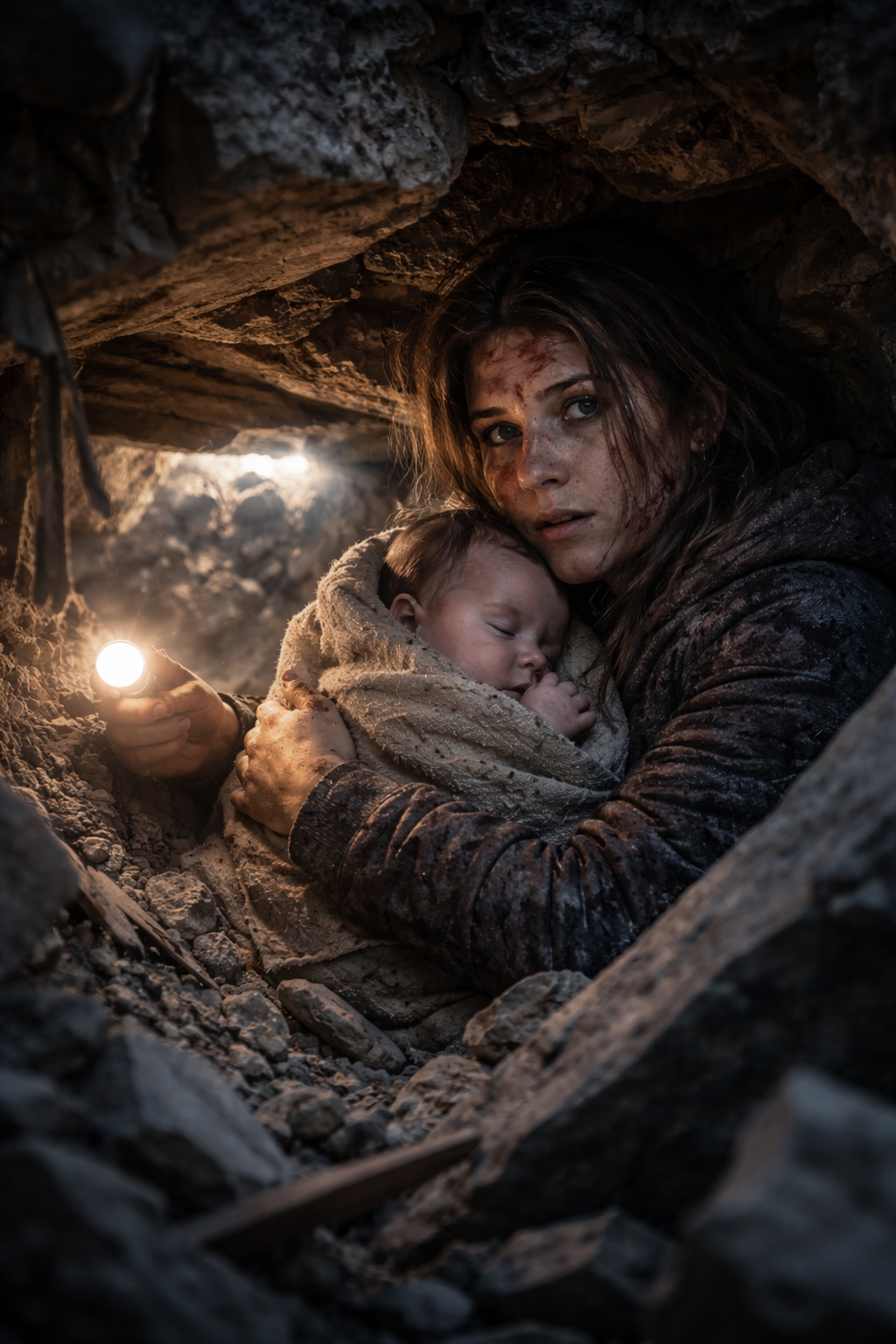
Susanna Petrosyan was lying on her back beneath a collapsed apartment building. Concrete hung above her head; broken piping lay across her shoulders. Her four-year-old daughter, Gayaney, was alive nearby. The account published in Red Cross, Red Crescent places them in the basement, trapped beneath what had been an ordinary family visit.
She could not simply pick up her child and carry her outside. Before there could be a journey home, someone had to reach them.
Editorial note: The written article has been corrected using contemporary reporting. The older audio/video version may contain details that differ from this updated account.
The visit that ended beneath the building
On December 7, 1988, Petrosyan had gone to her sister-in-law Karine’s apartment in Leninakan to try on a black dress. Gayaney had come with her. Then the earthquake brought the building down around them.
The disaster stretched far beyond their apartment. The U.S. Geological Survey’s later account describes a magnitude 6.8 earthquake at 11:41 a.m., with an estimated 25,000 people killed and 510,000 left homeless. Hospitals, schools and apartment blocks were among the damaged buildings. A rescue effort would have to reach people buried across a devastated region while medical facilities were themselves damaged.
The USGS investigation helps explain why rescuers faced so many emergencies at once. Its field summary estimated damage to 80 percent of Leninakan’s buildings. Across the most severely affected area, hundreds of buildings had collapsed and many more required demolition. A building still standing was not necessarily a place where a family could safely shelter or where rescuers could establish a base.
The field investigators counted 314 collapsed buildings in the most severely affected region and another 641 that required demolition. Only about a quarter of the buildings in the surveyed categories remained habitable. Those figures describe the landscape rescuers had to work through: not one isolated collapse surrounded by intact streets and services, but a region where usable shelter itself had become scarce.
Nor was the destruction confined to old buildings. Hays described failures in modern construction, including floor systems inadequately anchored to the rest of the structure.
The initial collapse was only the beginning of the emergency. Walter Hays’s USGS chapter emphasizes the harsh first day of search and rescue in winter: the earthquake’s destruction happened in seconds, while reaching the people caught beneath it took hours and days.
For Petrosyan, the immediate problem was much smaller and more desperate: what could she reach from where she lay?
What she could reach
In her Associated Press interview, she recalled giving Gayaney blackberry jam and wrapping her in stockings. Karine died the next day. There was no water.
Petrosyan said she cut her fingers with glass and offered blood. She could not recall the timing or frequency.
Above the rubble, a race to reach survivors
Outside, the response was gathering across borders. Red Cross, Red Crescent reported that French and Swiss rescuers with dogs had reached Yerevan by the second day. Hundreds of Red Cross workers came from abroad, while Armenian members and volunteers from elsewhere in the Soviet Union joined the effort. Field hospitals were established in Stepanavan and Spitak.
Yet the scale of the response created its own difficulties. The magazine described a system strained by incoming personnel and supplies, and local decision-makers who had themselves lost relatives. Help arriving in Armenia and help reaching a particular survivor were two different stages of the same emergency.
By December 14, the day Petrosyan and Gayaney were reached, the cold remained a threat to the people still missing. UPI’s report that day described forecasts of snow and below-freezing temperatures. Rescuers warned that those conditions could kill people who had survived the collapse but had not yet been found.
Timeline of Events
- December 7, 1988: The earthquake strikes northern Armenia.
- By the second day: International rescue teams with dogs have arrived in Yerevan, according to the Red Cross account.
- December 14: Mother and daughter are rescued.
Light through the wreckage
On December 14, rescuers opened a hole. Light entered. Petrosyan warned them that a child was inside. Her husband was with the rescuers.
AP reported that they were flown to Yerevan. Both were dehydrated; Gayaney spent four days in intensive care.
The wider medical emergency made that transfer significant. In its December 14 dispatch, UPI reported that injured people were being sent as far as Moscow. Government spokesman Gennady Gerasimov said shortages of dialysis equipment were hampering treatment for crush injuries. Across the disaster zone, pulling someone free could mark the beginning of urgent hospital care rather than the end of the danger.
The fuller AP report records disagreement between their doctors about whether the blood helped.
A Los Angeles Times correspondent recalled meeting Petrosyan in hospital on Christmas Day.
By the later AP interview, Gayaney was talking and smiling again, playing with a teddy bear in her hospital bed.
Frequently Asked Questions
Who were the mother and child?
Susanna Petrosyan and her four-year-old daughter, Gayaney.
How long were they trapped?
December 7–14; AP calls it the eighth day.
What did the mother report doing?
Offering her blood; doctors differed about its benefit.
Why is this story remembered?
For the care Petrosyan tried to give her daughter when she had almost nothing available, and for their eventual rescue.
Sources & References
Contemporary reporting and earthquake research reviewed October 22, 2026.
- Associated Press, published by Deseret News — Survivors: Armenian mother recounts sacrifices to save her child
The contemporary survivor interview. - U.S. Geological Survey — A Reader on Earthquake Hazard Reduction, Spitak chapter
Walter W. Hays’s chapter begins on PDF page 119: earthquake timing, magnitude, estimated losses and wider building damage. - Los Angeles Times — Christmas: I Won’t Be Home for the Holidays
A hospital encounter. - Red Cross, Red Crescent — Armenia: The Earthquake & the Aftermath (January–April 1989)
Pages 8–11: entrapment and the wider rescue operation. - Associated Press, Midland Reporter-Telegram, December 30, 1988 — archived newspaper scan
PDF page 15: fuller report, including medical disagreement and recovery. - UPI — Quake toll at 55,000; curfew imposed (December 14, 1988)
Contemporary reporting on weather threats and medical transfers. The article uses the USGS death estimate rather than this preliminary headline figure.
Watch it on YouTube