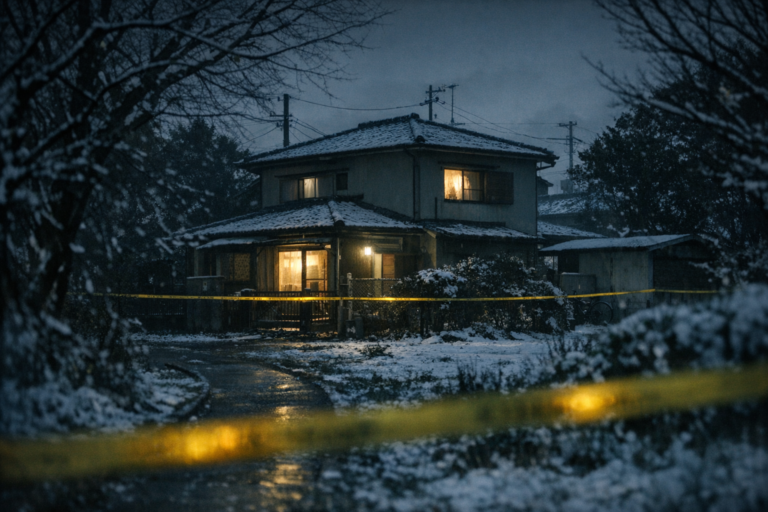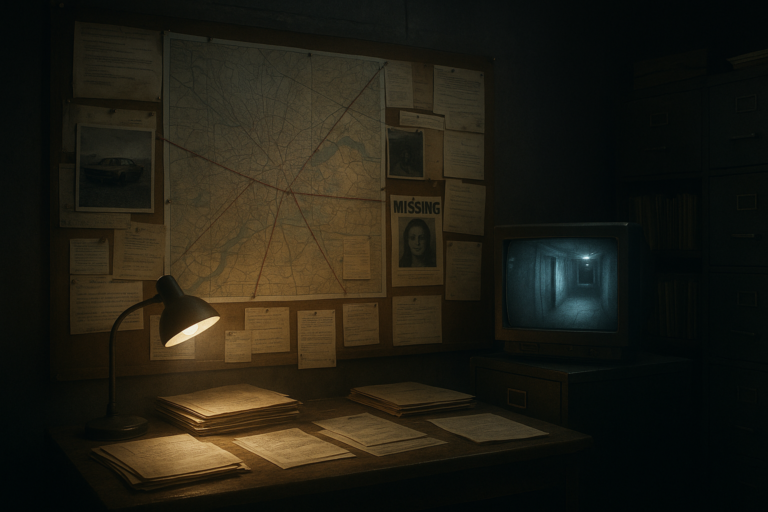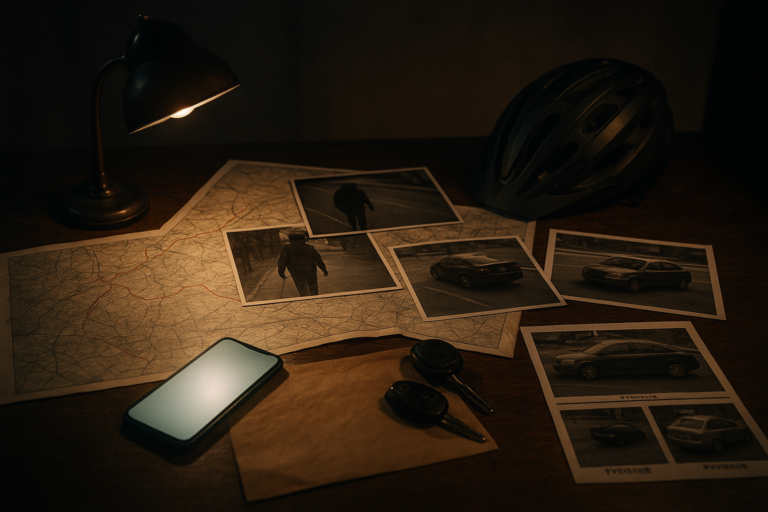
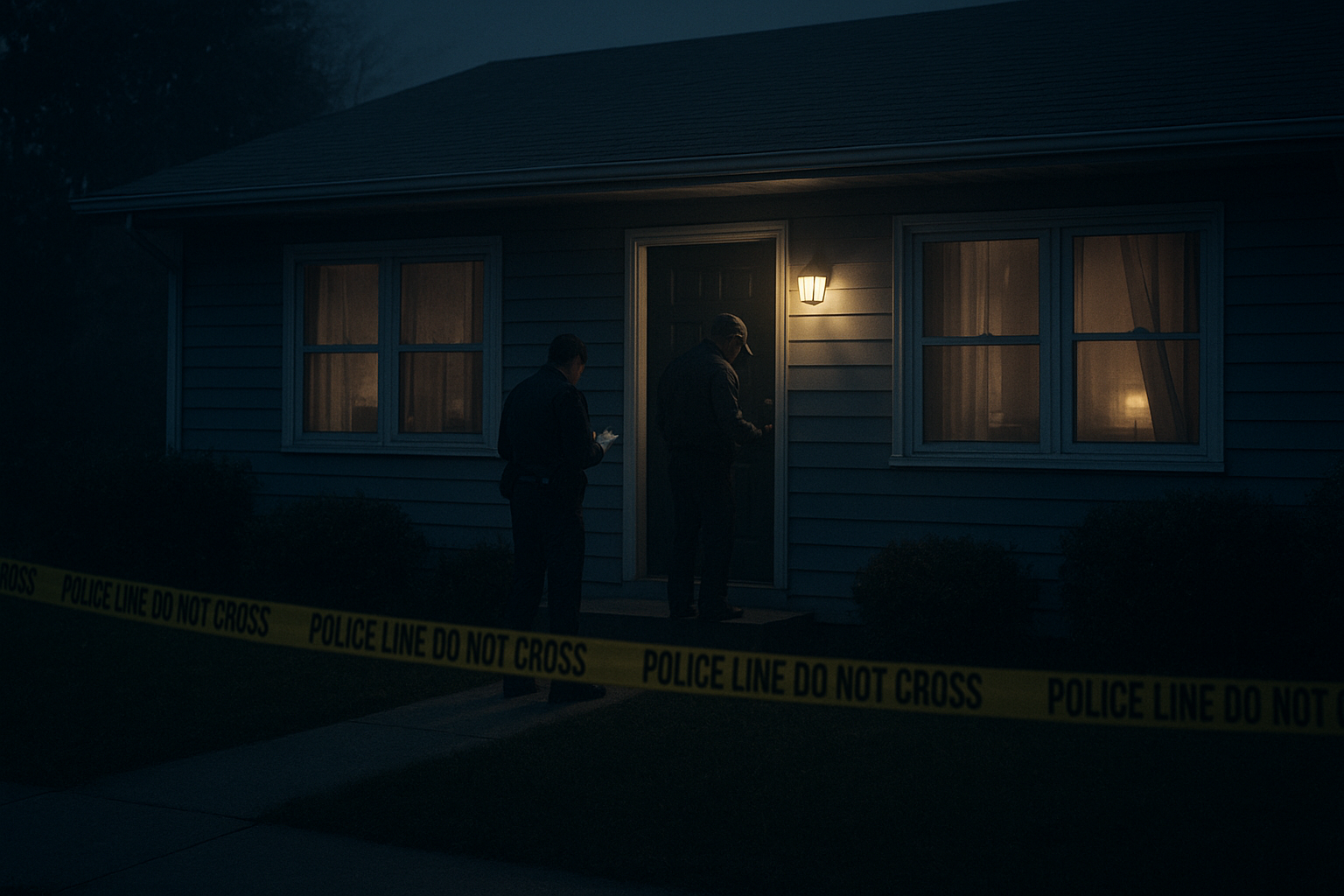
Most family murder cases stay with readers because they destroy the place people are supposed to trust most. The horror is not only in the body count, the suspect, or the verdict. It is in the setting. A bedroom, a staircase, a child’s room, a kitchen, a suburban driveway, a neatly kept family home — spaces designed for routine, privacy, and safety suddenly become the only stage where the entire story turns violent. That transformation is what gives these cases their special grip. The house does not feel like a backdrop. It becomes the crime scene, the witness, the lie, and the enduring wound all at once.
It is not a generic true crime roundup and not just a list of notorious murders involving relatives. The house everyone remembers, the rooms people can still picture, the routine that should have continued into the next morning, and the final hours that broke that illusion forever. Readers looking for this angle are usually not searching for crime in the abstract. They are searching for the specific cases where home itself feels permanently changed by what happened inside it.
Cases like Villisca Axe Murders — The Night a Family Was Killed in Their Sleep, John List Case — The Man Who Killed His Family and Disappeared, What Happened to the Petit Family? The Night Cheshire Lost a Family, Chris Watts Case — The Family Murder That Shocked the Entire World, and JonBenét Ramsey Case — The Child Murder That Still Haunts Investigators already pull strong reader attention on their own. What this page does is connect them through a tighter emotional and structural frame: family routine, domestic deception, and the moment a normal house stops being ordinary forever.
What This Page Covers — and Why These Cases Matter
In some, the crime happened inside the house. In others, the house became the emotional center of the mystery even when the body, confession, or final evidence pushed the story outward. Either way, readers return to these cases because the home remains unavoidable. The dining table, the bed, the stairs, the children’s rooms, the driveway, the basement, the bedroom door, the master-planned suburban calm — all of it becomes part of the case file.
These stories matter for more than shock value. They reveal how family violence often hides behind the most polished forms of normal life. To outsiders, the house reads as order. To investigators, it eventually reads as contradiction: staging, silence, blood patterns, missing timelines, rehearsed emotion, unexplained movement, or a routine that suddenly makes no sense. That is why this page belongs naturally beside larger RTRS hubs like The True Crime Archive — Unsolved Murders, DNA Breakthroughs, False Narratives, Retrials, and the Cases That Still Divide the Public, Murder Cases Caught on Surveillance Footage — The Timelines, Blind Spots, and Final Moments That Still Raise Questions, and True Crime Cases Reopened by Appeals, Retrials, and New Evidence — The Stories That Refused to Stay Closed. Those pages map broader true crime patterns. This one narrows the focus to the domestic threshold where family life turns into evidence.
It also fills a search-intent gap. Many readers are not only looking for “true crime cases” or “famous murders.” They are looking for cases like the Chris Watts murders, the John List family killings, the Villisca house murders, or the JonBenét Ramsey case precisely because the setting feels intimate and violated. The house is memorable. The family lies are memorable. The final hours feel close enough to imagine in painful detail. That makes these cases unusually bingeable and unusually sticky in memory.
Family Murder Cases Where Home Became the Crime Scene
Villisca Axe Murders
Villisca Axe Murders — The Night a Family Was Killed in Their Sleep belongs near the top of this collection because it may be one of the purest examples of a home turning into a permanent true crime landmark. The case is remembered not only because an entire family was killed in their sleep, but because the house itself became inseparable from the horror. Readers do not picture a broad city or a shifting route. They picture a quiet Iowa home, closed rooms, sleeping children, and a night that should have passed without incident.
The domestic routine is so painfully intact right until it shatters. Beds were made for sleep, not fear. Parents and children were inside the space that should have protected them. That is what makes the case feel different from public-space violence. The terror is not random distance. It is the violation of a place structured around trust, family, and ordinary nightly habits.
The key mystery point is that the house became both the scene of the slaughter and the lasting symbol of the unanswered questions around who entered, who moved through the rooms, and how such devastation could happen in so ordinary a setting.
John List Case
It fits the page’s angle because the ordinary home is not just the location of the crime — it is the mechanism that allowed the crime to breathe in public without immediate interruption. Readers stay with this case because the domestic order feels weaponized. Curtains, routines, expected privacy, and suburban isolation do not soften the horror. They help contain it long enough to deepen it.
The key mystery point is how a familiar family home could hold that kind of finality inside it while the outside world kept moving as if the ordinary pattern might still be intact.
What Happened to the Petit Family?
What Happened to the Petit Family? The Night Cheshire Lost a Family belongs here because few modern American family murder cases are remembered more vividly through the house itself. The Cheshire home invasion did not happen in some abstract crime zone. It happened in a residential setting readers can imagine too easily: a family house at night, sleeping rooms, a father, a mother, children, and the assumption that the walls mean something. In this case, the home became the center of terror almost immediately.
The domestic routine remains emotionally visible throughout the story. The family was not living a cinematic life. They were living a recognizable one. That recognizability is what makes the crime so difficult to shake. Home invasion family murders carry a different kind of dread because they collapse the mental barrier between public danger and private safety. Once that collapse happens, the house does not feel neutral anymore.
The key mystery point is not whether the case was solved. It is why the domestic setting still has such force: because the home is the thing readers remember first, and because every stage of the violence feels amplified by how normal that space was supposed to be.
Chris Watts Case
This is where the “timelines, lies, and final hours” angle becomes especially powerful. In the Watts case, the lies mattered because they were delivered against a setting designed to make them sound plausible. The home looked familiar. The family looked familiar. The routine looked familiar. But the timeline would not hold. That instability turned the house into more than a setting; it became the visible shell around a deception collapsing under pressure.
The key mystery point is how quickly a house that projected family order became a place readers associate with one of the most chilling reversals in modern true crime — a domestic life revealed as staged after the final hours had already closed around the victims.
JonBenét Ramsey Case
JonBenét Ramsey Case — The Child Murder That Still Haunts Investigators belongs in this collection because the home remains the center of the mystery even after decades of argument. The case is not remembered as a child murder in some generalized sense. It is remembered through the Ramsey house: the Christmas-night setting, the interior movement, the note, the basement, the rooms, the competing interpretations of what happened and when. The physical environment became inseparable from every theory.
Home, family image, and evidentiary confusion are fused together from the beginning. The ordinary domestic frame — holiday aftermath, parents, child, upstairs-downstairs routine — should have provided interpretive clarity. Instead it produced one of the most disputed domestic crime scenes in modern memory. That is why the case still grips readers. The house feels knowable, yet the sequence remains contested.
The key mystery point is that the home generated more visibility than certainty. Every room matters. Every movement matters. And still the domestic space that should have clarified the crime remains one of the main reasons it never settles cleanly.
Casey Anthony Case
Casey Anthony Case — The Trial That Divided a Nation belongs here because although the case widened beyond one single interior crime scene, the emotional center stayed domestic: a child, a family home, inconsistent explanations, missing time, and a private environment whose routines became impossible to trust. Readers did not stay with the case only because of the courtroom. They stayed because the family setting itself felt unstable from the beginning.
This is not purely a home-invasion or annihilator story. It is a domestic-uncertainty case where the family sphere became the origin point of suspicion, the source of competing stories, and the stage for one of the most divisive true crime reactions of the century. That still makes it part of the same cluster, because the home is where normal life first stops making sense.
The key mystery point is how rapidly domestic routine became narrative warfare — who knew what, when concern became real, and why the family setting itself remained central to the public’s inability to let the case go.
Scott Peterson Case
Scott Peterson Case — The Christmas Eve Disappearance That Turned Into a Murder Trial strengthens this hub because it shows that “home became the crime scene” does not always mean the entire story stayed inside four walls. Sometimes the house matters because it is where the family routine should have continued, where absence first became visible, and where the domestic lie begins to split from the timeline. In the Peterson case, marriage, pregnancy, routine expectation, and the outward performance of normality all matter as much as the later investigative path.
Readers experience the case through the collapse of a domestic future. The emotional architecture is house-bound even when parts of the evidentiary trail move elsewhere. People remember the case through family expectation, holiday routine, the missing wife, the missing child, and the way a household narrative began to look false under scrutiny.
The key mystery point is that the family home remains one of the case’s strongest symbolic spaces — not because every answer sat neatly inside it, but because it is where the ordinary life at the center of the story was supposed to go on.
Why These Family Murder Cases Still Disturb Readers
What these cases have in common is not one legal outcome or one exact murder pattern. It is the collapse of domestic trust. The house becomes evidence because the house once represented order. Villisca is unforgettable because the rooms were meant for sleep. John List is unforgettable because the home allowed silence to impersonate routine. The Petit case is unforgettable because private family shelter became the point of entry for the horror. Chris Watts is unforgettable because the suburban image looked so normal until the timeline broke. JonBenét Ramsey remains gripping because the house generated endless interpretation without stable closure. Casey Anthony and Scott Peterson remain divisive because the family setting became the first unstable narrative frame readers learned to distrust.
That is what makes this angle stronger than a generic “family murders” roundup. Readers are not only responding to kinship or betrayal. They are responding to domestic geography. They remember the stairs, the bedroom, the driveway, the basement, the kitchen-table normalcy, the children’s rooms, the holiday leftovers of ordinary life. In true crime, place often shapes memory more than motive. And in domestic murder cases, home is the place that keeps reappearing because it should have been the safest one.
There is also a deeper investigative reason these stories remain potent. Homes create expectations of legibility. A public crime scene can be chaotic. A private house seems like it should tell the truth more clearly. There are fewer people moving through it, fewer routes, fewer unknowns. But family murder cases often produce the opposite effect. Domestic intimacy complicates evidence. Familiar access muddies forced-entry logic. Staging becomes easier. Emotional performance matters more. The timeline depends on ordinary routine, and once ordinary routine is falsified, every room begins to feel suspect.
That is why these cases route so naturally into broader true crime reading paths. Someone who enters through Chris Watts can move into Murder Cases Caught on Surveillance Footage — The Timelines, Blind Spots, and Final Moments That Still Raise Questions because the visible timeline pressure feels related. Someone drawn in by contested or enduring narratives can move into True Crime Cases Reopened by Appeals, Retrials, and New Evidence — The Stories That Refused to Stay Closed. And someone who wants the bigger map of how family lies, old evidence, and unforgettable crime scenes fit together can continue into The True Crime Archive — Unsolved Murders, DNA Breakthroughs, False Narratives, Retrials, and the Cases That Still Divide the Public. The binge path works because the psychological hook works first.
What finally makes these cases so hard to forget is that they injure the idea of ordinary life itself. Most true crime readers know that violence can happen anywhere. But domestic family murder cases force a sharper realization: the routines people rely on most — tucking children in, going to bed, waking up for Christmas week, returning home to a spouse, moving through a neat suburban morning — can become the very framework investigators later use to reconstruct betrayal. The same normality that once made the house feel safe becomes the evidence that something inside it had already gone terribly wrong.
Conclusion
The family murder cases that stay lodged in public memory are rarely the ones defined by distance. They are the ones defined by domestic closeness. A family home, a child’s room, a sleeping household, a suburban routine, a husband’s explanation, a mother’s absence, a note on the stairs, a room that should have felt ordinary and never will again — these are the details that give the cases their afterlife.
The names differ. The eras differ. The legal endings differ. But the emotional architecture is the same. Home was supposed to hold. Instead, it became the place readers still return to when they want to understand how normal life can be made to look intact right up until the moment it very clearly was not.
🔎 If this story stayed with you, the author suggests these deeper investigations next:
- The wider true crime archive of murders, false narratives, retrials, and cases readers still argue about
- The surveillance-footage murder cases where the timeline looked visible and still refused to settle
- The reopened and retrial-driven true crime cases that would not stay closed
Explore more True Crime stories here: