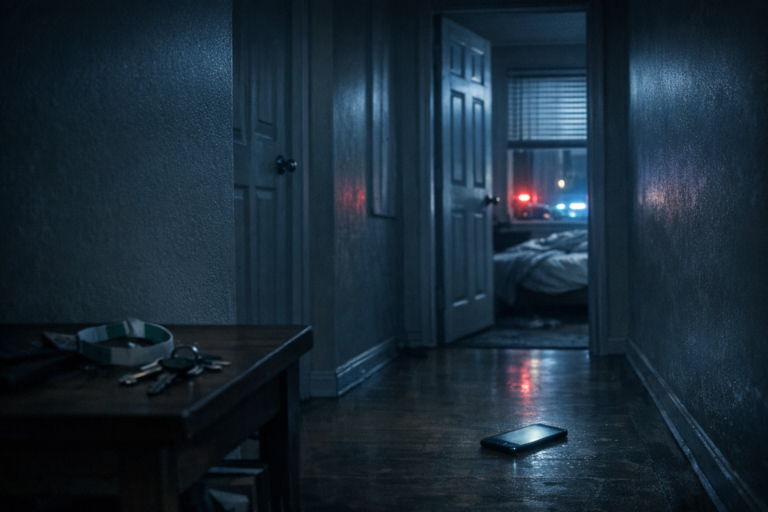

At 1:24 a.m. on March 18, 1990, two men wearing police uniforms rang the bell at the employee entrance of Boston’s Isabella Stewart Gardner Museum. They said they were answering a disturbance call. The guard opened the door. Eighty-one minutes later the men left with thirteen works, including a Vermeer that Isabella Stewart Gardner herself had purchased in Paris almost a century earlier.
The 81 Minutes That Changed the Museum Forever
The guard at the desk was Rick Abath. He admitted the men and summoned the other guard. The supposed officers handcuffed them and restrained them in the basement. The two employees who might have stopped the theft were now unable to alert anyone upstairs.
The museum could later reconstruct portions of the thieves’ movement because motion detectors had registered activity in the galleries. Those signals give the night a chronology. They do not tell us what the men said to each other or why they passed one work and took another.
Timeline of the Gardner Museum Heist
- 1:24 a.m. — The men ring the bell at the Palace Road entrance and are let inside.
- After entry — The two guards are detained and taken to the basement.
- During the next 81 minutes — Works are removed from the Dutch Room, the Short Gallery and the Blue Room.
- 2:45 a.m. — The thieves depart after carrying the stolen objects to their vehicle in two trips.
- 8:15 a.m. — Police arrive. The guards are still restrained.
What They Took—and What They Left Behind
In the Dutch Room, the men removed Vermeer’s The Concert and cut two Rembrandt paintings from their frames, including Christ in the Storm on the Sea of Galilee. They also took a landscape by Govaert Flinck, a small Rembrandt etching and an ancient Chinese bronze vessel. A painting on a wall and a vessel resting on a table had become part of the same crime.
In the Short Gallery, the missing objects included five works by Edgar Degas and a bronze eagle finial. Édouard Manet’s Chez Tortoni disappeared from the Blue Room. Count all the objects together and the total is thirteen. Only five were paintings removed from the frames the thieves left behind.
Reconstructing the 81 minutes
WBUR’s reporting draws on an interview with the second guard and an account from the museum’s security director. The intervals in a detector record can place movement in a particular space. They cannot identify the person who crossed it or establish the order in which each individual object was handled. The interval from arrival to departure is more firmly established than a minute-by-minute story of the theft.
The choices no one can explain
Why remove a small sculptural ornament while leaving other valuable objects? Why cut some canvases from their frames? The inventory establishes the decisions the men made. It does not establish that the objects had been ordered by a buyer, or that their selection reveals the identity of the thieves.
The Inside-Job Question
Breaking entry protocol gave the thieves access. That documented mistake does not prove that an employee participated in the theft. In 2013 the FBI announced that it believed the thieves were associated with a criminal organization and that the art had moved through Connecticut and the Philadelphia area. This was the bureau’s investigative assessment. It was not an announcement that the objects had been recovered.
The FBI estimated the value of the stolen works at approximately $500 million. That is a valuation of the objects together, not money taken from the museum or a price someone is known to have paid.
Why the Empty Frames Matter
In 1892 Gardner bought The Concert at auction in Paris. The gilt frame associated with the painting had been altered to fit it. A conservator examining its rails can still see where sections were removed to make it narrower. The object on the wall has a history of its own, even with the canvas gone.
The museum’s conservation account distinguishes the five emptied painting frames from the thirteen objects lost. An empty frame in the Dutch Room marks where a particular work belonged. It also preserves one of Gardner’s arrangements for a visitor who will never see that room exactly as she assembled it.
Why the Gardner Heist Still Holds Cultural Power
The museum continues to seek information leading to the return of the works. A name or theory about the perpetrators cannot put a painting back on the wall. Recovery turns on a different question: where are the objects now? That question remains open more than three decades after the theft.
The Final Shape of the Mystery
At one end of this story there is an unusually precise time: 2:45 a.m., when the thieves left. At the other is a gilt frame whose corners a conservator can still study. The eighty-one minutes explain how much was taken and how quickly. The frame shows what the loss looks like to someone who enters the room today.
FAQ
What happened in the Isabella Stewart Gardner Museum heist?
Two men dressed as police officers restrained the guards and stole thirteen works from three galleries on March 18, 1990.
Was the Gardner Museum heist ever solved?
The museum describes the theft as unsolved and continues to seek the return of the works.
What was stolen from the Gardner Museum?
Five paintings and eight other objects, including a Rembrandt etching, five works by Degas, a Chinese bronze vessel and an eagle finial.
Why does the Gardner Museum heist still get so much attention?
Works by Vermeer and Rembrandt remain missing, and the surviving frames make some of those losses visible in the galleries.
Why were the empty frames left in the museum?
The empty frames preserve part of Gardner’s installation and mark the places of missing paintings. Their continued display should not be mistaken for a provision in her will specifically addressing a future theft.
Research Sources
The following resources were consulted to verify and update this article.
- Isabella Stewart Gardner Museum, the 1990 theft — Official inventory, galleries, departure time, police arrival and continuing recovery effort.
- WBUR, Last Seen: 81 Minutes — Original reporting with a guard and the museum security director on entry, restraint and motion-detector reconstruction.
- Holly Salmon, The Five Frames Left Behind — Museum conservator’s account of the five paintings and the acquisition and alteration of the Vermeer frame.
- FBI, 2013 Gardner museum appeal — The bureau’s dated investigative assessment and approximately $500 million valuation.
Related reading
🔎 Related Investigation:
🔎 If this story stayed with you, the author suggests these real cases next:
- The hijacker who took the money and vanished into open air
- The killer whose letters kept the case alive long after the murders stopped
- The church surveillance case where the footage only made the questions worse
- The body on the beach that solved one mystery and deepened another
Explore more True Crime stories here:
Watch This Heist on YouTube
Watch our full account of the Gardner Museum heist right here, or watch on YouTube.