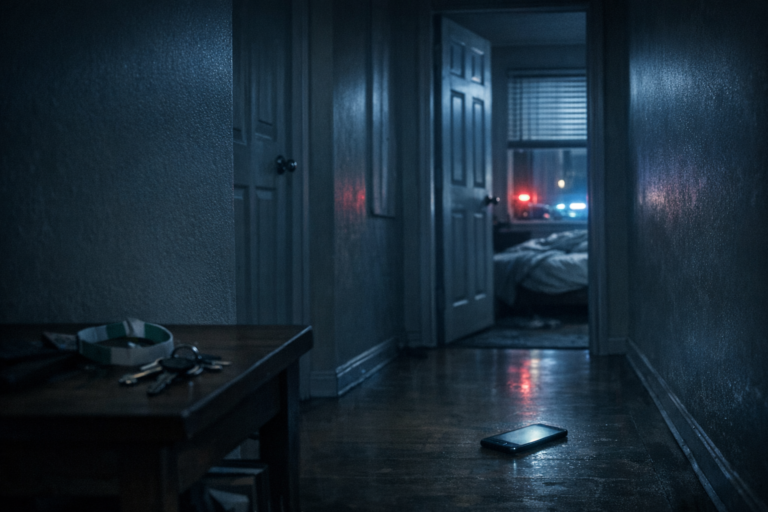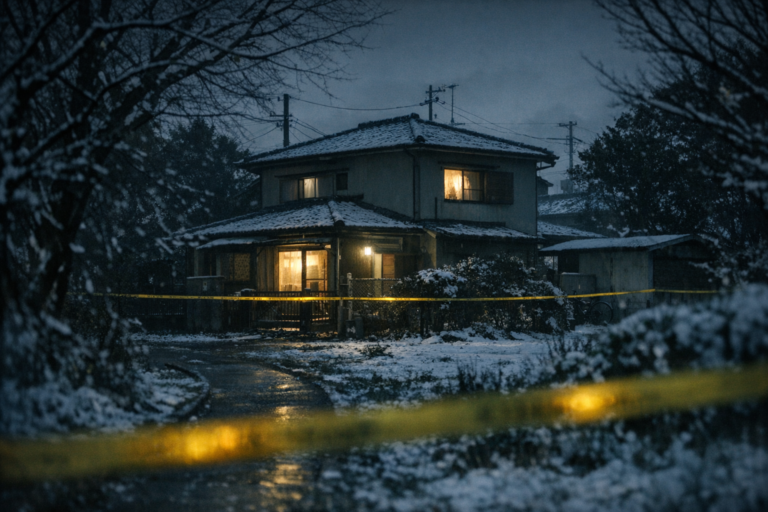
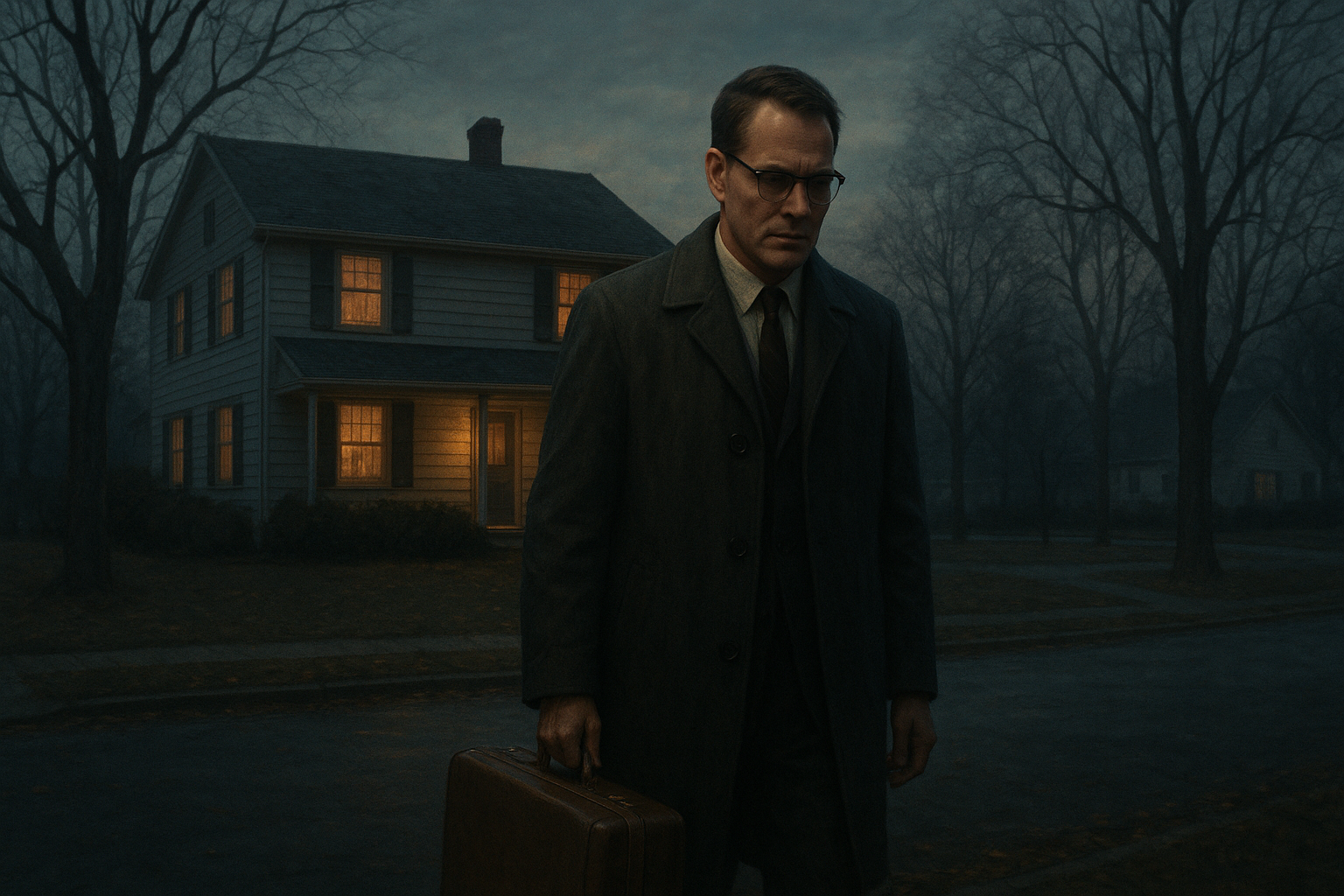
For weeks, the house on Hillside Avenue looked less like a crime scene than a place holding its breath.
It sat above Westfield, New Jersey, in a way that made it seem distant even from the street below. The mansion was old, grand, and quiet. Its windows stayed dark in strange patterns. Its lights sometimes burned without movement behind them. Mail collected. Days passed. Then more days passed. And inside that enormous house, five bodies waited in the silence while the man responsible kept driving farther away from the life he had just destroyed.
That is what makes this case so hard to forget. John List did not explode into violence and then vanish into chaos. He moved with terrifying patience. He planned. He cleaned. He wrote letters. He lowered suspicion. And when the truth was finally discovered, he was already gone.
The John List case remains one of the most chilling family murder stories in American true crime because it combines two nightmares at once: the slaughter inside the home, and the long, ordinary-looking life the killer built afterward. Nearly eighteen years passed before the manhunt finally ended, and even now the story still feels unreal because so much of it happened in stillness rather than panic.
If this kind of case pulls you in, the broader pattern becomes even more disturbing in these family murder cases where ordinary homes became crime scenes, where the familiar setting is part of what makes the violence so difficult to process.
By 1971, John List was living inside a version of success that had already collapsed. He was an accountant, a strict and deeply religious father, a man who outwardly fit the image of order. But behind that image, the pressure was building fast. He had lost his job at a New Jersey bank and kept the truth from his family. Each morning, he still left the house as if he were headed to work. Instead, he spent his days searching for employment, sitting with the humiliation, and trying to keep the appearance of normal life intact.
The house itself added to the pressure. Breeze Knoll was not just a home. It was a burden. The 19-room mansion carried old-money grandeur and constant expense. List’s mother, Alma, lived there too. His wife, Helen, had long-standing health problems, and family tension had become part of the atmosphere. From the outside, the Lists still looked established. Inside, the finances were fraying, the lies were piling up, and John List appears to have become obsessed with the idea that disgrace was worse than destruction.
On November 9, 1971, he turned that private collapse into something final.
That morning, after the children had left for school, he shot Helen in the back of the head in the kitchen. Then he went upstairs and killed his mother. Later, as the day unfolded and the house kept its routine, he waited for the children to come home. Patricia came back first. Then Frederick. Hours later, after watching his son John play in a soccer game and driving him home, List killed him too. By the end of the day, his wife, mother, and three children were dead inside the same house where, to neighbors, nothing had looked obviously wrong.
And then came the part that turns the case from horrifying to deeply eerie.
List did not flee in a frenzy. He took time. He placed the bodies of his wife and children together in the ballroom on sleeping bags, while his mother’s body remained in her apartment. He cleaned parts of the scene. He wrote letters to the schools and to employers to buy time. He canceled deliveries. He removed his own face from family photographs. He tuned the house to religious music and carefully arranged the conditions that would keep the murders hidden for as long as possible.
It is one thing to imagine violence in a burst of rage. It is another to imagine a man moving through a silent mansion, stopping to think about paperwork, appearances, and timing while his family lies dead in different rooms. That is where the coldness of this case really lives. Not just in the killings themselves, but in the deliberate stillness that followed them.
Timeline of Events
- Months before the murders: John List loses his job and hides it from his family while debt and shame grow worse.
- November 9, 1971: He kills Helen List, Alma List, Patricia List, Frederick List, and John List Jr. in and around the family home in Westfield.
- After the murders: He writes letters, stops deliveries, stages the house for delay, and disappears.
- December 7, 1971: Police finally enter the mansion and discover the bodies after weeks of silence and suspicion.
- 1971–1989: List lives under the name Robert Clark, relocates, works as an accountant, remarries, and blends into church communities.
- May–June 1989: America’s Most Wanted airs his case with a forensic age-progressed bust, leading to recognition and arrest in Virginia.
- 1990: He is convicted of the murders and sentenced to life in prison.
The delayed discovery is one of the most haunting parts of the case. For almost a month, the house remained sealed in silence. Notes had been sent. Deliveries had been stopped. By the time police entered on December 7, the murders had been hidden for weeks.
That delay mattered. It gave John List the head start he needed to become someone else.
He left the family car at an airport, creating the impression that he might have left the country. Instead, he stayed in the United States and turned himself into the kind of man people overlook. Under the name Robert Clark, he moved through ordinary spaces, found work, attended church, and eventually remarried. There was no outlaw glamour to his fugitive life. No dramatic underworld. No desperate run through motel rooms and aliases changing every few weeks. He survived by being forgettable.
And in that era, forgettable could be enough.
Before digital records instantly cross-checked identities and before faces could flood the country in minutes, a man like List had advantages. He was disciplined. He was conventional. He knew how to disappear into paperwork and routine. The same personality traits that made him seem reliable also helped him hide.
What Doesn’t Add Up
- Mercy was never the real shape of this crime. In his confession to his pastor, List framed the murders in religious language, suggesting he was saving his family’s souls. But the planning, concealment, and self-preservation point to control, not sacrifice.
- He feared humiliation more than violence. Losing status, money, and authority appears to have mattered more to him than the lives of the people around him.
- He spared himself from the fate he chose for everyone else. That contradiction is hard to ignore. If death was truly the righteous solution, why did he leave himself eighteen more years of life under another name?
- He kept performing normalcy after the murders. Watching his son’s soccer game on the same day as the killings remains one of the most disturbing details in the entire case.
Those contradictions are why the motive still feels so unsatisfying. There are explanations, but they do not settle the case emotionally. Financial collapse, religious obsession, pride, control, and resentment all seem to be part of the picture. But none of them make the act feel more understandable. If anything, they make it worse, because they suggest a man who kept choosing calculation over conscience at every step.
The break in the manhunt finally came in 1989, and it came from a medium built for the exact fear John List had been exploiting: the idea that ordinary people might suddenly look closer.
America’s Most Wanted featured the case and worked with forensic sculptor Frank Bender to create an age-progressed likeness of what List might look like after nearly two decades. The reconstruction was not flashy. It was careful. It leaned into how a rigid, conservative man would probably age. When the segment aired, someone in Virginia recognized the man living nearby as Robert Clark.
That tip cracked open the second life he had spent years protecting. Investigators followed it, confirmed his identity, and arrested him in 1989. No cinematic chase. No final shootout. Just a suburban fugitive whose long disguise ended because a face on television looked a little too familiar.
Why This Case Still Gets Attention
Some true crime stories stay alive because they are unsolved. This one lingers for a different reason. It was solved, but it never became less disturbing.
The house matters. The delay matters. The confession matters. But what really holds onto people is the image of John List afterward: remarried, attending church, speaking calmly, working ordinary jobs, carrying the weight of five murders without outward collapse. Cases like the Chris Watts case or the Scott Peterson case still pull readers in for a similar reason: the horror is tangled up with domestic normalcy, and that makes it feel much closer than people want to admit.
At trial, the defense argued that List’s mental state had been deeply damaged. Prosecutors answered with the planning. The letters. The false trail. The years of concealment. The jury convicted him in 1990, and he was sentenced to life in prison. He died there in 2008.
But even that ending does not fully close the story. The mansion where the murders happened later burned down under mysterious circumstances, almost as if the setting itself had been erased. Yet the larger terror was always the man: how ordinary he seemed, how methodical he stayed, and how long he succeeded in hiding in plain sight.
That is why the John List case still feels like a late-night documentary you cannot shake. It begins with a silent house, moves through a controlled slaughter, and ends with the realization that the killer spent years living among strangers who never knew who he really was. No supernatural twist. Just the fear that someone can destroy everything behind closed doors and then walk back into the world looking almost exactly as they did before.
FAQ
What happened to John List?
John List killed his wife, mother, and three children in their Westfield, New Jersey home on November 9, 1971, then disappeared and lived under the alias Robert Clark for nearly eighteen years before he was arrested in 1989.
Why did John List kill his family?
He claimed financial ruin and religious concerns drove him to the murders, but investigators and readers alike have long seen the case as one shaped by control, shame, pride, and a chilling desire to avoid public humiliation.
How was John List found?
He was identified after America’s Most Wanted aired the case in 1989 using a forensic age-progressed bust created by Frank Bender. A viewer in Virginia recognized him as her neighbor, who was living under a false name.
How long did John List hide?
He remained a fugitive for almost eighteen years, one of the most unsettling stretches in the case because he spent that time building an outwardly normal life.
Is the John List case solved?
Yes. He was arrested, tried, and convicted in 1990. But the case still gets attention because the motive, the calculated staging, and the years he spent hiding in plain sight continue to unsettle people.
🔎 If this story stayed with you, the author suggests these real cases next:
- Cases where the family home became the final stage for something unthinkable
- A modern family annihilation case that still feels impossible to process
- The disappearance that turned into one of America’s most argued murder trials
- A deeper archive of murder cases, retrials, and investigations that keep pulling readers back
Explore more True Crime stories here: