Hollow Earth Conspiracy – Is There a Hidden World Beneath Our Feet?
9 min readOctober 1, 2025
The first thing that makes the Hollow Earth theory stick is how physical it feels. This is not a rumor about some distant galaxy or a secret hidden in government paperwork. It starts with the ground under your shoes. Rock. Weight. Pressure. The oldest thing most people trust without thinking. Then the theory twists that certainty into something far stranger: what if the planet beneath us is not solid in the way we were taught? What if the real mystery is not above our heads, but under our feet?
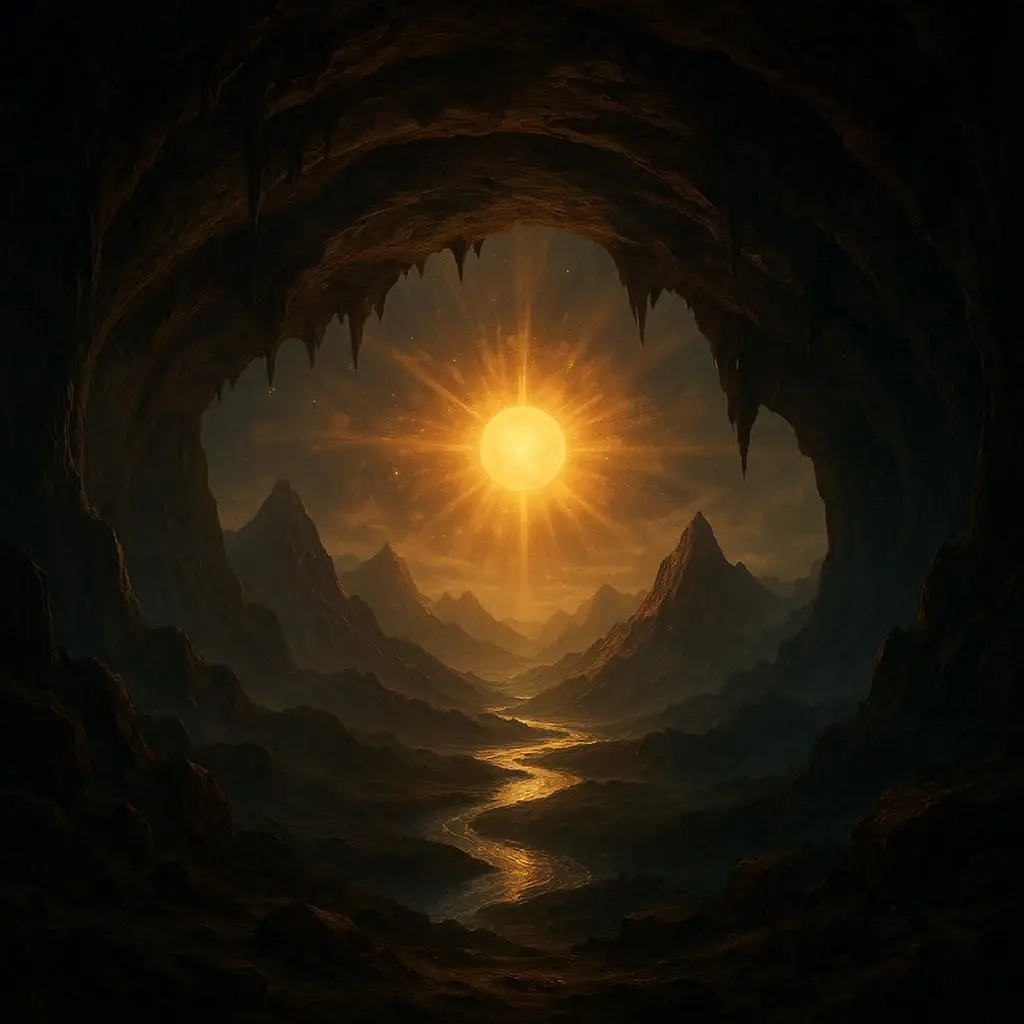
The Hollow Earth conspiracy theory claims Earth may contain a hidden inner world reached through polar openings, deep cave systems, or other concealed entrances. The idea still survives because it mixes real names, old expeditions, underground-city myths, and modern distrust in official explanations into one of the most persistent hidden-world stories ever told.
That staying power is part of why this theory keeps resurfacing in the same orbit as the psychology behind conspiracy belief. Hollow Earth is not just about geology. It is about the emotional pull of unfinished maps, sealed doors, and the suspicion that surface-level reality might be only the cover story.
If you trace the theory backward, it does not begin with social media clips or message boards. It reaches into older speculation about the shape of the world itself. Edmond Halley, best known for Halley’s Comet, once suggested models involving nested shells inside the Earth. Later, John Cleves Symmes Jr. pushed the idea further and argued for giant polar openings that could lead to an interior world. By the time those claims moved from scientific speculation into public obsession, Hollow Earth had already become something bigger than a bad hypothesis. It had become a stage set for adventure.
And that is where the theory starts to become more cinematic. Once the planet is no longer a sphere with a molten interior but a shell with hidden spaces, every cave mouth feels suspicious. Every polar expedition feels incomplete. Every blank patch on an old map starts to look less like a limit of knowledge and more like a sign that someone turned away just before the real discovery.
The story only grew stranger in the twentieth century. Admiral Richard E. Byrd’s real polar expeditions gave believers the perfect historical anchor: a decorated explorer, harsh ice, flight logs, radio silence, and enough myth around the poles to let fiction breathe. Over time, unofficial diary stories and recycled claims turned Byrd into a kind of accidental prophet in Hollow Earth lore. In those retellings, he did not simply cross frozen emptiness. He supposedly passed through it and found something warm, green, and inhabited beyond the known edge of the world.
1692: Edmond Halley proposes a layered Earth model with internal shells, giving later believers an early scientific-sounding foothold.
Early 1800s: John Cleves Symmes Jr. publicly argues that giant openings at the poles lead into the planet.
Late 1800s to early 1900s: hidden-world fiction, underground-city myths, and speculative exploration stories spread the concept beyond lectures and pamphlets.
Post-World War II: stories around Admiral Byrd and Antarctic flights become central to modern Hollow Earth lore.
Cold War era: the theory starts merging with UFO ideas, secret-base claims, and military cover-up narratives.
Internet era: Hollow Earth fuses with viral maps, satellite-image misreadings, reptilian myths, and underground-civilization stories.
What Keeps the Theory Alive
It uses real names: Halley, Symmes, and Byrd give the myth a documentary feel.
It borrows from real unknowns: caves, polar isolation, and limited direct access to deep Earth all help the theory feel less absurd than it is.
It rewards imagination: underground suns, lost civilizations, hidden technology, and forbidden entrances are more emotionally satisfying than ordinary geology.
It adapts well: it can merge with UFO lore, Nazi-myth narratives, Agartha legends, and even simulation-style internet theories.
That flexibility matters. Hollow Earth is not one clean claim. It is a cluster of overlapping versions. In one, there is a physically hollow planet with an inner sun. In another, there are only massive caverns and isolated advanced civilizations. In a darker version, governments know where the entrances are and actively guard them. In a newer version, unidentified craft do not come from space at all. They come from below.
That last branch helps explain why the theory fits so naturally beside stories like the Reptilian Elite theory, the strange architecture of the Denver Airport conspiracy, and even atmosphere-heavy suspicion stories like the Chemtrail conspiracy. Once you accept the idea of hidden worlds, secret tunnels, and unseen populations living near or beneath ordinary life, the jump to underground influence stops feeling large. It starts feeling inevitable.
The Nazi subplot pushed the theory even deeper into conspiracy culture. Stories about Antarctic bases, secret expeditions, and occult searches for forbidden power gave Hollow Earth a second engine. It was no longer just a weird belief about geology. It became part of a larger mythology about secret societies, advanced technology, vanished cargo, and wartime knowledge the public was never meant to see. There is no credible evidence supporting those claims, but credibility is not what gives this theory force. Atmosphere does.
And the atmosphere is hard to deny. Antarctica already feels like the edge of reality: white silence, impossible cold, distance so extreme it starts to feel unreal. Add rumors of tunnels, missing records, or restricted zones, and the place becomes the perfect backdrop for a theory that survives on implication. Hollow Earth does not need proof to feel alive. It only needs a setting that makes proof feel just barely out of reach.
That is also why believers keep returning to visual errors and oddities. Dark gaps in stitched satellite images, misunderstood cave systems, old illustrations of the poles, and maps from occult or mystical traditions all become puzzle pieces in the same larger picture. A data gap becomes an entrance. A myth becomes memory. A symbolic city like Agartha becomes a hidden capital. In a theory like this, almost anything ambiguous can be turned into evidence.
What Doesn’t Add Up
Earth’s mass and gravity: a truly hollow planet would not behave the way Earth does.
Seismic evidence: earthquake-wave behavior strongly supports a layered interior, not a giant habitable void.
No verified polar opening: decades of exploration, mapping, and observation have not produced evidence of giant entrances at either pole.
The Byrd legend problem: the most dramatic inner-world claims come from unofficial retellings, not his accepted expedition record.
The theory changes too easily: when one version fails, believers can shift to caves, bases, aliens, or mystical cities without abandoning the core myth.
That last point may be the most revealing. Hollow Earth survives because it is less like a single false statement and more like a story machine. If geology closes one door, the theory moves to mythology. If exploration closes another, it moves to cover-up. If satellite evidence fails, it becomes a suppression argument. A theory that can mutate that easily is difficult to kill because it does not depend on one central proof. It depends on preserving the feeling that something is hidden.
Mainstream science gives a much less romantic picture. Earth’s interior is studied through seismic waves, density, magnetic behavior, and other forms of evidence that point to a crust, mantle, outer core, and inner core rather than a giant concealed world. The USGS overview of Earth’s interior reflects that standard layered model, while standard biographies of Richard E. Byrd describe a polar explorer, not a witness to an inner civilization. That does not make the deep Earth boring. It just makes it differently mysterious. The real planet is full of pressure, molten movement, mineral transformation, and regions humans will never physically visit. For some people, though, that mystery is not enough. They want architecture. They want doorways. They want someone already living in the dark.
And that is where Hollow Earth becomes almost literary. It offers an older kind of wonder, the kind tied to hidden kingdoms and forbidden passages rather than modern data. It promises that the age of discovery never ended. Maybe the surface world only thinks it won. Maybe the biggest secret was never across the ocean or on another planet. Maybe it was under us the whole time.
That emotional promise is exactly why the theory still circulates through video essays, podcasts, conspiracy threads, and rabbit-hole culture. It makes the world feel unfinished. It restores a frontier. It turns solid ground into a question mark. In an era where people often feel boxed in by explanations, that kind of myth can be powerful.
It also keeps company with stories like the Philadelphia Experiment, the government-file intrigue of Project Blue Book, and the still-divisive aura of the JFK assassination conspiracy. The connection is not that these theories prove each other. It is that they all train the reader to look at official narratives as incomplete and to treat gaps, silences, and anomalies as the place where the real story hides.
So is there a hidden world beneath our feet? By every reliable scientific measure, no. But that answer has never been the end of the story. Hollow Earth remains fascinating because it is not really about whether a tunnel opens at the pole. It is about the part of the human mind that looks at the oldest ground on Earth and still hopes it is lying.
And maybe that is the real reason the theory refuses to die. Space is vast, but it is emotionally far away. The underworld is immediate. You walk over it every day. You trust it without checking. Hollow Earth takes that trust and turns it into suspense. It asks you to imagine that the safest thing in your life is also the least understood. For readers who want the broader rabbit-hole context around stories like this, the site’s Conspiracies & Theories archive frames how these myths stack on top of one another.
Once that thought gets in, the theory does the rest.
FAQ
What is the Hollow Earth conspiracy theory?
The Hollow Earth conspiracy theory is the belief that Earth contains a hidden interior world, sometimes reached through polar openings, deep tunnels, or concealed entrances. Different versions describe inner civilizations, secret bases, or even an advanced world hidden beneath the surface.
Did Admiral Byrd really discover an opening into the Earth?
No verified historical record shows that Admiral Richard E. Byrd discovered or entered a Hollow Earth opening. That part of the story comes from later conspiracy retellings, unofficial diary claims, and myth-building around his polar expeditions.
Why do people still believe in Hollow Earth?
People still believe in Hollow Earth because the theory combines real explorers, old scientific speculation, hidden-city myths, and distrust of official explanations. It feels like an adventure story wrapped inside a conspiracy story, which makes it unusually hard to forget.
Is there any scientific evidence that Earth is hollow?
No. Modern geology, gravity data, and seismic evidence all support a layered Earth with a crust, mantle, and core rather than a giant habitable void inside the planet.
How is Hollow Earth connected to other conspiracy theories?
Hollow Earth often overlaps with theories about UFOs, underground bases, Antarctica, hidden elites, and lost civilizations. Once a person accepts the idea of a secret world below the surface, it becomes easier to connect that hidden world to other mysteries and cover-up narratives.
🔎 If this story stayed with you, the author suggests these real cases next: