Reptilian Elite Theory Explained — Why Some Believe World Leaders Aren’t Human
8 min readApril 5, 2026
The reptilian elite conspiracy theory claims that powerful world leaders, celebrities, royals, and financial figures are secretly shape-shifting reptilian beings controlling human society from behind the scenes. Popularized by conspiracy writer David Icke during the 1990s, the theory blends ancient serpent mythology, political distrust, UFO culture, and internet paranoia into one massive hidden-world narrative. No credible evidence has ever supported the claims, yet the theory continues spreading because it transforms ordinary corruption and public distrust into something far more disturbing: the idea that the people in power may not even be human.
There are conspiracy theories that stay close to reality.
A government lies about surveillance.
A corporation hides dangerous information.
An intelligence agency manipulates events behind closed doors.
Whether true or false, those theories still operate inside a recognizable world.
Then there are conspiracy theories that feel like they escaped from somewhere darker.
The reptilian elite theory belongs to that second category.
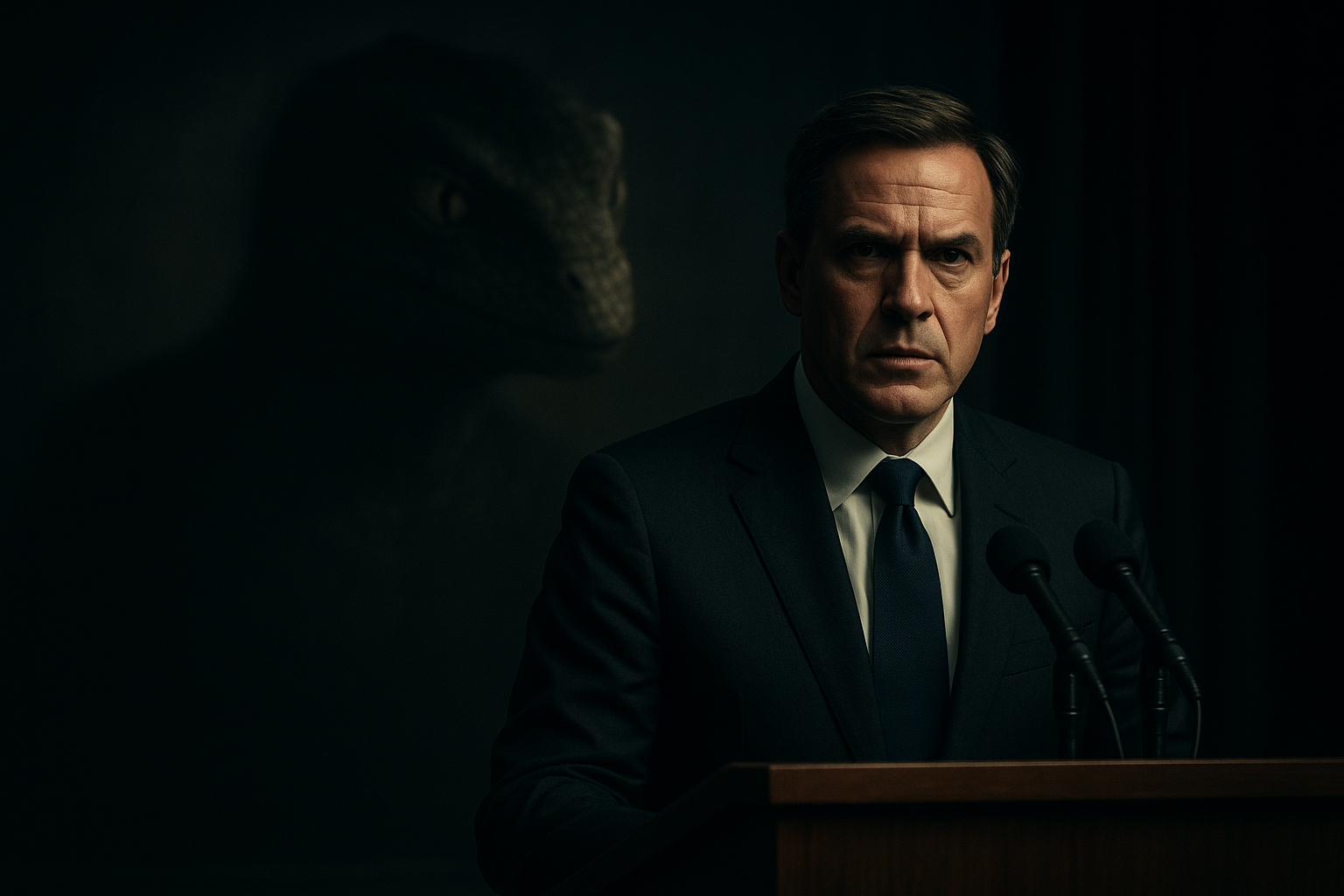
According to believers, certain politicians, celebrities, royals, billionaires, and world leaders are not fully human at all. They are said to be shape-shifting reptilian beings — or descendants of them — hiding behind human appearances while secretly guiding global events from the shadows.
Wars.
Economic crashes.
Mass media.
Political division.
Fear itself.
Inside the theory, all of it becomes part of a system of control.
At first glance, the idea sounds absurd.
But the unsettling part is not the claim itself.
It is how long the theory has survived… and how many people eventually started repeating it.
To understand why the reptilian theory spread so far, you have to begin with something older than the internet:
human distrust of power.
Throughout history, ordinary people have looked at rulers and wondered whether they were truly like everyone else.
Kings lived behind walls.
Priests claimed secret knowledge.
Political leaders spoke carefully in public while making decisions in private rooms ordinary people never entered.
The more distant power becomes, the less human it can begin to feel.
A ruler does not need to be a literal monster to appear unnatural.
Sometimes secrecy alone is enough.
That fear appears again and again throughout mythology. Ancient cultures told stories about serpent gods, dragon rulers, underworld creatures, and divine bloodlines connected to hidden knowledge or dangerous power. Those myths were not the modern reptilian conspiracy theory, but they created symbolic imagery that survived for centuries.
Snakes already represented:
– deception
– temptation
– hidden danger
– forbidden knowledge
– cold intelligence
Once those symbols exist, modern conspiracy culture can easily pull them into a new story.
How David Icke Changed Everything
For most of the twentieth century, reptilian-style ideas existed mostly at the edges of occult books, UFO communities, fringe radio programs, and speculative fiction.
Then, during the 1990s, one person transformed the idea into a worldwide conspiracy movement.
That person was David Icke.
Before becoming one of the world’s most recognizable conspiracy theorists, Icke worked as a sports broadcaster in Britain. His public life appeared completely ordinary.
Then everything changed.
Icke began speaking publicly about spiritual awakenings, hidden systems of control, and unseen forces shaping human civilization. At first, many people viewed him as eccentric or unstable. British television openly mocked him. Newspapers treated him like a punchline.
But ridicule often behaves strangely inside conspiracy culture.
To believers, public mockery can look less like disproof and more like evidence that someone touched a dangerous subject.
Over time, Icke expanded his worldview into something far larger.
According to his theory, powerful bloodlines throughout history were secretly connected to reptilian entities manipulating humanity behind the scenes. These beings supposedly preserved control by creating fear, confusion, conflict, and distraction on a global scale.
To critics, it sounded unbelievable.
But the theory spread anyway.
Why The Theory Refused to Die
The reptilian elite theory survived because it offered something psychologically powerful:
a single explanation for chaos.
Modern life often feels confusing and unstable. Governments contradict themselves. Corporations hide information. Financial systems collapse while billionaires grow richer. Public trust erodes while institutions continue demanding obedience.
For some people, randomness feels unbearable.
The reptilian theory replaces randomness with intention.
It says:
– somebody is in control
– somebody planned this
– somebody benefits from the confusion
That emotional structure is extremely powerful, even when the claims themselves collapse under scrutiny.
And once someone begins thinking that way, almost any strange moment can become “evidence.”
A politician pauses awkwardly during an interview.
A video compression glitch distorts someone’s eyes for half a second.
A celebrity smiles strangely.
A royal family member appears emotionally distant during a speech.
In ordinary life, those moments mean almost nothing.
Inside conspiracy communities, they become signs the disguise is failing.
This is how modern myths survive.
Not through proof.
But through ambiguity.
The Internet Made Everything Bigger
Before the internet, conspiracy theories spread slowly.
Online culture changed that permanently.
A strange video clip could now be:
– slowed down
– edited
– reposted
– surrounded with dramatic music
– attached to claims about “shape-shifting eyes” or “reptilian glitches”
Forums, video platforms, and conspiracy communities then expanded the theory further.
One person connected it to ancient mythology.
Another tied it to UFOs.
Another added secret societies.
Another introduced underground bases, hidden rituals, coded hand signs, and media manipulation.
Eventually, the reptilian theory stopped being one conspiracy.
It became an entire conspiracy universe capable of absorbing almost anything:
– political distrust
– anti-establishment anger
– alien theories
– celebrity culture
– surveillance fears
– economic collapse
– media manipulation
That flexibility helped the theory survive long after many fringe ideas disappeared.
The Dark Psychology Behind The Theory
The most important part of the reptilian theory is not the reptiles.
It is the emotional role they play.
The theory transforms powerful people into something literally nonhuman.
That matters because ordinary human evil is uncomfortable to confront. If human beings alone are capable of creating war, corruption, exploitation, and suffering on a massive scale, then the problem feels frighteningly close to home.
It means the systems people depend on may already contain the cruelty they fear.
The reptilian theory creates distance from that reality.
It turns corruption into cosmic horror.
Older generations told stories about demons hiding behind friendly faces. The reptilian theory updates that fear for the modern world. Instead of devils in villages, the monsters now wear expensive suits, appear on television, and stand behind podiums.
The setting changed.
The fear stayed the same.
Reality Check
Despite decades of claims, no credible evidence has ever shown that world leaders or celebrities are secretly reptilian beings.
Investigations into the theory consistently lead back to:
– symbolic interpretations
– internet rumors
– edited videos
– speculative claims
– recycled conspiracy material
– communities reinforcing one another’s beliefs
What keeps the theory alive is not proof.
It is atmosphere.
The reptilian theory offers an emotionally satisfying answer during times when real explanations often feel incomplete, dishonest, or frustrating.
That emotional appeal can survive even after factual claims collapse.
Because conspiracy theories rarely survive on evidence alone.
They survive on feeling.
Timeline of The Reptilian Elite Theory
Ancient History
Cultures around the world tell myths involving serpent gods, dragon rulers, and hidden nonhuman beings connected to power.
20th Century
Fringe occult writers and UFO communities begin combining ancient mythology with modern conspiracy theories.
1990s
David Icke popularizes the modern reptilian elite theory through books, lectures, and interviews.
Early Internet Era
Online forums and conspiracy websites rapidly spread reptilian theories worldwide.
YouTube & Viral Media Era
Edited videos and “shape-shifting” clips fuel mainstream internet fascination with the theory.
Present Day
The reptilian theory survives online as part of broader conspiracy culture involving distrust of institutions, elites, and hidden systems of power.
🔎 Related Investigation:
If this case pulled you deeper into the mystery, continue into:
Even people who laugh at the reptilian theory often understand the emotion underneath it.
They understand:
– distrust of political systems
– frustration with corruption
– fear of manipulation
– the feeling that powerful institutions rarely face consequences
The theory did not create those fears.
It simply transformed them into something visual and unforgettable.
That may be why the reptilian elite theory continues surviving in a world full of cameras, records, experts, and debunkers.
Because facts can destroy a claim.
But facts do not always destroy a feeling.
And the feeling underneath this theory is one humanity has carried for centuries:
the fear that the people controlling society are not merely different from everyone else…
but something else entirely.
Frequently Asked Questions
What is the reptilian elite conspiracy theory?
The reptilian elite theory claims that powerful world leaders, celebrities, and financial elites are secretly shape-shifting reptilian beings controlling human society.
Who created the reptilian conspiracy theory?
British conspiracy writer David Icke popularized the modern reptilian elite theory during the 1990s through books and public lectures.
Is there evidence supporting the reptilian theory?
No credible evidence has ever supported claims that world leaders or celebrities are secretly reptilian beings.
Why do some people believe the reptilian theory?
The theory appeals to people who distrust powerful institutions and want explanations for corruption, inequality, political manipulation, and global instability.
Did ancient cultures believe in reptilian beings?
Many ancient cultures told stories involving serpent gods, dragon-like creatures, and nonhuman rulers, though these myths were very different from the modern conspiracy theory.
🔎 If this story stayed with you, the author suggests these real cases next: