Gabby Petito Case – The Final Days, the Travel Timeline, and the Warning Signs People Now Read Differently
10 min readMarch 22, 2026
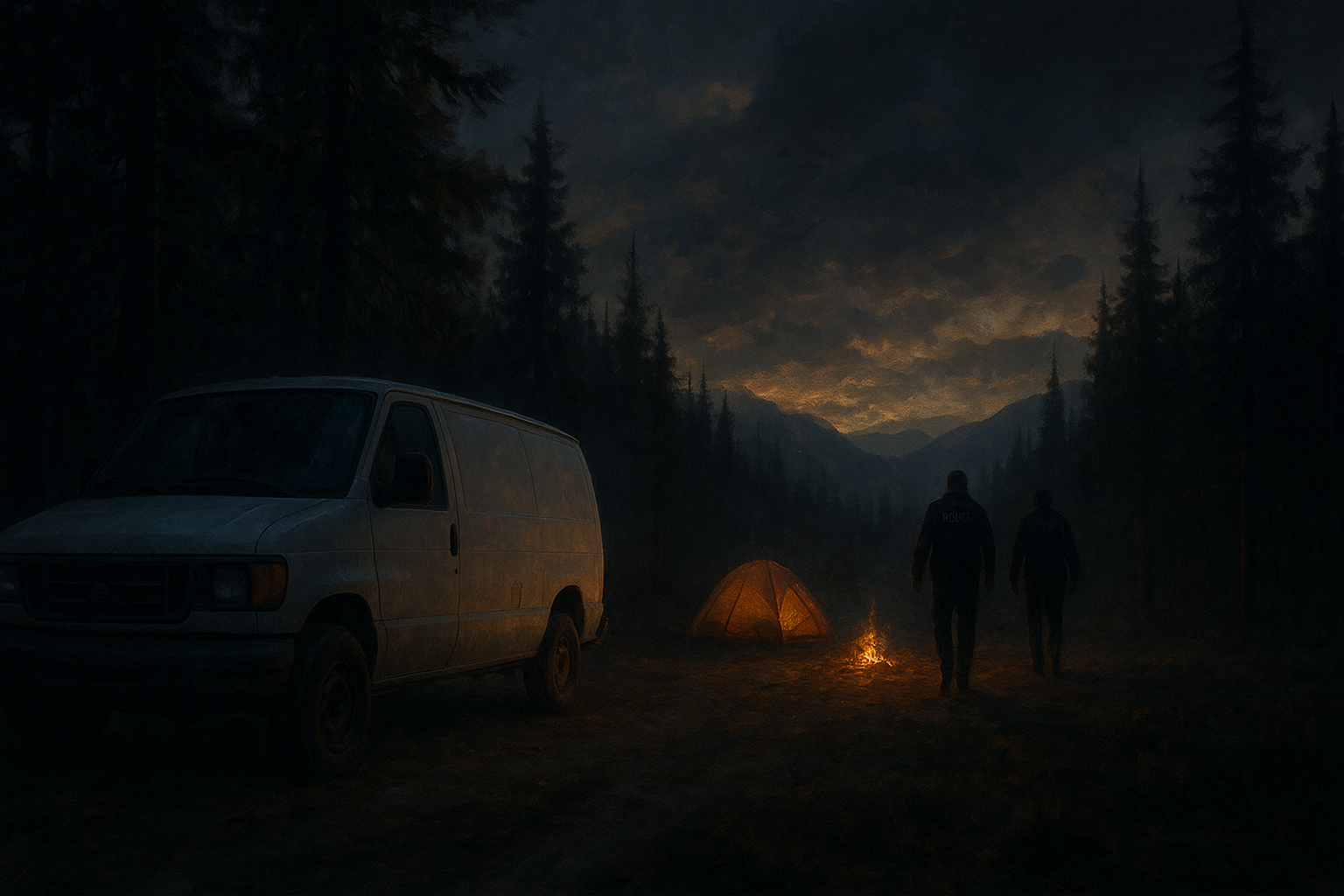
Before the country knew her name, before hashtags and body-cam clips and endless side-by-side timeline videos, there was just a white van parked in a place that felt too quiet.
By the time that van footage mattered, the feeling around the Gabby Petito case had already changed. What had looked online like a bright, restless road trip had started to feel wrong in a way people could not quite explain at first. A crying traffic stop. Text messages that did not sound like her. A young woman who seemed to be traveling across the American West in public, and yet somehow slipping out of reach in plain sight.
The Gabby Petito case became one of the most talked-about true crime stories in America because it unfolded in almost real time. It was not just a disappearance. It was the story of Gabby Petito’s final days, the van trip she took with Brian Laundrie, the evidence trail left across several states, and the warning signs millions of people would later study with a kind of helpless hindsight. For readers who fall into long-form case files, this sits naturally inside The True Crime Archive, because it is as much about what was visible as what was missed.
That contrast is what makes the story so hard to shake. Gabby and Laundrie were not hidden from the world. They were posting. Driving. Meeting police. Crossing national parks. Being seen by witnesses. Their trip had a map, a van, a trail of digital traces, and a public-facing version of happiness that now feels almost unbearable to revisit. The deeper you go into the timeline, the more it feels like watching a door close one inch at a time.
In July 2021, Gabby Petito and Brian Laundrie left New York in a converted Ford Transit van. The plan was simple enough to sound romantic: travel west, document the trip, build content around the van-life dream, and keep moving through places most people only see in postcards. To strangers online, the early images looked familiar—sunlight on rock faces, scenic pullouts, happy captions, small moments edited into something clean and enviable.
But long road trips can turn pressure into atmosphere. There is nowhere to cool off in a tiny van. There is no easy privacy, no real emotional escape hatch, and no comfortable distance when the mood in that space starts changing. Every stop becomes loaded. Every argument follows you to the next state. Every silence rides with you.
On August 12 in Moab, Utah, police responded to a report involving the couple. The body-camera footage from that stop would later become one of the most replayed pieces of the entire case. Gabby was visibly upset. She cried, apologized, and tried to explain what had happened. Brian appeared calmer. Officers separated them for the night and treated the situation as a mental-health-related incident rather than making an arrest. At the time, it looked like one bad stop on a stressful trip. Later, it came to feel like one of the last public moments when intervention still seemed possible.
And that is where the case starts to tighten. Once the Moab stop entered the public record, the story was no longer just about where Gabby went. It was about the terrible gap between a moment people could see and a danger they did not fully understand. That same tension runs through other cases built around relationships, public perception, and what happens behind closed emotional doors, including Travis Alexander’s murder, where outside appearances also hid a much darker reality.
Timeline of Gabby Petito’s Final Days
July 2021: Gabby Petito and Brian Laundrie begin their cross-country van trip from New York.
August 12, 2021: Police in Moab, Utah, respond to a domestic incident involving the couple. Body-cam footage captures Gabby distressed and crying.
Late August 2021: Family communication patterns begin to feel irregular. Some messages later strike relatives as unusual.
August 27, 2021: Witness activity and the now-famous van footage place the white van in the Spread Creek dispersed camping area near Grand Teton.
September 1, 2021: Brian Laundrie returns alone to his parents’ home in Florida, driving Gabby’s van.
September 11, 2021: Gabby Petito is officially reported missing.
September 19, 2021: Human remains are found in the Bridger-Teton National Forest area.
September 21, 2021: Authorities confirm the remains are Gabby Petito’s.
October 2021: Brian Laundrie’s remains are eventually found in Florida after a separate search.
2022: The FBI says Laundrie claimed responsibility for Gabby’s death in writings linked to the investigation.
Written like that, the sequence looks clean. But living inside it would have felt nothing like clean. It would have felt chaotic and confusing—especially for Gabby’s family, who were trying to judge whether changing communication meant poor reception, travel stress, ordinary delay, or something much worse. The awful reality of cases like this is that danger rarely announces itself in one dramatic, undeniable flash. More often, it gathers as discomfort.
After Moab, the trip continued north. Gabby remained in the orbit of parks, campgrounds, and roads that looked almost too open to hide anything. Yet openness can be deceptive. Wilderness travel creates distance not just from home, but from familiar witnesses, routines, and people who know how to read when something is off. If there is a recurring dread in this story, it is that the landscape was enormous while Gabby’s options may have been narrowing.
Then came the details that would later lock the timeline into place. Witnesses described tense interactions. Public footage became evidence. A family filming their own trip happened to capture the white van near Spread Creek on August 27. That clip would become one of the defining artifacts of the case: ordinary vacation footage transformed into an investigative landmark because the country was suddenly searching for a missing woman and trying to rewind time.
What Doesn’t Add Up
The public-facing trip versus the private strain: Online content suggested freedom and adventure, but the Moab stop showed a level of distress that made later viewers question how much pain had already been building.
The communication shift: Family members later said some messages did not feel like Gabby’s normal voice, adding to the unease around her final timeline.
The return to Florida without Gabby: Brian Laundrie’s arrival home alone in the van was one of the starkest and most disturbing turns in the case.
The gap between visibility and intervention: Witnesses, police contact, and digital traces existed, yet none of that prevented the outcome.
Those are the points people return to because they sit at the heart of the case. Not just what happened, but why warning signs can remain scattered and unresolved until a story crosses the line from troubling to catastrophic. In that sense, the Petito case did not merely become famous because it involved social media. It became culturally consuming because so many people recognized, too late, how modern evidence can still fail to stop old patterns of harm.
The Evidence Room: Digital Traces, Witnesses, and the Van Route
If the emotional center of the story is hindsight, the investigative center is accumulation. The Gabby Petito case was built from fragments that became powerful when placed beside one another: body-cam footage, witness accounts, travel movements, text patterns, the van’s route, and the Spread Creek video that narrowed the focus of the search.
None of those pieces alone told the full story. Together, they turned the case into something unusually visible. Investigators did not have one perfect clue that solved everything at once. They had a trail of moments—some official, some accidental, some digital, some deeply human. A family road-trip video suddenly mattered. A police encounter that had once seemed temporary became a national object of scrutiny. The route of a van across Utah and Wyoming stopped being travel content and became a reconstruction path.
That is part of what kept the public so locked in. People were not just waiting for a single answer. They were watching separate pieces click into place and realizing each one carried a different kind of weight. Witnesses could place movement. Video could place the van. Messages could raise doubts. Search teams could narrow physical ground. It became a case where the story did not move in one straight line. It tightened by pressure.
And then, once Gabby’s remains were found near the area where the van had been seen, the entire emotional temperature of the case changed. This was no longer a missing-person search suspended between fear and hope. It was a homicide investigation. The public did not simply want news anymore. They wanted the timeline to explain itself. They wanted the visible pieces to arrange themselves into something that made moral sense. But cases like this rarely offer that kind of relief.
Brian Laundrie’s disappearance only intensified that feeling. Suddenly there were two parallel voids: what happened to Gabby, and where Brian had gone. Search helicopters, swamp footage, endless updates, online speculation, and the growing sense that this story had split into overlapping manhunts gave it a scale unusual even for major true crime cases. It entered the same broad conversation as other stories that stay in circulation because public attention keeps returning to them in waves, including true crime cases back in the spotlight when new evidence, legal turns, or cultural re-examination reopen old wounds.
Why This Case Still Gets Attention
The simplest answer is that the case feels modern in every direction. It involved influencer-era storytelling, national park travel, domestic violence warning signs, digital evidence, public footage, and an online audience that helped spread awareness while also magnifying rumor. It was a tragedy that seemed to unfold on both the road and the internet at the same time.
But there is a deeper reason it still lingers. The Gabby Petito case forced people to confront how often harm can coexist with a polished public image. A relationship can look adventurous from the outside and still be unstable. A person can be visible in photos and increasingly unreachable in reality. A young woman can be surrounded by scenery, traffic stops, campsites, and passing witnesses, and still not get home.
That is why the image of the van matters so much. It is not just a vehicle. It became the symbol of the split at the center of the story: freedom on the outside, dread underneath. Once people understood what that split might have concealed, the case stopped feeling like a headline and started feeling like a warning.
For Gabby’s family, though, none of the national fascination can ever be the real center. The center is still a daughter who should have survived the trip, come home, and had the rest of her life in front of her. The case matters because it ended in loss, because it exposed warning signs people now wish had been recognized differently, and because the aftermath pushed larger conversations about domestic violence, media attention, and missing-person advocacy into the open.
🔎 If this story stayed with you, the author suggests these real cases next:
Gabby Petito disappeared during a 2021 cross-country van trip with Brian Laundrie. After a highly public search centered on Wyoming, her remains were found near the Spread Creek area, and the case became a homicide investigation.
Is the Gabby Petito case still unsolved?
The investigation was formally closed after authorities said Brian Laundrie claimed responsibility in writings tied to the case. Even so, many people still revisit the timeline because the public warning signs and missed chances for intervention remain deeply unsettling.
What was the route of Gabby Petito’s van trip?
The trip began in New York and moved west through states including Kansas, Colorado, Utah, and Wyoming. Key moments in the final stretch of the case are tied to Moab, Jackson, Grand Teton, and the Spread Creek dispersed camping area.
What made the Gabby Petito case so widely followed?
The case exploded because it combined social media visibility, body-cam footage, witness accounts, van-life travel, and a real-time missing-person search. People felt like they were watching pieces of a tragedy surface one by one.
Why does the case still get attention now?
It still resonates because it sits at the intersection of domestic violence awareness, digital evidence, and public hindsight. The story continues to feel close because so much of it happened in ordinary, visible places rather than in hidden darkness.
Watch This Story on YouTube
Prefer to watch? See the full story on our YouTube channel.