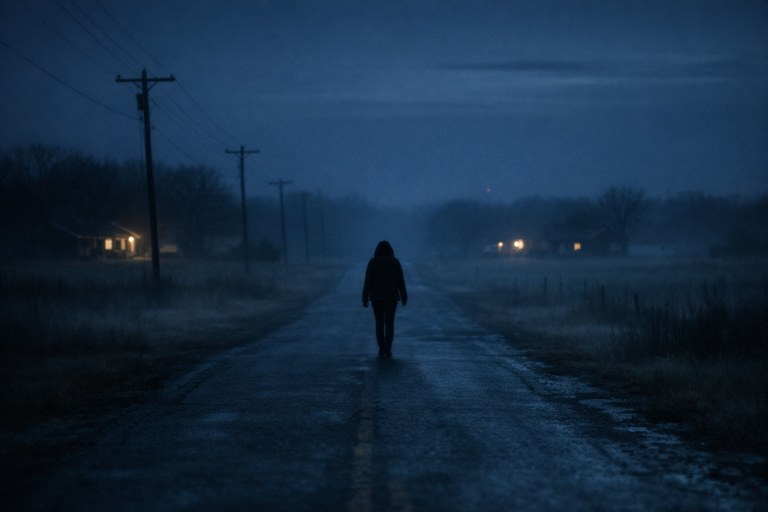
By the second night, the mountain had stopped feeling like a place and started feeling like a verdict. Caleb Mercer lay inside a thin tent somewhere in Montana’s Bitterroot range, listening to cold air move through the trees and waiting for one familiar sound that never came: another human voice. No footsteps. No distant truck. No trail chatter. Just the kind of silence that makes a person hear every bad thought more clearly than ever before.
The Sound of Nothing tells the survival story of Caleb Mercer, an experienced hiker who vanished into the Bitterroot Mountains after one small navigation mistake turned a simple overnight trip into five days alone. What makes the story linger is not just the hunger, cold, or rescue effort, but the psychological weight of isolation and the moment-by-moment decisions that kept him alive.
Stories like this sit at the heart of the wilderness survival archive, because they show how quickly the outdoors can punish confidence once the trail disappears and the landscape stops offering obvious answers.
The Morning Everything Still Felt Normal
It started on a bright Saturday in early September. Caleb parked his dusty pickup at the edge of the Bitterroot Mountains in western Montana, shouldered a light pack, and stepped into a morning that felt more refreshing than dangerous. The air had that clean mountain chill that sharpens the lungs. Pine trunks rose in dark columns. Somewhere far above, a hawk cried once and then the forest closed around him.
Nothing about the plan sounded dramatic. Caleb was thirty-two, in good shape, and not new to backcountry hiking. He carried a lightweight tent, a metal water bottle, a knife, a paper map, trail mix, two protein bars, and a compact first-aid kit. He expected to hike about twelve miles, camp near a ridge, and come back the next afternoon. Before leaving, he texted his sister: On the trail. Back tomorrow afternoon. She answered with a thumbs up.
When a Small Mistake Stops Being Small
By early afternoon, Caleb had climbed higher than expected. His map showed a fork near a rock outcropping shaped like a broken tooth. When he reached a formation that seemed close enough, he saw two options: one path looked worn, the other faint. He chose the more obvious route.
That was the mistake.
At first, it did not feel like a crisis. But wilderness mistakes rarely announce themselves. A harmless choice becomes extra time, then doubt, then the point a rescue team circles later on a map.
By the time Caleb sensed the trail no longer matched what he expected, the sun had already started sinking. He stopped, studied the map, looked up, and waited for the ridgeline he should have seen. It never appeared. He tried turning around and retracing his steps, but the forest had already pulled its oldest trick: it looked different in reverse. Trees that had seemed distinct blended together. Rocks lost their shape. Direction became a feeling instead of a fact.
He spent nearly an hour searching for the original trail before panic started leaking in around the edges.
Timeline of Events
- Day 1, morning: Caleb enters the Bitterroot Mountains for a planned overnight hike.
- Day 1, afternoon: He reaches a trail fork near a rock formation, chooses the wrong path, and keeps climbing.
- Day 1, evening: He realizes the map and terrain no longer match, fails to relocate the main trail, and camps in a clearing.
- Day 2: He begins moving downhill toward water, filters from a small stream, and starts rationing food more aggressively.
- Day 2, night: Temperature drops sharply; fear and isolation begin to take a heavier psychological toll.
- Day 3: Search efforts intensify while Caleb follows water, conserves energy, and fights worsening hunger.
- Day 3, night: Rain gives him a safer water source and a small morale boost.
- Day 4: He narrows his focus to survival basics, hears a helicopter, flashes a reflective emergency blanket, and is finally seen.
- Day 5: Rescuers reach him. He is weak, dehydrated, and badly worn down, but alive.
The First Night Alone
As daylight thinned, Caleb stopped trying to force a way out and switched to the only decision left that made sense: survive the night first. He set his tent in a small clearing, took inventory, and told himself this would be easier in the morning. He still had water in his bottle. He still had a filter. He still had enough food to stretch if he stayed calm.
He ate half a protein bar and a handful of trail mix, not because he was hungry enough to need it all, but because he understood that tomorrow might be worse.
Then night settled in.
People imagine wilderness silence as peaceful, but that is not what Caleb heard. Beneath the snaps in the brush and the scrape of branches was something heavier: no reassurance, no human noise, no sign that help was close.
Caleb barely slept.
Departure, Disorientation, and the First Smart Move
Morning brought frost on the grass and cold breath in front of his face. The confidence from the day before was gone. In its place was urgency. Caleb packed quickly and began moving downhill under a simple survival assumption: water gets bigger, bigger water finds valleys, valleys eventually lead to roads, cabins, trails, or people.
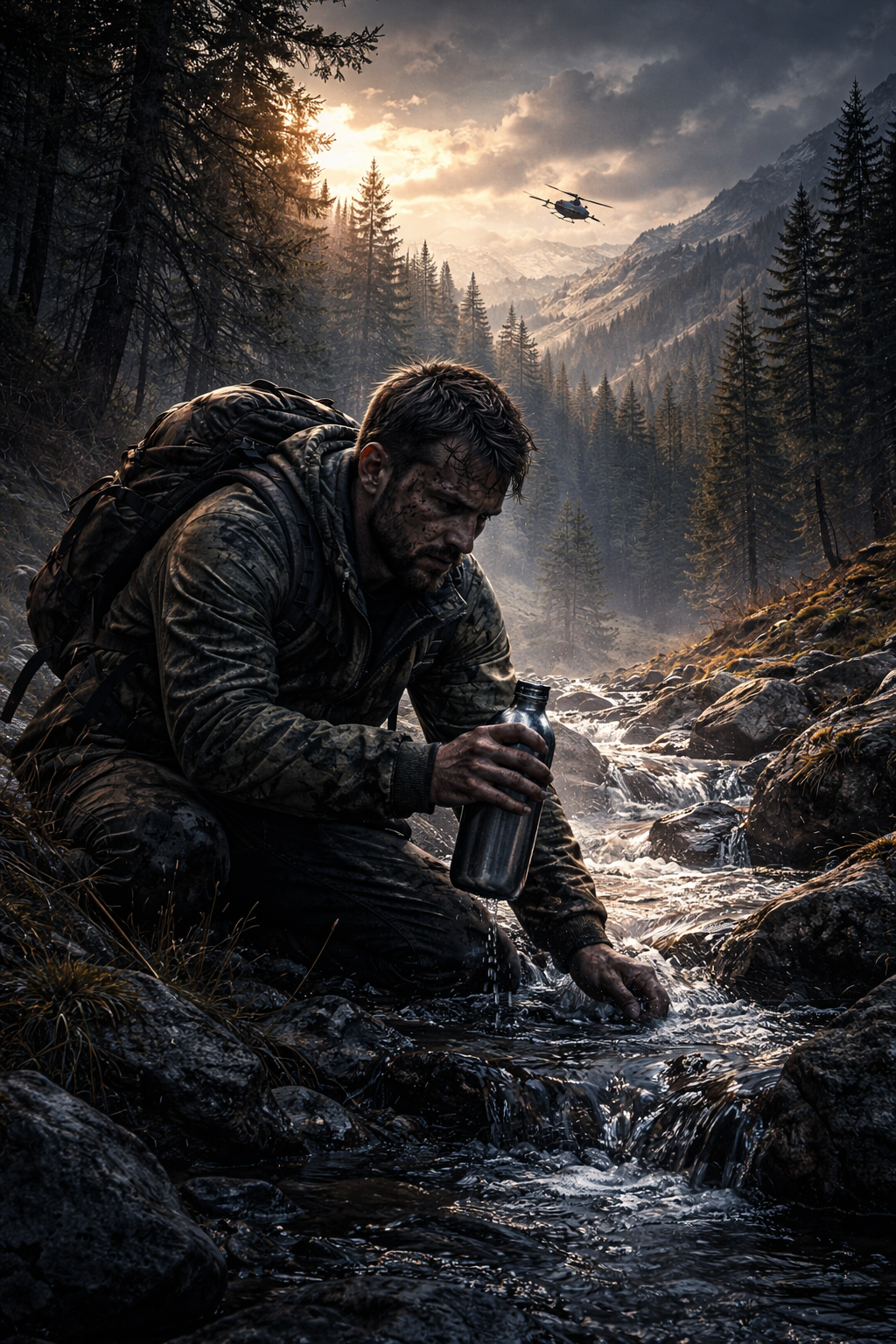
Two hours later he found a trickle running over smooth stone. He dropped to his knees and filtered from it. The water tasted metallic but clean. It was the first truly good decision he had made since leaving the main trail. In mountain survival stories, water matters more than food.
By mid-afternoon, hunger had become a constant pressure instead of a background problem. He rationed the rest of his trail mix. He saved the final protein bar. He kept moving, but the landscape refused to reward him. No ridge he recognized. No campsite. No boot prints. No sign that the forest was thinning into something navigable. Just more trees. More slope. More uncertainty.
And underneath all of it, the sound the title remembers best: nothing.
What Doesn’t Add Up Until You’ve Been There
- Experience did not protect him from one wrong choice. Caleb was not reckless or unprepared, yet the mountains still punished a minor navigation error.
- The map did not fail him as much as time did. Once daylight dropped and landmarks blurred, even correct information became harder to use.
- Fear became dangerous before the terrain did. His real battle was not only with exposure and hunger, but with the risk of making panicked, energy-burning decisions.
- Silence became a survival factor. Isolation affected his judgment, sleep, and emotional stability just as much as cold affected his body.
- Rescue nearly missed him anyway. Even active search efforts can pass over someone hidden under dense forest canopy.
The Hours When the Mountain Got Inside His Head
The second night was colder. Caleb zipped himself deeper into his sleeping bag and tried to control the shaking in his legs. Some of it was temperature. Some of it was fear.
Back home, his sister realized the schedule was broken. When he failed to answer the next afternoon, concern turned into calls. By evening, the ranger station knew his name and search crews were scanning known trails and ridgelines.
On the third day, hunger turned physical. His stomach cramped. His legs weakened. He chewed pine needles just to put something in his mouth, but he knew better than to gamble on unknown plants. Guessing wrong in the wilderness can turn a bad situation into a fatal one. So he stayed disciplined. Water first. Movement second. Emotion third.
That may have saved him.
Key Evidence and Clues in His Survival
- He stopped and camped instead of wandering blindly all night. That protected energy and reduced the chance of injury in darkness.
- He moved downhill toward water. It was not a guaranteed escape route, but it gave him hydration and a practical direction.
- He rationed food without obsessing over it. The greater threat was dehydration and bad judgment, not immediate starvation.
- He used rain as a resource. Collecting water from his rain cover turned miserable weather into an advantage.
- He carried reflective emergency gear. The flash from his blanket gave rescuers the one visual cue the canopy almost denied them.
The Rain, the Narrow Focus, and the Rescue Turn
That evening, clouds rolled in and rain began after sunset. Cold rain was dangerous, but it also meant water. Caleb stretched his rain cover between two trees, angled it carefully, and let the runoff collect into his bottle. For the first time in days, the mountain gave him something back.
By the fourth day, his thinking had changed. He stopped imagining the full distance to safety and reduced the problem to basics: find water, keep moving downhill, rest when needed, stay warm.
Late that afternoon, pushing through dense brush, Caleb heard something that did not belong to the forest: a faint mechanical hum. He froze, listened, and then stumbled forward until he saw it through the breaks in the canopy-a helicopter moving above the treetops.
He tried to shout, but his voice broke into almost nothing. So he used what he had left. He pulled the reflective emergency blanket from his pack, angled it toward the sun, and waved with every last ounce of strength. The helicopter kept moving. For one sickening moment it looked like the chance had passed. Then it slowed. Tilted. Circled.
Rescuers later said they almost missed him. Without that flash of reflected light, the trees would have hidden him completely. When they finally reached him, he could barely stand. His lips were cracked. His hands trembled. He had dropped nearly fifteen pounds in five days.
But he had made it to the part of the story where people could touch him, warm him, and carry him out.
Why This Story Still Stays With People
In the hospital, Caleb said the hardest part was not the hunger or even the cold. It was the silence. That answer is why the story lingers. Survival is never only physical. Caleb did by shrinking the problem to basics-water, shelter, movement, hope-and refusing to hand his next decision to fear.
FAQ
What happened in The Sound of Nothing?
Caleb Mercer entered Montana’s Bitterroot Mountains for a planned overnight hike, took a wrong trail, and became lost for five days. He survived by conserving energy, following water downhill, collecting rainwater, and signaling a helicopter with a reflective emergency blanket.
Why is The Sound of Nothing such an effective survival story?
Because it focuses on both the physical and psychological side of being lost. The hunger and cold matter, but the story’s real pressure comes from isolation, silence, and the need to keep making rational decisions while fear keeps pushing in.
How did Caleb Mercer stay alive in the Bitterroot Mountains?
He avoided reckless moves, sheltered at night, filtered water from streams, used rain to refill his bottle, rationed food, and kept his attention on immediate tasks instead of panicking about the full scale of the situation.
How was Caleb finally rescued?
A search helicopter was scanning the area when Caleb used a reflective emergency blanket to flash sunlight through the forest canopy. That brief signal was enough to make the aircraft circle back and confirm his location.
Why does this story still get attention?
Because it captures a fear many people understand instantly: one normal day outdoors turning quietly, almost invisibly, into a survival situation. It also leaves readers with the unsettling truth that experience helps, but it does not erase the consequences of one small mistake.
🔎 If this story stayed with you, the author suggests these real cases next:
- Wilderness ordeals where isolation became the real enemy
- A runner facing the Sahara after the desert tried to erase him
- The diver who went underground and never came back out the same way
- The wider survival archive of wilderness, ocean, and disaster stories
Explore more Survival Stories here: