Yossi Ghinsberg Survival Story — Lost in the Amazon for 3 Weeks and the Moment the Jungle Turned Against Him
8 min readJuly 29, 2025
The jungle did not swallow Yossi Ghinsberg all at once. It started with a broken raft, a river that kept moving as if nothing had happened, and one sickening moment on a muddy bank when he understood nobody was beside him anymore. In the Amazon, that realization was not loneliness. It was a countdown.
Listen to “Lost in the Green Hell” on Spreaker.
The Yossi Ghinsberg survival story still gets searched because it was more than a young traveler lost in the Amazon for three weeks. It was a real jungle survival ordeal shaped by bad judgment, physical collapse, hallucinations, and a rescue that arrived almost too late.
That same pull is why readers who get hooked here often keep going into real survival stories that sound impossible. Ghinsberg’s case has that exact energy: it begins like adventure and turns, very fast, into a slow-motion disappearance.
In 1981, Yossi Ghinsberg was 22, recently out of the Israeli military, and wandering South America with the restless confidence that makes danger sound like a better story than caution. In La Paz, Bolivia, he met two other backpackers: Kevin Gale, an American photographer, and Marcus Stamm, a Swiss schoolteacher. Then came Karl Ruprechter, an Austrian who claimed he knew the jungle and could lead them to places outsiders rarely saw.
Karl promised hidden villages, untouched forest, and the kind of route that turns ordinary travel into legend. It was exactly the sort of pitch young travelers want to believe. The four men headed toward the Bolivian Amazon, and for a little while the trip still looked like a rough but survivable expedition.
Then the rainforest began stripping away the fantasy. The heat was constant. The humidity made everything feel rotten. Food was harder to find than Karl had implied. Marcus’s feet began breaking down from the wet conditions. And the deeper they went, the more Karl looked less like an expert and more like a man improvising confidence in a place that punished uncertainty.
That is how wilderness disasters often begin. Not with one dramatic event, but with a chain of smaller misreadings. The route is a little worse than expected. The guide is a little less reliable. The group gets a little more tired, a little more divided, and a little more willing to choose a bad shortcut because the slower option feels unbearable.
The Decision That Changed Everything
As tension inside the group grew, Karl proposed a new plan: build a raft and travel down the Tuichi River. On paper it sounded like relief. No more grinding through mud and thick vegetation. No more dragging an injured member across hostile terrain. Let the current do the work.
But rivers in remote jungle country are dangerous in ways that flatter false confidence. They can feel efficient right up until they become violent. The group built the raft anyway, and at first the change probably felt like rescue. Then the rapids hit.
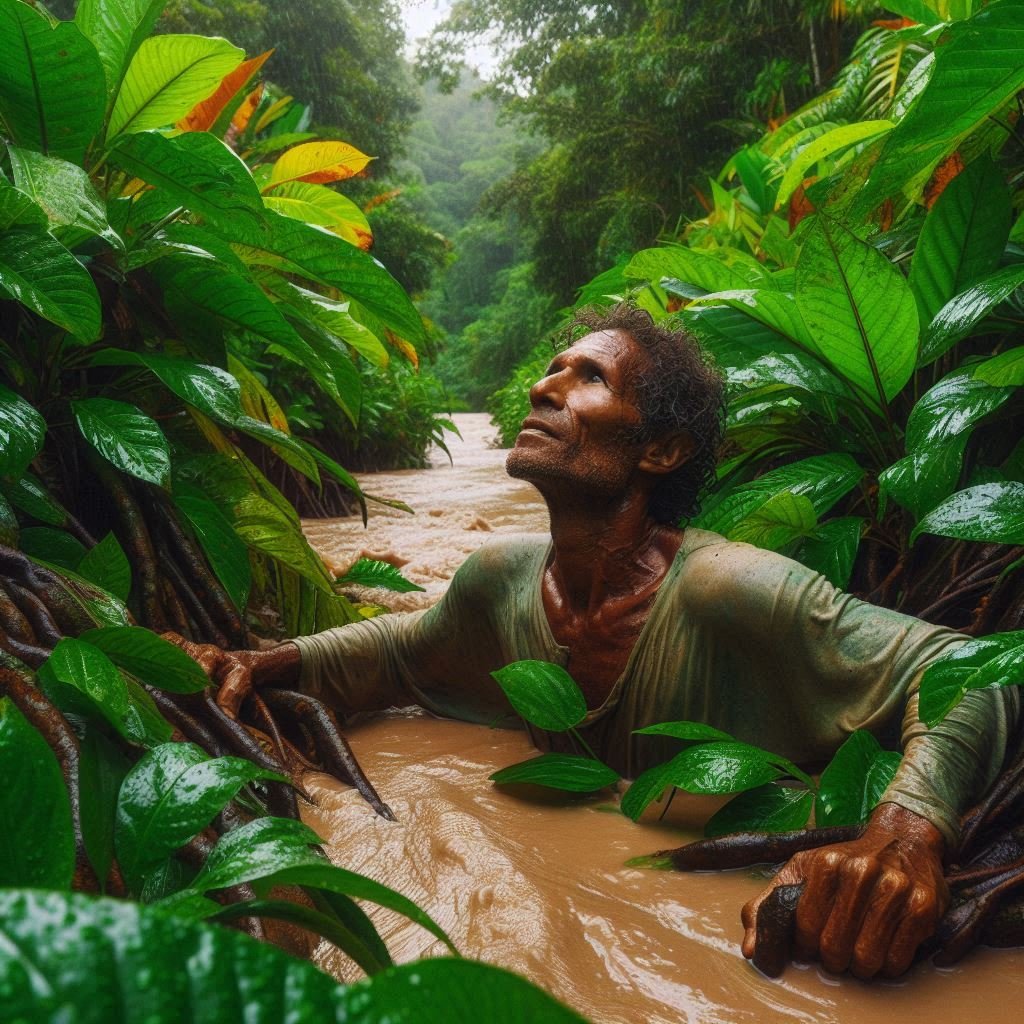
The raft broke apart in the river. Wood, gear, and bodies went in different directions. In seconds the expedition stopped being a bad adventure and became a survival emergency. When Yossi reached shore, bruised and exhausted, Kevin was gone. So were Marcus and Karl. The only thing left was jungle.
That was the moment the story truly began. Not when he entered the Amazon, but when he understood he was now alone inside it.
Timeline of the Ordeal
La Paz: Yossi Ghinsberg meets Kevin Gale, Marcus Stamm, and Karl Ruprechter.
Into the Bolivian jungle: The group follows Karl into remote rainforest territory.
Conditions worsen: Food becomes a problem, Marcus’s feet deteriorate, and trust in Karl collapses.
The raft plan: The group builds a raft and attempts to ride the Tuichi River.
Rapids and separation: The raft is destroyed, splitting the men apart.
Nineteen days lost: Yossi survives alone through hunger, infection, fear, and isolation.
Rescue: Kevin returns with local help and finds Yossi before the jungle finishes the job.
Alone in the Green Hell
People summarize this case by saying Yossi was lost for 19 days, but that makes it sound like a number instead of an experience. The Amazon did not just leave him disoriented. It attacked him from every side at once.
The ground could turn to mud or flood without warning. Rain soaked him so thoroughly that rest stopped feeling restorative. Insects bit through whatever protection he had left. His feet deteriorated. Infection spread. Hunger became constant. And the noise of the rainforest, which sounds alive from a distance, became something far less comforting when he had no idea whether anyone would ever find him.
That is what makes jungle survival different from the cleaner versions people imagine. There is no stable shelter, no clean line between day and safety, no reliable way to recover strength. Every hour strips something away. Energy. judgment. morale. skin. sleep. Hope.
Ghinsberg scavenged what he could. He followed water. He kept moving when stopping would have felt easier. He fought through infected feet and periods of near collapse because he seemed to understand a brutal truth: in a place like that, surrender often looks quiet long before it looks final.
How He Stayed Alive
He kept adapting: When one plan failed, he changed course instead of freezing in panic.
He used the environment even while fearing it: Rivers were dangerous, but they also offered direction and the possibility of human contact.
He scavenged calories wherever he could: Not enough to be comfortable, just enough to avoid hitting zero.
He kept moving through pain: Infection and exhaustion were making every step more dangerous, but staying still too long could have been worse.
He stayed emotionally attached to life: Thoughts of family helped pull him back when despair started to feel easier than effort.
What nearly killed him was not one cinematic enemy. It was accumulation. Starvation. Infection. exposure. isolation. floodwater. Sleep deprivation. The Amazon works like that. It keeps collecting small losses until a person is too reduced to resist the next one.
When the Mind Starts to Break
One of the most unsettling parts of the Yossi Ghinsberg survival story is that the jungle did not only attack his body. It started working on his mind. Alone for days, starving, soaked, and unsure whether he was moving toward rescue or deeper into danger, he began experiencing hallucinations. He imagined voices. He imagined rescue. He even described the sense that a woman was with him in the jungle.
That detail matters because it shows what prolonged isolation does. The brain begins manufacturing companionship when reality becomes too empty and too threatening. Survival at that point is not just about finding food or staying dry. It is about keeping hold of reality long enough to continue making decisions.
Ghinsberg later described moments of deep despair, including points where giving up felt close. What seems to have dragged him back was not grand heroism. It was something more human and more convincing: the idea of his family never knowing what happened if he stopped fighting.
The Rescue
By the time rescue came, the margin was thin. Ghinsberg was weak, skeletal, infected, and mentally frayed. If the search had moved a little differently, his story might have ended as one more unsolved disappearance swallowed by wilderness.
Instead, Kevin Gale had survived the separation too. After reaching safety, he did not accept the worst and walk away. He returned with local help, including Tico Tudela, and searched for Yossi in the same environment that had already nearly erased them all.
When Yossi heard an engine, he reportedly thought at first it might be another hallucination. That says everything about how far gone he was. But the boat was real. Kevin was real. And after 19 days of being reduced almost to instinct, Yossi Ghinsberg was pulled back into the world of other people.
Why This Story Still Gets Attention
It starts with a believable mistake: trusting charisma and adventure over caution.
It has a brutal physical core: hunger, infection, exposure, and exhaustion all matter.
It carries unresolved loss: Marcus Stamm and Karl Ruprechter were never recovered.
It feels cinematic without needing embellishment: the real story already moves like a survival film.
It also belongs naturally beside other endurance stories where nature becomes the antagonist, whether the setting is open ocean, high mountain, or jungle. Readers who want that same feeling of impossible survival often drift next toward cases like the USS Indianapolis survival story, where the environment itself becomes the thing trying to finish the survivors.
But Ghinsberg’s case has its own distinct chill because the Amazon did not feel dramatic in a distant, spectacular way. It felt intimate. Wet. close. endless. It reduced the fight to one man, one damaged body, and one decision repeated again and again: keep moving.
FAQ
How long was Yossi Ghinsberg lost in the Amazon?
Yossi Ghinsberg survived alone in the Bolivian Amazon for 19 days after his group was split apart on the river.
What nearly killed Yossi Ghinsberg?
Hunger, infected feet, exhaustion, exposure, floodwater, and the psychological strain of isolation all pushed him close to death.
How was Yossi Ghinsberg found?
Kevin Gale survived separately, reached safety, and returned with local help to search for him. That search found Yossi before his condition became fatal.
Is the Yossi Ghinsberg survival story true?
Yes. It is based on Ghinsberg’s real 1981 ordeal in the Bolivian Amazon, later described in his memoir Lost in the Jungle.