Aron Ralston — Rebuild It Around the Trap, the Countdown, and the Decision Nobody Wants to Imagine
9 min readJuly 29, 2025
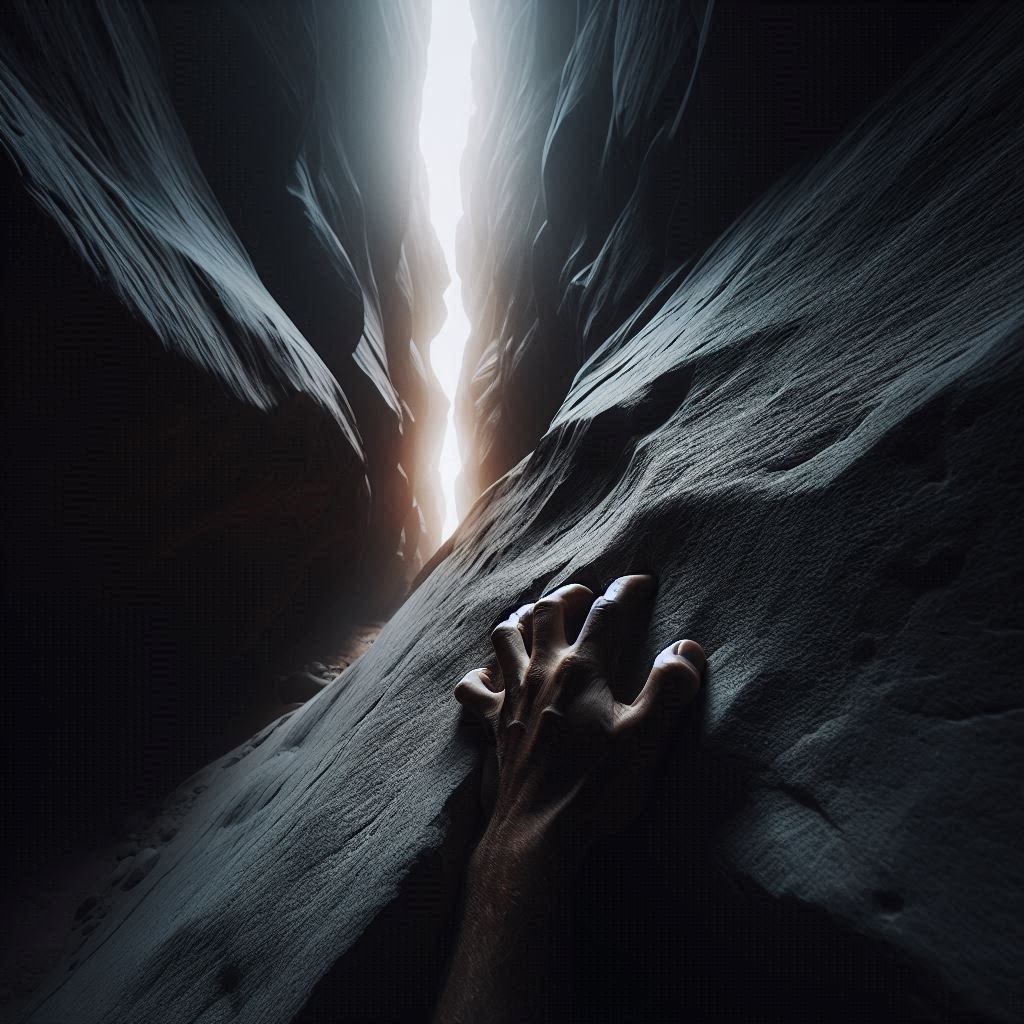
The canyon gave no warning. One second Aron Ralston was lowering himself through a narrow crack in Bluejohn Canyon, doing what he had done so many times before, and the next a boulder the size of a refrigerator lurched loose and slammed his right arm against the sandstone wall. The sound was part grinding rock, part breaking bone. Then everything went still. No crowd. No trail. No phone signal. Just a 27-year-old climber standing alone in a slot of red stone, staring at an arm that was no longer really his.
Listen to “How Aron Ralston Amputated His Own Arm” on Spreaker.
The Aron Ralston survival story began in Utah’s Bluejohn Canyon in April 2003, when an experienced canyoneer became trapped by a falling boulder for nearly five days. The case still matters because it shows with unusual clarity what isolation, dehydration, pain, and the will to live can do to a human mind.
If this kind of ordeal gets under your skin, it sits naturally beside the Andes Plane Crash Survival Story, where survival turned into a long argument against death.
Before Bluejohn Canyon trapped him, Aron Ralston was an experienced solo outdoorsman who knew the terrain, trusted his skills, and moved through canyon country with the confidence of somebody who believed he could manage the risk. That is part of what makes the story hit so hard. This was not a careless tourist. It was a serious climber making one small decision in one remote place, and paying for it almost immediately.
On April 26, 2003, he headed toward Bluejohn Canyon near Canyonlands with water, food, climbing gear, a multi-tool, and a video camera. What he did not bring was the one thing that later defined the whole case: a clear notice to other people about exactly where he was going and when he planned to return.
That missing detail turned the canyon into a sealed room. When the boulder shifted, the trap was not just physical. No one knew the right place to start looking.
The accident happened fast. Ralston was maneuvering down a narrow section when he used a suspended boulder for balance. The rock suddenly broke loose, dropped, and pinned his right forearm and hand against the canyon wall. At first, he still believed he could free himself in the next few minutes and limp back to his truck.
He pulled. He twisted. He leaned his weight against the stone. He tried to chip away at the rock and rig hauling systems with his climbing equipment. None of it worked. The boulder was estimated to weigh around 800 pounds. It had not trapped him loosely. It had locked him in place with the kind of force that makes effort feel insulting. Every movement hurt, but worse than the pain was the realization that all the simple options were disappearing one by one.
April 26, 2003: Aron Ralston enters Bluejohn Canyon alone and is trapped when a falling boulder pins his right arm.
First day: he tries pulling, levering, and cutting around the rock, hoping to free the arm without drastic action.
Days two through four: he rations food and water, records messages for family and friends, and realizes rescue is unlikely because nobody knows his exact route.
As dehydration worsens: he experiences exhaustion, cold nights, physical decline, and the psychological strain of total isolation.
Morning of May 1: he decides he cannot wait any longer, breaks the bones in his trapped forearm, and amputates the arm using his multi-tool.
After freeing himself: he rappels out of the canyon, hikes until he encounters other people, and is ultimately rescued.
Once the first surge of action wore off, the true countdown began. Bluejohn Canyon is beautiful in the way many dangerous places are beautiful: narrow, silent, and indifferent. During the day, heat and glare wore him down. At night, the temperature dropped and the canyon became a cold stone trench. Time changed shape. Daylight meant trying to solve the unsolvable. Darkness meant waiting with the knowledge that the same problem would still be there at dawn.
His supplies were painfully limited. Water became the center of everything. Every swallow had to be weighed against the hours ahead. Food mattered, but not nearly as much. A person can endure hunger longer than thirst. Ralston knew enough about survival to ration what he had, but knowledge does not make deprivation less brutal. It only makes the arithmetic clearer.
As the hours turned into days, the canyon stopped feeling like a place and started feeling like an instrument that was slowly tightening around him. His trapped arm swelled. Circulation was gone. Tissue damage worsened. The limb was becoming less a source of pain than a dead weight attached to a still-living man. He filmed messages to his family and friends, partly to leave something behind and partly, perhaps, to stay psychologically organized. Talking into the camera gave shape to fear. It let him narrate the nightmare instead of drowning in it.
There is a reason this story still overwhelms people even when they already know the ending. The central horror is not just the self-amputation. It is the long stretch before it—the hours where death is not dramatic, just methodical. Ralston had to sit with the possibility that he might die in stages, alone, unseen, and slowly enough to think about it the entire time.
Survival Mechanics: What the Canyon Was Really Doing to Him
The physical reality is part of what makes the final decision understandable instead of mythic.
Dehydration: by the later stages, lack of fluid was threatening organ function, concentration, and physical strength. Thirst was not just discomfort. It was the main clock.
Isolation: because no one knew his precise location, rescue could not be treated as likely or even timely. That changed every decision he made.
Cold and heat cycling: desert canyons punish the body in both directions, draining energy by day and threatening exposure at night.
Crush trauma: the trapped arm was badly damaged, and the longer it stayed pinned, the less viable it became.
Mental compression: sleep deprivation, pain, fear, and thirst narrow thinking. The fact that he still managed to plan the final act matters as much as the act itself.
By the fourth and fifth days, the story shifted from “How do I free my arm?” to “How do I leave here alive at all?” That is a darker question. It accepts that the trapped limb may already be lost. It also forces a person to think beyond the immediate pain toward what comes after: blood loss, shock, climbing out with one arm, and the possibility of collapsing before help appears.
Ralston did not simply wake up and choose an impossible act because he was brave in some abstract, movie-ready way. He arrived there because all the other paths kept failing. The canyon stripped away every softer option first. That is what makes the decision so haunting. It was not a burst of heroic inspiration. It was a final piece of survival logic carried out under catastrophic pressure.
What Doesn’t Leave You After the Decision
The part most people remember is the mechanics: he realized he could break the bones in his forearm, use the multi-tool to cut through soft tissue, and free himself. But what lingers longer is the mental line he had to cross first. He had to stop seeing the arm as something to save and start seeing it as the price of getting out.
When he finally acted, the canyon did not become merciful. It only changed the test. After freeing himself, he still had to rappel down a cliff, move through the desert, and stay conscious long enough to reach help. Surviving the amputation was not the end of the ordeal. It was the beginning of the escape.
Eventually he encountered other hikers who helped him get water and contact rescuers. He did not walk out like an invincible action hero. He stumbled out as a severely injured man who had only just barely moved himself back into the world of other people.
In the years after Bluejohn Canyon, Aron Ralston’s story became internationally famous through interviews, his memoir, and the film 127 Hours. But the fame can blur the raw shape of what happened. The real story is harsher and quieter than the legend. It is about a man forced into a private negotiation with death, in a place where nobody else could speak for him.
It also became an outdoor-safety parable, and for good reason. His experience sharpened a lesson that seems almost too basic until it is tested: tell people exactly where you are going. Not roughly. Exactly. Experienced adventurers are often most vulnerable when routine makes them feel invisible to risk. Bluejohn Canyon punished one missing communication choice as severely as it punished one bad foothold.
That is why the story belongs alongside other extreme endurance cases like Yossi Ghinsberg’s survival story in the Amazon, Left for Dead on Everest: The Unbelievable Survival of Beck Weathers, 438 Days at Sea, and Lost at Sea Survival Stories. The settings change, but the emotional center stays the same: a human being reaches the point where normal endurance is gone, and survival becomes a series of brutal decisions rather than a lucky break.
Aron Ralston’s story still lands because it forces readers to imagine the part of themselves they hope never gets called into service. Not courage in the abstract. Not grit as a slogan. Something colder and more frightening: the ability to do what you absolutely do not want to do because the alternative is disappearing in silence. Bluejohn Canyon reduced his world to one question, and for five days he kept answering it the same way. Not yet. Not here.
FAQ
What happened to Aron Ralston in Bluejohn Canyon?
In April 2003, Aron Ralston was canyoneering alone in Utah’s Bluejohn Canyon when a falling boulder pinned his right arm against the canyon wall. After nearly five days trapped with limited water and no realistic rescue timeline, he amputated his own arm and escaped.
How long was Aron Ralston trapped?
He was trapped for almost five days before freeing himself on May 1, 2003. That long stretch of isolation, dehydration, and exposure is what turned the accident into one of the most famous survival stories in modern history.
Why didn’t rescuers find Aron Ralston sooner?
Because he had gone out alone and had not told anyone his exact route. In a remote canyon system like Bluejohn, that made timely rescue far less likely and forced him to assume he would have to solve the situation himself.
How did Aron Ralston survive after amputating his arm?
After freeing himself, he still had to rappel, hike out, and stay conscious long enough to reach other people. He eventually encountered hikers who gave him water and helped bring rescuers to him.
Why does the Aron Ralston survival story still get so much attention?
Because it combines physical horror, psychological endurance, and an almost impossible choice. It is a real story that feels too extreme to be real, which is exactly why it continues to stay with people.