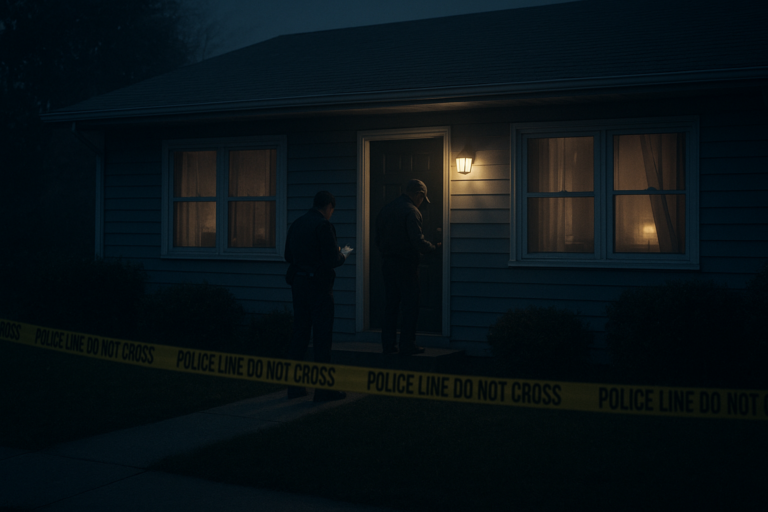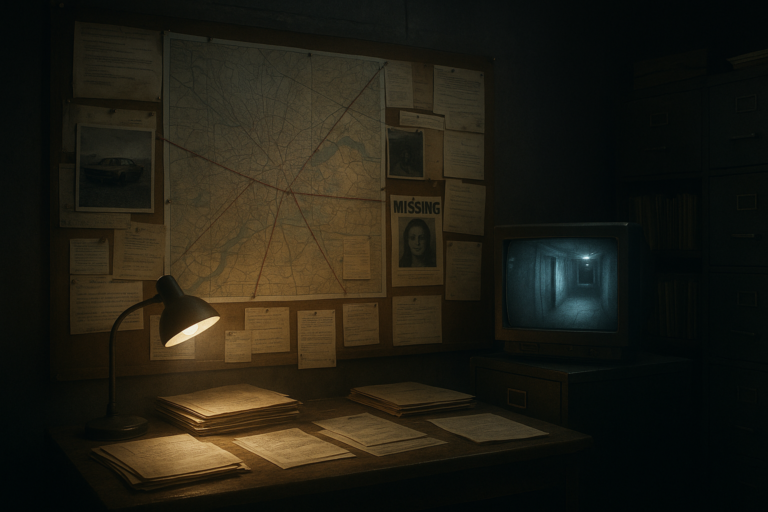
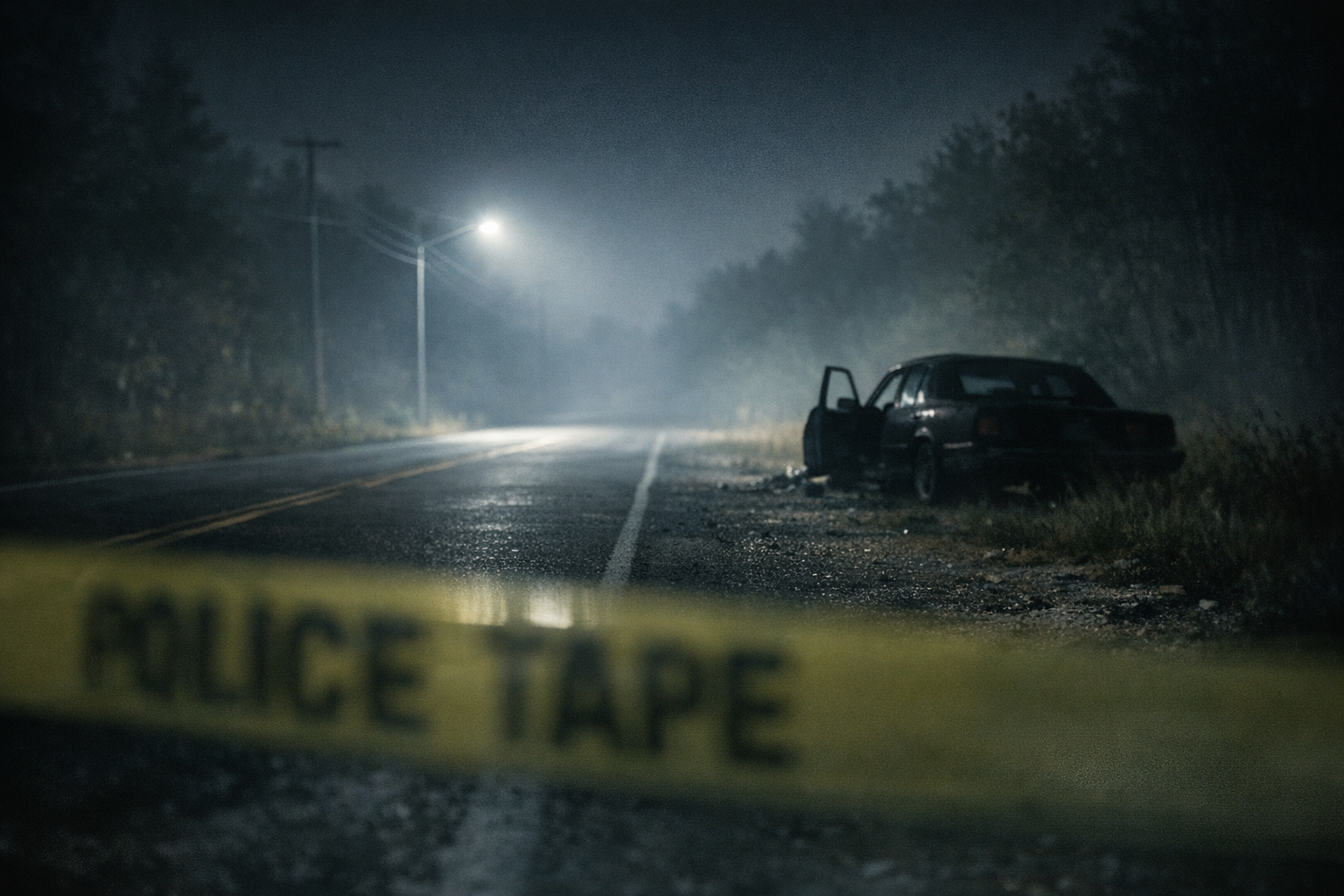
The most disturbing disappearance cases are not always the ones with the least evidence. Sometimes they are the ones with just enough evidence to reconstruct the final hours — and just enough missing space to make that reconstruction collapse. A phone goes silent in the middle of a conversation. A surveillance clip shows a person walking toward the edge of the story, but not through it. A witness timeline seems detailed until the one movement that matters most. These are the disappearances that keep pulling people back because the clock should help, and instead the clock becomes part of the mystery.
This page is a documentary-style guide to unsolved disappearances where the final hours still do not add up. Instead of grouping cases by fame alone, it focuses on a narrower investigative pattern: broken timelines, conflicting witness windows, unexplained movement gaps, and last-known sequences that should have clarified what happened but never did.
These cases matter because timelines are supposed to reduce uncertainty. Investigators use them to test statements, compare physical evidence, narrow routes, and identify the point where an ordinary day turned into an unsolved disappearance. But in the cases below, the timeline does the opposite. The more closely the final hours are examined, the clearer it becomes that something essential is still missing. That is what gives this cluster its lasting authority. Readers are not just looking for a mystery. They are looking for the exact point where reality stops making sense.
Sebastian Rogers
Sebastian Rogers vanished from his Tennessee home under circumstances that should have produced a cleaner answer than they did. The case immediately turned into a battle over the final timeline: what happened inside the house, when he was last definitely seen, and how a child could disappear despite the kind of focused attention that normally narrows a search fast.
It fits this hub because the case is driven by a compressed final-hours window. The mystery is not abstract. It is built around a sequence that should be small enough to reconstruct and still refuses to settle.
The key unresolved point is brutally simple: once investigators narrowed the last known period, the timeline still did not reveal a believable path out of it.
What makes this case especially useful in a final-hours roundup is that the uncertainty is not vague. It is located in a specific missing stretch between known facts. That gives readers something concrete to measure: not just that the person vanished, but that the sequence should have closed the distance between last contact and disappearance and somehow never did.
That pattern matters across the wider site because cases like this connect naturally to other timeline-centered disappearances. Once you compare witness windows, surveillance gaps, abandoned vehicles, and unexplained route changes side by side, the cluster stops looking like a pile of isolated mysteries and starts looking like a recognizable investigative category.
Read the full case here: What Happened to Sebastian Rogers? The Final Timeline in an Unsolved Disappearance That Still Doesn’t Add Up.
Tiffany Valiante
Tiffany Valiante’s disappearance and death continue to generate intense scrutiny because the known movements, physical evidence, and disputed interpretations never line up in a satisfying way. What happened in the stretch between leaving home and the final scene remains one of the most argued-over sequences in the cluster.
This case belongs here because it is exactly the kind of evidence-heavy timeline that should clarify a tragedy and instead deepens every argument around it.
The unresolved point is whether the final movement pattern tells one coherent story at all, or whether the timeline still contains breaks that investigators never truly resolved.
What makes this case especially useful in a final-hours roundup is that the uncertainty is not vague. It is located in a specific missing stretch between known facts. That gives readers something concrete to measure: not just that the person vanished, but that the sequence should have closed the distance between last contact and disappearance and somehow never did.
That pattern matters across the wider site because cases like this connect naturally to other timeline-centered disappearances. Once you compare witness windows, surveillance gaps, abandoned vehicles, and unexplained route changes side by side, the cluster stops looking like a pile of isolated mysteries and starts looking like a recognizable investigative category.
Read the full case here: What Happened to Tiffany Valiante? The Evidence Trail That Still Doesn’t Add Up.
Jelani Day
Jelani Day’s disappearance became unsettling not only because he vanished, but because the sequence of his last confirmed movements left behind an unnerving mix of locations, delays, and unanswered transitions. The timeline offers enough fixed points to keep the case alive, but not enough to close the route between them.
The final days are not mere background. They are the investigative engine of the case, and every missing segment matters.
The key question is why the known movements still do not form a clear, believable progression from last sighting to outcome.
What makes this case especially useful in a final-hours roundup is that the uncertainty is not vague. It is located in a specific missing stretch between known facts. That gives readers something concrete to measure: not just that the person vanished, but that the sequence should have closed the distance between last contact and disappearance and somehow never did.
That pattern matters across the wider site because cases like this connect naturally to other timeline-centered disappearances. Once you compare witness windows, surveillance gaps, abandoned vehicles, and unexplained route changes side by side, the cluster stops looking like a pile of isolated mysteries and starts looking like a recognizable investigative category.
Read the full case here: Jelani Day Disappearance Explained: The Final Days and Clues That Still Don’t Add Up.
🔎 Related Investigation:
Lauren Spierer
Lauren Spierer’s final night is one of the clearest examples of a crowded timeline that still collapses at the point of truth. Friends, bars, apartments, calls, and witness statements create a sequence packed with detail, yet the one moment everyone needs — how Lauren vanished from that environment — remains missing.
This is a classic final-hours mystery because the case is not starved of information. It is overfull with fragments that never fuse into certainty.
The mystery point is that an entire night can be heavily documented and still fail to answer the one question the timeline was supposed to solve.
What makes this case especially useful in a final-hours roundup is that the uncertainty is not vague. It is located in a specific missing stretch between known facts. That gives readers something concrete to measure: not just that the person vanished, but that the sequence should have closed the distance between last contact and disappearance and somehow never did.
That pattern matters across the wider site because cases like this connect naturally to other timeline-centered disappearances. Once you compare witness windows, surveillance gaps, abandoned vehicles, and unexplained route changes side by side, the cluster stops looking like a pile of isolated mysteries and starts looking like a recognizable investigative category.
Read the full case here: Lauren Spierer Disappearance — The Unsolved Case and Timeline of Her Final Night.
Brandon Lawson
Brandon Lawson’s disappearance remains haunting because it begins with a call for help and then splinters into confusion. A stranded vehicle, a frantic 911 call, and uncertain witness interpretation should have narrowed the final route. Instead they created one of the most debated last-known sequences in modern disappearance lore.
It fits this hub because the entire case is powered by the gap between what the timeline seems to say and what investigators can actually prove happened next.
The key unresolved point is how a man can be present enough to leave a real-time distress trail and still vanish into a timeline that never quite locks into place.
What makes this case especially useful in a final-hours roundup is that the uncertainty is not vague. It is located in a specific missing stretch between known facts. That gives readers something concrete to measure: not just that the person vanished, but that the sequence should have closed the distance between last contact and disappearance and somehow never did.
That pattern matters across the wider site because cases like this connect naturally to other timeline-centered disappearances. Once you compare witness windows, surveillance gaps, abandoned vehicles, and unexplained route changes side by side, the cluster stops looking like a pile of isolated mysteries and starts looking like a recognizable investigative category.
Read the full case here: Brandon Lawson Disappearance — The 911 Call That Still Makes No Sense.
Rey Rivera
Rey Rivera’s case remains one of the strangest because his final day seems to move toward a destination that still feels physically and logically unstable. Calls, sudden movement, and the bizarre discovery scene combine to create a timeline that looks concrete until you try to explain how it actually works.
This case belongs in the roundup because it is less about generic mystery and more about a final sequence that appears mapped, yet still refuses to become believable.
The unresolved point is not just what happened, but how the final hours could plausibly lead to the scene investigators were left with.
What makes this case especially useful in a final-hours roundup is that the uncertainty is not vague. It is located in a specific missing stretch between known facts. That gives readers something concrete to measure: not just that the person vanished, but that the sequence should have closed the distance between last contact and disappearance and somehow never did.
That pattern matters across the wider site because cases like this connect naturally to other timeline-centered disappearances. Once you compare witness windows, surveillance gaps, abandoned vehicles, and unexplained route changes side by side, the cluster stops looking like a pile of isolated mysteries and starts looking like a recognizable investigative category.
Read the full case here: Rey Rivera Disappearance — The Rooftop Mystery That Still Makes No Sense.
Jennifer Kesse
Jennifer Kesse disappeared on an ordinary workday, leaving behind a car, a surveillance sequence, and one of the most maddening camera gaps in any disappearance case. The morning timeline should be one of the strongest assets in the investigation. Instead it remains one of the greatest frustrations.
It fits perfectly because the final-hours mystery is not built on folklore or rumor. It is built on structured daily routine interrupted at exactly the wrong point.
The key question is how so many morning details can be known and the most important movement still remain hidden.
What makes this case especially useful in a final-hours roundup is that the uncertainty is not vague. It is located in a specific missing stretch between known facts. That gives readers something concrete to measure: not just that the person vanished, but that the sequence should have closed the distance between last contact and disappearance and somehow never did.
That pattern matters across the wider site because cases like this connect naturally to other timeline-centered disappearances. Once you compare witness windows, surveillance gaps, abandoned vehicles, and unexplained route changes side by side, the cluster stops looking like a pile of isolated mysteries and starts looking like a recognizable investigative category.
Read the full case here: Jennifer Kesse Disappearance — The Woman Who Vanished in Broad Daylight.
Steven Koecher
Steven Koecher parked in a quiet neighborhood, walked away from his car in daylight, and then seemed to disappear out of the frame of ordinary life. Few cases illustrate the cruelty of a short documented sequence better than this one. The timeline is clean enough to be memorable and incomplete enough to be infuriating.
This is the final-hours pattern in its purest form: visible movement, no obvious panic, and no answer waiting at the end of the route.
The unresolved point is why a case with such a defined last-known walk still offers no convincing explanation for where the timeline breaks.
What makes this case especially useful in a final-hours roundup is that the uncertainty is not vague. It is located in a specific missing stretch between known facts. That gives readers something concrete to measure: not just that the person vanished, but that the sequence should have closed the distance between last contact and disappearance and somehow never did.
That pattern matters across the wider site because cases like this connect naturally to other timeline-centered disappearances. Once you compare witness windows, surveillance gaps, abandoned vehicles, and unexplained route changes side by side, the cluster stops looking like a pile of isolated mysteries and starts looking like a recognizable investigative category.
Read the full case here: Steven Koecher Disappearance — The Man Who Walked Into a Neighborhood and Vanished.
Why These Disappearances Still Don’t Make Sense
What links these cases is not one theory, one setting, or one suspect type. It is structural failure in the final known sequence. In some disappearances, the problem is speed: a person vanishes in a window so small it feels physically unfair. In others, the problem is documentation: there is footage, a call log, a vehicle, a witness, or a digital trace — but each clue stops one move short of resolution. The final hours survive scrutiny, yet they never become complete.
That is why timeline-driven disappearance cases age differently from other mysteries. Time does not soften them. It hardens them. The known facts become more fixed, the unknown gap becomes more insulting, and every new reader finds the same contradiction waiting in the same place. A timeline should create order. In these cases, it sharpens the void.
Readers interested in one final-hours mystery are often interested in others built around the same investigative problem.
🔎 Related Investigation:
If this case pulled you deeper into the mystery, continue into:
Conclusion
A strong timeline is supposed to tell you where the truth probably lives. These disappearances do something darker. They trace the edges of the truth, narrow the route, establish the final contacts, and then leave the center missing. That is why they stay alive in the public imagination. Not because nothing is known, but because so much is known that the remaining gap feels impossible to accept.
If there is one lesson running through these cases, it is that the final hours matter more than people think. A roadside call, a late-night walk, a surveillance pass, a witness window, a return route, a parked vehicle, a last message — each becomes the hinge of the entire story. And until those hinges finally move, these disappearances will remain exactly what they are now: cases where the final hours still do not add up.
Frequently Asked Questions
Why do timelines matter in disappearance cases?
Timelines help investigators reconstruct a missing person’s final known movements, compare witness statements, verify alibis, and narrow down when something went wrong. In many unsolved disappearances, the timeline itself becomes one of the biggest mysteries.
What makes a disappearance timeline suspicious?
Cases often become suspicious when there are unexplained gaps, conflicting witness accounts, strange movement patterns, missing surveillance footage, or sudden breaks between confirmed sightings and the point where the person vanished.
Which disappearance cases are known for confusing timelines?
Cases like Maura Murray, Jennifer Kesse, Lauren Spierer, Brandon Lawson, Rey Rivera, and Jodi Huisentruit are frequently discussed because their final known movements still contain major unanswered questions.
Why are timeline-based disappearance cases so difficult to solve?
Even when investigators know many details about a person’s final hours, a single missing movement or unexplained gap can prevent the entire case from making sense. The closer the timeline gets to the disappearance itself, the more important every minute becomes.
What is the most famous disappearance with a timeline that still doesn’t add up?
There is no single answer, but cases like Maura Murray, Jennifer Kesse, and Lauren Spierer are among the most heavily analyzed because investigators know significant portions of their final movements while the critical missing moments remain unresolved.
Do surveillance cameras usually solve disappearance cases?
Not always. In some investigations, surveillance footage actually deepens the mystery by showing only partial movements, unclear figures, or missing angles that leave key questions unanswered.
Why do some disappearance cases attract online investigators?
Cases with detailed timelines, witness reports, maps, phone records, or surveillance clips often draw online attention because people feel the mystery should be solvable if the final sequence can be fully reconstructed.
Are these disappearance cases still open?
Most of the cases featured in this roundup remain open or unresolved, with investigators continuing to review evidence, follow new leads, and accept public tips.
🔎 If this story stayed with you, the author suggests these deeper investigations next:
- Disappearances where the timeline itself becomes the mystery
- Other disappearances where the facts feel wrong from the beginning
- More unsolved disappearance cases that still resist easy answers
- Unsolved Disappearances Where the Car Was Found, but the Person Was Never Seen Again
- Unsolved Disappearances With Witness Sightings That Only Made the Mystery Stranger
- What Happened After the Car Was Found? 6 Real Disappearances Where the Vehicle Was Recovered but the Person Was Not
- The Final Timelines That Still Don’t Close: 9 Disappearances Reconstructed Minute by Minute
- Vanished Into the Frame: 8 Disappearances Where the Final Footage Only Deepened the Mystery
Explore more Disappearances stories here: