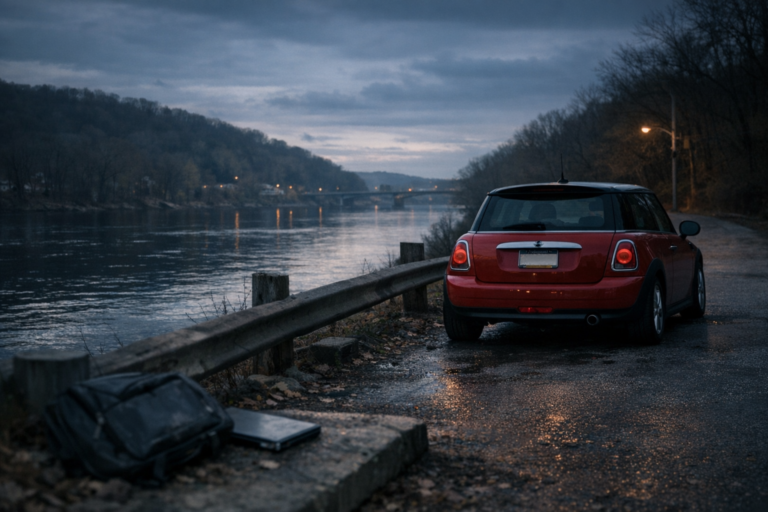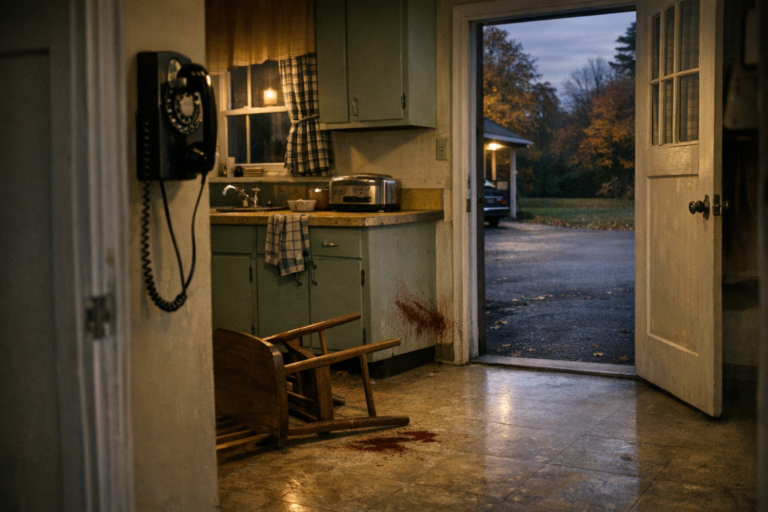

The first people who reached the tracks that night did not step into a clean answer. They stepped into confusion.
It was late on a humid July night in southern New Jersey. Trees pressed close to the rail line. The air felt heavy. And somewhere in that darkness, an eighteen-year-old girl named Tiffany Valiante had disappeared from the ordinary world of family arguments, college plans, and a summer evening at home and entered a mystery that still refuses to settle.
By the time the story reached police files and news cameras, the case already carried the shape of something too fast and too terrible to untangle in one glance. A walk into the dark. A set of belongings. A railroad track. An official conclusion. And then, almost immediately, a second story rising beneath it — one built on the people who looked at the evidence and said, no, this does not fit.
The Tiffany Valiante case is still discussed as a possible missing person case wrapped inside a disputed death investigation, because the scene raised questions that many people believe were never fully answered. Her story matters not only because of how suddenly she vanished from her family’s life, but because the arguments over her final timeline and the physical evidence have kept this case painfully alive for years.
Tiffany was eighteen years old, a standout athlete from Mays Landing, New Jersey, and by most accounts a young woman with a future already taking shape. She had earned a volleyball scholarship. College was ahead. From the outside, she looked like someone standing at the edge of a new life.
Then came July 12, 2015.
That evening, Tiffany had been at home with family. There had reportedly been tension earlier in the night after a disagreement involving a credit card and an argument at the house. On paper, that detail sounds simple. Families argue. Teenagers storm off. It happens every day. But in cases like this, the most ordinary moments become dangerous later, because they give investigators a ready-made story line: she was upset, she left, tragedy followed.
And sometimes that story line is true. But sometimes it becomes a shortcut.
That is why the Tiffany Valiante case still pulls people in. It belongs to the same unsettling world as the Brandon Lawson case, where the final calls and physical clues still leave major gaps. The basic outline looks neat from a distance. Up close, the details start slipping in your hands.
According to the family’s account and later reporting, Tiffany left the house on foot at around 9:30 p.m. She was not supposed to be disappearing forever. She was walking off anger, or trying to cool down, or simply putting space between herself and a tense night. The distance from home to the train tracks was not tiny. It would have required a deliberate path through dark surroundings. And that is one of the first reasons the case divides people: supporters of the official ruling see intent in that walk, while Tiffany’s family and others see uncertainty, vulnerability, and a route that leaves too much unexplained.
Some reports say her phone was found, or at least was no longer with her, before the final point in the timeline. Other details focused on her shoes and headband being discovered separately, away from where people expected them to be if the scene had unfolded in the most straightforward way. Those details matter because physical evidence is the spine of a disputed case. When the evidence matches the story, the case hardens. When it doesn’t, doubt takes over.
And doubt came quickly here.
Tiffany’s remains were found on the tracks after a train struck her. Authorities treated the case as a suicide. Her family did not accept that conclusion. They argued the investigation moved too quickly, that key evidence was overlooked or interpreted too narrowly, and that what should have been a deep forensic examination instead became a closed narrative before all the questions were asked.
This is where the story turns from tragedy into something more unnerving. Because once a case gets labeled early, every later detail has to fight uphill. If the ruling is suicide, then the burden falls on the family to prove why the scene may point somewhere else. Not just emotionally. Physically. Logically. Piece by piece.
And that is exactly what made Tiffany’s case such a lightning rod for debate. Her family and later supporters pointed to the distance she would have had to travel, the condition and placement of her belongings, questions about blood evidence and impact interpretation, and the possibility that she may have encountered someone before reaching the tracks. None of those questions automatically proves homicide. But together, they create the central tension of this case: the official explanation may be possible, yet many people still feel it does not fully explain the scene.
Timeline of Events
- Evening, July 12, 2015: Tiffany is at home in Mays Landing, New Jersey, with family members and normal summer plans still ahead of her.
- Earlier that night: A disagreement reportedly breaks out after concerns over a credit card and tension at the house.
- Around 9:30 p.m.: Tiffany leaves home on foot after the argument.
- Later that night: Her path takes her away from the house and, according to the official timeline, toward the rail line.
- Near the tracks: Personal items including shoes and other belongings become part of the evidence trail that later fuels years of dispute.
- Train impact: Tiffany is struck on the tracks, and authorities ultimately rule the death a suicide.
- Afterward: Her family challenges that conclusion, arguing the scene and evidence raise larger unanswered questions.
The timeline is not important just because it tells us where Tiffany went. It matters because it forms the heart of the disagreement. If the official version is correct, the final walk points to a deliberate act. If it is incomplete, then the timeline may hide another encounter, another interruption, or another explanation entirely.
That is why people who follow this case tend to return to the same images over and over: the path into darkness, the separated belongings, the track itself. Not because the visuals are dramatic, but because they are the only hard objects in a case where motive and intention are still being argued.
Tiffany’s family has long emphasized that she was making plans for the future, not preparing to end her life. Supporters of that view point to her personality, her athletic drive, and the ordinary momentum of a teenager moving toward college. Critics of that argument say families often do not see private struggles, and that outward plans do not rule out an impulsive act. That tension is real. It appears in many disputed death cases. But even when emotional readings collide, the evidence still has to carry the truth.
And this is where the case keeps splitting.
One side sees a distressed teenager who left home after an argument and ended up on the tracks in a moment of crisis. The other side sees a physical scene that contains too many rough edges to accept so easily. Why were certain items found where they were? Did the blood evidence and train damage line up cleanly with the official account? Was enough done to investigate whether Tiffany met someone after leaving home? Were all witness opportunities exhausted? Once those questions entered public discussion, the case stopped being just about what happened on the tracks. It became about what investigators may have missed before reaching that conclusion.
🔎 Related Investigation:
If this case pulled you deeper into the mystery, continue into:
What Doesn’t Add Up
- The evidence trail: The placement of Tiffany’s belongings has been one of the most persistent flashpoints in the case.
- The walk itself: People still question whether the route from home to the tracks fits a simple, uninterrupted explanation.
- Scene interpretation: Supporters of the family argue the physical evidence should have triggered a broader forensic review rather than a quick closure.
- Alternative-contact questions: If Tiffany crossed paths with someone after leaving home, that possibility could change the entire meaning of the timeline.
- Competing narratives: The official ruling offers one explanation, but public doubt has remained unusually strong because many details feel unresolved rather than settled.
Those questions do not automatically overturn an official finding. But they do explain why the case is still discussed years later. In a truly closed case, the evidence tends to narrow debate. Here, the evidence widened it.
That widening effect only grew after documentaries and renewed public attention brought Tiffany’s story to a larger audience. Once more people saw the outline of the case, they recognized the same pattern that drives so many enduring mysteries: a conclusion that may sound final, paired with a body of details that refuses to stay quiet.
And if you follow true crime long enough, you learn that these are the cases that last. Not always because there is a hidden mastermind or a dramatic twist waiting around the corner, but because the first answer may have arrived before the full investigation had breathed. The world loves closure. Real cases do not always provide it on demand.
For Tiffany’s family, that lack of closure has meant years of pushing against a system that already made up its mind. That is a brutal position to occupy. If authorities are right, the family is left fighting a truth they cannot emotionally accept. If authorities are wrong, the family has spent years shouting into a locked door while the real explanation remains outside the file. Either possibility is devastating. But only one can be correct.
And that is why this case still carries so much weight. It is not just about a tragic night. It is about whether the evidence was read properly the first time.
There are cases where mystery comes from absence — no witnesses, no clues, no body, no trail. Tiffany Valiante’s case is different. Here, the mystery comes from presence. There was a scene. There were objects. There was a ruling. There were forensic questions. There was a family refusing to stop. Instead of an empty file, the case offers a stack of details that somehow still fails to feel complete.
That incompleteness creates a special kind of unease. If Tiffany’s final moments were truly understood, the case would now sit in the sad but settled category of lives lost in a sudden crisis. But because so many people believe the physical evidence points to something more complicated, the story keeps reopening itself in the public mind.
Maybe the official explanation is exactly what happened, and the unanswered questions come from the painful fact that terrible events do not always unfold neatly. That is possible. But so is the opposite possibility: that the scene was interpreted too fast, and that once that happened, later evidence was forced to fit a conclusion rather than tested against it.
That is the unique tension at the center of Tiffany Valiante’s case. It is not merely a story about a young woman’s final walk. It is a story about evidence conflict — about what happens when the physical scene and the official narrative never seem to fully make peace with each other.
Years later, that conflict is still the reason people remember her name.
Because the real question is no longer just what happened to Tiffany Valiante that night.
The real question is whether the truth was ever seen clearly enough to begin with.
🔎 Related Investigation:
🔎 Related Investigation:
🔎 If this story stayed with you, the author suggests these real cases next:
- The haunting Polaroid case that turned one missing girl into a decades-long mystery
- The bizarre 911 call and final movements that still leave investigators guessing
- The strange drive, missing hours, and evidence trail that never felt complete
Explore more Disappearances stories here: