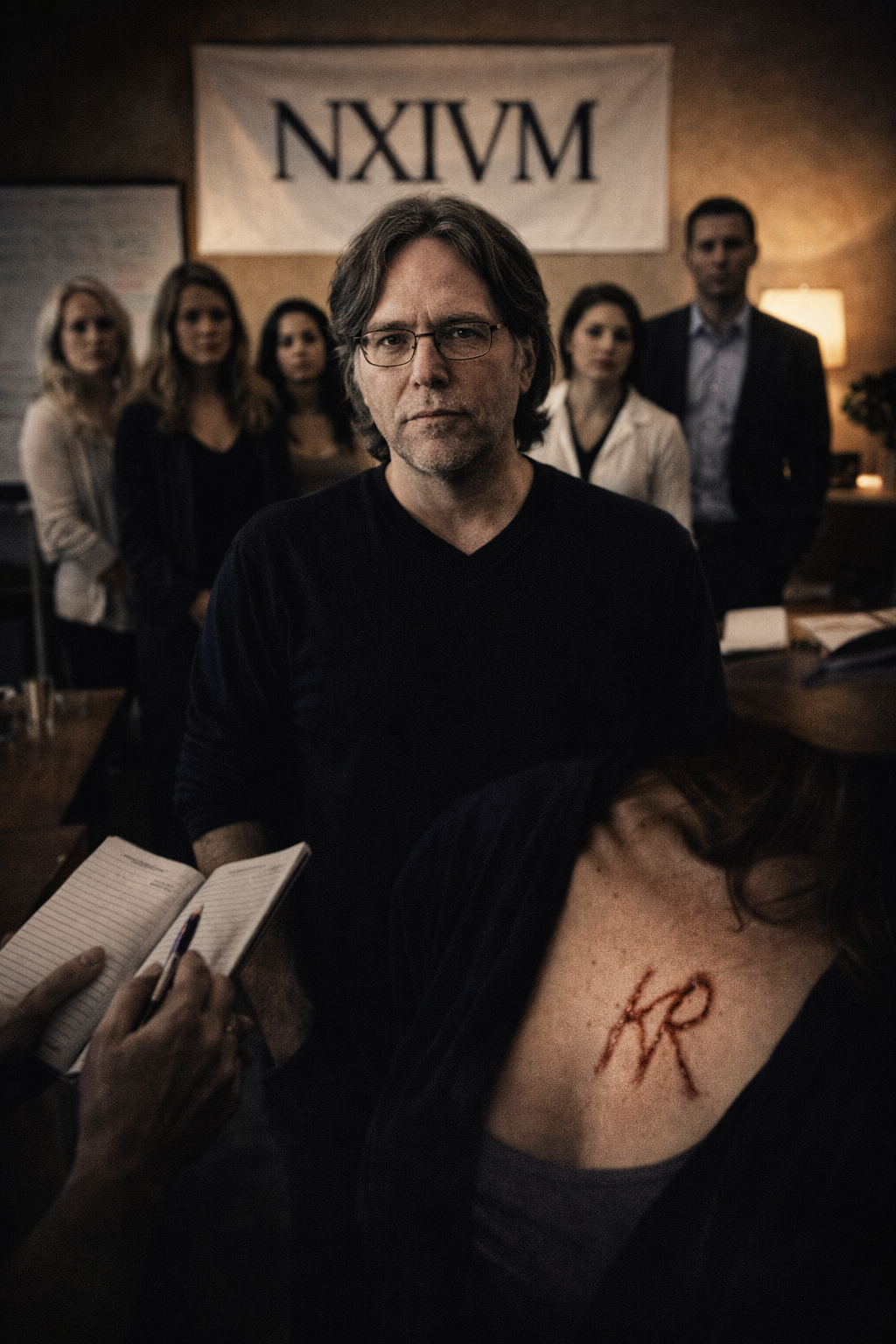
NXIVM Cult Explained: The Self-Help Empire, the Secret Branding Rituals, and the Control Hidden in Plain Sight
9 min readApril 1, 2026
At first, the room did not look dangerous.
It looked expensive, organized, and calm. There were neat rows of chairs, a whiteboard at the front, and people in business clothes talking in low, confident voices. The pitch in rooms like that was never chaos. It was improvement. Discipline. Clarity. A better version of yourself waiting just a few seminars away.
That ordinary atmosphere is what makes the NXIVM story so hard to shake. Before the headlines, before the trials, before the branding rituals that would horrify the public, the group looked like a polished self-help program. Nothing about the first step felt like a leap into a cult. It felt like walking into a place that might finally help you get your life under control.
NXIVM was a self-help organization founded around Keith Raniere and its “Executive Success Programs,” but the case still gets attention because that polished language hid coercion, obedience, and abuse in plain sight. What began as coaching and personal development slowly became one of the most disturbing cult cases of the modern era.
That slow slide from guidance into control belongs beside other cases like Doomsday Cults That Ended in Death — The Beliefs, Leaders, and Final Catastrophes, where belief systems kept growing darker long after the public image had already been built.
In the late 1990s and early 2000s, NXIVM presented itself as something smart, structured, and aspirational. Its courses were sold under the name Executive Success Programs, and they were designed to sound like a blend of business coaching, personal transformation, and emotional training. Members attended workshops, took notes, talked through insecurities, and were urged to confront the beliefs holding them back.
For many people, that first layer felt real. Some participants said the courses made them more focused. Others felt more disciplined, more ambitious, or more emotionally clear. That mattered. A system like this does not grow by feeling obviously sinister from the start. It grows because the early experience gives people just enough reward to trust the structure that delivered it.
At the center of all of it was Keith Raniere. He did not usually present himself like a wild-eyed preacher or a theatrical cult prophet. He often seemed measured, soft-spoken, almost deliberately unflashy. That calm image helped. Inside NXIVM, followers called him “Vanguard” and treated him less like a teacher than a man with rare insight. The mythology around him kept expanding: his intelligence, his ethics, his methods, his vision for human improvement.
And once that mythology settled in, disagreement became harder. A person might begin by trusting a class. Then they trusted the method. Then they trusted the people delivering it. Then, before they fully saw the shift, they were trusting the man at the top more than their own discomfort.
How Coaching Turned Into a System of Obedience
That change did not happen in one dramatic break. It happened the way many coercive systems operate: gradually, through commitment that kept deepening. Introductory workshops led to more workshops. More workshops meant more money, more time, and stronger emotional investment. Members were encouraged to expose vulnerabilities, confess fears, and let the organization reframe private pain as material for growth.
Hierarchy mattered inside NXIVM. Some members were seen as more advanced than others. Some were closer to the inner logic of the group. The closer you got to the center, the more your identity could become tied to the idea that you were evolving while outsiders simply did not understand.
That is one reason the story remains so disturbing. On paper, the language was empowering. In practice, the structure became increasingly controlling. If your doubts were proof of fear, and fear was proof you needed more work, then the system had a built-in answer to resistance. The very instinct that might have helped someone step back could be treated as evidence they needed to stay.
NXIVM also benefited from the kind of social proof that makes dangerous groups harder to recognize. It attracted professionals, wealthy backers, and well-known names. That helped the operation look legitimate from the outside. A person could think: If all these successful people are involved, how bad can it really be? But legitimacy on the surface was part of the protection.
When the Secret Inner Circle Came Into Focus
The most notorious part of NXIVM was a secret subgroup called DOS, a name derived from a Latin phrase commonly translated as “master over slave.” Even the name is chilling in retrospect. But many women were not brought into it through a blunt warning. They were invited by women they trusted — friends, mentors, people who appeared loyal, composed, and committed.
That trust was the doorway.
Then came collateral.
Women entering DOS were asked to hand over damaging personal material: secrets, explicit photographs, private confessions, or signed statements that could wreck relationships and reputations if released. This was presented as a demonstration of seriousness and surrender. In reality, it created leverage. Once someone gives a system the power to humiliate them publicly, leaving becomes harder, speaking becomes riskier, and obedience becomes easier to enforce.
Inside DOS, members were arranged in a chain of authority. Each woman had a “master,” and those lines of control ultimately led back toward Raniere. The demands were framed as discipline, self-mastery, and transformation. But discipline inside a coercive system is not freedom. It is a method of narrowing a person’s choices until submission starts to feel normal.
Members were expected to answer quickly, complete assignments, and prove loyalty. Food intake could be monitored. Sleep could be reduced. Intimate decisions could be influenced or directed. The language remained polished, but the reality underneath it was pressure. A person did not simply belong to a program anymore. She was being shaped by a hidden structure that wanted access to her body, her fear, and her silence.
The Branding Ritual That Stripped Away the Cover Story
The moment that shattered NXIVM’s public image for many people was branding.
Women were reportedly told they would receive a small symbol tied to commitment and strength. What happened instead was far more brutal. They were physically branded, without anesthesia, with a design that observers later recognized as containing Keith Raniere’s initials. By that point, the language of empowerment had become impossible to separate from humiliation and control.
This was not some symbolic team exercise or theatrical rite. It was pain imposed inside a system built on secrecy, leverage, and obedience. And it exposed the central lie at the heart of NXIVM: that submission was actually empowerment, and that surrendering autonomy was somehow proof of becoming stronger.
What makes this stage of the story especially unnerving is that many of the people involved had not entered looking for danger. They were looking for direction, confidence, community, or healing. The case matters because it shows how exploitation can arrive wearing the language of self-improvement. It does not always begin with visible menace. Sometimes it begins with a seminar packet and a promise.
Timeline of the NXIVM Case
Late 1990s: NXIVM is founded and begins building its image around executive training and personal development.
Early 2000s: Executive Success Programs expand, drawing professionals, aspiring leaders, and members of influential circles.
Over time: Keith Raniere’s authority inside the group deepens, and loyalty to him becomes central to the culture.
Mid-2010s: The secret subgroup DOS operates within the wider NXIVM world, using collateral, hierarchy, and obedience to control members.
2017: Reporting begins exposing the branding rituals and hidden structure inside DOS.
2018: Keith Raniere is arrested after the case gains wider public and legal attention.
2019: Raniere is convicted on federal charges tied to the NXIVM enterprise.
2020: He is sentenced to a lengthy prison term, and NXIVM’s public power collapses.
How the System Worked When It Was Working Best
The most important thing to understand about NXIVM is that it was not held together by fear alone. At first, it offered a framework, answers, and the feeling that private confusion could be turned into progress. Once a group becomes the place where your pain makes sense, leaving it can feel like losing not just friends or status, but the story that explains your life.
That is also why this case fits naturally beside stories like The Manson Family: How Belief Turned Deadly in Los Angeles and Heaven’s Gate Cult — The Tape Recordings, the Comet, and the Night They Believed They Were Leaving Earth. NXIVM updated the same pattern for a modern audience, trading robes and compounds for coaching language, workshops, and the sleek vocabulary of performance and growth.
Why the Case Still Gets Attention
Years after the criminal case broke open, NXIVM still holds public attention because it hits a particularly modern nerve. The group did not market apocalypse. It marketed self-optimization. It did not ask people to reject success. It told them success was the path to truth. And because of that, the warning signs were easier for outsiders to miss and easier for insiders to reinterpret.
There is also the lasting unease of how many layers had to fail before the full picture came into view. People trusted the seminars. Members trusted recruiters. Recruits trusted the women above them. Many trusted Raniere himself. By the time the public saw branding, collateral, and the hidden hierarchy clearly enough to name them, years of manipulation had already passed.
That is what gives the story its lingering weight. The fear is not just what happened inside DOS. The fear is how normal the entry point looked, and how many people could sit in a room that seemed perfectly ordinary while the machinery of control was already quietly turning.
It is why the NXIVM case still belongs in the larger cult archive alongside Jonestown Massacre Explained – The Last Broadcast, the Jungle Settlement, and the Day Peoples Temple Turned Into a Graveyard, Children of God — Faith That Crossed the Line, and Order of the Solar Temple — The Final Ritual. Different era, different presentation, same brutal lesson: some of the most dangerous systems do not look dangerous when they first invite you in.
FAQ
What was NXIVM?
NXIVM was an organization built around self-help and executive training programs, but investigators and former members later revealed a deeper system of coercion, manipulation, and abuse connected to founder Keith Raniere and the secret subgroup DOS.
What happened in the NXIVM case?
The case exposed how a group marketed as personal development had evolved into a hierarchy of control. Reporting and testimony brought public attention to collateral, obedience rituals, branding ceremonies, and the role Keith Raniere played in directing the system.
Was the NXIVM case still considered unresolved?
No. Keith Raniere was convicted in federal court and later sentenced to a lengthy prison term. But the story still draws attention because people continue to ask how a group with such an ordinary public image was able to operate that way for so long.
Why does the NXIVM story still get attention?
Because it feels disturbingly modern. NXIVM did not present itself as an obvious cult. It looked like self-improvement, ambition, and discipline — which makes the hidden coercion underneath it even more unsettling.
Who was Keith Raniere?
Keith Raniere was the founder and central leader of NXIVM. Inside the organization he was treated with extraordinary reverence, and prosecutors argued that the culture of obedience around him was essential to how the entire system operated.