Most people imagine deadly disasters arriving with warning.
Smoke.
Gunfire.
Explosions.
Something obvious.
But some of the deadliest moments in history begin with something almost invisible:
A crowd slowly becoming too dense to breathe.
The CCNY stampede of 1991 started as a celebration.
Music echoed through the streets of Harlem.
Teenagers laughed outside the gymnasium.
Fans pushed closer hoping to catch a glimpse of rising hip-hop stars.
For many young people that night, it felt like the center of the world was suddenly happening at The City College of New York.
And then the pressure started building.
Bodies pressed together.
Doors jammed.
The crowd surged forward.
And within minutes, excitement turned into panic.
By the end of the night, nine people would be dead.
Most never even made it inside the building.
Short answer: The CCNY stampede happened on December 28, 1991, during a celebrity charity basketball event at the City College of New York. Overcrowding, poor crowd management, locked exit areas, and crushing pressure inside a narrow stairwell caused a deadly crowd crush that killed nine people and injured dozens more.
A night that felt bigger than a basketball game
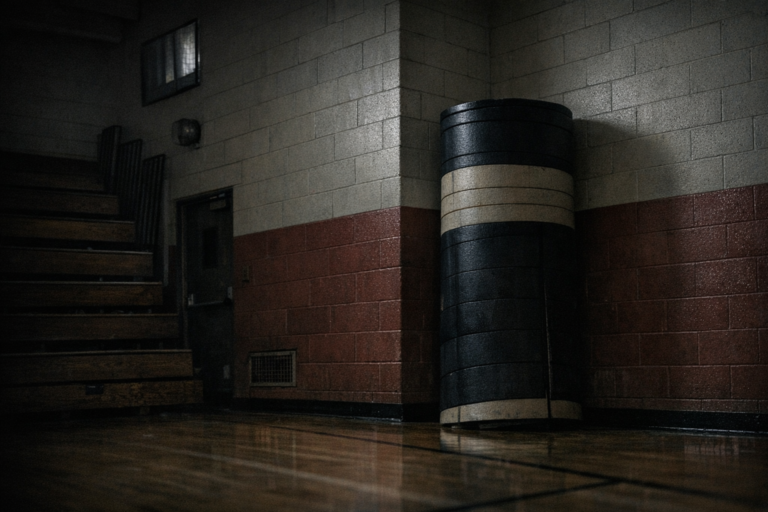
The event took place at the Nat Holman Gymnasium in Manhattan.
Officially, it was a celebrity charity basketball game connected to major names in hip-hop culture, including Heavy D and Sean “Puff Daddy” Combs.
But to many young fans in New York City, it felt like something much larger.
Hip-hop in the early 1990s was exploding into mainstream culture.
Artists were becoming icons almost overnight.
And events like this offered something rare:
A chance to stand close to people who suddenly seemed untouchable.
Thousands showed up.
Far more than organizers expected.
Some had tickets.
Some didn’t.
Others simply wanted to be near the excitement.
That emotional energy matters.
Because crowd disasters rarely begin with panic.
They begin with anticipation.
The pressure started long before the tragedy
Even before the doors officially opened, warning signs were already visible.
The crowd outside the gym kept growing.
People pressed closer toward the entrance trying to avoid being left outside.
At first, the movement felt manageable.
The kind of slow crowd pressure people experience at concerts or packed sporting events.
But crowd density changes human behavior.
Once enough bodies fill the same space, people slowly lose the ability to move independently.
The crowd itself begins controlling movement.
Security guards attempted to manage the entrance.
Barriers were placed.
People were told to wait.
But investigators later concluded the event was dangerously unprepared for the number of people arriving.
Reports suggested tickets may have been oversold while crowd management plans failed to account for the swelling crowd outside.
Then came another dangerous factor:
Impatience.
People inside reportedly shouted for more doors to open.
People outside kept pushing forward without understanding conditions near the front.
That’s one of the deadliest realities in crowd crush disasters.
People in the back often have no idea the people in front are trapped.
The moment the entrance collapsed
Around 7 PM, the pressure near the doors became overwhelming.
Witnesses later described bodies packed so tightly people could barely move their arms.
Then the pushing intensified.
One surge.
Then another.
And suddenly the glass entrance doors shattered inward.
The crowd poured through.
For people further back, it may have looked like the entrance had finally opened.
But for people near the front, the situation instantly became terrifying.
Bodies slammed together.
People stumbled.
Others disappeared beneath the crowd.
And once people begin falling inside an extremely dense crowd, the danger escalates almost immediately.
Witnesses later described screams blending into the roar of the crowd itself.
Security staff attempted to regain control, but the pressure was already too powerful.
Then hundreds of people moved toward the same narrow staircase.
The stairwell became a death trap
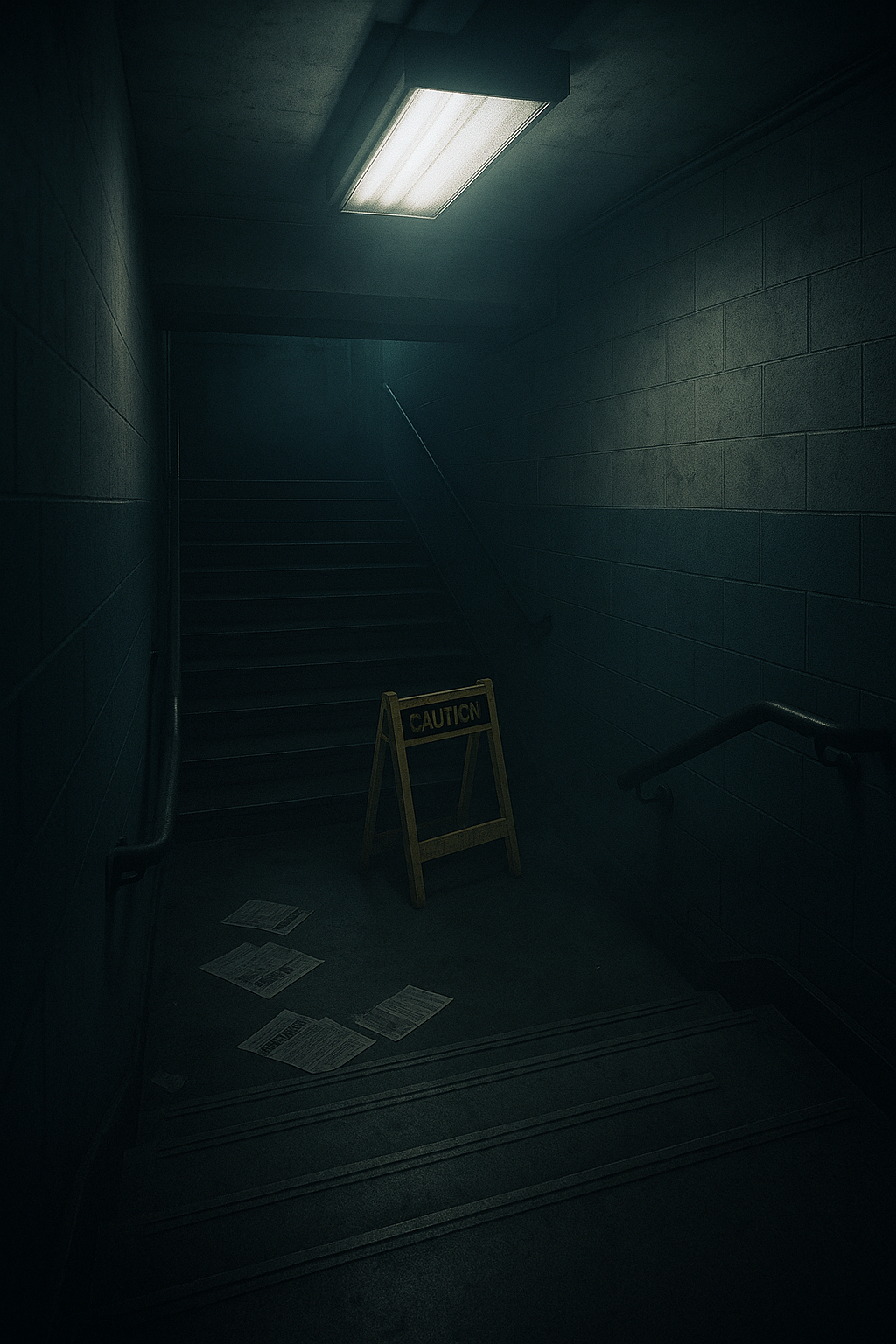
Inside the building was a staircase leading toward the gym entrance.
It was narrow.
Only about seven feet wide.
And at the bottom were locked doors.
That detail turned the stairwell into a trap.
People near the back continued moving forward because they couldn’t see the blockage below.
People at the front had nowhere left to go.
The pressure built rapidly.
And in crowd crush disasters, pressure itself becomes deadly.
This is something many people misunderstand.
Most victims are not trampled to death.
They suffocate while standing.
As bodies compress together tightly enough, lungs can no longer expand.
Breathing becomes impossible.
And once crowd pressure reaches a certain point, even strong adults cannot fight against it.
Witnesses later described people pinned upright unable to move their arms or chest.
Some screamed for help.
Others could no longer make sound at all.
Within moments, the staircase turned deadly.
The crowd itself became the danger
As the crush intensified, panic finally spread through the crowd.
But by then, panic no longer mattered.
The physics had already taken over.
Witnesses later described horrifying scenes:
- People gasping desperately for air
- Bodies pinned against walls
- Victims collapsing beneath others
- People trying to climb over the crowd to escape
Emergency responders struggled to even reach the victims because the stairwell itself had become jammed with bodies.
Rescuers reportedly had to pull people out one by one.
By the time the pressure finally eased, nine people were dead.
Most from compressive asphyxia — the inability to breathe under crushing crowd pressure.
Dozens more were injured.
And the basketball game itself never even began.
The city woke up in shock
News coverage spread rapidly across New York City.
Families rushed to hospitals searching for loved ones.
The gym became a disaster scene.
And investigators immediately began asking difficult questions.
- Why had the venue become so overcrowded?
- Why were dangerous choke points left unsecured?
- Why were locked doors blocking escape routes?
- Why wasn’t crowd flow controlled earlier?
- Who was responsible for safety planning?
Those questions would follow organizers and city officials for years.
What investigators discovered
Official investigations later concluded the disaster was not caused by one single mistake.
It was caused by multiple failures happening at once.
According to reports:
- Security staffing was insufficient
- Crowd management planning failed
- Venue capacity concerns were ignored
- Barriers proved ineffective
- Dangerous crowd bottlenecks formed unchecked
And once people entered the stairwell, escape became nearly impossible.
That’s one reason crowd disasters feel uniquely haunting.
There is rarely one obvious villain.
No attacker.
No mastermind.
Just a chain of ordinary failures slowly building toward catastrophe.
And by the time people realize the danger, physics becomes stronger than human control.
The science behind crowd crush disasters
One reason the CCNY tragedy is still studied today is because crowd crushes are widely misunderstood.
People imagine chaos.
Running.
Stampeding.
But many deadly crowd disasters happen while people are barely moving at all.
Once crowd density reaches extreme levels, pressure moves through the crowd almost like a liquid wave.
At that point:
- Individuals lose balance easily
- Breathing becomes difficult
- People can no longer control movement
- Fallen victims create deadly obstacles
And unlike fires or explosions, crowd crushes often appear deceptively calm from a distance.
That’s part of what makes them so dangerous.
By the time panic becomes visible, people at the center may already be dying.
What doesn’t add up
One of the most disturbing aspects of the CCNY tragedy is how visible many of the warning signs already were.
The crowd kept growing.
The entrance areas became compressed.
The venue capacity limits were obvious.
And yet the situation continued escalating until the system completely broke apart.
That raises a painful question seen in many crowd disasters:
At what point does excitement quietly become danger?
Because these disasters rarely happen instantly.
The pressure builds gradually.
And often, by the time authorities fully recognize the threat, there is no easy way to stop it.
Timeline of the CCNY stampede
- December 28, 1991: Fans gather at the Nat Holman Gymnasium in New York City for a celebrity charity basketball event.
- Before doors open: Large crowds begin forming outside the venue.
- Evening hours: Pressure increases near the entrance as overcrowding worsens.
- Around 7 PM: Entrance doors reportedly shatter under crowd pressure.
- Mass crowd surge: Hundreds move toward a narrow stairwell leading to the gym.
- Deadly crush develops: Victims become trapped near locked doors at the bottom of the staircase.
- Emergency response begins: Police and rescue workers attempt to pull victims from the crowd.
- Aftermath: Nine people die and dozens more are injured.
The feeling survivors never forgot
Years later, many survivors described the same terrifying realization:
The moment they understood they were no longer controlling their own body.
One survivor later said:
“It felt like the world was closing in.”
Another described being held upright entirely by the pressure of the crowd itself.
Those memories stayed with survivors long after the event ended.
Because unlike many disasters, there was no single obvious moment when the danger announced itself.
The tragedy emerged slowly… then all at once.
Frequently Asked Questions
What was the CCNY stampede?
The CCNY stampede was a deadly crowd crush disaster that occurred on December 28, 1991, during a celebrity charity basketball event at the City College of New York.
How many people died in the CCNY tragedy?
Nine people died during the crowd crush, while dozens of others were injured.
What caused the crowd crush?
Investigators cited overcrowding, poor crowd control, dangerous bottlenecks, locked exit areas, and crushing pressure inside a narrow stairwell.
Were victims trampled?
Most victims died from compressive asphyxia, meaning they were unable to breathe due to intense crowd pressure rather than being trampled.
Why is the CCNY disaster still studied today?
The tragedy is often studied as an example of how crowd density, poor planning, and restricted movement can turn ordinary events into deadly disasters within seconds.
The final unsettling thought
When people imagine deadly disasters, they usually picture something obvious.
A fire.
An explosion.
An attack.
But the CCNY tragedy reminds us that sometimes disaster begins with something far simpler:
Too many people.
Too little space.
And one moment where movement becomes impossible.
That’s what still makes this story feel so haunting.
The victims weren’t running toward danger.
They were trying to attend a basketball game.
Trying to be part of an exciting night.
Trying to move through a doorway.
And within seconds, the crowd itself became stronger than anything a single person could fight against.
Because once human beings are compressed tightly enough together, individual control disappears.
The crowd stops behaving like people.
And starts behaving like force.
🔎 If this tragedy stayed with you, continue with these next:
Explore more real tragedy and mystery stories here: