The Pollock Twins: The Sisters They Lost, the Children Who Came Back, and the Reincarnation Case That Still Splits Believers
10 min readJuly 24, 2025
On a Sunday morning in 1957, three children were walking through Hexham on their way to church when a car came at them so fast there was almost no time to react. By the time the street went quiet again, Joanna Pollock, her younger sister Jacqueline, and their friend Anthony were dead. For most families, that would have been the end of the story. For the Pollocks, it became the beginning of something far harder to live with.
Listen to “The Pollock Twins” on Spreaker.The Pollock Twins case is still one of the world’s most debated reincarnation stories because it does not begin with a séance or a legend. It begins with documented grief, two sisters killed in Hexham, England, in 1957, and twin girls born the following year who later seemed to recognize places, toys, habits, and fears they should not have known. That is why the case still sits in the uneasy space between psychology, memory, religion, and something harder to name.
It also belongs beside other identity-and-evidence mysteries like the Somerton Man case, where the facts are real, the witnesses are sincere, and yet the central question refuses to settle. In the Pollock story, the question is not simply whether reincarnation is possible. It is whether grief and suggestion can really explain every detail people still remember from that house in northern England.
Before there were twins, there were two sisters. Joanna was 11 and protective. Jacqueline was 6, lively, stubborn, and marked by a scar on her forehead from an earlier fall and a birthmark her mother knew by heart. Their parents, John and Florence Pollock, were raising them in an ordinary life that did not look like the beginning of folklore.
Then came May 5, 1957. The girls were walking to church with a friend when a woman named Marjorie Wynne, reportedly in severe mental distress, drove into them. All three children were killed. One minute they were headed to Mass. The next, they were gone.
Florence Pollock was shattered. John Pollock grieved too, but he reached for a belief that made even relatives uneasy. He believed the girls would return. That conviction would become the spine of everything that followed, and it is one reason skeptics never stop circling the case.
May 5, 1957: Joanna Pollock, Jacqueline Pollock, and another child are killed in a car accident while walking to church in Hexham, England.
After the deaths: John Pollock tells people he believes his daughters will return, despite Florence resisting the idea.
October 4, 1958: Florence gives birth to twin girls, Gillian and Jennifer Pollock.
Early childhood: family members notice Jennifer has markings that seem similar to Jacqueline’s scar and birthmark.
Ages 2 to 4: the twins reportedly recognize places in Hexham, identify old toys, and show unusual fear around cars.
Later childhood: the strange statements and reactions begin to fade.
Years later: researcher Dr. Ian Stevenson helps turn the case into one of the best-known reincarnation stories in modern discussion.
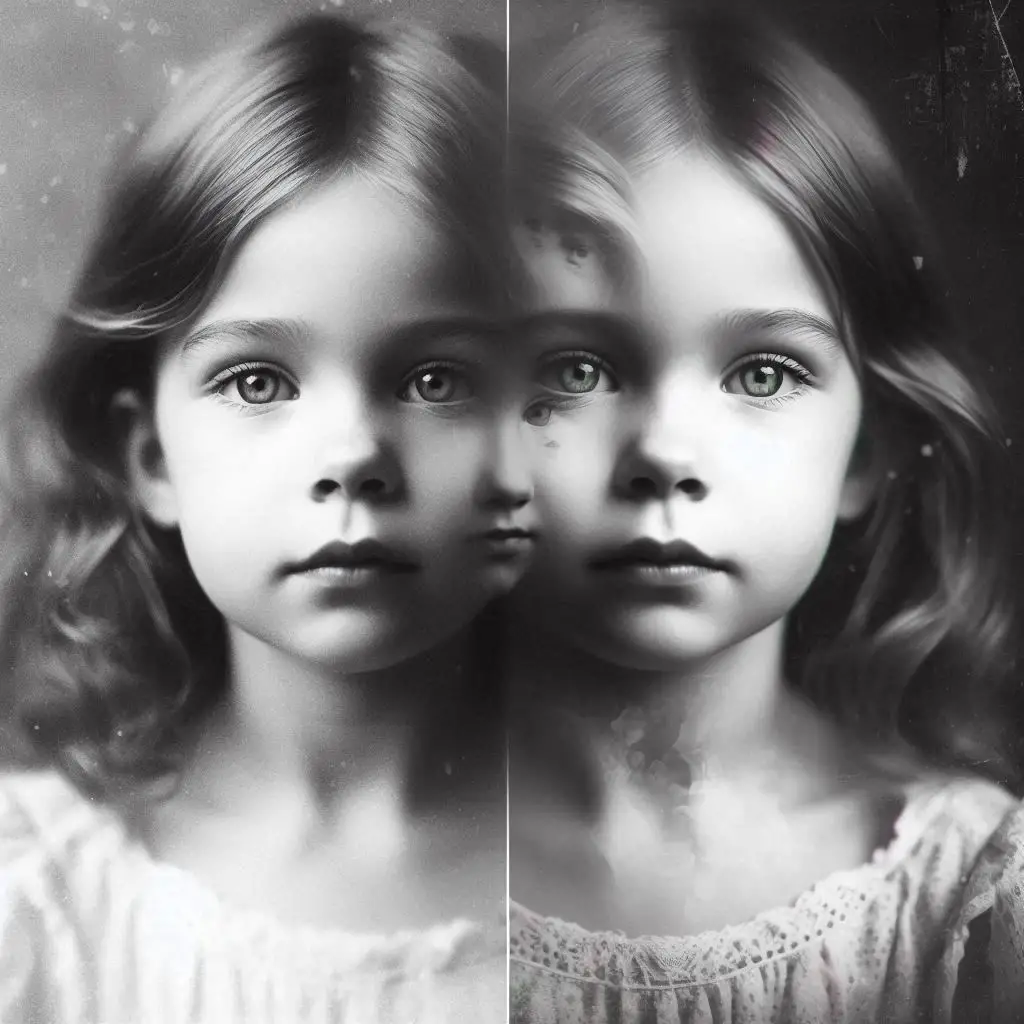
The birth of Gillian and Jennifer in October 1958 should have been simple in emotional terms: a family trying to live again after loss. Instead, the twins immediately entered a story their mother did not want and their father could not stop believing. Jennifer was said to have a mark on her forehead in roughly the same place Jacqueline had once been injured, along with another mark resembling a birthmark the younger girl had carried. John saw meaning in that almost instantly. Florence tried not to.
Then came the part that made the case impossible to keep private. As the twins grew, relatives said the girls reacted to old places in Hexham as if they already knew them. When family toys were brought back out, the twins reportedly identified favorites that had belonged to Joanna and Jacqueline. In later retellings, these scenes have a nearly theatrical quality: a toy box opened, a child reaching in, a room going still. But whatever was actually said in each moment, the emotional truth is easy to imagine. Parents who had buried two daughters were now being confronted with little echoes of them in the gestures of two new children.
The most unsettling reports centered on cars. Family accounts say the twins sometimes panicked when traffic came too close, clinging to each other and crying out as if something terrible were about to happen again. One of the most repeated lines from the case is that they shouted about a car coming for them. That detail matters because it sits at the center of the story’s emotional power. A child recognizing an old toy can be explained away. A child acting out mortal fear tied to the exact manner of two dead sisters’ deaths is harder to forget.
What Makes the Story So Hard to Dismiss
The timing: the twins were born only about 17 months after Joanna and Jacqueline died, which gave the case an immediate emotional charge.
The physical marks: Jennifer’s markings became one of the most cited details because they seemed to echo features of Jacqueline.
The toy recognitions: these are often treated as the strongest “memory” moments inside the home itself.
The car fear: the reactions fit the original tragedy too neatly to feel casual.
The fading memories: many believers point out that the strange claims weakening with age matches other alleged past-life cases.
But the closer you look, the less neat the case becomes. The Pollock Twins story is often told as if every detail carries the same weight. It does not. Some parts of the case come from family recollections. Some were emphasized later by researchers. Some may have grown sharper in retelling because grief tends to preserve what hurts most and blur what does not. A documentary-style telling has to slow down there.
John Pollock’s beliefs matter more than believers usually like and less than total skeptics sometimes claim. Yes, he had already spoken openly about reincarnation. Yes, that raises the possibility of expectation, leading questions, or unconscious shaping inside the home. But Florence’s discomfort matters too. She was not eager for the story to become mystical. She reportedly wanted the twins to be themselves. That tension between the parents is one reason the case never fits perfectly into either camp. It does not feel like a simple hoax, but it does not feel clean enough to count as proof either.
When the case later drew the attention of Dr. Ian Stevenson, it entered a larger archive of children’s alleged past-life memories. Stevenson became famous for collecting cases that included statements, phobias, and birthmarks he thought lined up too precisely to ignore. The Pollock twins were a natural fit. They offered tragedy, timing, emotional witnesses, and a pattern that seemed to build from body marks to behavior to memory. For believers, the case became one of the most persuasive modern examples. For skeptics, it became one of the clearest examples of how human beings build meaning under unbearable pressure.
Evidence, Memory, and the Skeptical Case
There are several reasons critics keep pushing back on the Pollock Twins story, and none of them are frivolous.
Retrospective storytelling: some details became famous only after the case had already spread, which makes clean verification difficult.
Parental influence: even if unintentional, children can absorb names, fears, and cues from adults faster than adults realize.
Selective memory: families tend to remember the startling hits and forget the ordinary misses.
Researcher framing: once a case enters reincarnation literature, later retellings often sharpen the uncanny details and smooth out contradictions.
And still, there is a reason the story survives. It is not because every detail is airtight. It is because the combination is unusually haunting. The deaths were real. The twins were real. The father’s conviction was real. The mother’s discomfort was real. Something happened in that family that later participants, including the twins as adults, never entirely reduced to nonsense. That does not prove reincarnation. But it does preserve the case as a mystery rather than a debunked anecdote.
What gives the Pollock case its lasting atmosphere is the emotional sequence. First comes the loss. Then the impossible hope. Then the little moments inside the house: toys, remarks, habits, fear. Then, just when it seems the story is building toward certainty, it slips away. The twins grew older. The memories faded. The comments stopped.
That fading matters. If the girls had gone on making explicit claims into adolescence, the case might feel easier to challenge or easier to believe. Instead it behaves like many childhood mysteries do: vivid, brief, and then inaccessible.
That is why the Pollock Twins case still leads naturally into pages like the Green Children of Woolpit, the Wyoming Incident broadcast mystery, and the Mary Celeste mystery. They are very different stories, but they trigger the same uneasy sensation: enough detail to stay grounded, not enough certainty to close the file.
🔎 Related Investigation:
If this case pulled you deeper into the mystery, continue into:
Why the Pollock Twins Still Divide Believers and Skeptics
People who believe in reincarnation see the Pollock twins as evidence that consciousness can carry something forward: scars, memory, fear, personality, unfinished experience. People who reject that conclusion usually see something just as human and, in its own way, just as tragic: bereaved parents searching their new children for signs that death had not won completely. The case endures because both interpretations feel emotionally plausible.
And maybe that is the truest thing about it. The Pollock Twins story is not unforgettable because it proves a doctrine. It is unforgettable because it traps readers in a family’s grief and then asks them to decide what they think they are looking at. Two girls reborn. Two girls unconsciously shaped by the sorrow in their own house. Or a mixture of both memory and mystery that no neat category can quite hold.
The Pollock Twins story survives because it never settles into one explanation for long. One moment it feels supernatural. The next, painfully human. And somewhere between grief, memory, coincidence, and belief, the case keeps pulling people back into the same uncomfortable question:
What, exactly, was happening inside that family?
FAQ
Were the Pollock Twins real?
Yes. Gillian and Jennifer Pollock were real twin sisters born in England in 1958 after the deaths of Joanna and Jacqueline Pollock in a 1957 car accident. The debate is not about whether the family existed, but about how to interpret the stories told about the twins’ early childhood.
What did the Pollock Twins allegedly remember?
According to family accounts, the twins recognized places in Hexham, identified toys that had belonged to their dead sisters, and showed intense fear around cars. Those details became the heart of the reincarnation claim.
Was the Pollock Twins case investigated?
Yes. The case became widely known in part because psychiatrist Dr. Ian Stevenson included it among the childhood past-life cases he studied. His work helped preserve the story, though critics argue that some details were still too dependent on memory and later retelling.
What is the strongest skeptical explanation for the Pollock Twins case?
The strongest skeptical explanation is a mix of parental influence, retrospective storytelling, and selective memory. In that view, the twins may have absorbed more from their household than anyone realized, and later recollections may have emphasized the uncanny details while downplaying the ordinary ones.
Why does the Pollock Twins case still get attention?
It still gets attention because it combines documented tragedy with intimate, child-centered details that feel too specific to dismiss easily. The case never fully proves reincarnation, but it never becomes simple enough to forget either.
🔎 If this story stayed with you, the author suggests these real cases next: