Richard Ramirez Night Stalker – The Killer Who Turned Los Angeles Into a City of Fear
8 min readApril 17, 2026
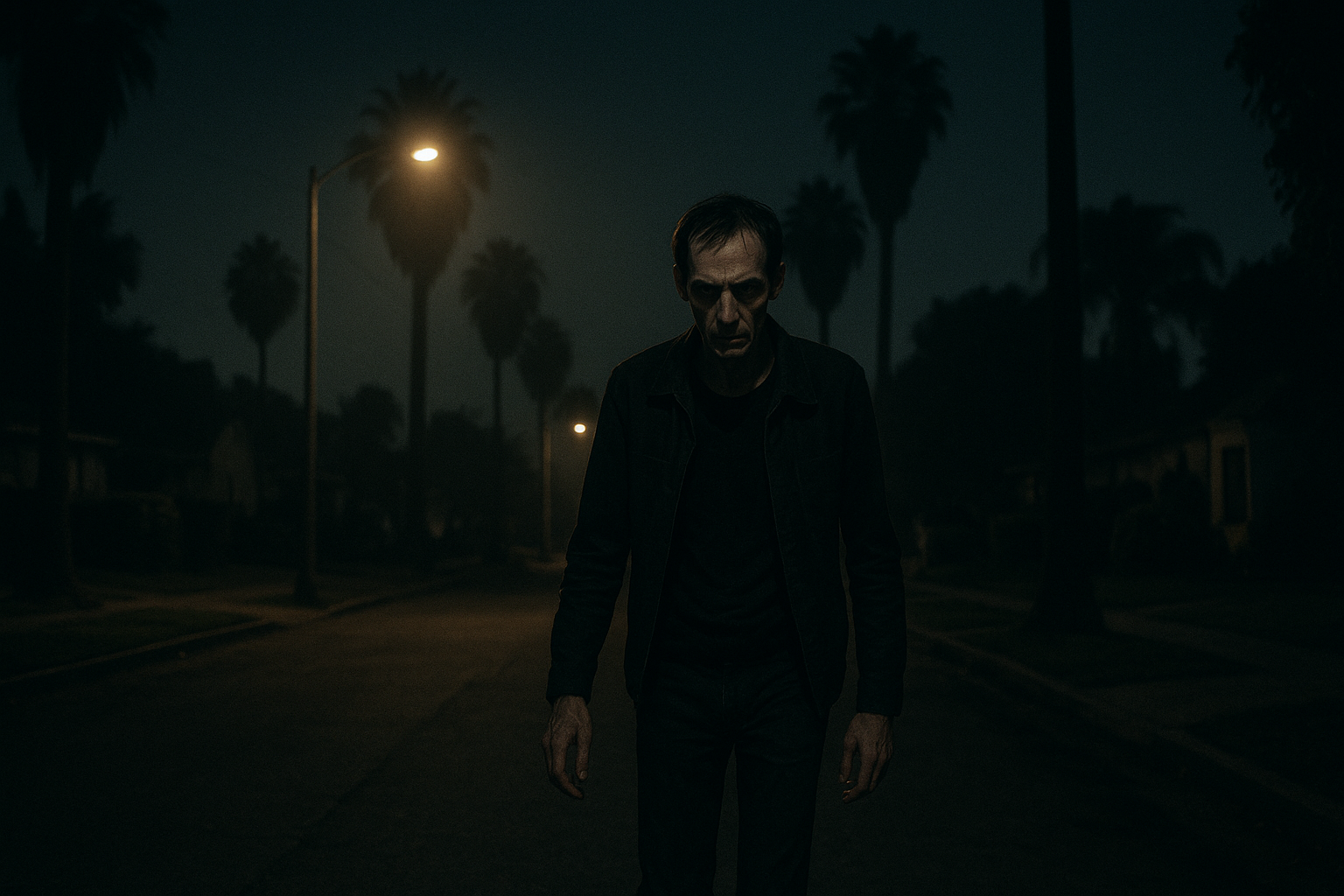
During the summer of 1985, people across Los Angeles started doing things they had never done before. Hardware stores sold out of locks. Families slept with guns beside their beds. Neighbors stayed awake listening for strange noises outside bedroom windows. Parents checked on sleeping children multiple times each night just to make sure they were still safe. Because somewhere in the darkness, a man was entering homes at random, attacking sleeping families, and disappearing before sunrise. His name was Richard Ramirez. But the city would remember him by another name: The Night Stalker.
At first, the murders did not seem connected.
One victim was an elderly woman living alone. Another was a young married couple asleep in their bedroom. Another attack happened miles away in an entirely different neighborhood. Different weapons were used. Different victims. Different crime scenes. Detectives struggled to understand what they were dealing with because the attacks looked chaotic and inconsistent.
But the public did not care about investigative details.
People only saw one terrifying reality.
Someone was entering homes at night.
And nobody knew where he would strike next.
The attacks usually happened after midnight. A family would go to bed believing they were safe. A window might be left slightly open because of the summer heat. A sliding door might stay unlocked because the neighborhood had always felt quiet and safe before.
Then sometime in the darkness, a stranger would already be inside the house.
Sometimes victims woke to footsteps moving down the hallway.
Sometimes they woke staring directly into the barrel of a gun.
Other times they never woke up at all.
What made Richard Ramirez so frightening was how unpredictable he seemed. Most serial killers develop patterns investigators can study. They target similar victims or operate inside certain areas. Ramirez attacked almost anyone. Elderly couples. Young women. Children. Men. Wealthy neighborhoods. Modest homes. Nothing about the attacks felt safe or predictable.
That randomness became its own kind of terror.
Los Angeles is one of the largest cities in America. Normally, its size makes people feel anonymous and protected. But during the Night Stalker murders, the city’s endless neighborhoods suddenly felt dangerous. If the attacks were random, then anyone could become the next victim.
And fear spread quickly.
Fear Began Moving Through Every Neighborhood
By the middle of 1985, nightly life across Southern California had started changing. Gun stores saw long lines. Hardware stores sold extra locks and alarm systems faster than they could replace them. Some neighborhoods organized volunteer patrols with baseball bats and flashlights.
Police hotlines flooded with calls about suspicious strangers.
Most reports led nowhere.
But fear had reached the point where every unexplained sound after midnight suddenly felt important.
One woman later described hearing tree branches scrape against her roof and immediately believing the killer had entered her house. Another family pushed heavy furniture against doors before going to sleep each night. Children began asking parents if locked windows could actually stop the Night Stalker from getting inside.
Even adults became afraid of the dark in ways they had never experienced before.
The media made everything worse.
Television broadcasts warned viewers to stay alert. Newspapers printed terrifying details almost daily. Sketches of the killer appeared everywhere. Stories about satanic symbols, brutal attacks, and survivors waking up face-to-face with a stranger spread across California.
The Night Stalker no longer felt like a criminal.
He felt like something moving invisibly through the darkness itself.
The Man Behind The Night Stalker Murders
Richard Ramirez was born in El Paso, Texas, in 1960. The early parts of his life were filled with violence, instability, and disturbing influences that many people later believed helped shape what he became.
One of the darkest influences came from an older cousin, a Vietnam veteran who reportedly told Ramirez graphic stories about torture, murder, and violence during the war. Friends later described Ramirez as increasingly disconnected from normal life as he got older. Drug use, petty crimes, and violent fantasies slowly became part of his world.
By the early 1980s, Ramirez was drifting through California, sleeping in cheap hotels, stealing cars, and spending nights wandering through Los Angeles.
Then the murders began.
One of the most horrifying aspects of the Night Stalker case was how personal the crimes felt. Ramirez did not attack people in public spaces where danger feels distant or shared. He entered the private spaces people trusted most.
Bedrooms.
Hallways.
Children’s rooms.
Kitchens.
The ordinary parts of home where people are supposed to feel safest.
That is why the fear spread so deeply across Los Angeles. People realized their front door might not actually protect them anymore.
In one attack, Ramirez entered a home while a couple slept peacefully inside. The husband was shot almost immediately. His wife was beaten and assaulted while surrounded by ordinary reminders of family life. In another attack, an elderly woman woke to find a stranger standing beside her bed before she was violently murdered.
Survivors often remembered the same things afterward.
The eyes.
Cold. Empty. Emotionless.
And the terrifying realization that the danger was already inside the room before they fully woke up.
Why Police Struggled To Catch Him
Investigators faced enormous challenges partly because the attacks crossed multiple jurisdictions. Different police departments were investigating different crimes without immediately realizing they were hunting the same person.
But slowly, small clues began connecting the murders.
Witness descriptions.
Stolen vehicles.
Fingerprints.
And one important clue investigators repeatedly found at crime scenes: a distinctive Avia sneaker print.
For the first time, detectives could begin tracing a pattern.
But Ramirez kept escaping.
Each successful attack made him seem even more frightening. He appeared suddenly, committed horrifying violence, then disappeared back into the city before sunrise. Some people became so paranoid they started suspecting strangers everywhere. Cars parked on quiet streets suddenly looked threatening. Unknown faces became reasons for alarm.
And through all of it, Ramirez adapted constantly.
He stole vehicles often, drifted between locations, and used whatever weapon happened to be available. Sometimes guns. Sometimes knives. Sometimes blunt objects. That unpredictability made him difficult to track.
But eventually, luck stopped protecting him.
The Mistake That Finally Exposed The Night Stalker
In August 1985, investigators discovered a stolen vehicle connected to one of the attacks. Inside, they found a fingerprint.
That fingerprint changed everything.
For months, the Night Stalker had existed like a faceless nightmare moving through headlines and police sketches. But fingerprints do not disappear. Detectives ran the print through criminal databases and finally found a match.
Richard Ramirez.
A known offender with a criminal record.
Suddenly, the faceless killer haunting Southern California had both a name and a photograph.
Police released his image publicly.
And almost overnight, Los Angeles turned into a citywide manhunt.
People studied newspapers over breakfast tables. Store owners taped his photograph into windows. Television stations interrupted programming with updates. Neighbors warned each other to stay alert.
For the first time, the public knew exactly who they were hunting.
Ramirez, meanwhile, had no idea how recognizable his face had become.
🔎 Related Investigation:
If this case pulled you deeper into the mystery, continue into:
On August 31, 1985, Ramirez returned to Los Angeles from Arizona.
Almost immediately, someone recognized him.
A person shouted his name.
Ramirez panicked and started running.
What happened next became one of the strangest endings to any serial killer manhunt in American history.
Ordinary citizens chased him through the streets.
Drivers stopped their cars and joined the pursuit. Residents pointed him out as he ran through neighborhoods desperately trying to escape. At one point, Ramirez attempted to steal another vehicle, but people surrounded him before he could get away.
Then the crowd finally caught him.
The man who had spent months entering homes where victims were trapped suddenly found himself trapped instead.
People punched him. Hit him with objects. Held him to the ground while waiting for police officers to arrive. By the time authorities reached the scene, the Night Stalker was bruised, bleeding, and surrounded by furious strangers who refused to let him disappear again.
After months of terror, the city finally had him.
Why The Night Stalker Case Still Haunts People
Richard Ramirez was eventually convicted of numerous murders and violent crimes before being sentenced to death. He spent the rest of his life on death row and died in prison in 2013.
But for many people who lived through the summer of 1985, the fear never completely disappeared.
Because the Night Stalker case was never only about one killer.
It was about what fear can do to an entire city.
People who remember that time often talk less about courtroom evidence and more about the atmosphere itself. The unbearable summer heat mixed with locked windows. The silence after midnight. The sound of helicopters overhead. The constant checking of doors before bed.
They remember how nighttime itself stopped feeling safe.
And maybe that is why the Richard Ramirez story still endures decades later.
Not because he was some criminal mastermind.
Not because he was impossible to catch.
But because for a few terrifying months, he made millions of ordinary people feel vulnerable inside the one place they believed would always protect them.
Their own homes.
That is what transformed the Night Stalker from a serial killer into something larger in the public imagination. He became the face of random fear. A reminder that danger does not always announce itself loudly. Sometimes it arrives quietly, sometime after midnight, while the rest of the city is asleep.
Then suddenly a window moves.
A shadow crosses the hallway.
And an ordinary night becomes something people remember forever.
🔎 If this story stayed with you, the author suggests these real cases next: