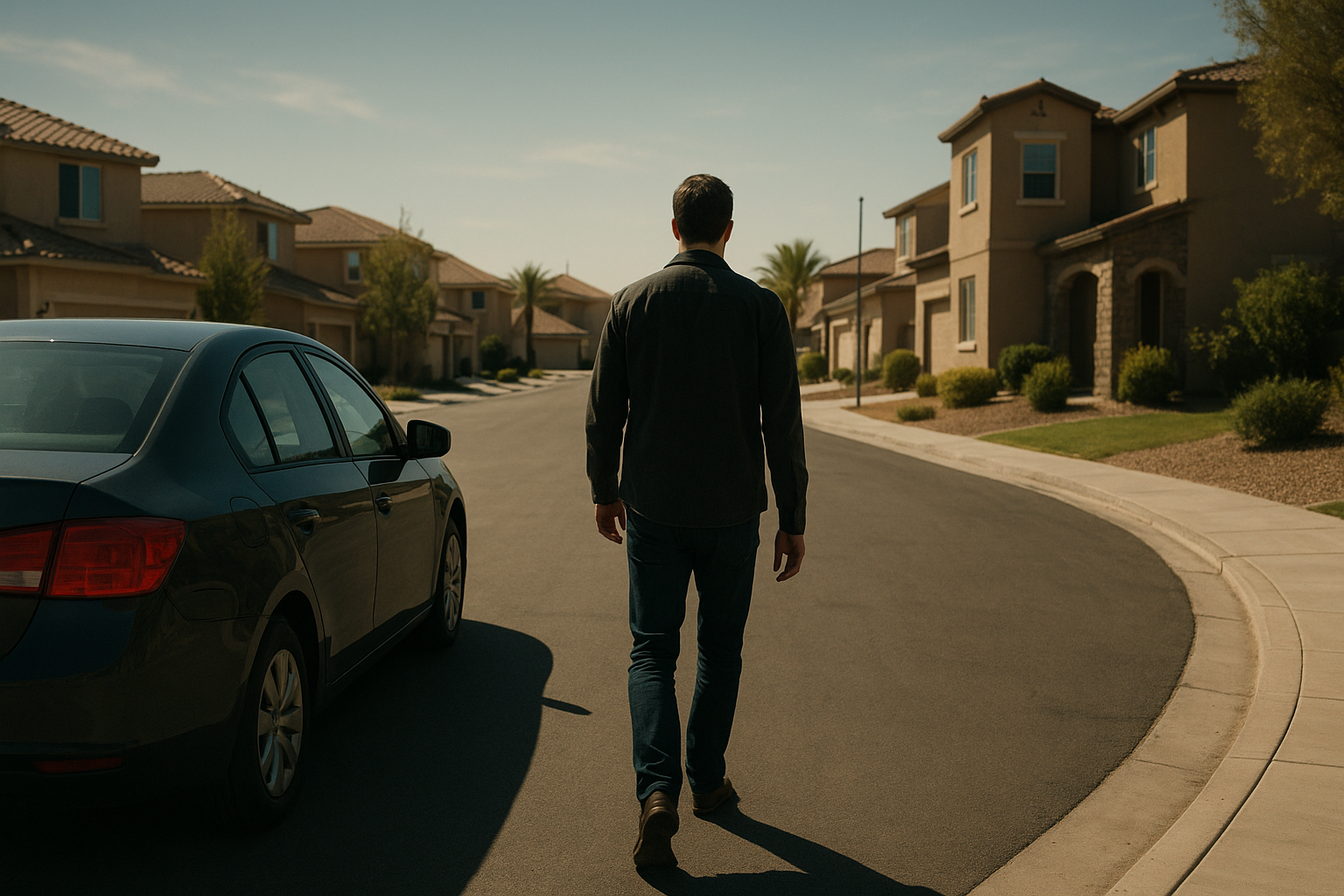
Steven Koecher parked in a quiet Henderson neighborhood on a Sunday morning, stepped out of his Chevrolet Cavalier, and walked into one of the strangest silences in modern missing-person history.
There was no chase in the footage. No obvious panic. No final confrontation caught on camera. Just a 30-year-old man moving through an ordinary suburban street in broad daylight, the kind of place where someone should have noticed if a life was about to split in two.
The Steven Koecher disappearance began on December 13, 2009, when the Utah man was last seen on surveillance footage in Henderson, Nevada. The case still matters because it sits at the crossing point of several haunting clues: a parked car, a final walk, unclear travel before the disappearance, possible financial pressure, and a neighborhood that looked too normal to hide such a permanent mystery.
For readers drawn to cases where a person is visible right up until the final known moment, Steven’s story belongs beside other disappearances caught on surveillance footage, where cameras answer one question and then leave the most important one untouched.
The Quiet Street Where the Trail Broke
Savannah Springs Avenue did not look like the edge of a mystery. It was a residential street in Henderson, outside Las Vegas, with houses, driveways, and the everyday calm of a neighborhood on a Sunday. That makes the footage so hard to shake. Steven did not vanish from a remote trail, a storm-dark road, or a dangerous-looking corner. He walked into a place built to feel watched, mapped, and safe.
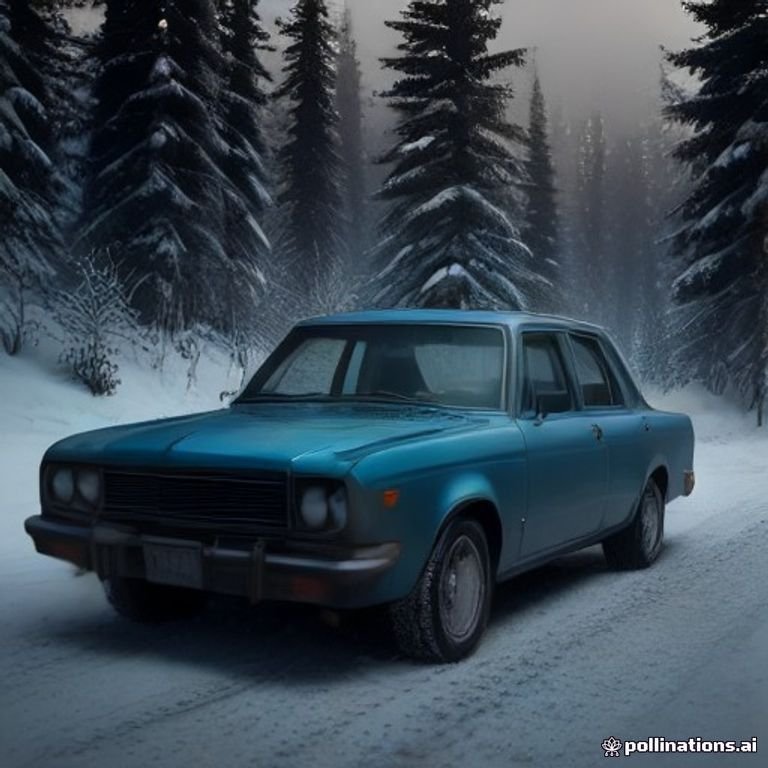
His Chevrolet Cavalier was later found parked near the end of the cul-de-sac. Inside were personal belongings, including wrapped Christmas gifts. That detail has always made the case feel painfully human. Wrapped gifts suggest future plans. They suggest family, obligation, and a life that had not been packed away. Whatever brought Steven to that street, the car did not look like something abandoned by a man calmly closing the door on everyone who loved him.
The surveillance footage shows him walking away from the vehicle. He appears composed. He is not sprinting. He is not visibly struggling. He simply leaves the frame, and from that point forward the story becomes a series of hard edges with empty space between them.
Steven Before Henderson
Steven Koecher was 30 years old, from Utah, and remembered by people close to him as intelligent, private, polite, and connected to his family. He had worked in journalism and had also taken other jobs as his professional life shifted. Like many people after the economic crash, he appears to have been under pressure. Work was unstable. Money was tight. Plans that once seemed solid had started to loosen.
That context matters, but it does not solve the case. Financial stress can explain why someone might drive farther than expected, chase odd job leads, or keep worries quiet. It does not automatically explain why a man would park in a neighborhood far from home and never contact his family again.
In the days before he vanished, Steven’s movements raised questions. He had been in parts of Utah and Nevada, including St. George and then Henderson. Investigators and family members tried to understand whether he was following a job opportunity, meeting someone, delivering something, looking for work, or dealing with a problem he had not shared. Each possibility opens a door, but none leads to a confirmed answer.
Why That Final Walk Feels So Wrong
The most unsettling part of the Steven Koecher case is not that the final sighting is chaotic. It is that it is calm. He walks as if he has a reason to be there. That makes the scene feel less like a random wrong turn and more like a destination.
If Steven was meeting someone, the neighborhood may have been chosen because it seemed harmless. If he was looking for an address, he may have believed he was about to handle something routine. If he was under stress and acting alone, the quietness of the street makes the lack of later sightings even more difficult to understand. A developed suburb does not erase people easily.
That is the pressure point in the case. The footage gives investigators a fixed location and a fixed time, but it stops before the story becomes understandable. Did Steven knock on a door? Did someone pick him up nearby? Did he cut through the area on foot? Did he enter a house voluntarily? Or did something happen after he moved beyond camera range, in a place no lens happened to cover?
Timeline of Events
- Before December 13, 2009: Steven had been dealing with work and money stress, while moving between Utah and Nevada in ways that later drew attention.
- December 13, 2009: He drove to Henderson, Nevada, and parked his Chevrolet Cavalier on Savannah Springs Avenue.
- Late morning: Surveillance footage captured Steven leaving the car and walking away through the neighborhood.
- After the final sighting: He was not confirmed alive again, and the reason for his trip to that exact street remained unclear.
- Later investigation: Police and family examined his vehicle, personal items, travel history, possible job or money leads, and any available records that might explain the gap.
The timeline is short where it should be long. That is why the case remains so frustrating. Investigators can reconstruct the approach and the search after it, but the central moment is still missing.
What the Car Tells Us — and What It Does Not
Steven’s car is one of the strongest pieces of evidence because it anchors the disappearance in a real place. It shows he made it to Henderson, stopped in that neighborhood, and left on foot, at least for the brief stretch captured on camera.
But the car also refuses to explain motive. A parked vehicle can mean someone planned to return soon. It can mean someone expected to be gone only a few minutes. It can mean they were meeting another person and no longer needed their own transportation. Or it can mean the car became a silent witness after events moved somewhere else.
The wrapped gifts inside deepen the emotional weight without giving investigators a clean answer. They argue against a simple picture of someone cutting ties without feeling. But they do not prove foul play by themselves. In cases like found vehicle disappearances, the vehicle often becomes the last solid object in a story where everything else turns unstable.
What Doesn’t Add Up
- The location: There has never been a fully satisfying public explanation for why Steven chose that specific Henderson neighborhood.
- The calm footage: He does not appear to be fleeing danger, yet he vanishes soon afterward.
- The lack of confirmed transition: There is no widely accepted account showing how he moved from that street to wherever he ended up.
- The personal items: The car and gifts make the disappearance feel abrupt, not carefully staged.
- The ordinary setting: A suburban street should have produced more witnesses, more cameras, or more certainty. Instead, it produced a wall.
That combination is why the case keeps pulling people back. One clue points toward a planned meeting. Another points toward sudden harm. Another leaves room for a private crisis. None of them closes the circle.
Theories That Still Circle the Case
One theory is that Steven went to Henderson for work or money reasons and met the wrong person. This fits the sense that he may have had a purpose for being there, but it depends on a meeting that has never been publicly proven in a way that solves the case.
Another possibility is that he entered a home or vehicle willingly and then something happened out of sight. That would explain why there was no public struggle on the street, but it raises another question: who was waiting, and why has no physical trail clearly exposed them?
Some have wondered whether Steven chose to disappear because of stress. But that theory struggles against the abandoned car, the gifts, his family ties, and the absence of a later confirmed life. Voluntary disappearance can happen, but in Steven’s case it requires believing he walked away with very little visible preparation and then stayed hidden completely.
There is also the possibility of a crisis or disorientation, followed by misadventure. In southern Nevada, developed neighborhoods are not far from harsher spaces. Still, investigators and searchers have never found the kind of answer that would make that explanation settle.
Why This Case Still Gets Attention
Some missing-person cases become famous because of a shocking scene. Steven Koecher’s case is different. It lasts because of absence. The footage is ordinary enough that viewers keep trying to extract more from it: a hesitation, a glance, a sign he knew where he was going. But the video will not give them the missing piece.
The case endures because it feels so close to normal life. Steven was not doing something that looked impossible to understand. He was driving. Parking. Walking. Those actions are ordinary until the ending changes them.
The Unfinished Center of the Story
For Steven’s family, the mystery is not an online puzzle or a chilling clip. It is the absence of a son and brother. Families in cases like this are forced to live with details that never become answers. They revisit maps, timelines, habits, money records, possible sightings, and old conversations, searching for the one missed hinge that could open the whole case.
That is the cruelest part of the Steven Koecher disappearance. The story seems to stop just before explanation. If the footage lasted a few more minutes, maybe it would show a meeting. If one neighbor had looked out at the right second, maybe there would be a vehicle description. If one record had surfaced with the right name, maybe the neighborhood would finally make sense.
Instead, the case remains suspended on a quiet street in Henderson. A parked car. Wrapped gifts. A man walking with purpose. A camera that stops too soon.
More than fifteen years later, the silence still does not feel empty. It feels like something is hidden inside it.
FAQ
What happened to Steven Koecher?
Steven Koecher disappeared on December 13, 2009, after parking his car in a Henderson, Nevada neighborhood and walking away on surveillance footage. He has not been found, and no public explanation has fully answered why he was there or what happened after he left the camera’s view.
Where was Steven Koecher last seen?
He was last seen in the area of Savannah Springs Avenue in Henderson, Nevada. Surveillance footage showed him walking away from his parked Chevrolet Cavalier in a residential neighborhood.
Why is Steven Koecher’s car important?
The car anchors the final known scene. It showed where he stopped, that he left on foot, and that personal items were left behind. But it does not explain whether he planned to return, was meeting someone, or encountered trouble after walking away.
Is the Steven Koecher disappearance still unsolved?
Yes. Steven remains missing, and the central questions in the case remain unresolved: why he went to that neighborhood, where he went after the footage ended, and whether he met someone there.
Why does the Steven Koecher case still get attention?
Because the final footage is so calm and ordinary. It shows a man walking through daylight in a safe-looking neighborhood, then the trail simply ends. That contrast between normal movement and total disappearance is what makes the case so haunting.
Continue exploring:
- Enter the archive of disappearances built from timelines, cameras, sightings, and missing clues
- Follow the cases where the vehicle stayed behind and the person did not
- Read the Ray Gricar disappearance, another case where a vehicle and a route raised more questions
- Step into Jason Jolkowski’s short walk that somehow became a permanent mystery
- Return to the night Brian Shaffer entered a bar and seemed to vanish from the frame
More Disappearances stories: