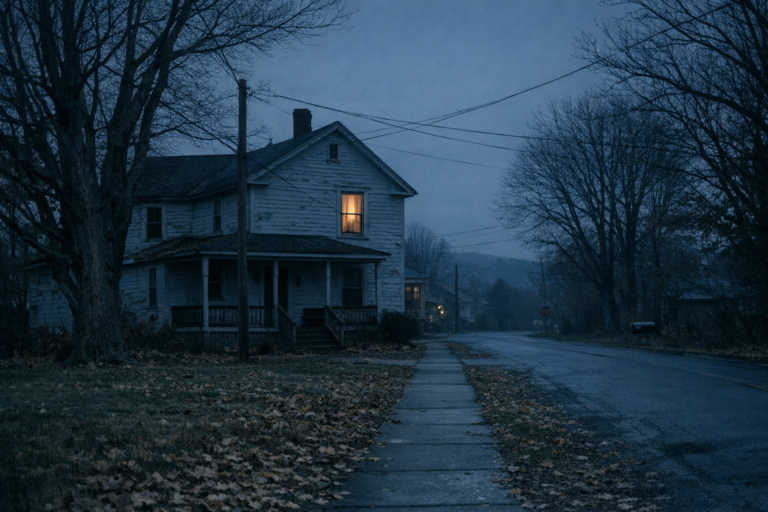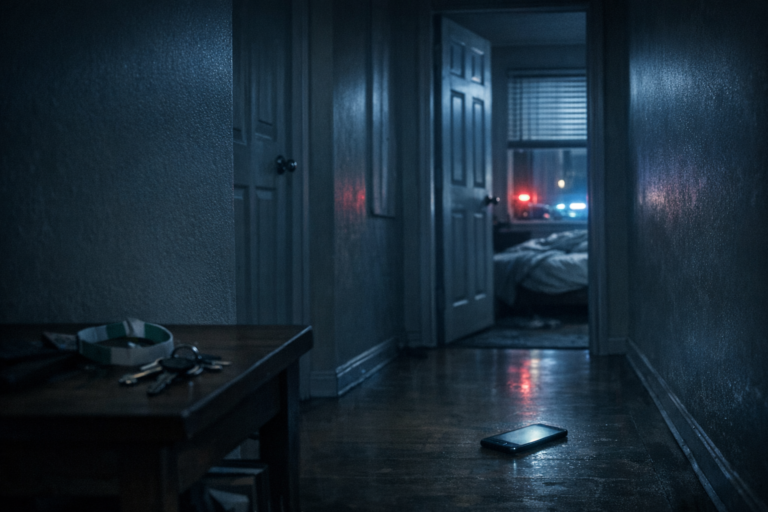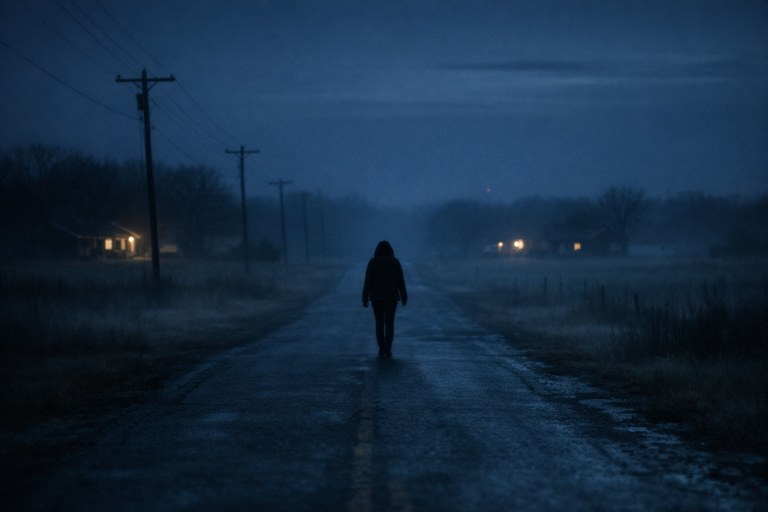
At 2:50 in the morning, Brandon Swanson was still on the phone with his father, still walking through black farm country, still sounding like a young man dealing with a problem he thought he could solve. Then he suddenly blurted out, “Oh, sh*t!” and the line went dead. No scream. No struggle. No second call. Just one startled outburst in the dark, followed by a silence that has lasted for years.
The Brandon Swanson disappearance remains one of the most unsettling missing person cases in modern America because the mystery begins at the exact moment the story should become clear. A 19-year-old college student called home after his car slid into a ditch, stayed connected for 47 minutes, and appeared to be actively moving toward help. Instead, Brandon vanished, and every solid clue somehow made the final gap feel stranger.
That is part of what makes cases built around last known movements so haunting. In stories like these disappearances where the timeline still doesn’t add up, the evidence is not completely missing. It is close enough to touch, and still somehow not enough.
The Night the Phone Call Turned Into a Mystery
On the night of May 13, 2008, Brandon had been out with friends near Canby, Minnesota, celebrating the end of the college semester. He was 19 years old, a student at Minnesota West Community and Technical College, and by every account the evening began as ordinary as countless other nights before it.
Eventually, Brandon started driving home.
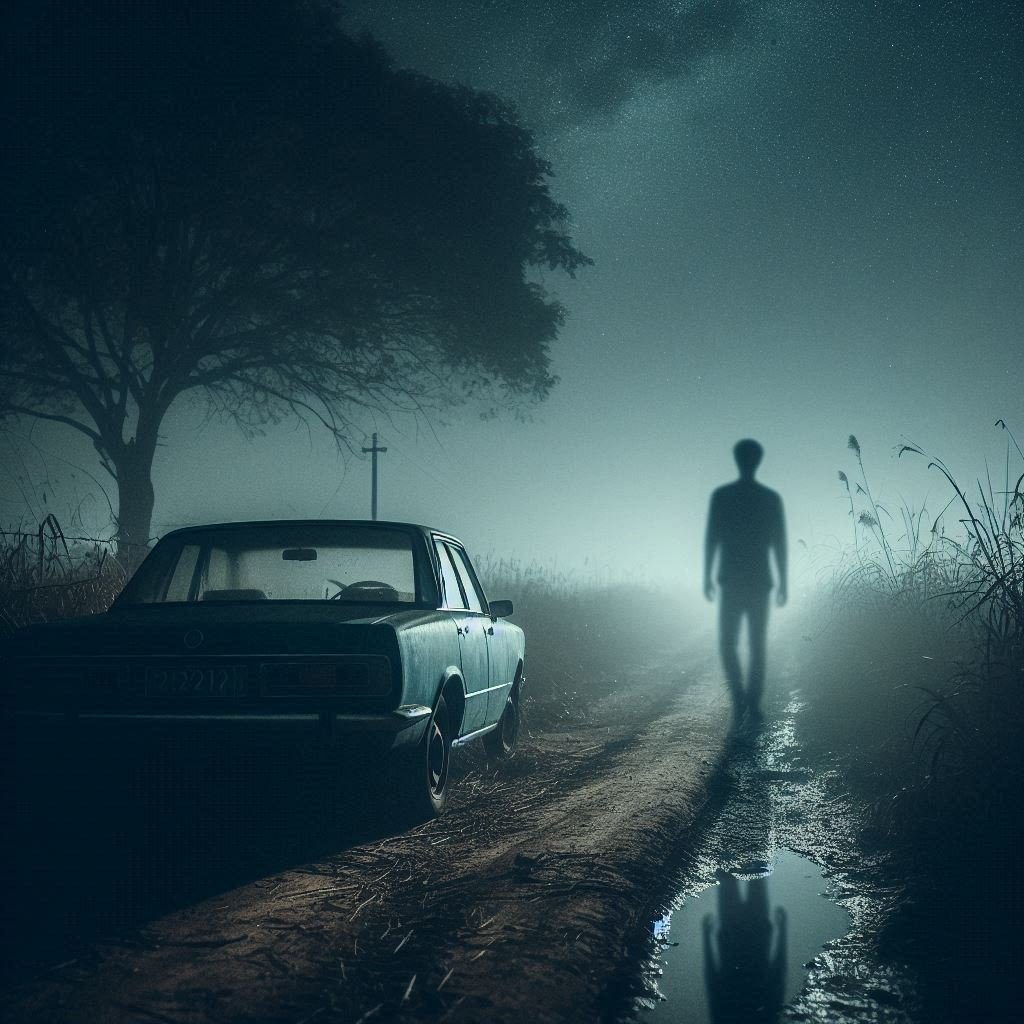
Somewhere along a rural gravel road, his Chevy Lumina slid into a ditch.
When he called his parents, Brian and Annette Swanson, this did not sound like the beginning of a national mystery. It sounded frustrating. Maybe embarrassing. The kind of late-night phone call parents answer while immediately shifting into problem-solving mode.
Brandon believed he was near Lynd, Minnesota. His parents got into the car to find him. While they drove, Brandon decided he would start walking and stay on the phone with his father.
For the next 47 minutes, the two remained connected.
Brandon described gravel roads, fences, open fields, and distant lights. He sounded calm. He sounded alert. At times, he even sounded confident that he could see the town lights ahead.
But something was wrong.
His parents were searching the Lynd area in real time, and nothing Brandon described matched what they were seeing.
Somewhere out in the darkness, Brandon kept walking past empty fields and narrow gravel roads while his father tried to guide him home through a phone line. The farther the conversation went, the stranger it became. Brandon sounded certain. His father sounded increasingly confused. And neither of them realized they were talking across two completely different parts of rural Minnesota.
That growing mismatch is what gives the case its awful tension. Brandon remained present, audible, reachable — and yet somehow drifted farther out of reach with every passing minute.
It is one reason this case gets compared to stories like the Brandon Lawson disappearance, where a live phone call leaves behind more atmosphere than answers.
Timeline of Brandon Swanson’s Final Hours
- Late evening, May 13, 2008: Brandon spends time with friends near Canby, Minnesota, after finishing the semester.
- About 1:54 a.m., May 14: He calls his parents after his Chevy Lumina slides into a ditch on a rural road.
- Shortly after the call begins: Brandon says he believes he is near Lynd and begins walking while talking to his father.
- For roughly 47 minutes: He describes roads, fences, lights, and open farmland that do not line up with where his parents are searching.
- About 2:50 a.m.: Brandon suddenly says, “Oh, sh*t!” and the call disconnects.
- Moments later: His parents repeatedly try calling back, but Brandon never answers.
- After daylight: Search efforts begin around Lynd before investigators realize Brandon was actually somewhere else entirely.
- Later investigation: Cell phone records reveal Brandon was near Porter, Minnesota, roughly 25 miles from where he believed he was.
The timeline is not vague. That is exactly why the case lingers.
A disappearance with no timeline leaves room for chaos. A disappearance with a timeline this narrow creates a different kind of unease, because the final unknown feels like it should be small enough to solve.
Lynd, Porter, and the Geography That Broke the Search
One of the most important details in the Brandon Swanson case is also one of the easiest to underestimate:
He was wrong about where he was.
Brandon believed he was near Lynd. Investigators later concluded he was actually near Porter, around 25 miles away.
In rural farmland at night, that kind of mistake becomes dangerous fast. Roads look identical. Fields stretch endlessly in every direction. Distant lights can convince a tired person they know exactly where they are when they do not.
His parents were not simply missing him by a turn or two. They were searching the wrong town entirely.
That discovery explained why they could never find him during the call. But it also created the hardest question in the case:
How did Brandon become so certain of a place he was nowhere near?
Like the Jodi Huisentruit disappearance, this is a case where the known details should have narrowed the truth, but instead made the missing part sharper.
The Search Area, the Car, and the Problem of the Missing Trace
Once investigators realized Brandon had not been near Lynd, the search shifted toward the Porter area.
His Chevy Lumina was eventually located in a ditch along a remote gravel road, confirming that Brandon had indeed been somewhere completely different from where he thought he was.
Normally, finding the vehicle pulls a missing person case into focus. It narrows the geography. It gives investigators a physical center.
But in disappearances like this, the car becomes something almost cruel.
It tells you where the story tightened.
It does not tell you how it ended.
Searchers spent years combing the surrounding area with volunteers, tracking dogs, helicopters, and repeated ground searches. Investigators focused heavily on nearby farmland, drainage areas, and the Yellow Medicine River.
Yet Brandon himself was never found.
No confirmed remains.
No backpack.
No clothing.
No personal item that clearly explained what happened after the phone call ended.
What Doesn’t Add Up
- The location error: Brandon was not slightly mistaken. He was roughly 25 miles from where he believed he was.
- The length of the call: He remained connected for 47 minutes, meaning the situation did not begin as a sudden catastrophe.
- The tone shift: Until the final moment, Brandon reportedly did not sound panicked or terrified.
- The final outburst: “Oh, sh*t!” sounds sudden and reactive — but that reaction could point to a stumble, water, a drop, an obstacle, or something unexpected in the darkness.
- The lack of physical evidence: Years of searching never produced the kind of trace many people expected if the explanation were entirely accidental and local.
Those are the pressure points in the case.
None of them proves foul play.
None of them eliminates accident.
But together they keep the story from settling into a comfortable explanation.
The Yellow Medicine River Theory
The most widely accepted explanation is also the one that initially sounds the most ordinary:
Brandon may have accidentally fallen into the Yellow Medicine River or nearby water during his walk through the darkness.
There are reasons this theory has survived.
Brandon was moving through unfamiliar terrain late at night. The area included uneven ground, steep embankments, drainage cuts, thick vegetation, and water. If he suddenly stepped into a hidden drop or muddy riverbank, the final startled exclamation would make sense.
It also explains the abrupt silence.
But for many people, the river theory still feels emotionally incomplete.
It explains the final second better than the years afterward.
Search teams spent enormous amounts of time working the area. Yet so little physical evidence ever surfaced that many people continue to wonder whether something else happened after the call ended.
That does not make the river theory weak.
It simply means the most plausible explanation still does not feel fully satisfying.
What Likely Happened?
If the goal is honesty rather than drama, the Brandon Swanson case seems to narrow into two broad possibilities.
The first is accidental death caused by disorientation and terrain.
Brandon may have misjudged his location, wandered deeper into rural land, encountered water or a sudden drop in darkness, and disappeared in a way the environment never cleanly revealed afterward. This remains the explanation most consistent with the geography, the conditions, and the abrupt final words heard on the call.
The second possibility is some form of outside encounter.
That could mean foul play, a confrontation, or an unexpected interaction after the phone call disconnected or at the exact moment it ended.
The reason people continue considering that possibility is simple: when physical evidence remains this limited, uncertainty naturally expands.
Still, there is an important difference between a case that invites suspicion and a case that contains strong evidence of homicide.
Publicly, Brandon Swanson’s disappearance has never produced the kind of confirmed evidence that clearly points investigators toward foul play.
The most likely explanation may still be a tragic accident shaped by darkness, confusion, exhaustion, and dangerous terrain.
The hardest part is that “most likely” is not the same thing as “proven.”
That unresolved space is where the case has remained ever since.
It also connects naturally with other haunting disappearances, including cases where the car was found but the person was never seen again. Once the vehicle is recovered, the story should narrow. In some disappearances, it only becomes stranger.
?? Related Investigation:
If this case pulled you deeper into the mystery, continue into:
🔎 Related Investigation:
If this case pulled you deeper into the mystery, continue into:
🔎 Related Investigation:
If this case pulled you deeper into the mystery, continue into:
Why the Case Still Gets Attention
Brandon Swanson’s disappearance continues to pull people in because it feels so close to being solvable.
There was a live conversation. A father listening in real time. A vehicle. A corrected search area. A likely environmental danger.
And yet the case still never crossed the line from probable to known.
That is why the final phone call remains the emotional center of the story.
It is not just eerie.
It is unusually intimate.
Most cold cases lose their subjects in long stretches of unobserved time. Brandon remained present almost to the very end, audible in the darkness, trying to orient himself while someone who loved him listened helplessly from the other side of the line.
The case also left a real-world impact. Minnesota later passed Brandon’s Law, requiring law enforcement to take missing adult reports immediately when dangerous circumstances are involved.
If another disappearance involving confusion, distance, and a vehicle left behind stayed with you, the Maura Murray disappearance carries a similarly haunting atmosphere.
FAQ
What happened to Brandon Swanson?
Brandon Swanson disappeared in the early morning hours of May 14, 2008, after calling his parents when his car slid into a ditch on a rural Minnesota road. He remained on the phone for roughly 47 minutes before suddenly saying, “Oh, sh*t!” and disconnecting. He has never been found.
Was Brandon Swanson ever found?
No. Despite extensive searches over many years, Brandon Swanson has never been located, and no confirmed physical evidence has resolved the case.
Why is Brandon Swanson’s last phone call so important?
The call matters because it captured Brandon alive and speaking in real time almost up to the moment the mystery begins. It provides investigators with a narrow timeline while still failing to explain what caused the sudden silence.
Where was Brandon Swanson actually located?
Although Brandon believed he was near Lynd, investigators later determined he was actually near Porter, Minnesota, about 25 miles away. That mistake changed the entire search effort.
What is the leading theory in the Brandon Swanson case?
The leading explanation is that Brandon became disoriented in the darkness and suffered a fatal accident involving nearby terrain or water, possibly the Yellow Medicine River. However, because no definitive evidence was ever recovered, debate around the case continues.
🔎 If this story stayed with you, the author suggests these real cases next:
- Another final phone call that ended in confusion and silence
- The TV anchor who vanished during an incredibly narrow morning window
- The crash scene that should have led directly to answers
- The woman whose final known movements were partially captured on camera
Explore more Disappearances stories here: