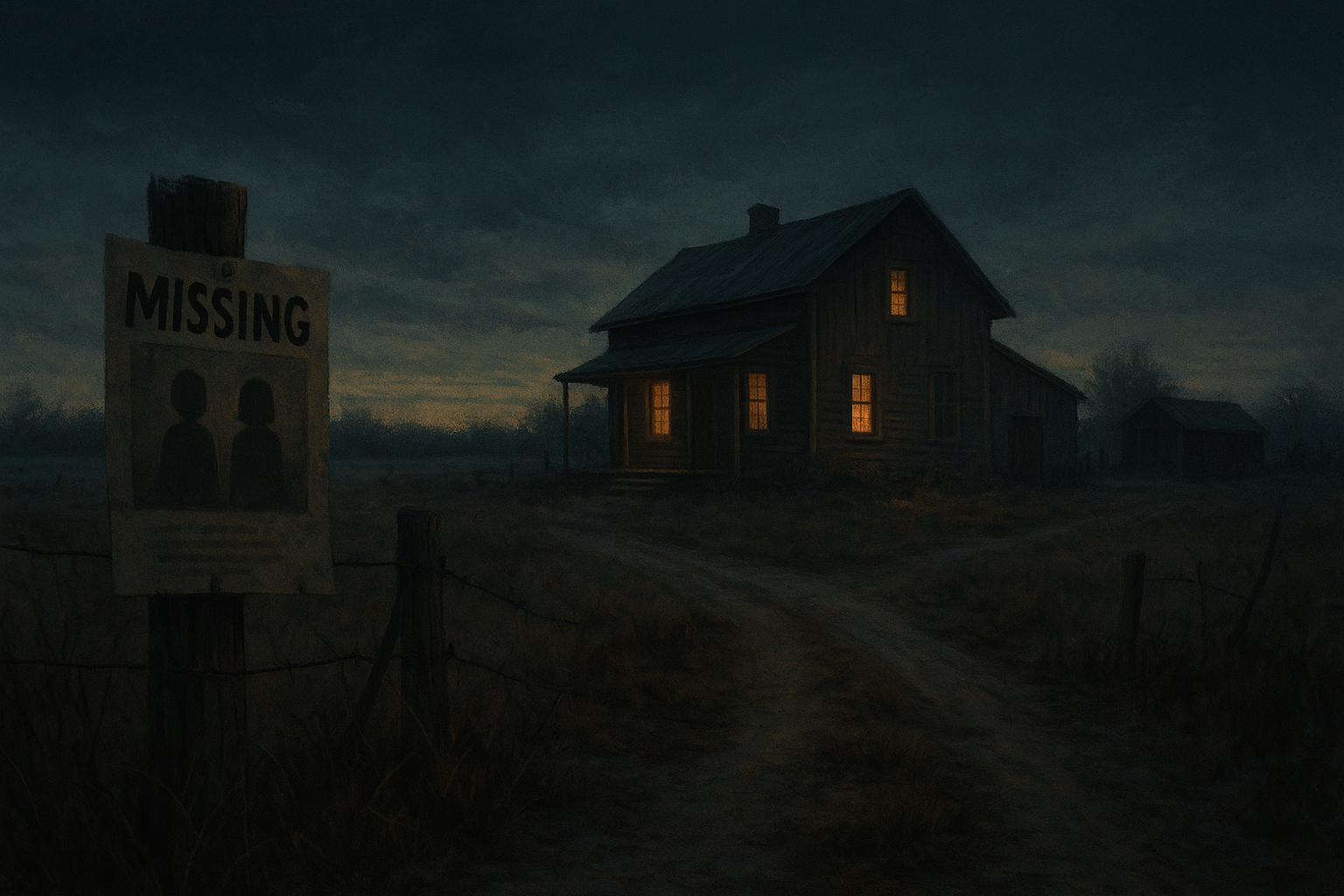
Just before dawn, in a quiet patch of rural Nova Scotia, a home that should have sounded ordinary suddenly went still.
That is the image people keep returning to in the Lilly and Jack Sullivan disappearance. A mother inside the house. Two children who had been heard only moments earlier. Thick woods beyond the door. Then a silence so complete that, more than a year later, investigators still cannot fully explain what happened next.
Lilly Sullivan and Jack Sullivan were reported missing on May 2, 2025, from their home in Lansdowne Station, Nova Scotia, and the case has become one of the most unsettling child disappearance investigations in Canada. It still grips people because the search was immediate, the attention was massive, and yet the basic question has never changed: how do two young siblings vanish and leave so little behind?
If child disappearance cases pull you into the details that refuse to settle, the site’s Missing Children and Teens Archive opens that same unbearable pattern across other cases families are still waiting to understand.
The morning everything broke
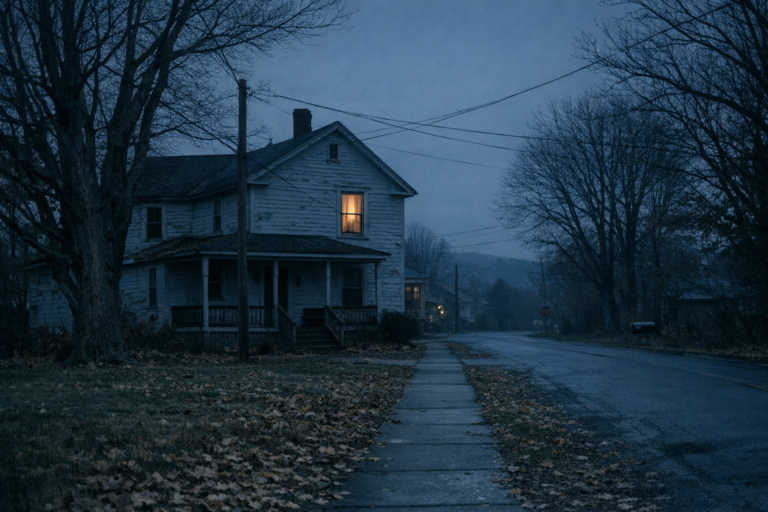
Lansdowne Station is the kind of place where distance matters. Homes are spread out. Roads thin into wooded stretches. Once daylight drops away, the landscape stops feeling wide and starts feeling hard to read. That setting matters because when Lilly and Jack disappeared, the first fear was the simplest one: maybe they had gone outside and gotten lost.
According to public reporting, Lilly, 6, and her younger brother Jack were reported missing on the morning of May 2, 2025. They were living with their mother, Malehya Brooks-Murray, their stepfather, Daniel Martell, and the couple’s baby daughter. Brooks-Murray and Martell have both said they heard the children inside the home that morning. Then the home went quiet. Then the children were nowhere to be found.
That sequence is part of what keeps the case so disturbing. This was not a disappearance built around a long public timeline, a drive, a last text, or a stranger caught on camera. It seems to collapse inward almost immediately. The children were there, and then they were not, and by the time panic gave way to a 911 call, the search had already become a race against terrain, weather, and uncertainty.
Police and volunteer searchers moved fast. Drones went up. Dogs were brought in. Helicopters and ground teams followed into woods dense enough to swallow sight and sound almost instantly. But the first days did not produce the clear route or clean answer people wanted.
Timeline of Events
- May 1, 2025: The family is last publicly seen together the day before the children are reported missing.
- Early morning, May 2, 2025: Lilly and Jack are reportedly heard inside the home in Lansdowne Station.
- May 2, 2025: Their mother calls 911 after realizing the children are gone.
- Immediate aftermath: A major search begins in the thick woods surrounding the rural property, involving police, volunteer search teams, dogs, drones, and helicopters.
- Following days and weeks: The investigation expands beyond the first grid search and begins pulling in tips, video canvasses, interviews, and forensic review.
- Later investigative phase: RCMP Major Crime continues the case under the Missing Persons Act, examining digital records, conducting formal interviews and polygraphs, and reviewing search-warrant material.
- One year later: Public searches continue, volunteers return to the area, and the case remains unresolved.
That timeline is short on dramatic turns, which is exactly why it feels so heavy. There is no clean handoff from ordinary life to known danger. The whole case lives inside a blur between the last time the children were believed to be safe and the first moment everyone understood something had gone terribly wrong.
That is also why cases built around the final known sequence, like those collected in The Final Timelines That Still Don’t Close, stay with people so long. Once a disappearance becomes a timeline problem, every minute starts to feel like evidence.
What investigators actually had
One reason this case drew so much attention is that the search was huge, but the physical evidence discussed publicly remained painfully limited. Over time, reporting pointed again and again to two details: a pink blanket connected to Lilly and child-size boot prints found in the area. Neither detail solved the case. Both only deepened the sense that something meaningful might be nearby without ever becoming enough to explain the disappearance.
The blanket mattered because it was tangible. It was one of the few things searchers could point to and say this may connect directly to the children. The boot prints mattered for a similar reason. They suggested movement, possibility, maybe even direction. But possibility is not the same thing as proof. Police have not publicly said those traces answered the larger question of where Lilly and Jack went or what happened after they left the home.
As the months went on, the investigation became less visible but more layered. RCMP Major Crime took the lead. Public updates described a widening case file rather than a narrowing one: thousands of videos reviewed, hundreds of tips assessed, dozens of formal interviews completed, some polygraphs administered, materials seized and examined, and search-warrant applications filed. Public reporting later added that investigators had reviewed phone and banking records of people closest to the children and were using technology-heavy methods to keep pushing for answers.
That kind of work sounds slow from the outside because it is slow. It is not cinematic. It does not produce an ending every week. But it does tell you something important about the case. Police did not treat this as a brief local mystery that burned out after the first search. They treated it as an active, serious, unusually difficult disappearance requiring sustained review.
Key Evidence and the Unknowns
- Known: Lilly and Jack were reported missing from their home in Lansdowne Station on May 2, 2025.
- Known: A major rural search began immediately and involved extensive ground and air resources.
- Known: Public reporting has identified a pink blanket and child-size boot prints as part of the known physical evidence discussed around the case.
- Known: RCMP have said there is no evidence the children were abducted.
- Known: The case has continued under the Missing Persons Act rather than formally shifting to a criminal case, though police have never ruled out that criminality could eventually emerge.
- Unknown: Exactly how the children left the home.
- Unknown: Whether the physical evidence found in the area maps to a complete route or only fragments of one.
- Unknown: Whether the disappearance began as wandering, concealment, foul play, or something investigators have not publicly described.
- Unknown: Why such an intensive response has still not produced the kind of decisive break the public expects.
That last point may be the hardest part to sit with. In many disappearance cases, uncertainty fades into one of a few familiar shapes. There is surveillance. A vehicle is found. A witness surfaces. A digital breadcrumb places the missing person somewhere specific. Here, the uncertainty has remained stubbornly broad. The case keeps refusing to become one thing.
What doesn’t add up
The public has often treated this as a case of two children simply wandering into the woods. But even that explanation has always felt too neat. Children do leave homes. Children do get lost. Rural terrain can turn a short distance into a fatal one very quickly. None of that is impossible. What makes this case different is how little closure that explanation provides when matched against the scale of the response and the amount of time that has passed.
RCMP have said publicly there is no evidence of abduction. That narrows one lane, but it does not settle the others. At the same time, police have also avoided giving the public a reassuring alternate explanation. They have not stepped forward and said, with confidence, that this was definitely a straightforward wandering case. Instead, the language around the investigation has remained careful, deliberate, and unfinished.
That careful language matters. In court-related reporting months later, officials acknowledged there were not reasonable grounds at that point to say a crime had taken place, but also made clear the investigation could become criminal if the evidence led there. That is not the same as ruling anything out. It is a way of saying the case remains open in more than one direction.
The family context has also drawn attention, especially after court documents described allegations about conflict in the relationship between the children’s mother and stepfather before the disappearance. Those details do not prove what happened to Lilly and Jack. They do explain why investigators would scrutinize the home environment just as closely as the woods outside it.
That is part of why this case fits so naturally beside unresolved family-linked disappearances and last-known-moment mysteries, like those explored in What Happened After the Last Sighting? and What Happened to Them?.
Why the case still holds people
Some stories stay in the news because they change constantly. This one stays alive for the opposite reason. It keeps circling the same wound.
Two small children vanished. Searchers came fast. The country paid attention. The investigation grew larger and more technical. Still, the central image never improved. There are no recovered children, no public explanation that makes the timeline feel solid, and no single clue strong enough to settle the case in the public mind.
A year after the disappearance, volunteers were still returning to the same ground and still treating the case as unfinished. That is probably why the Lilly and Jack Sullivan case keeps pulling people back. Children are supposed to be easiest to account for when they are at home. In this case, home became the beginning of a mystery rather than the protection against one.
FAQ
What happened to Lilly and Jack Sullivan?
Lilly and Jack Sullivan were reported missing from their home in Lansdowne Station, Nova Scotia, on May 2, 2025. Investigators have carried out a major long-running search and review process, but there is still no public explanation that fully accounts for how the children disappeared.
Is the Lilly and Jack Sullivan case still unsolved?
Yes. The case remains unsolved. RCMP Major Crime has continued investigating, reviewing tips, videos, interviews, digital material, and search evidence while asking the public for information on the children’s whereabouts.
Did police say Lilly and Jack Sullivan were abducted?
No. RCMP have said publicly that they do not have evidence the children were abducted. That has not ended the uncertainty, though, because investigators also have not provided a complete alternate explanation for what happened.
What evidence has been discussed publicly in the case?
Public reporting has repeatedly mentioned a pink blanket and child-size boot prints found in the search area. Those details have been important, but they have not produced a public breakthrough explaining the children’s disappearance.
Why does this case still get so much attention?
Because the disappearance involves two very young siblings, an immediate and massive search, and a mystery that still feels structurally incomplete. People expect a case like this to leave a clearer trail than it has.
🔎 If this story stayed with you, the author suggests these real cases next:
- An archive of child and teen disappearances where the routine broke without warning
- The nine-year-old who walked into the dark and was never fully explained
- Disappearance timelines reconstructed minute by minute that still refuse to close
- Cases that seem to snap apart at the last known moment
Explore more Disappearances stories here: