On August 24, 1951, ten-year-old Beverly Potts attended the Showagon at Halloran Park in Cleveland. She did not return home.
Her friend Patricia “Patsy” Swing had a different deadline. She was supposed to be home before dark. Beverly’s parents had given their daughter permission to stay until the show ended. When the Potts family began looking for Beverly that evening, Patsy was already back at her own house on Linnet Avenue. She could say where the girls had parted. She could not tell them which way Beverly went afterward.
Two trips to Halloran Park
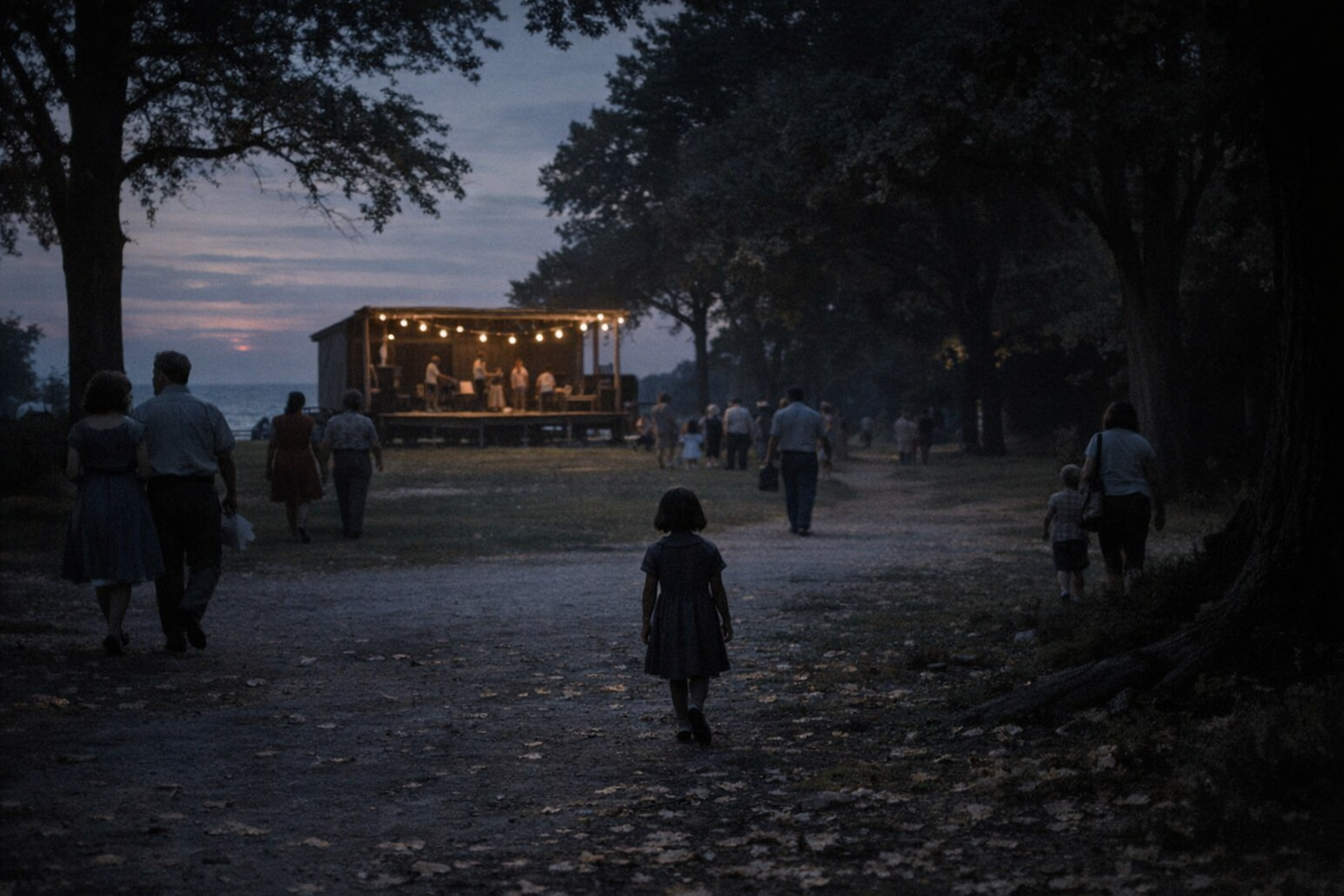
The Showagon brought a free variety show to Cleveland’s neighborhood parks. The Cleveland Press and the city recreation department sponsored it. Performers could sing, dance or do magic on a portable stage. On that Friday in August the show had come to the West Side, within walking distance of Beverly’s home. There was a reason to go and a reason for her mother to hesitate. According to the Charley Project’s case history, Beverly had recently returned late from the park. Her mother made an exception for the performance.
The girls first travelled by bicycle, returned home to leave the bikes and went back on foot. That first return matters. The sight of the bicycles at home belonged to a trip both children completed. By about eight, according to the case history, the two were back at Halloran Park watching the show. This time only Patsy made the return journey that anyone could account for.
Patsy left shortly before nine. She remembered Beverly standing near a woman whose hand rested on Beverly’s shoulder. This is a detail from Patsy’s recollection, and its limits matter for the woman as well as for the child. It places two people near one another during a public performance. Patsy did not report seeing the woman lead Beverly away.
Timeline of Events
- Evening, August 24, 1951. Beverly and Patsy cycle to Halloran Park, take their bicycles home and return on foot.
- Shortly before 9 p.m. Patsy leaves. Beverly has permission to remain for the end of the performance.
- About 9:30 p.m. A teenage acquaintance reports seeing a girl he believes is Beverly crossing the park.
- About 10:30 p.m. After looking for Beverly, her family reports her missing to Cleveland police.
What Doesn’t Add Up
The accounts of when Beverly was last seen can sound more definite than the witnesses were. Kent State University Press’s summary of historian James Jessen Badal’s investigation gives the time as nine o’clock. The Charley Project describes a later report by a thirteen-year-old boy who knew her. At about half past nine, as the park was emptying, he saw a girl walking diagonally in the direction of her home. He thought he recognized Beverly by the way she walked.
If the boy was right, Beverly was still near home after the show. Even then, his account would cover only the moments he saw her walking. If he was mistaken, Patsy’s departure leaves a longer gap. Neither account describes a child getting into a car, leaving with a particular person or arriving at Linnet Avenue. Beverly’s reputation for being cautious around strangers has sometimes figured in theories about who could have approached her. It cannot identify the person she encountered or even establish that an approach happened inside the park.
A search that began on Linnet Avenue
Beverly’s father, Robert, went to look for her. The family contacted Cleveland police at about half past ten. In a later reconstruction for The Plain Dealer, Fred McGunagle described neighbors already searching on foot with flashlights and driving through the neighborhood. At the house, Beverly’s older sister Anita worked through the names of Beverly’s friends by telephone. A call to the right household might still have accounted for the child without taking the search farther from home.
Instead the search widened. Railroad police looked in empty boxcars. Mounted officers worked on the West Side, and Boy Scouts searched fields around the park. Cleveland television stations and newspapers carried Beverly’s picture. Mayor Thomas Burke used the radio to appeal to people who had attended the show to arrange interviews with police. Asking spectators to come forward offered a way to find witnesses who had already gone home by the time anyone knew Beverly was missing.
The Ohio Attorney General’s description still records things a witness might have recognized: the bobbed blond hair with bangs, the blue jeans that fastened at the side, the navy jacket and the loafers. The park and the clothing could help a stranger place a memory. The great difficulty was determining whether someone who remembered seeing a child in the area had actually seen Beverly.
The letters investigators could check
Years later, a document found beneath a carpet in a Cleveland house appeared to offer a new lead. The 1960 letter came to light in 1994. Its writer accused her husband of disposing of Beverly’s body. Investigators had an address and property records with which to trace a real person. According to the Charley Project, they located the woman who had written it. She acknowledged writing the letter and said the allegation was false.
In 2000 another letter reached The Plain Dealer. Detective Robert Wolf was assigned to investigate the anonymous writer’s claim of responsibility. The correspondent held out the prospect of identifying himself on August 24, 2001, fifty years after the disappearance. That date passed without the promised identification. The correspondence produced work that investigators could undertake, but it did not supply Beverly’s whereabouts or an established account of what happened to her.
In August 2015, Cleveland Crime Stoppers made a public appeal following another anonymous tip. Its interim director said investigators could check one detail of a caller’s information and needed the caller to explain more. Confirmation of that detail did not establish the identity of an offender. Ohio continues to list Beverly as a missing child.
What Anita kept
When Badal set out to reconstruct the disappearance, he could consult surviving Cleveland police records. He and Detective Wolf also walked Halloran Park and the streets around the Potts home with maps. For a different part of the record, he turned to Anita. She found family photographs, papers and letters for him. In 2003 she also sat for a recorded interview with documentary maker Mark Wade Stone, who shared the footage with Badal.
Anita died in 2006 without learning where her sister had gone. Some of the family photographs she brought out appear in Badal’s book. A child most Clevelanders knew from a missing-person picture could also be seen in the photographs her sister had kept.
FAQ
How old was Beverly Potts when she went missing?
She was ten on August 24, 1951. Her home was on Linnet Avenue on Cleveland’s West Side.
What was the Showagon?
A travelling variety show that gave free performances in Cleveland neighborhood parks. Beverly and Patsy attended the performance at Halloran Park.
Did anyone see Beverly leave the park?
A teenager reported seeing a girl he thought was Beverly walking across the park about 9:30 p.m. His account does not establish where she left the park or what happened next.
Has Beverly been found?
As of November 2026, the Ohio Attorney General still lists Beverly Rose Potts as missing and directs anyone with case information to the Cleveland Police Department at 216-623-5100.
Research Sources
The following resources were consulted to verify and update this article.
- Ohio Attorney General — Missing Child – Beverly Rose Potts
The official missing-child listing records her age, disappearance date, Halloran Park and identifying details. - The Charley Project — Beverly Rose Potts
The case summary describes the return for bicycles, reported sightings and unproven leads; it explicitly cautions that a retired detective’s claimed solution lacked official confirmation. - Kent State University Press — Twilight of Innocence
The publisher describes James Jessen Badal’s historical investigation of the disappearance and contemporary publicity. - The Plain Dealer, January 24, 1999 (PDF)
A retrospective account of the family’s search, police operations and public appeals. - James Jessen Badal, Twilight of Innocence, book preview
The acknowledgments explain how Anita, a contemporary reporter and Detective Wolf contributed to the account. - Cleveland Scene, August 24, 2015
Reports the request for an anonymous caller to contact investigators again.
Continue exploring:
- Kyron Horman’s disappearance from school
- The highway sightings in Asha Degree’s disappearance
- The documented trip and the search for Timmothy Pitzen
More Disappearances stories: