By the time anyone said her name out loud as a missing child, too much quiet had already piled up around her.
An 8-year-old girl had stopped showing up to school. Adults had accepted handwritten excuses. A shelter janitor had been moving in and out of her life so openly that people had a nickname for him. Hotel cameras had already seen the two of them together. Hallways, lobby lights, elevator doors, parking lots—ordinary places had been watching while the danger stayed disguised as routine.
And the worst part of the Relisha Rudd case is not just that she disappeared. It is that, for weeks, her disappearance did not look urgent enough to the systems that were supposed to notice.
Relisha Rudd’s unsolved disappearance still matters because the warning signs were visible long before she was gone
Relisha Rudd was an 8-year-old Washington, D.C., girl whose unsolved disappearance became one of the most painful missing person cases in the city’s recent history. The case still matters because it was not built around a single mysterious moment, but around a chain of ignored absences, false explanations, hotel sightings, and institutional failures that made her easier to lose.
It also belongs in the larger pattern of missing-children cases where ordinary routines broke in just a few minutes—except in Relisha’s story, the fracture did not happen all at once. It happened slowly, in plain sight, one excuse at a time.
In 2014, Relisha was living with her mother and brothers at the D.C. General shelter, a place that already carried the feeling of overcrowding, exhaustion, and people doing whatever they could to get through one more day. That matters because the setting is part of the story. Cases like this do not begin with the final camera footage. They begin in environments where exhaustion lowers alarms, rules blur, and dangerous people learn exactly how much they can get away with.
Kahlil Tatum was a janitor at the shelter. He was not family. He was not a doctor. He was not someone who should have been taking a child away overnight or receiving that level of trust. But by the time the crisis became visible, he had already become part of Relisha’s daily orbit. He gave gifts. He offered attention. He made himself seem helpful. And in a place where stability was already fragile, that kind of false helpfulness can look like kindness until it is far too late.
Relisha reportedly called him “God-daddy.” That detail lands like a punch because it shows how thoroughly the boundary had collapsed. A man who should have remained an employee had instead moved into a role that felt personal, protective, and normal.
Then Relisha stopped going to school.
That should have shattered the routine immediately. Instead, the absences gathered slowly. Payne Elementary kept getting explanations saying she was under the care of “Dr. Tatum.” The title itself should have triggered instant suspicion, but the machinery of concern moved slowly. By the time anyone pushed hard enough, the timeline had already drifted into the kind of silence investigators hate—the silence where a child has been missing for days or weeks before the search even truly starts.
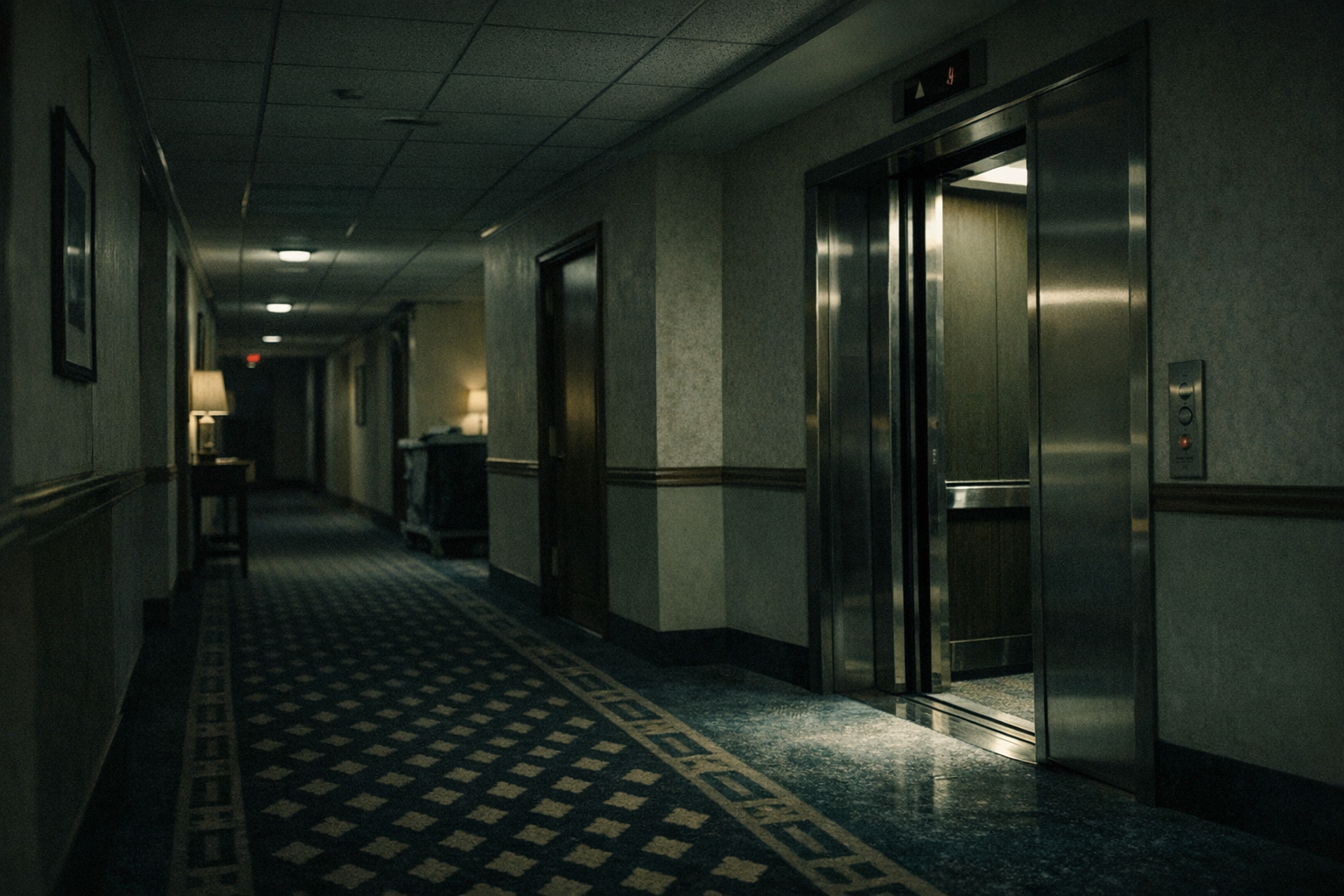
The known timeline makes the whole thing worse. On February 26, hotel surveillance captured Relisha with Tatum at a Holiday Inn Express in Northeast Washington. Then, on March 1, another surveillance clip showed her walking with him at a Days Inn on New York Avenue. That March 1 footage is widely treated as the last confirmed evidence that she was alive.
Think about how brutal that is. In many missing child cases, the final sighting is a blur on a sidewalk or a witness statement that may or may not be right. Here, the last confirmed trace lived under fluorescent lights, in a hotel hallway, on a recording device. The case was not hidden in deep woods or swallowed by a storm. It moved through places built for visibility.
And still, she vanished.
Timeline of Events
- Late February 2014: Relisha’s school absences begin piling up while adults are told she is being treated by “Dr. Tatum.”
- February 26: Surveillance reportedly shows Relisha with Kahlil Tatum at a Holiday Inn Express in Northeast Washington, D.C.
- March 1: Video shows Relisha with Tatum at a Days Inn on New York Avenue. This is considered the last confirmed sighting of her.
- March 10–13: School officials press for medical documentation; after continued absences, the case is reported for educational neglect.
- March 19: A social worker tries to meet “Dr. Tatum,” learns he is not a doctor, and police are contacted.
- March 20: Tatum’s wife, Andrea, is found shot to death in a Prince George’s County motel room.
- March 2 onward, later uncovered by investigators: Tatum had purchased items including lime, a shovel, and large trash bags.
- March 31: Tatum is found dead from an apparent self-inflicted gunshot in Kenilworth Park. Relisha is still missing.
That sequence tells you why the case never stops haunting people. Every step looks like a moment when the ending might still have been interrupted. Every date feels like a door that shut one by one.
By March 19, when social workers came looking for answers, the cover story finally started to collapse. Tatum failed to show up. People learned there was no “Dr. Tatum.” Calls went unanswered. Relisha’s mother reportedly said the child was away with him at a medical conference near Atlanta. Even now, that explanation feels unreal—one more layer of delay draped over a situation that should already have been treated as a full emergency.
Then the case turned even darker. Tatum’s wife, Andrea Tatum, was found shot to death in a motel room in Maryland. Investigators would later find Tatum dead from an apparent suicide in Kenilworth Park, using the same gun. By then, many authorities believed Relisha was already dead too.
And that is where the story hardens into one of the most unbearable kinds of missing-child mystery: the kind where the central suspect is gone, the child is gone, the last clear image is old footage, and whatever happened in the silent gap is trapped with the dead.
What Doesn’t Add Up
- The boundary failures were obvious. Tatum’s access to young girls at the shelter reportedly raised concerns before Relisha vanished, yet the relationship was not stopped in time.
- The school absence trail lasted too long. A child missing that much school under a vague medical explanation should have produced faster, harder intervention.
- The false “Dr. Tatum” story held longer than it should have. A simple credential check could have broken the lie much earlier.
- The timeline began before the official missing-person date. By the time police moved, investigators were already looking backward instead of acting in real time.
- The setting itself should have increased scrutiny, not lowered it. A vulnerable child living in a large emergency shelter needed more institutional protection, not less.
This is the planner’s core angle, and it is the reason Relisha Rudd still gets under people’s skin. The mystery is not only where did she go? The mystery is how so many warning signs managed to stay warning signs instead of becoming action.
That is what makes the case feel different from a child vanishing during one sudden outdoor moment. Relisha seems to disappear in layers. First from school. Then from ordinary oversight. Then into hotel footage. Then into a story adults told each other because it was easier than saying the obvious thing: an 8-year-old girl was in danger.
The hotel timeline matters because it strips away the fantasy that nobody could have seen the risk coming. There were sightings. There were absences. There was a false medical cover story. There was an adult man with no legitimate role taking unusual control over a child’s movements. In hindsight, the danger feels almost unbearably visible.
That visibility is also why the case resurfaces whenever people talk about child welfare failures, missing Black girls receiving less national attention, or the way institutions often respond more slowly when a child is already living at the edge of public concern. Relisha did not vanish from the center of the American news machine. She vanished from a place many people preferred not to think about at all.
And that matters. Because public attention is not evenly distributed. Some missing children become immediate national obsessions. Others remain local grief stories, even when the facts are just as horrifying. Relisha’s case has long been cited as an example of that imbalance, and it is hard to argue with the feeling that if more people had been paying attention sooner, the pressure on every involved system might have looked very different.
Why This Case Still Gets Attention
Relisha Rudd’s missing person case still draws attention for three reasons:
- It is emotionally immediate. She was only 8, and the known facts are easy to understand and impossible to forget.
- It exposes systemic failure. The story forces people to ask whether agencies, schools, and shelter oversight mechanisms responded fast enough.
- It never reached a clean ending. No arrest. No trial. No recovered answer. Just a last confirmed video, a dead suspect, and a child still missing.
That unresolved shape keeps the case alive. A solved crime can eventually settle into a file. Relisha’s disappearance cannot. It keeps leaning forward, because the essential human question never went away: if the red flags were there, why did no one stop what was happening in time?
The likeliest explanation, based on the known public record, is the one investigators have long feared—that Tatum harmed Relisha and that the truth disappeared with him before it could be fully reconstructed. But even if that explanation is the most probable, it does not ease the larger wound in the story. The larger wound is that the crisis appears to have been building well before March 1.
That is why her case reads less like a single abduction mystery and more like a slow institutional failure captured in fragments: school records, shelter access, hallway footage, phone calls, excuses, and finally a park search that arrived after the center of the story was already gone.
There are disappearances that feel like lightning strikes—one sudden break in the world. Relisha Rudd’s case feels more like a building alarm that kept sounding while everyone nearby convinced themselves it might be nothing.
And maybe that is the most haunting detail of all. Not that the clues were hidden. But that so many of them were visible.