On a hot June night in Alma, Arkansas, the game should have ended the way summer games always do � with dusty shoes, tired kids, and parents calling from the bleachers that it was time to go home. Instead, one ordinary Little League field became the last place anyone could say for sure they saw six-year-old Morgan Nick alive.
There was no storm. No blackout. No dramatic warning. Just a ball game, a parking lot, a few children catching fireflies, and a window of only minutes wide enough to swallow a child and leave almost nothing behind.
Morgan Nick�s unsolved disappearance remains one of the most haunting missing child cases in America because it began in such a painfully normal setting. More than two decades later, the missing person case still matters not only because Morgan was never found, but because each new lead seems to sharpen the same terrible question: how could a little girl vanish so completely in front of so many people?
That ordinary-public-place terror is part of what makes this case linger, much like the dread that hangs over the Asha Degree disappearance, where a child also seemed to slip out of the known world faster than logic says should be possible.
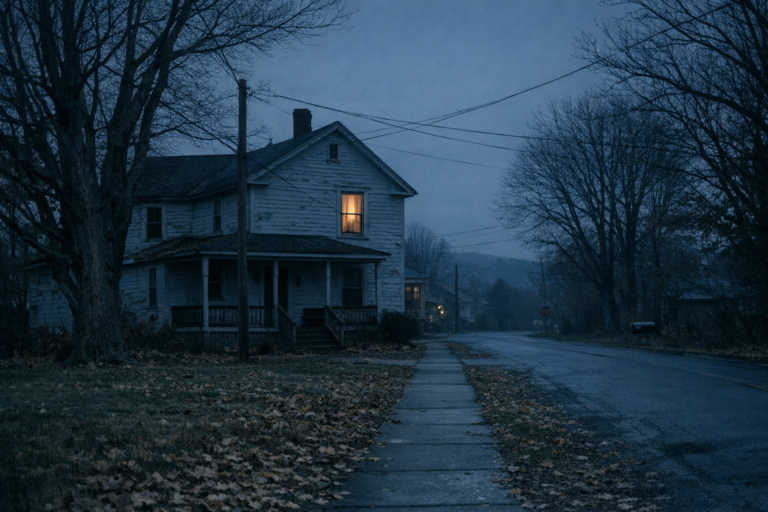
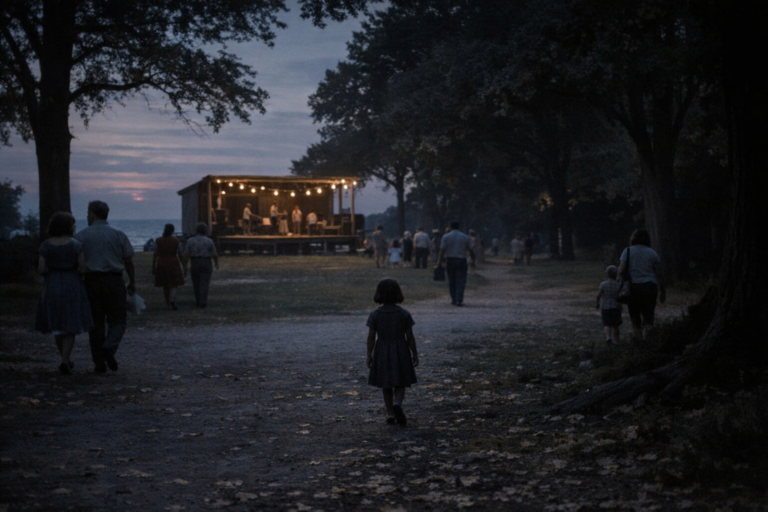
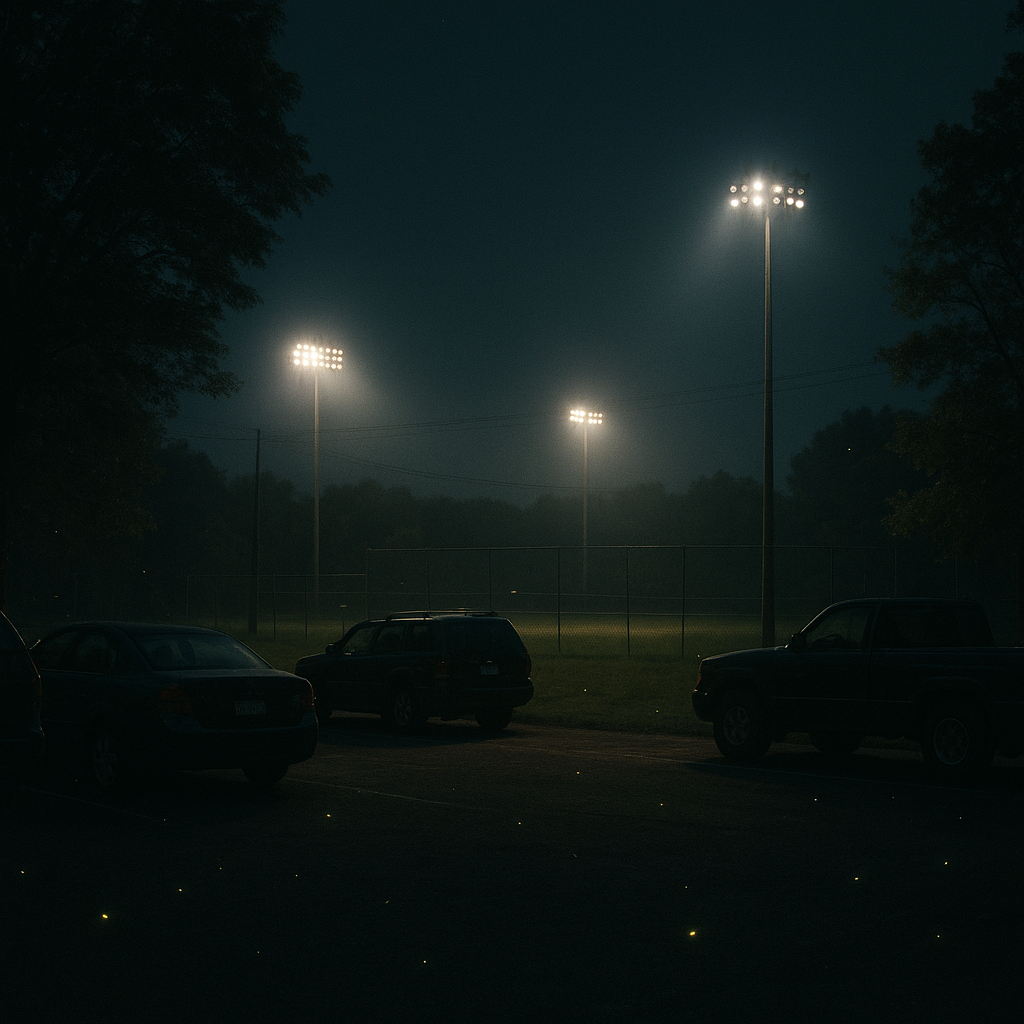
On June 9, 1995, Morgan went with her mother, Colleen Nick, to a Little League baseball game at Wofford Field in Alma. It was the kind of small-town night people trust without thinking too much about it. Families knew each other. Kids drifted from one cluster of adults to another. The field lights kept the darkness pushed back just enough to make everything feel safe.
As the evening stretched on, Morgan played with other children nearby. At some point, the kids wanted to chase fireflies. It did not sound dangerous. It sounded like summer. Colleen hesitated at first, then allowed Morgan to go with the other children a short distance from the stands. There was still a game going on. There were still parents around. Nobody believed they were making a life-altering decision.
Later, witnesses said the children went toward the parking area and a patch of dirt and sand. After a few minutes, the girls came back and said Morgan had stayed behind near the car, emptying sand from her shoes. That tiny detail � sand in her shoes � has become one of the most painful images in the entire story, because it freezes her in a final moment of childhood. Not running in fear. Not screaming for help. Just doing what kids do after playing outside.
Then the game ended.
And Morgan was gone.
Timeline of Events
- Evening, June 9, 1995: Morgan Nick attends a Little League baseball game with her mother in Alma, Arkansas.
- Late in the game: Morgan goes with other children to catch fireflies near the parking lot.
- Around 10:45 p.m.: She is reportedly last seen near her mother�s car, brushing sand from her shoes.
- Moments later: The other children return, but Morgan does not.
- That night: A massive search begins around the field and surrounding area.
- In the years that follow: Investigators pursue thousands of leads, revisit suspect vehicles, and repeatedly return to the case.
- 2024: New DNA testing publicly strengthens the link between Morgan and a truck tied to longtime suspect Billy Jack Lincks.
The horror of the Morgan Nick case is not just that she disappeared. It is how little time it seems to have taken. People like to imagine abductions as loud, chaotic things � a struggle, a witness, a clear alarm. But the cases that haunt investigators most are often quieter than that. A child pauses. A stranger speaks. A truck door opens. By the time the adults realize something is wrong, the world has already changed.
Early witness accounts suggested that while Morgan was near the parking area, a man had been seen in the area, and one child later described a �creepy� man talking to her. The description that emerged over time pointed investigators toward a red pickup truck with a white camper shell. That vehicle would become one of the central threads in the entire mystery, not because it solved the case, but because it kept reappearing like a dark shape at the edge of the story.
That is where the Morgan Nick disappearance becomes more than a tragic abduction story. It becomes a story about speed. About how fast normal life can become permanent uncertainty. One minute Morgan was part of the harmless blur of a summer night. The next, her mother was looking around a parking lot and realizing the kind of panic that changes a person forever.
When Colleen could not find her daughter, the search began almost immediately. Families looked around the field. People checked cars, bathrooms, nearby spaces, anywhere a six-year-old might have wandered. But that kind of search depends on one hopeful assumption � that the child is still somewhere close. As the minutes passed, that hope began to die.
Law enforcement response escalated quickly. Searchers combed the area. Leads flooded in. Sketches, descriptions, possible sightings, and tips all entered the case file. Over time, the investigation would stretch far beyond Alma and grow into one of Arkansas�s most well-known missing child cases. But for all the manpower, attention, and public emotion, the central fact never moved: Morgan never came home.
?? Related Investigation:
If this case pulled you deeper into the mystery, continue into:
🔎 Related Investigation:
If this case pulled you deeper into the mystery, continue into:
🔎 Related Investigation:
If this case pulled you deeper into the mystery, continue into:
What Doesn�t Add Up
- The setting felt too public for a clean abduction. A Little League game full of families should have reduced the chance that someone could take a child unseen.
- The time window was brutally small. Morgan appears to have vanished in only a matter of minutes.
- Witness memory was limited. People noticed fragments � a truck, a strange man, a brief interaction � but not enough to stop what may have happened.
- The strongest suspect died years ago. That cut off the chance to pressure him, challenge contradictions, or follow up in real time.
- Even major later searches produced no final answer. Properties were searched, wells were examined, and leads were revisited, yet the case stayed open.
The years after Morgan vanished were filled with the kind of developments that can keep a case alive without actually resolving it. Investigators searched property in Booneville after a specific tip suggested she might be buried there. Nothing conclusive was found. Years later, investigators searched a vacant house in Spiro, Oklahoma. Cadaver dogs reportedly alerted to an area around a well, but again, the search produced no answer that could close the case.
Each of those moments gave the public the same painful surge of hope: maybe this is it. Maybe this is the lead that finally explains what happened in that parking lot. But the Morgan Nick case has a cruel pattern. It offers movement, but not peace. It offers possibility, but not resolution.
The biggest modern shift came when authorities publicly refocused attention on Billy Jack Lincks, a man who had long been associated with the early investigation. Lincks drove a red truck matching the vehicle description that had shadowed the case from the beginning. In 2021, police said fibers from his truck closely matched Morgan�s T-shirt. Then in 2024, authorities announced that new DNA testing strongly indicated Morgan had been inside that truck.
That development mattered. A lot. It did not solve everything, but it changed the emotional temperature of the case. For years, the red truck was the kind of lead people discussed with uncertainty, always half-buried under the phrase person of interest. The 2024 DNA announcement made the story feel sharper and darker. It suggested that the terrifying theory many people feared from the beginning may have been much closer to the truth than anyone wanted to believe.
And still, even that was not the end.
Lincks died in prison in 2000 for an unrelated crime. No one has been charged in Morgan�s disappearance. Morgan has not been found. So the case now sits in one of the most agonizing places an investigation can sit: closer to an answer than before, but still not fully across the line.
Key Evidence and Clues
- Final sighting: Morgan near the car, brushing sand from her shoes after catching fireflies.
- Witness concern: Reports that a strange man may have spoken to her shortly before she vanished.
- Vehicle focus: A red pickup truck with a white camper shell remained a recurring investigative lead.
- Fiber evidence: Authorities later said fibers from the truck were a close match to Morgan�s shirt.
- DNA development: In 2024, officials said new testing strongly indicated Morgan had been inside the suspect truck.
The reason this case still grips people is not just that Morgan was a child. It is that the story attacks one of the most basic assumptions people carry through everyday life � that a familiar place with other families around is safe enough. A school. A park. A ball field. A parking lot under lights. These are supposed to be the spaces where danger has to force its way in loudly enough to be noticed.
But Morgan�s case suggests something colder. It suggests that the worst thing can happen in a place full of people if the moment is small enough and the stranger bold enough.
That is also why the case keeps returning in documentaries, anniversary coverage, and public conversations. The facts are tragic, but the structure of the story is unforgettable. A mother says yes to a tiny request that sounds harmless. A child walks a short distance away. Friends assume she is by the car. Then the ordinary map of the evening rips apart.
Other cases in this lane pull at readers for the same reason. The Kyron Horman disappearance leaves behind the same public-setting unease, while the Dulce Alavez case shows how quickly a child can vanish even when the gap in supervision seems unbelievably short.
And then there is Colleen Nick. Her story became part of the case because grief did not end with the search. Instead of disappearing into silence, she became one of the country�s best-known advocates for missing children. The Morgan Nick Foundation grew out of the worst night of her life. That does not make the case less sad. If anything, it makes it sadder. It shows what families are forced to become when answers never arrive: part detective, part advocate, part memorial keeper.
For some readers, the most likely explanation now feels brutally simple. A predator saw an opening, moved fast, and got Morgan into his truck before anyone understood what was happening. The later evidence pointing to Lincks makes that theory difficult to ignore. But there are still missing pieces investigators would want in any truly finished case � a full reconstruction, a body, a direct confession, a chain of proof strong enough to shut every remaining door.
Without that, the case remains suspended between knowledge and uncertainty. Close enough to feel the outline of what happened. Not close enough to say it with finality.
And maybe that is why the last image still lands so hard. Not the truck. Not the suspect. Not even the searches years later. It is Morgan in the parking lot, bent over her shoes, tapping out sand after a summer game. That detail is almost too ordinary to bear. It reminds you that this was not the end of some risky adventure or dangerous plan. It was the end of a normal childhood moment that should have led to a sleepy car ride home.
Instead, it led into one of the most enduring unsolved disappearances in modern Arkansas history � a case that still feels close enough to touch, and yet has never truly been brought back.
?? Related Investigation:
?? Related Investigation:
?? If this story stayed with you, the author suggests these real cases next:
- The rainy-night mystery of Asha Degree
- The school-day vanishing of Kyron Horman
- The playground timeline in the Dulce Alavez case
Explore more Disappearances stories here: