
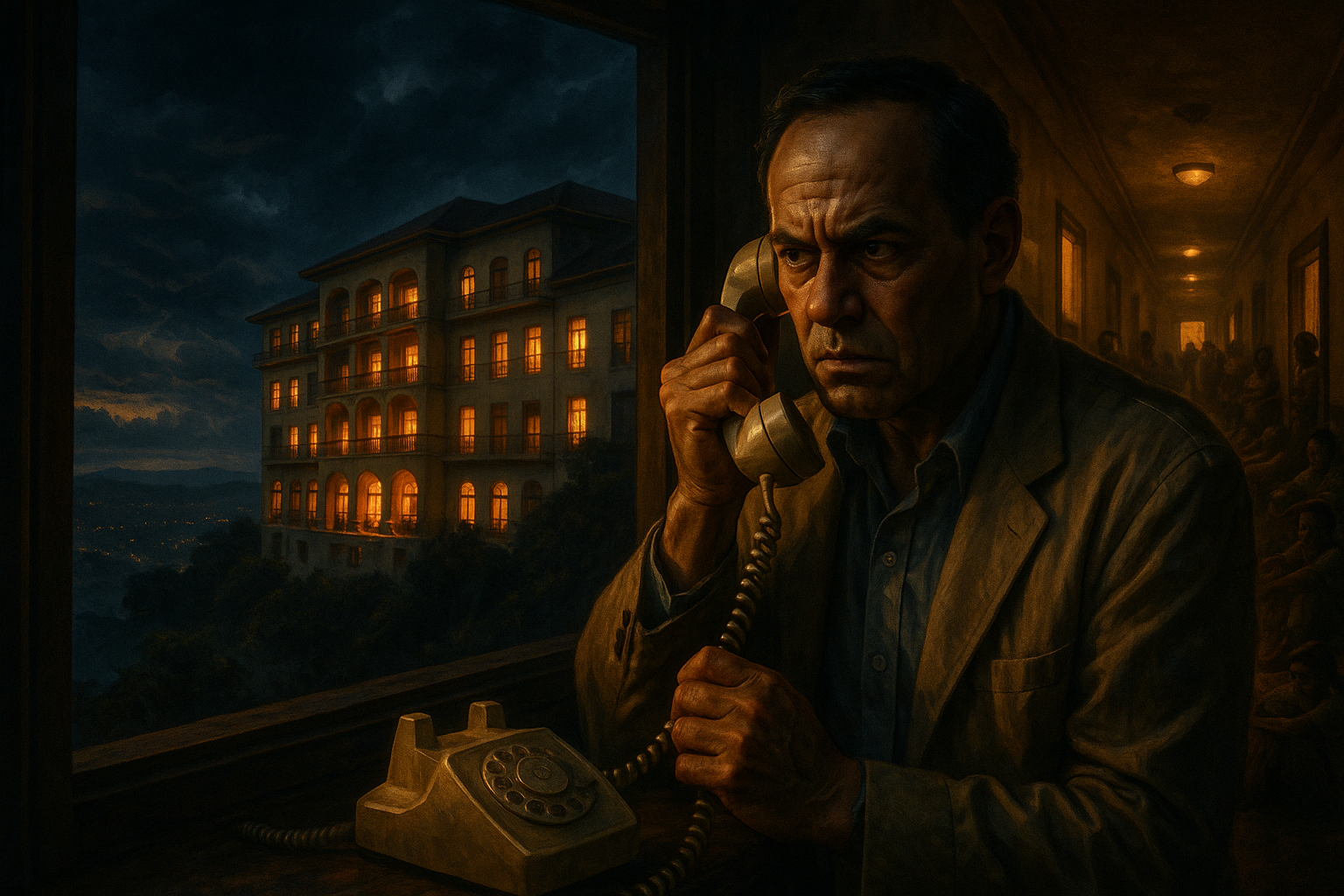
On April 6, 1994, the night sky over Kigali cracked open with fire.
A plane carrying Rwanda’s president, Juvenal Habyarimana, fell out of the dark and exploded on approach. Within hours, roadblocks appeared. Lists were unfolded. Machetes were handed out. Radios began to spit instructions like commands from a fever dream.
By morning, neighbors were hunting neighbors.
In a city sliding into organized terror, one place still looked ordinary: a four-star hotel on a hill, with polished floors, a bar, and a swimming pool that reflected the same blue sky as always.
Its manager was Paul Rusesabagina.
The Night the Rules Died
Rwanda had long carried a wound sharpened by colonial divide-and-rule politics, post-independence reprisals, and years of propaganda. In 1994, that wound was forced open all at once.
After the president’s assassination, hardline leaders in government and the military moved fast. Moderate politicians were murdered. UN peacekeepers were constrained. State media and extremist radio identified enemies by category, then by street.
The primary target was the Tutsi minority. Any Hutu who opposed the killing became a target too.
The genocide moved with terrifying efficiency: checkpoints, house searches, militia patrols, and constant incitement. The city learned new sounds: trucks at midnight, whistles, boots on concrete, and screaming that stopped abruptly.
A Hotel Becomes a Last Shelter
At first, people came to hotels because they still believed institutions meant something. Foreigners had stayed there. Diplomats held meetings there. Maybe that meant protection.
At the Hotel des Mille Collines, families arrived with one bag, then no bag, then only the clothes they wore. They came carrying infants, elderly parents, and the stunned silence of people who had already seen too much.
Soon the hotel was no longer a business. It was a human dam trying to hold back a flood of violence.
By many accounts, more than a thousand people would shelter there during the worst days.
Paul Rusesabagina’s Weapon: Negotiation
Paul Rusesabagina was not a soldier. He had no battalion, no armored convoy, no legal authority strong enough to stop armed men on his own. What he had was the toolbox of a seasoned hotel manager: names, phone numbers, relationships, and a calm voice under pressure.
He understood power in Rwanda did not move only through official orders. It moved through favors, ego, hierarchy, and face-saving gestures. He used all of it.
Phone Calls in the Dark
He called military officers. He called political figures. He called anyone who might influence a checkpoint commander for ten minutes, then another ten, then one more hour. He reminded them who stayed at the hotel. He invoked reputation, foreign scrutiny, and future consequences.
In some accounts, he offered alcohol and money to keep militias away in moments when words were not enough. In others, he leveraged contacts from years of service in elite hospitality, pressing every connection like a finger on a failing pulse.
Every delay mattered. Every postponed attack meant another sunrise.
The Performance of Normal
Inside the hotel, normal life became a strategy. Water pressure was unstable. Food ran short. Electricity failed. Fear spread faster than information.
But routines were imposed where possible: room assignments, rationing, quiet hours, basic order. Children were told to stay low near windows. Adults took turns watching gates and hallways. Rumors were checked, then checked again.
When armed men approached, panic had to be contained before it became a stampede. The facade of control was part theater, part survival discipline.
In genocidal chaos, appearing governable could keep a place from being annihilated.
What Survival Looked Like Inside
The people inside the Mille Collines did not survive because danger stayed outside. Danger came to the gates repeatedly. Names were demanded. Threats were made. Guns were visible. So were machetes.
At times, those sheltering there expected to die within minutes.
Water, Food, and Fear
Shortages were constant. Toilets backed up. Drinking water became uncertain. Parents diluted milk and pretended children were full. Adults skipped meals so younger people could eat.
The body can adapt to hunger. The mind adapts less well to waiting for murder.
People slept in clothes, shoes nearby, ready to run though there was nowhere safe to run to. They listened for engines, shouting, sudden silence. They memorized exits they might never reach.
Outside the Walls
While the hotel held, much of Rwanda burned. Across about 100 days, an estimated 800,000 people, mostly Tutsi, along with moderate Hutu and others, were killed. Churches became massacre sites. Schools became execution grounds. Rivers carried bodies.
The international response was slow, fragmented, and haunted by legal evasions around the word genocide. Those trapped in Kigali did not need semantics. They needed protection that rarely came.
The End of the Killing in Kigali
As the Rwandan Patriotic Front advanced and eventually took Kigali in July 1994, the killing in the capital receded. The genocidal government collapsed and many perpetrators fled.
Those who survived emerged into a country transformed by grief. Families were erased. Streets were recognizable, but lives were not.
The Mille Collines remained one of the best-known survival sites from those months, and Paul Rusesabagina became internationally associated with the story of its shelter operation.
Memory, Narrative, and Dispute
Over the years, Rusesabagina’s role has been celebrated by many and challenged by some who lived through the events, with disagreements over specific details, motives, and methods. Historical memory after mass atrocity is often contested, especially when testimony, politics, and international storytelling collide.
But one fact remains stark: in a city where death was systematized, hundreds upon hundreds of people inside that hotel stayed alive when the odds pointed the other way.
Survival there was not clean, simple, or cinematic. It was improvised, negotiated, and fragile.
Why This Story Still Grips the World
People return to this story because it sits at an unbearable intersection: bureaucratic evil on one side, ordinary human agency on the other. Not heroism in the fantasy sense, heroism in the exhausted, compromised, sleepless sense.
Paul Rusesabagina’s story, whether told in testimony, journalism, film, or debate, forces the same question every generation must face: when the rules collapse, what can one person still do?
The Thin Line
In Rwanda in 1994, the line between life and death could be a gate that stayed closed, a phone call answered, a truck delayed, a commander persuaded not to look too closely, just for tonight.
Sometimes survival is not a dramatic rescue at the final second. Sometimes it is a hundred small decisions made under unbearable pressure, each one buying a little time for someone else.
And sometimes a hotel built for tourists, conferences, and polished service becomes a fortress not of concrete, but of human will.
When the killing began, the world looked away for too long. Inside one building in Kigali, people waited, negotiated, rationed, and endured. They did not know whether morning would come.
For many of them, it did.
That is the survival story. Not neat. Not mythic. Real enough to hurt.
And for survivors, the end of immediate danger was only the beginning of another struggle: testimony, mourning, rebuilding, and the impossible work of living beside memory. The hotel walls did not keep trauma out forever. They only bought time for life to continue, and in 1994, time was the rarest currency in Rwanda.