On December 30, 2000, the Miyazawa family went shopping near Chitose Karasuyama Station. The police account of their last day brings them home again for dinner and television: Mikio, Yasuko, their eight-year-old daughter Niina and six-year-old son Rei.
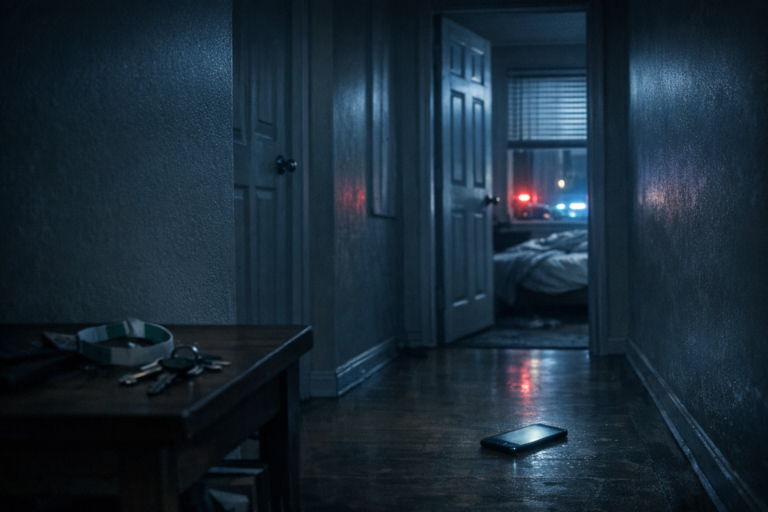
By the following morning, all four were dead. Someone had entered their home in Setagaya, Tokyo, and left behind clothing, blood and other physical traces. The house would give investigators objects to examine and movements to reconstruct. It has still not given them a name.
What happened to the Setagaya family?
Mikio Miyazawa was 44 and worked on corporate identity projects for a foreign-affiliated company. He liked animation and had taken part in theater and puppetry as a student. Yasuko, 41, ran a cram school at home. Niina was a second-grader who took ballet and piano lessons; Rei attended kindergarten. These details, preserved in the police appeal, describe the people whose home later became a crime scene.
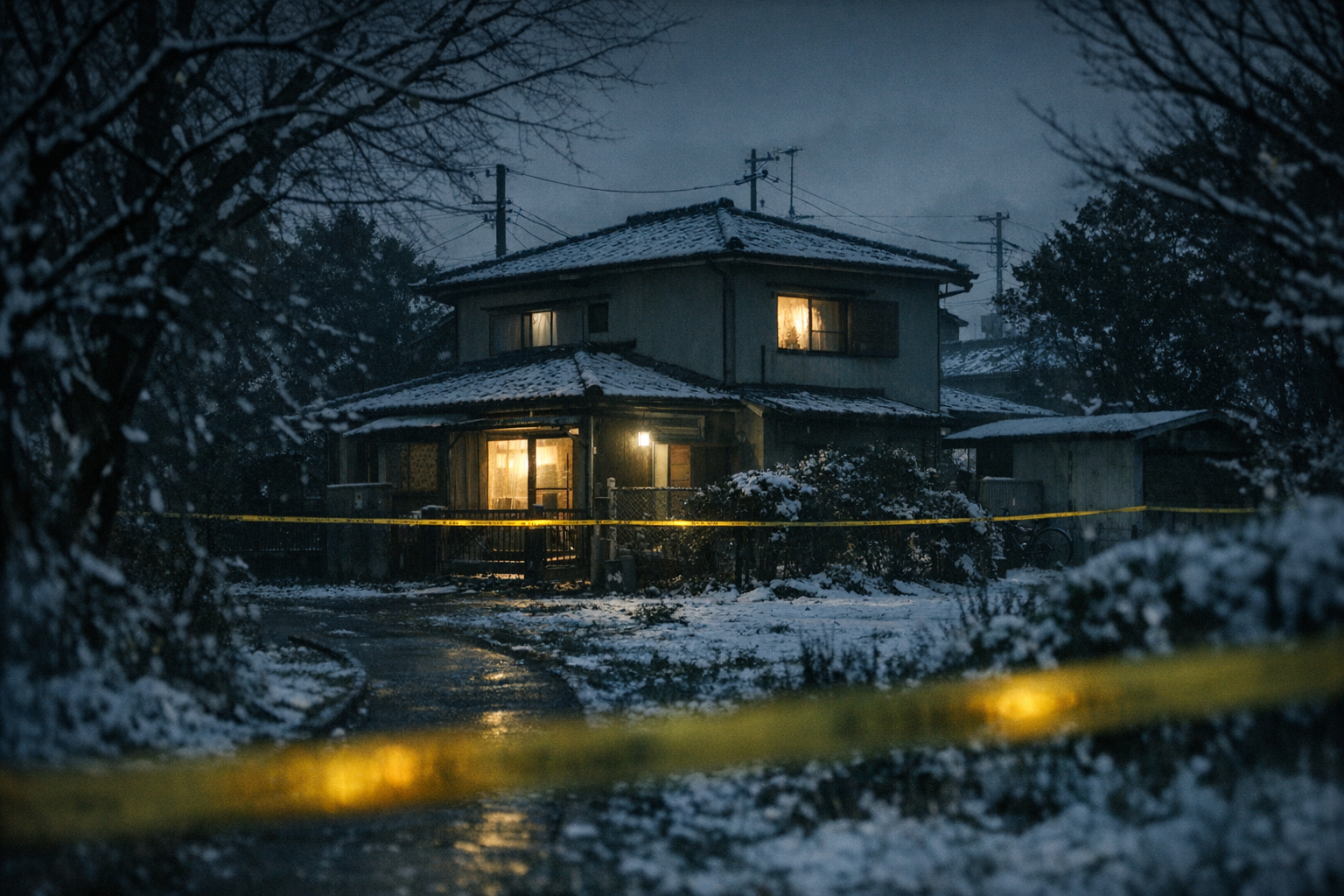
The Miyazawas lived in Kami-soshigaya, where park expansion had left just four houses. That setting matters to the search for witnesses, but does not establish why this family was attacked.
Police place the offense between around 11 p.m. on December 30 and dawn on December 31. TV Asahi’s December 2025 account describes a reconstruction in which the intruder entered through a bathroom window, strangled Rei, then attacked Mikio before killing Yasuko and Niina in the loft. That is a reconstruction of an unwitnessed attack, rather than a complete, proven account of every movement.
Mikio’s mother-in-law discovered the victims the following morning. Her arrival would later become important to the investigation of a computer record.
Timeline of Events
- December 30, 2000: The family shops near Chitose Karasuyama Station; the police leaflet describes dinner and television at home afterward.
- Around 11 p.m. to dawn: The offense window in the official police appeal. The precise sequence remains a reconstruction.
- December 31, about 1:18 a.m.: Reported computer activity becomes an investigative lead.
- December 31, about 10 a.m.: Mikio’s mother-in-law discovers the victims. Computer activation around this time is later reassessed.
- December 2014: TV Asahi reports police experiments suggesting the morning activation could have been accidental.
- July 2025: FNN reports that DNA analysis suggested an older age at the time of the crime than earlier clothing-based estimates.
- October 28, 2026: The checked police appeal continues to seek information; the murders remain unresolved.
Key evidence and clues left inside the house
Police identified a yanagiba kitchen knife, hand injuries and type-A blood. Clothing offered another route outward: manufacturers, retailers and purchasers who might remember the same items.
Only 130 sweatshirts of the same design had sold nationwide before the murders, ten in Tokyo. Police hoped to trace purchasers. Owning a similar shirt is not evidence of involvement: the offender’s was left at the scene.
Other objects had histories that were harder to follow. A separate police appeal describes a worn hip bag, sand inside it and traces of red fluorescent material. The scarf was worn too, and police had not established its manufacturer or sales route. They asked people to examine photographs taken between 1995 and 2000 for someone wearing the same bag or scarf.
That request turns an unfamiliar object into a question someone might be able to answer. A photograph may show an item before its owner ever came under suspicion. But recognizing a product and identifying its user are different steps; a manufacturing location cannot establish a person’s nationality or movements.
The shoes illustrate that distinction. Police identified impressions associated with South Korean-manufactured Slazenger footwear. That is a lead about footwear, not proof that the man who wore it was Korean. Likewise, the sand in the bag does not, by itself, provide a reliable biography of its owner.
The computer record that changed the timeline
Computer records initially seemed to place the killer there until morning. But TV Asahi reported in 2014 that the later activation showed Mikio’s company page without further searching.
Experiments supported another explanation: a falling mouse could have activated the computer when Mikio’s mother-in-law entered.
That weakened the claim that the offender stayed until daylight. It did not fix his departure time. The distinction changes which escape routes and sightings might matter.
Reported food consumption is another detail that needs care. In a December 2025 ABEMA interview, former Seijo police chief Takeshi Tsuchida discussed the offender eating ice cream and remaining at the scene. He proposed that the man might have been waiting for a particular time to leave. That was his interpretation of unexplained behavior, not a confirmed motive or timetable. Eating something does not tell us whether the offender felt calm, feared discovery or had planned his next move.
What Doesn’t Add Up
- Who can be connected to the physical evidence? Blood, fingerprints and belongings offer routes to comparison, but the public record still contains no verified identification. The gap is the connection to a person, not a logical contradiction created by having many clues.
- Why was this home attacked? Police classify the case as robbery and murder. The offender’s complete purpose and any prior connection to the family remain unresolved. A proposed motive must explain the evidence rather than substitute for it.
- When did the offender leave? The uncertain departure time affects which sightings and escape routes would be relevant.
- How should changing age estimates guide the search? A reported DNA-based estimate differs from the earlier impression of a much younger man. An estimate may redirect inquiries, but it cannot identify the offender on its own.
New inquiries, an older unanswered question
In July 2025, FNN reported that specialist analysis of blood from the scene suggested the offender had been in his thirties in 2000. Earlier estimates had emphasized a teenager or man in his twenties, partly from clothing and the bag’s waist measurements. FNN attributed the newer result to investigative sources and described a method examining age-related DNA methylation. It remains a reported estimate, not a publicly named suspect or a conviction.
Investigators have also revisited an object found outside the house. A stone Jizo statue was discovered near the Senkawa River on April 9, 2001. Police do not know whether it was a well-intentioned memorial or had some connection to the offender. In December 2025, TV Asahi reported that outreach through stone-industry websites had brought a tip about similar lettering on a statue shown by a stone dealer. Police were investigating the possible connection; the report did not announce that the statue had solved the murders.
A separate May 2026 development concerned the empty property itself. The Tokyo Reporter, citing Sankei reporting, described arrests over an alleged later break-in and attempted theft. Those were allegations about entering the vacant house years afterward, not arrests for killing the Miyazawas.
The murders remain unresolved as of this review. At a December 2025 gathering, a letter from Mikio’s mother, Setsuko, expressed renewed hope after an arrest in another long-unsolved case. She wanted investigators to be able to make fuller use of DNA. The same TV Asahi report described both the promise of new methods and outstanding legal and accuracy questions; it did not promise a breakthrough.
For Setsuko, the evidence has never been an abstract puzzle. It concerns her son, his wife and two children. Their names were known from the first day. More than twenty-five years later, the person responsible is the name their family is still waiting to hear.
Frequently Asked Questions
Has the Setagaya family murder case been solved?
No. The police appeal checked on October 28, 2026 still seeks information about the unidentified offender. Later arrests concerning a break-in at the empty property do not resolve the murders.
Did the killer definitely stay until morning?
No. Experiments reported in 2014 supported accidental computer activation during discovery. His departure time remains uncertain.
Does the evidence establish the killer’s nationality?
No. Product origins and reported forensic estimates should not be treated as proof of citizenship, residence or occupation.
Was the offender a teenager?
That has not been established. Earlier estimates suggested a young man; FNN reported in July 2025 that DNA analysis instead suggested someone in his thirties at the time. Neither is an identification.
Where should information be reported?
Use the contact instructions in the official Tokyo Metropolitan Police appeal below.
Sources & References
- Tokyo Metropolitan Police — official case appeal: offense window, scene, clothing, knife and current request for information.
- Tokyo police — English case leaflet: family biographies, last-day account and retained evidence.
- Tokyo police — hip bag and scarf appeal: physical characteristics and request to check old photographs.
- TV Asahi, December 12, 2014 — computer evidence: reconstruction experiments.
- ABEMA TIMES, December 30, 2025 — former police chief’s interview, page 6: his interpretations of food consumption and lingering, rather than established motives.
- FNN, July 24, 2025 — reported DNA-based age estimate: attributed reporting that the offender may have been in his thirties.
- TV Asahi, December 27, 2025 — information about the Jizo statue: a new tip and the unresolved question of its relevance.
- TV Asahi, December 28, 2025 — family hopes and DNA investigation: reconstruction, Setsuko’s letter and limitations of proposed methods.
- The Tokyo Reporter, May 15, 2026 — arrests over a later break-in: a separate alleged offense at the vacant property.