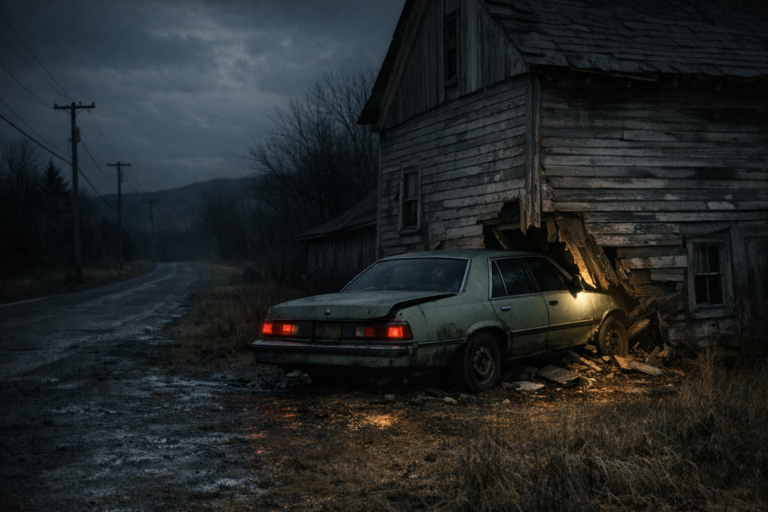

The car was sitting where it should not have been.
It was a 1969 Mercury Montego, parked on a lonely mountain road in northern California, nose pointed into the dark timber, tires pressed into shallow snow. The doors were unlocked. One window was down. There was gas in the tank. The engine worked. Snacks from the last stop had been eaten.
But the five men who had been inside it were gone.
No one could explain why they had driven there. No one could explain why they had left the car. And when the snow finally melted months later, the answer waiting higher up the mountain did not close the case. It made the whole thing feel worse.
What Happened in the Yuba County Five Disappearance?
The Yuba County Five disappearance is an unsolved disappearance and suspicious-death case involving Jack Madruga, Bill Sterling, Ted Weiher, Jack Huett, and Gary Mathias, five friends who vanished after a basketball game on February 24, 1978. The case matters because every major clue points to a decision that still does not make sense: a wrong road, an abandoned working car, a long walk into snow, and survival supplies that somehow did not save them.
That is why the story still sits beside other cases where found vehicles that left investigators with even harder questions. A recovered vehicle should be a starting point. In this case, it became the first locked door.
The five men lived in the Yuba City and Marysville area. They were close friends, basketball teammates, and men with families who knew their routines. Jack Madruga was thirty and owned the Mercury. Bill Sterling was twenty-nine. Ted Weiher was thirty-two. Jack Huett was twenty-four. Gary Mathias was twenty-five, an Army veteran who had been treated for mental illness but, by many accounts, had been doing better with medication and family support.
They had gone to Chico to watch a college basketball game. The next day mattered even more to them: their own team had a tournament. Families later said they were excited about it. They were not a group known for impulsive wilderness trips or late-night mountain adventures. The plan was simple. Watch the game. Maybe stop for snacks. Go home.
Instead, after the game, they moved away from home.
That is the point where the story begins to bend. From Chico, the normal route back to Marysville would have been familiar and straightforward. But the Mercury ended up far to the east, on a remote road in the Plumas National Forest area, roughly in the opposite direction from where the men should have been headed. It was not a small wrong turn around town. It was a different kind of night entirely: higher elevation, colder air, fewer lights, and snow thickening the farther they went.
When the car was found on February 28, it was not wrecked. It was not buried. It was not out of fuel. Investigators could not look at it and say, “This is why they walked.” The Mercury appeared to have been stuck or stopped in snow, but not so helpless that five adults could never have moved it. The keys were missing. The men were missing. And the silence around the car was total.
Timeline of Events
- February 24, 1978: Madruga, Sterling, Weiher, Huett, and Mathias attend a basketball game at Chico State.
- Later that night: The group stops for snacks after the game, then fails to return home.
- February 25: Families report the men missing after they miss the basketball tournament they had been excited to play in.
- February 28: Madruga’s Mercury Montego is found abandoned on a snowy mountain road, far from the expected route home.
- Spring 1978: Heavy snow slows searches and hides large parts of the area.
- June 1978: As the snow melts, remains are found in and around the forest. Ted Weiher is discovered in a Forest Service trailer. The remains of Madruga, Sterling, and Huett are found in the wider search area.
- Afterward: Gary Mathias is never found, leaving the fifth name in the case permanently unresolved.
The timeline looks simple until you imagine living it from the inside. Five friends leave a warm, crowded gym. They get into a car. They have food, plans, families, and a reason to be home. Then, somehow, they reach a mountain road where none of those plans matter anymore.
Investigators and families faced the same impossible fork: either the men willingly drove into the mountains for a reason no one has ever proven, or something happened after the game that redirected them.
That second possibility has always haunted the case. Were they following someone? Were they frightened? Did they take a wrong turn and keep going because no one realized how far off course they were? Did one man influence the others? Or did an outside person force the group into a situation they could not safely escape?
There is no clean evidence for any single answer. That is what makes the Yuba County Five disappearance so frustrating. The case does not lack clues. It has clues that refuse to line up.
What Doesn’t Add Up
- The route: The car was found far from the expected path back to Marysville. It was not a normal shortcut home.
- The car condition: The Mercury had fuel and was reportedly operable. It did not offer the obvious explanation of a catastrophic breakdown.
- The timing: The men had a basketball tournament the next day, something families said mattered deeply to them.
- The decision to walk: Leaving a car at night in cold mountain conditions is the kind of decision investigators still struggle to explain.
- The trailer evidence: Food, matches, and other supplies were nearby, yet Ted Weiher lost a shocking amount of weight before he died.
- Gary Mathias: His shoes were found in the trailer, but he was never located.
The abandoned car was strange. The trailer was devastating.
Months after the men vanished, a motorcyclist discovered a Forest Service trailer deep in the mountains. Inside was Ted Weiher. Evidence suggested he had not died immediately after leaving the car. He had survived for weeks, perhaps longer. He had lost a massive amount of weight. He had been wrapped in bedding. Nearby were supplies that should have mattered: canned food, matches, clothing, things that could have bought time.
That detail changes the emotional weight of the case. It means the mystery is not only why they drove into the snow. It is what happened after they found shelter.
Imagine reaching a trailer after a brutal walk through freezing darkness. Imagine making it inside. There is food. There are materials. There is at least a chance. But the chance slips away anyway. The questions become smaller and more painful. Who was still alive? Who understood what supplies were there? Were they too afraid to open things that did not belong to them? Too injured? Too disoriented? Waiting for help that never came?
Some reports suggest the men may have been reluctant to use items that were not theirs. Others believe injury, exhaustion, confusion, or fear may have kept them from taking the steps that seem obvious from a safe distance. But every theory has a hole in it. Survival stories often make sense backward. This one resists that. The evidence says someone endured. The evidence also says the trailer did not become the rescue point it should have been.
Key Evidence and Clues
- The Mercury Montego: It was found abandoned, unlocked, with gas still in the tank. The missing keys matter because they suggest someone left with them or took them.
- The eaten snacks: Food from the convenience-store stop placed the group together after the game and showed the night was still ordinary shortly before the mystery began.
- The snowbound road: The location raised the central question: why would the group be there at all?
- The Forest Service trailer: The trailer showed at least one man survived beyond the first night, making the case more than a simple exposure death.
- Unused or barely used supplies: Available food and other materials intensified questions about decision-making, fear, injury, and awareness.
- Mathias’s missing body: Gary Mathias remaining missing keeps the case open in a way the other discoveries could not close.
Mathias became a focus partly because he was never found. That is understandable, but it is also dangerous. In mysteries, absence can become a blank screen that people project onto. Mathias had a history that made him easier to question: military service, mental-health struggles, and past episodes that sounded alarming on paper. But people close to the case have also pointed out that he was not reported to be acting wildly at the game or the store. There was no confirmed scene where he turned on the group. No confession. No physical evidence that he harmed the others.
His shoes being found in the trailer is one of the strangest details. One explanation is practical: he may have switched footwear because another pair was better for snow. Another is darker: he may have left the trailer alive and gone somewhere else, injured, desperate, or trying to seek help. Without his remains, even that final movement stays hidden.
The case invites comparisons to final timelines where one missing hour changed everything, because a single unknown stretch after the Chico game controls the entire story. If investigators knew why the car headed east, the rest might finally have a shape. Without that answer, every later clue feels like a consequence of a decision no one can see.
The Theory Most People Debate
The biggest debate is whether the men got lost on their own or were pushed into the mountains by someone else.
The accidental theory says the group made a wrong turn, became disoriented, got the car stuck, and started walking toward what they believed was help. It is possible. Roads at night can confuse people, especially in rural areas. Snow can erase landmarks. Panic can make a bad choice look like the only choice.
But the accidental theory has to explain why they kept going so far in the wrong direction, why they abandoned an operable car with gas, and why the trailer supplies did not prevent death.
The foul-play theory says something or someone changed their route. Maybe they were followed. Maybe they followed another vehicle. Maybe an encounter after the game scared them. Families have long struggled with the idea that the men simply chose this path for no reason. To them, the group had habits, personalities, and a strong reason to go home.
But the foul-play theory has its own problem: there is no confirmed attacker, no proven abduction, no weapon, and no final witness who can explain the turn into the mountains.
That leaves the most uncomfortable possibility of all: the truth may be a chain, not a single event. A wrong turn. A frightening encounter. A stuck car. A bad decision. A long walk. A shelter used imperfectly. One man leaving. Others collapsing. Each step might have made sense to the men in that moment, while looking impossible from the outside.
This is why the case still gets attention. It is not just a mystery about five men disappearing. It is a mystery about decision-making under fear. A mystery about vulnerability. A mystery about how close rescue can be and still not arrive.
When people call the Yuba County Five “America’s Dyatlov Pass,” they usually mean the eerie setting: a group, snow, bodies found later, theories multiplying in the cold. But the stronger comparison is emotional. Both cases leave readers staring at the same question: what happened in the gap between ordinary plans and fatal choices?
For the families, that question was not entertainment. It was the rest of their lives. They had to live with the car, the road, the trailer, and the empty place where Gary Mathias should have been. They had to hear strangers argue over whether the men were lost, led, frightened, confused, or harmed. And they had to do it without the one thing every family wants from a case like this: a final answer that holds.
The mountain road is still there in the story, quiet and stubborn. The Mercury is gone. The snow melted long ago. But the decision point remains frozen: five men left a basketball game, drove into a place they were never supposed to be, stepped out of a working car, and walked into a night that never gave them back.
The Yuba County Five disappearance endures because the evidence does not feel empty. It feels unfinished. The car points one way. The trailer points another. The missing man points into the trees. And somewhere between them is the answer to why a road home became a road into the snow.
Continue exploring:
- More cases where the car was found but the person was gone
- Read final timelines that still refuse to close
- Follow the Leah Roberts road-trip mystery
More Disappearances stories: