The Toxic Lady Case — The Emergency Room Collapse, the Strange Evidence, and the Questions That Never Fully Went Away
9 min readJuly 25, 2025
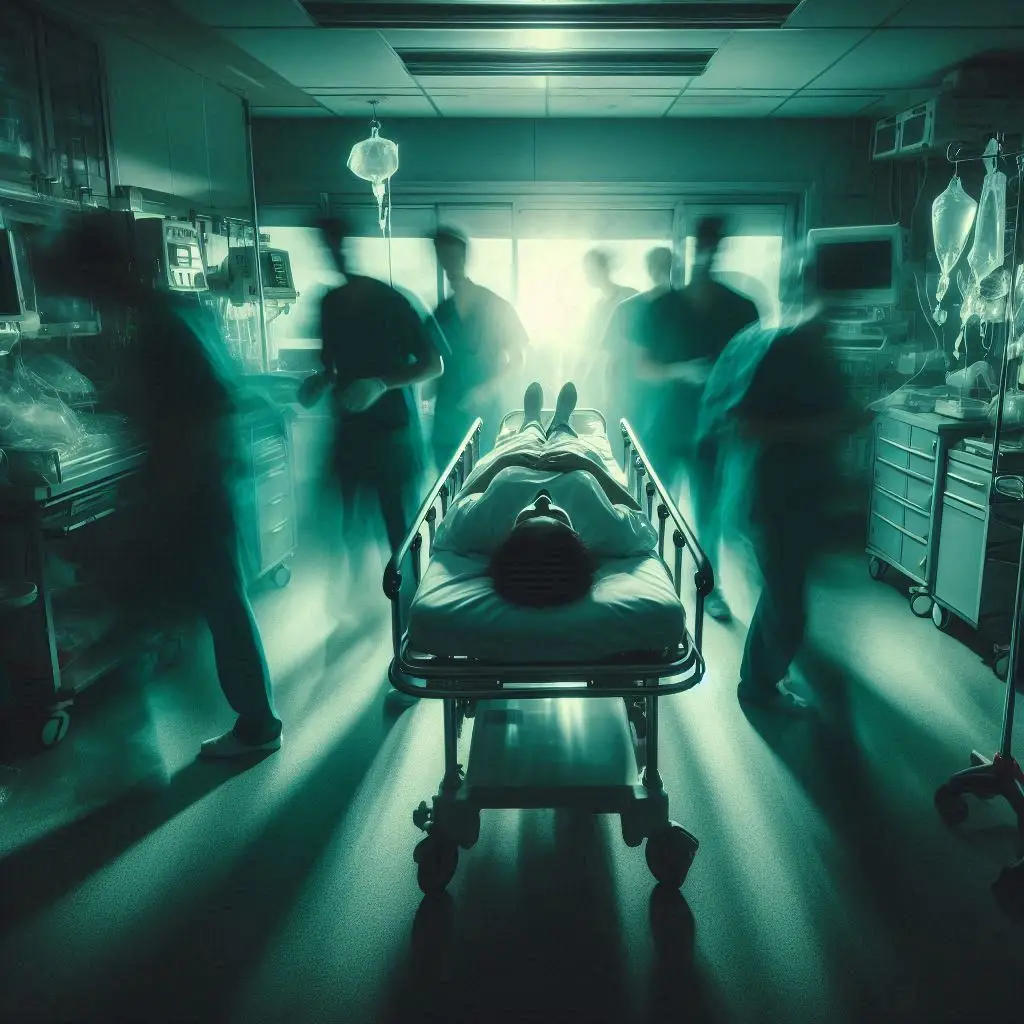
The emergency room at Riverside General was supposed to be the place where chaos stopped. On the night of February 19, 1994, it became the place where chaos seemed to spread from a single body. A dying woman was rolled through the doors struggling to breathe. Nurses moved in. Doctors started treatment. Then the room changed. One staff member grew dizzy. Another dropped to the floor. Someone noticed an oily sheen in the blood. Someone else smelled something strange in the air. Before long, the people trying to save the patient were backing away from the bed as if the danger had somehow climbed out of medicine and into the room itself.
The Toxic Lady case, centered on Gloria Ramirez, still gets searched because it is one of the strangest unexplained medical mysteries in modern American history: a terminally ill woman arrived at a California hospital, several medical workers suddenly became sick around her, and the best-known explanation still sounds like something halfway between chemistry and nightmare. It matters not just because the scene was dramatic, but because even decades later the facts, the witness descriptions, and the scientific theories still do not fit together neatly.
That unresolved tension is why this story belongs in the same late-night rabbit hole as other true events so bizarre they barely sound possible. It also connects naturally to mysteries like the Somerton Man case, where the official record explains part of what happened but leaves behind a feeling that something essential never got pinned down.
Gloria Ramirez was 31 years old, a mother of two, and dying of advanced cervical cancer. By the time she reached Riverside General Hospital that Saturday night, she was in severe distress. Reports describe her as confused, breathing badly, and suffering from a racing heart. There was nothing supernatural about that part. It was a grim, human medical emergency — the kind emergency-room teams see at the sharpest edge of ordinary life.
What happened next is why people still remember her by a nickname instead of just her name.
As staff worked around the bed, nurse Susan Kane drew blood and immediately noticed that it looked wrong. Witnesses later described it as oily. Others said there was a garlic-like or ammonia-like odor coming from Ramirez’s body or the syringe sample. Nurse Julie Gorchynski reportedly leaned in, examined the blood more closely, and saw unusual particles in it. Those details would become the foundation of almost every explanation that followed. But in the room, they were not clues yet. They were warning signs with no label on them.
Then people started collapsing.
One by one, members of the emergency-room team complained of dizziness, nausea, burning sensations, and trouble breathing. Some fainted. Some staggered out. A code was called. Patients were moved. Staff fled into hallways and outside air. The place designed for resuscitation briefly felt contaminated, as if the act of trying to save Gloria Ramirez had triggered a second emergency spreading through the people around her.
Evening of February 19, 1994: Gloria Ramirez is brought to Riverside General Hospital in Riverside, California, in severe medical distress related to late-stage cervical cancer.
Shortly after arrival: doctors and nurses begin standard emergency treatment, including oxygen, medications, and blood draws.
During treatment: staff notice unusual details, including a strange odor and blood described by witnesses as oily or chemically abnormal.
Minutes later: multiple emergency-room workers begin experiencing dizziness, nausea, fainting, breathing trouble, and other symptoms.
That same night: the room is partially evacuated and treated like a hazardous situation while care efforts continue.
Around 8:50 p.m.: Gloria Ramirez is pronounced dead.
In the aftermath: more than twenty people report symptoms, several are hospitalized, and the case becomes national news.
Months later: investigators weigh competing explanations, from toxic chemical reaction to mass psychogenic illness.
That timeline is important because the mystery is often retold as one explosive moment, when in reality it unfolded in layers. First there was the medical crisis. Then the sensory anomalies people said they noticed. Then the staff illnesses. Then the scramble to explain whether those illnesses came from an actual toxic exposure, from stress and suggestion, or from some combination no one wanted to admit was possible.
Gloria herself died less than an hour after arriving. The official cause was tied to her underlying cancer and complications from her condition. But the public story never settled on her death alone. It shifted almost immediately to the second question: what happened to the people around her?
What Witnesses Said They Saw and Smelled
This part of the case matters because later theories depend heavily on firsthand observations from inside the room.
Unusual blood appearance: several accounts describe Ramirez’s blood as oily or oddly textured.
Strange odor: witnesses reported a smell often compared to ammonia, garlic, or strong chemicals.
Crystalline particles: one of the most repeated details is that tiny crystal-like flecks were seen in the blood sample.
Rapid staff illness: the people nearest the bed reported the most dramatic symptoms first, which made many workers believe exposure was real and immediate.
Those details gave the case its lasting shape. If the witnesses were broadly accurate, then something physical entered that room and affected trained hospital staff in real time. If they were mistaken, or if stress amplified what they thought they were experiencing, then the case becomes less a chemical mystery than a brutal example of how panic can move through a crisis environment. The problem is that both interpretations explain part of the story and neither one explains all of it.
That split is what makes the case feel so durable. It has the same pressure you see in stories like the Dyatlov Pass incident: real facts, disturbing observations, and a permanent argument over which details deserve the most trust.
The Main Scientific Theory
The best-known official explanation focused on a chemical called dimethyl sulfoxide, usually shortened to DMSO. DMSO was used by some people as a home remedy for pain and could be applied to the skin. Investigators theorized that Gloria Ramirez may have used it while trying to manage the agony of late-stage cancer.
From there, the theory becomes more complicated. According to the state investigation’s most famous conclusion, DMSO on Ramirez’s body may have changed inside the high-oxygen, high-intervention environment of the emergency room. One step in that process could have produced dimethyl sulfone, which some said matched evidence in tissue samples. Under even more specific conditions, the theory argued, that compound might then have converted into dimethyl sulfate, a highly toxic substance capable of causing serious symptoms in the staff around her bed.
That explanation has always gripped people because it sounds horrifyingly plausible for just long enough to be memorable. It keeps the mystery grounded in chemistry instead of ghosts. It also preserves the central terror of the case: not that Gloria Ramirez was malicious or contaminated in some ordinary way, but that her body may have become, under freak conditions, the center of an accidental toxic event.
And yet the theory has never fully escaped criticism. Some scientists argued the chemistry was too speculative. Others questioned whether the temperature, oxygen level, electrical shocks, and body chemistry involved could really produce the chain reaction described. In other words, the official answer may have been the most coherent answer available — but coherent is not the same thing as universally accepted.
What Doesn’t Add Up
The chemistry debate: critics have long argued that the proposed DMSO-to-dimethyl-sulfate pathway sounds more convincing on paper than it does inside a real emergency-room scenario.
The symptom spread: not everyone in the room got equally sick, which raises questions about exposure patterns, proximity, stress, and timing.
The witness consistency problem: the odor, the crystals, and the blood appearance are widely repeated, but retellings vary enough to leave room for doubt.
The physical damage question: some staff members had symptoms serious enough to resist a simple “it was just panic” explanation.
The emotional environment: once one person collapses in a crowded ER, fear itself becomes part of the scene, making later reconstruction harder.
The mass-hysteria explanation, often framed more carefully as mass psychogenic illness, tries to solve that last problem by putting stress at the center of the story. Emergency rooms are intense. A terminal patient arrives in crisis. Someone notices a smell. Someone faints. Others become frightened. Symptoms cascade. On paper, that does account for part of what happened.
But critics of that explanation keep coming back to the same objection: some workers reportedly experienced lasting physical effects and abnormal lab findings, which makes a purely psychological explanation feel too thin. That does not prove the DMSO theory. It simply means the easier alternative also has gaps.
This is where the case starts to resemble broader unexplained-evidence stories like the Tunguska mystery or the Hum mystery. In each of them, people are arguing not only over the answer, but over the evidence itself.
There is also a human cost under all the chemistry: Gloria Ramirez became famous as “the Toxic Lady,” but she was a real person dying in extraordinary pain. For her family, this was not a puzzle first. It was a loss. For the staff, it was a trauma.
That combination helps explain why the case never really goes cold. It feels solvable and unsolved at the same time, which is exactly why people keep reopening it.
Why This Case Still Gets Attention
The Toxic Lady case still gets attention because it sits in a uniquely unsettling corner of true-story culture. It is not a murder case, not a haunting, and not a simple medical anomaly. It is a moment where science, witness testimony, fear, and spectacle all collided in one fluorescent hospital room. People keep returning to it because the event itself feels documented enough to be real and bizarre enough to feel unreal.
It also lingers because the ending never lands cleanly. The most accepted theory explains a lot, but not enough to silence debate. So the case remains suspended between explanation and unease.
FAQ
What happened to Gloria Ramirez?
Gloria Ramirez was a 31-year-old California woman with late-stage cervical cancer who arrived at Riverside General Hospital in February 1994 in severe distress. During treatment, several medical workers around her suddenly became ill, and after her death the incident became known as the Toxic Lady case.
Why was Gloria Ramirez called the Toxic Lady?
She was called the Toxic Lady because hospital staff reported strange odors, unusual blood characteristics, and sudden symptoms among workers treating her. The nickname grew out of the belief that something connected to her body may have exposed people around her to a toxic substance.
Was the Toxic Lady case ever solved?
Not in a way everyone accepts. The best-known official explanation involved a chemical reaction related to DMSO and the possible formation of dimethyl sulfate, but critics have challenged that theory for years and no universal consensus has ever fully settled the case.
Did doctors really collapse around Gloria Ramirez?
Yes. Multiple hospital workers reported symptoms including dizziness, nausea, fainting, and breathing trouble, and several were hospitalized. The debate is not whether people got sick, but what exactly caused it.
Why does the Toxic Lady case still fascinate people?
Because it combines a real hospital emergency, sensory details that sound almost cinematic, and a scientific explanation that remains controversial. It feels like a documented event that should be fully explained by now — and still isn’t.
🔎 If this story stayed with you, the author suggests these real cases next: