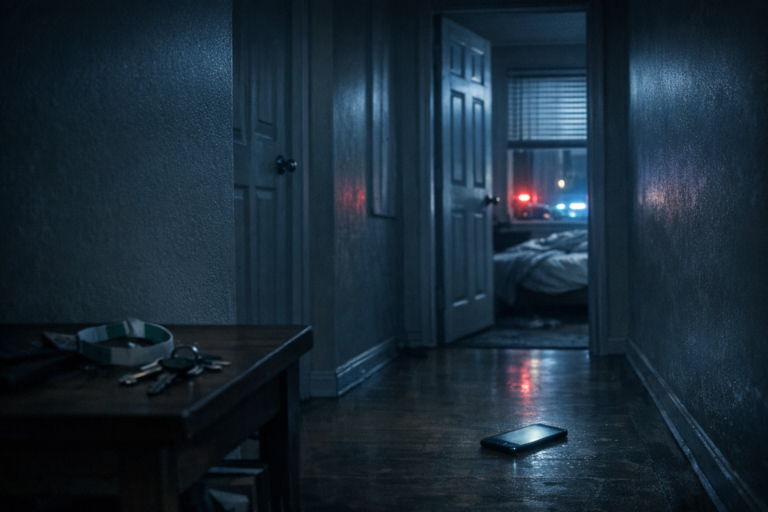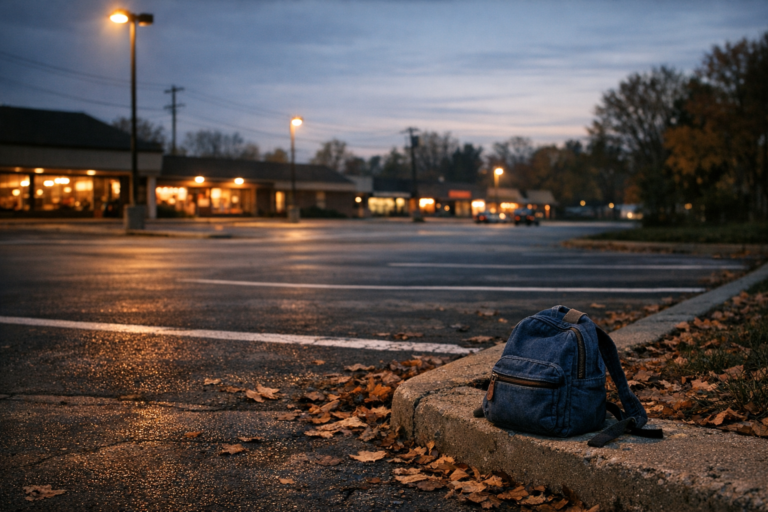

On a June morning in 1991, eleven-year-old Jaycee Dugard disappeared while walking to her school bus stop near South Lake Tahoe, California. For nearly two decades, her family did not know whether she would come home. But behind fences and makeshift structures in an Antioch backyard, Jaycee was still alive. When she was finally identified in 2009, she was a mother of two.
Listen to “Jaycee Dugard” on Spreaker.
The Morning Jaycee Dugard Vanished
June 10, 1991, began with the short walk toward school. Jaycee never reached the bus. California’s inspector general later recorded her stepfather’s account: a sedan carrying a man and a woman stopped near her, and the female passenger pulled her inside. The car sped away.
Jaycee’s own grand-jury testimony added what the people outside the car could not see. She said she had been shocked with a stun gun and covered with a blanket during the journey. At the Garrido home, Phillip threatened her with the weapon and warned that dogs would attack if she tried to leave.
The child taken that morning was being held by Phillip Garrido and his wife, Nancy. Her disappearance continued for eighteen years, while the life she should have been living passed without her.
The Backyard Compound
Jaycee was held in a concealed area behind the Garrido home in Antioch, California. Tents, sheds and fences separated that part of the property from the world beyond it. Her captor was already a convicted kidnapper and rapist under parole supervision.
She was isolated, controlled and threatened. In testimony reported by the Associated Press, she described a period of confinement in a backyard studio lasting an entire year. Later, when her physical restrictions changed, she still did not know where she could go. A door or a fence was only part of the captivity.
During those years, Jaycee gave birth to two daughters fathered by Phillip Garrido. She was fourteen when the first was born. Her memoir explains that once she became a mother, she could not imagine leaving her daughters behind. Any account of why she stayed must begin with her situation and testimony, rather than a diagnosis imposed afterward.
Jaycee was not only surviving captivity herself. She was trying to help two children survive it too.
Timeline of Events
- June 10, 1991: Eleven-year-old Jaycee is abducted near her school bus stop.
- 1991–2009: She is held at the Garrido property in Antioch and gives birth to two daughters during captivity.
- August 24–25, 2009: Garrido visits UC Berkeley with the girls. Lisa Campbell and Ally Jacobs follow up on concerns about the encounter.
- August 26, 2009: Jaycee’s identity is established during questioning at a parole office; Phillip and Nancy Garrido are arrested.
- June 2, 2011: Following guilty pleas, Phillip receives 431 years to life and Nancy 36 years to life.
- 2011: Jaycee publishes A Stolen Life and speaks publicly about recovery and the JAYC Foundation.
How Did Nobody Discover It?
One of the most disturbing questions surrounding the case is how the captivity continued while Garrido was being supervised. The later investigation documented specific missed opportunities, not simply a clever hiding place.
California’s November 2009 inspector-general report found failures in classification, supervision and home inspections. Agents had not pursued visible utility wires leading toward the concealed compound or adequately investigated a young girl seen during a visit. The report also criticized failures to use GPS information and to seek information from neighbors and other agencies.
Those findings matter because they locate responsibility in actions that could have been taken. Jaycee’s survival should not be confused with an absence of opportunities to discover her.
The Visit That Changed Everything
On August 24, 2009, Phillip Garrido visited UC Berkeley with Jaycee’s daughters, then fifteen and eleven. He wanted permission to hold a religious event. Police specialist Lisa Campbell was concerned by his behavior and arranged for him to return the next afternoon.
Officer Ally Jacobs ran a background check and joined Campbell for that meeting. The women asked the girls about school and their lives. According to Berkeley’s contemporary account, the answers and the girls’ subdued manner deepened their concern. Jacobs had no basis to arrest Garrido there, but she contacted his parole officer and asked for a follow-up.
That distinction is important: the campus encounter did not itself reveal Jaycee’s name. Campbell kept the conversation open, Jacobs checked the background, and information reached the agency responsible for supervising him. A troubling encounter became an investigation.
How Investigators Solved It
On August 26, Garrido appeared for a parole meeting with Jaycee, her daughters and Nancy. Jaycee was now twenty-nine. For years she had used the name Alissa while under Garrido’s control.
The accounts of who the women and children were did not agree. Questioning continued, and the explanation Garrido had given could no longer hold. Jaycee’s identity was established that day, ending the disappearance that had begun when she was eleven.
In A Stolen Life, she describes the difficulty of reclaiming her name after so long without being allowed to use it. The publisher’s reading guide notes that she wrote it down. The discovery was not simply a moment when investigators recognized a missing-person photograph. Jaycee had to identify herself after years in which even her own name had been taken from her.
The Sentencing
In 2011, Phillip and Nancy Garrido pleaded guilty to crimes involving Jaycee’s kidnapping and rape. On June 2, Phillip was sentenced to 431 years to life and Nancy to 36 years to life. Nancy’s sentence included the possibility of parole; it was not a sentence of life without parole.
Jaycee did not attend the sentencing. Her mother, Terry Probyn, read her victim-impact statement. The sentences put the captors’ responsibility into the court record, while Jaycee chose how her own words would reach that courtroom. Freedom did not require her to sit in front of them again.
The Road Back To Life
After her rescue, Jaycee faced the enormous challenge of rebuilding a life interrupted since childhood. She later wrote the memoir A Stolen Life, sharing her experience in her own words rather than allowing others to define her story.
Her 2011 interview with ABC News gave recovery concrete dimensions: getting a driver’s license, taking her daughters to school and having family dinners around a table. She and her daughters worked with family therapists, including through activities involving horses. These were experiences to learn and relationships to rebuild, not a switch that could be thrown the day captivity ended.
She also helped create the JAYC Foundation to support families affected by abduction and trauma. Its work continues to emphasize human-animal connection. The organization’s name expands to Just Ask Yourself to Care.
For eighteen years, other people had controlled where Jaycee lived and what she was called. The life beyond captivity included choices that had once been unavailable: telling her own story, raising her daughters outside the compound and deciding how to help others. She had come home. What followed belonged to her.
Frequently Asked Questions About Jaycee Dugard
Who kidnapped Jaycee Dugard?
Phillip and Nancy Garrido abducted her in 1991. Both later pleaded guilty to crimes involving her kidnapping and rape.
How long was Jaycee Dugard missing?
More than eighteen years, from June 10, 1991, until August 26, 2009.
Where was Jaycee Dugard held?
At the Garrido property in Antioch, California, in a concealed backyard area containing makeshift living spaces.
How was Jaycee Dugard found?
Campbell and Jacobs raised concerns after Garrido’s Berkeley visits. Follow-up questioning by parole and police authorities led to her identification.
What happened after Jaycee was rescued?
She reunited with her family, wrote about her experiences and helped establish the JAYC Foundation. Her captors received lengthy prison sentences in 2011.
Sources & References
- UC Berkeley: Arrest of kidnap suspect Phillip Garrido hinged on instincts and diligence of two members of UC Berkeley police force (August 28, 2009) — Campbell’s and Jacobs’s accounts of the campus encounters and follow-up.
- Simon & Schuster: A Stolen Life — Dugard’s memoir overview and reading guide, including her daughters and reclaiming her identity.
- KQED: Garrido Sentencing (June 3, 2011) — Prison terms and links to the victim-impact statements and grand-jury material.
- ABC News: Jaycee Dugard’s JAYC Foundation interview (July 2011) — Her account of recovery, family life and the foundation’s purpose.
- California Office of the Inspector General: Supervision of Parolee Phillip Garrido (November 2009) — Official review of the abduction account, identification and missed supervision opportunities.
- Associated Press via 6abc: Woman held eighteen years too afraid to try escape (June 3, 2011) — Reporting on Dugard’s released grand-jury testimony and the sentencing.
- Dugard v. United States, Ninth Circuit opinion (August 26, 2016) — The factual background on pages 4–6 corroborates the abduction, captivity and date of freedom.
- The JAYC Foundation — The organization’s current description of its trauma-support mission.
Related stories
Explore this topic
Watch This Story on YouTube
Prefer to watch? See the full story on our YouTube channel.