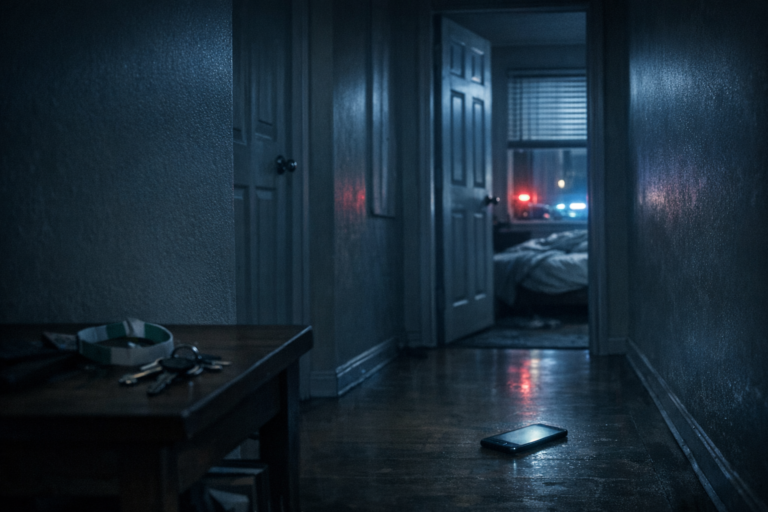

By the time the bronze van was found sitting in Bellingham, the trip had already become something darker than a delay. Jay Cook and Tanya Van Cuylenborg had left Vancouver Island for what should have been an overnight run into Washington, the kind of errand-heavy road trip young couples make without imagining it will be remembered for decades. Then the van turned up without them, and the ordinary shape of the story collapsed.
The William Talbott DNA murder case centers on the 1987 killings of Jay Cook and Tanya Van Cuylenborg, a Canadian couple whose final route through Washington became one of the Pacific Northwest’s most haunting cold cases. It still matters because it showed, in brutally human terms, how a case can sit silent for more than 30 years and then break open when genetic genealogy finally catches up to preserved evidence.
That long wait is part of what makes this case linger. If you’ve followed other investigations where one forensic breakthrough changed everything, the larger pattern is familiar in Cold Cases Solved by DNA and Genetic Genealogy — The Breakthroughs That Finally Named the Killer. But this one feels especially cold because the beginning is so simple: a ferry ride, a van full of plans, and two teenagers who never made it home.
On November 18, 1987, Jay, 20, and Tanya, 18, left Saanich, British Columbia, in Jay’s father’s van. They were headed toward the Seattle area to pick up furnace parts for the family business. They took the Coho ferry to Port Angeles, drove across the peninsula, bought gas on the way, and boarded another ferry from Bremerton toward Seattle. That second ferry would become one of the last clear points in the timeline. After that, the case opens into darkness.
The first days would have felt unbearable for both families because nothing about the trip sounded risky enough to explain total silence. They were not running away. They were not supposed to disappear into some unknown wilderness. They were on roads, ferries, and city routes people use every day. That contrast matters. When ordinary settings produce extraordinary violence, the story refuses to stay in the past.
Then the discoveries started. On November 24, Tanya’s body was found in rural Skagit County, near Alger, in a ditch off a remote road. She had been raped and shot in the head. The next day, her wallet and the van’s keys turned up near the Greyhound station in Bellingham. The van itself was found nearby in a downtown parking area. Inside were details investigators would keep circling for years: zip ties, gloves, receipts, and Tanya’s black pants. Jay was still missing, which only deepened the dread.
On November 26, Jay’s body was found in rural Snohomish County, miles away from Tanya. He had been beaten, strangled, and left in a separate location. That separation told detectives this was not one chaotic burst of violence. The killer had time, movement, and control. He had moved through Washington leaving fragments of a route that never made emotional sense: Seattle-area travel, Bellingham clues, a body north of the city, another body south of it. The geography itself felt wrong.
Timeline of Events
- November 18, 1987: Jay Cook and Tanya Van Cuylenborg leave British Columbia in a bronze Ford van and travel by ferry toward Washington.
- Later that day: They take the ferry from Bremerton toward Seattle, the last confirmed major movement in their route.
- November 19–20: They fail to return home or make contact; their families report them missing.
- November 24: Tanya’s body is found in Skagit County.
- November 25: Her wallet, the van keys, ammunition, and other items are found in Bellingham; the van is located nearby.
- November 26: Jay’s body is found in Snohomish County.
- 2003: The suspect DNA profile is entered into CODIS, but no match is found.
- April–May 2018: Genetic genealogy points investigators toward William Earl Talbott II.
- June 2019: Talbott is convicted of two counts of aggravated first-degree murder.
- December 2022: The Washington Supreme Court reinstates the guilty verdict after an appellate reversal tied to juror-bias issues.
For years, that was the shape of the case: a young couple, a broken route, and no answer that held. Detectives had a theory that Jay and Tanya may have encountered their killer during the ferry portion of the trip, possibly giving him a ride after reaching Seattle. It was plausible, but plausibility is not proof. Cold cases often get trapped in that space where investigators can feel the outline of what happened without being able to drag a name into the light.
What kept this case alive was evidence. Semen recovered from Tanya’s clothing gave police an unknown DNA profile, later referred to in reporting as “Individual A.” That profile mattered immediately, but in the 1980s and 1990s it could not do what detectives needed it to do. Even when it was uploaded to CODIS in 2003, nothing came back. No hit. No suspect. Just more waiting.
That is the part people often miss when they hear a case was solved by DNA. DNA is not magic by itself. It is only as useful as the system around it. In this story, investigators had the right clue for years, but the world had not yet built the right door for that clue to open.
What Changed the Case
The breakthrough came when forensic genealogy changed the question. Instead of asking whether the crime-scene DNA matched someone already in a law-enforcement database, investigators could ask whether it connected to relatives in a public family-tree database. That is a much stranger and more modern kind of detective work. It does not begin with the suspect. It begins with cousins, branches, marriages, old records, and the patient narrowing of a family line.
After the Golden State Killer arrest showed what this method could do, investigators on the Cook-Van Cuylenborg case pushed the same direction. Genetic genealogist CeCe Moore worked the DNA trail after it was uploaded to GEDmatch. Reporting on the case says she found strong relative matches quickly and built a family tree that pointed toward William Earl Talbott II. Suddenly the case was no longer suspended in abstraction. It had a living suspect.
Police still needed confirmation, and this is where the story becomes almost chilling in its simplicity. Investigators watched Talbott and recovered a discarded cup. The DNA on that cup matched the crime-scene profile. After more than three decades, the answer did not come from a confession, a dramatic witness, or a lucky traffic stop. It came from biology, persistence, and a detective team that never let the evidence room have the final word.
What Doesn’t Add Up Until You See the Whole Route
- The path of the crime scenes: Tanya was found in Skagit County, Jay in Snohomish County, and the van in Bellingham. The route feels chaotic until you accept that the killer had control and moved deliberately.
- The early dead end in CODIS: Detectives had viable suspect DNA, yet got nowhere for years because the suspect was not in the database.
- The prison-adjacent suspicion: Some investigators felt the crime suggested someone familiar with incarceration, but that instinct did not produce an identity.
- The long silence after 1987: The case was not weak. It was technologically stranded.
Once Talbott was arrested in 2018, the case entered a new phase. The mystery was no longer only about who did it. It became about whether the courtroom would accept the path that led there. Prosecutors argued that the DNA, the geography, and the physical evidence formed one continuous chain. They also pointed to the fact that Talbott had lived near where Jay’s body was found. The defense answered the way defense teams often do in late-solved cases: attack certainty, attack interpretation, attack the meaning of the biological evidence.
That tension matters because the case was never just a media story about a flashy new forensic tool. It became a legal test of whether genetic genealogy could survive trial scrutiny. In that sense, this case belongs beside other justice stories where evidence years later forced the system to reopen its own assumptions, including the wrongful-conviction reversal in the Craig Coley Case — The Double Murder, the DNA Reversal, and 39 Years Stolen by a Bad Verdict. One case used DNA to identify a killer. Another used DNA to expose a terrible mistake. Either way, the science arrived late and changed the meaning of everything around it.
In June 2019, a jury found William Talbott II guilty of two counts of aggravated first-degree murder. He was later sentenced to life without parole. The case did not end cleanly there. An appellate court overturned the conviction in 2021 over juror-bias issues, then the Washington Supreme Court reinstated the guilty verdict in 2022. That later legal turn matters because it reminds you this was never a neat documentary ending. Even after the breakthrough, the families were dragged back through the machinery of uncertainty.
And maybe that is why this case still hits so hard. It is solved, yes, but it does not feel tidy. Jay and Tanya do not become less young because a conviction finally happened. Their final trip does not become less frightening because science eventually caught up. If anything, the long delay makes the whole story heavier. It forces you to imagine birthdays, holidays, and ordinary family milestones passing under a permanent question mark.
That is also why cases like this connect naturally to older homicide investigations where the killer slipped through for years before one mistake or one preserved clue brought everything down. The pattern shows up differently in BTK Killer Explained: The Floppy Disk Mistake That Finally Unmasked Dennis Rader and in the Iowa breakthrough behind Michelle Martinko Murder — The Cold Iowa Case Solved by Family Tree DNA. Different crimes. Different decades. Same unnerving idea: some evidence waits far longer than people do.
FAQ
Who were Jay Cook and Tanya Van Cuylenborg?
They were a young Canadian couple from Saanich, British Columbia, who vanished during a November 1987 trip into Washington State. Their murders became one of the Pacific Northwest’s best-known cold cases.
What happened in the William Talbott DNA murder case?
Investigators used preserved crime-scene DNA and later genetic genealogy to identify William Earl Talbott II as a suspect more than 30 years after the killings. He was convicted in 2019, and the guilty verdict was reinstated by the Washington Supreme Court in 2022 after a temporary appellate reversal.
How was William Talbott identified?
Not through a direct early database hit. Detectives used forensic genetic genealogy, tracing the unknown DNA through relatives in a public genealogy database and then confirming the lead with DNA from a discarded cup.
Why does this case still get so much attention?
Because it combines a deeply haunting double murder, a fragmented final route through Washington, and one of the clearest early examples of genetic genealogy changing a cold case in a courtroom-tested way.
Is the case considered solved?
Yes. Talbott was convicted, sentenced, and later had the guilty verdict reinstated after post-trial legal challenges. The emotional weight of the case remains, but the identity of the killer is no longer treated as unknown.
🔎 If this story stayed with you, the author suggests these real cases next:
- Cold cases that looked buried until one breakthrough finally forced the truth into daylight
- A murder case where DNA arrived decades late and changed the whole story
- The serial killer who kept hiding in plain sight until one small mistake ended it
- Another genetic genealogy case where a family tree cracked a long-frozen murder
- Disappearances that went cold until one late break reopened everything
Explore more Solved Cases stories here: