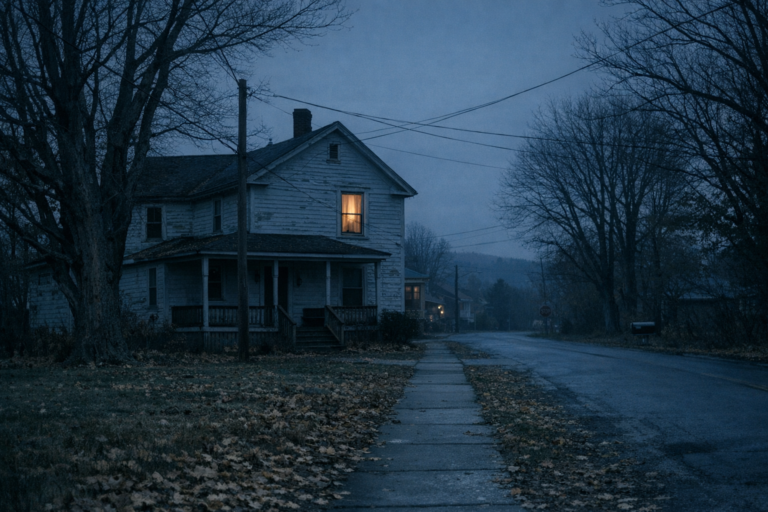
On December 18, 2011, Phoenix Coldon left her parents’ home in Spanish Lake, Missouri. Her father reported seeing her drive away at about 2:20 p.m. Her SUV was recovered in East St. Louis later that afternoon. The ordinary departure became the beginning of a search that still has no confirmed ending.
The Phoenix Coldon disappearance remains one of the most unsettling unsolved disappearance cases in modern Missouri missing person coverage because the known facts are so simple, and the missing space between them is so hard to explain. A 23-year-old woman drove away from home in daylight, and within hours her vehicle was recovered with personal belongings reportedly left behind, yet no clear trail has ever shown what happened next.
That is one reason this story keeps resurfacing whenever people revisit cases involving abandoned vehicles and broken timelines. Like the cases in What Happened After the Car Was Found? 6 Real Disappearances Where the Vehicle Was Recovered but the Person Was Not, the car should have answered the most important questions. Instead, it became the object that made everything stranger.
To understand why the case still grips people, you have to start with the kind of life Phoenix seemed to be living from the outside. Friends and family described her as smart, talented, quiet, and deeply tied to the church life she grew up around. She had been homeschooled for much of her education. She played multiple instruments. She fenced competitively and did well enough to become a regional champion. She was not the kind of person people expected to simply vanish into a blank space.
But the deeper people looked after she disappeared, the more they began to realize there were parts of her life her parents did not fully know. That is the unsettling angle at the heart of this case: not a wild public scene, but a normal departure followed by the discovery that the person everyone thought they understood may have been carrying private pressures, relationships, and plans no one had fully seen.
On December 18, 2011, Phoenix was reportedly wearing gray sweatpants, a dark hoodie, and tennis shoes. She may also have had her glasses with her. There was no dramatic goodbye. No known sign that she was packing for a long trip. No public indication that she was about to disappear from her own life. She got into the Blazer and drove away.
Then the timeline breaks.
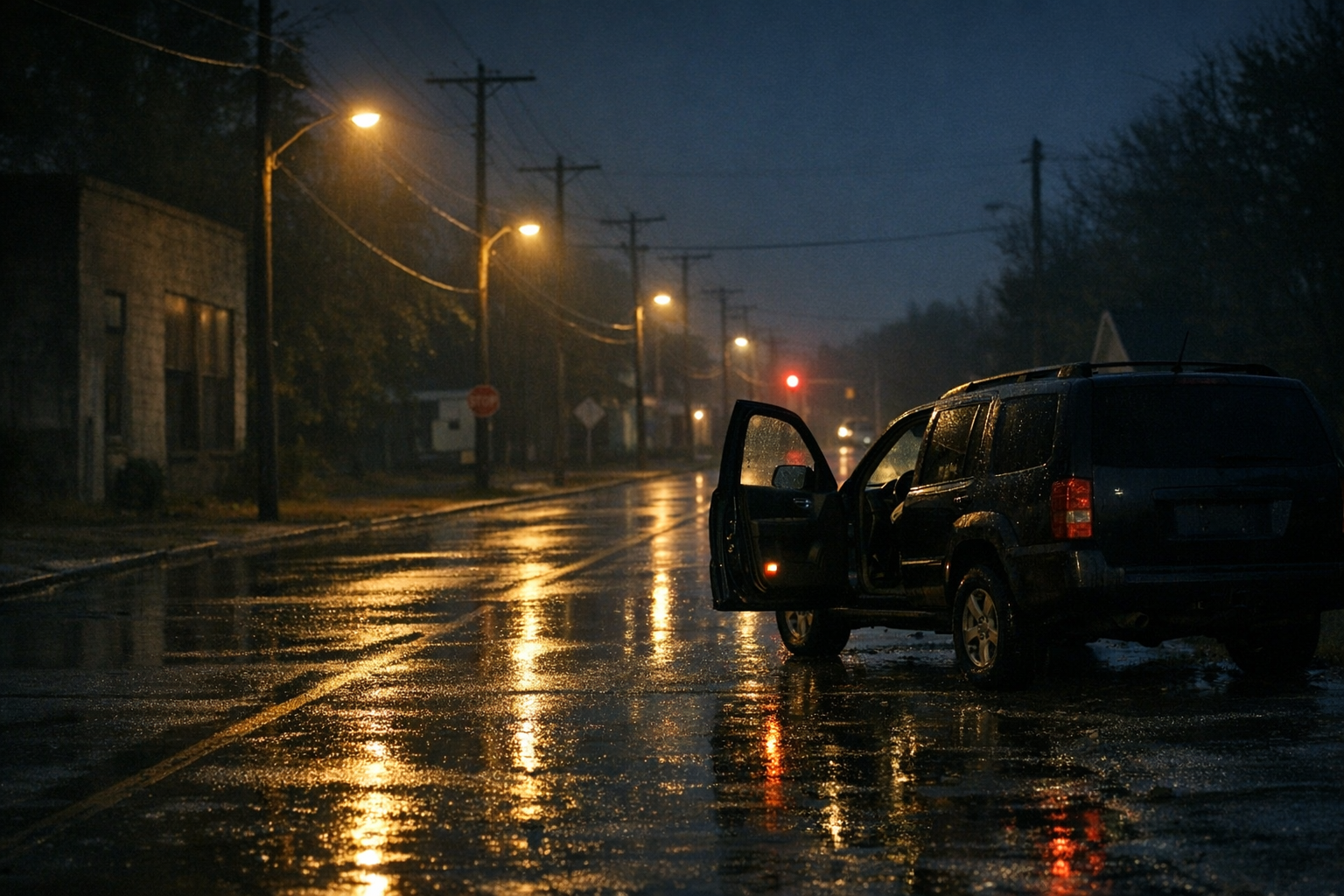
At about 5:30 p.m., the black 1998 Chevrolet Blazer was found abandoned in East St. Louis. Early accounts described it as running with an open door. Those reports were later challenged. Officer Kendall Perry told Oxygen the engine was off, doors closed and keys absent. Uncovered also records that correction and reports that glasses, a purse and shoes were recovered. Neither the vehicle’s condition nor those belongings establishes how or why Phoenix left it.
And then there was another problem. Police reportedly had the vehicle towed before anyone connected it to a missing person case. In a story where the vehicle should have been the most important physical clue, the first response may have treated it like just another abandoned car. That detail has haunted the case ever since, because once a scene is handled as routine, precious context can disappear with it.
Timeline of Events
- About 2:20 p.m.: Phoenix Coldon’s father sees her leave the family driveway in Spanish Lake, Missouri.
- Roughly three hours later: Her black Chevrolet Blazer is found abandoned in East St. Louis, Illinois.
- Vehicle condition: The later responding-officer account contradicts the dramatic scene described in early reports.
- Afterward: Phoenix is not found at the scene, and no confirmed public trail explains where she went next.
That short timeline is what makes the case so powerful. There is very little room between the last confirmed sighting and the discovery of the vehicle. Yet inside that narrow window, the story somehow opens into a void wide enough to swallow everything.
Her parents later learned that when Phoenix had previously moved out, she had lived with a boyfriend rather than the female friend they believed she was staying with. That difference between family knowledge and her private life does not explain her disappearance or establish that any particular relationship was dangerous.
That private life is central to the case’s unique tension. Most missing person stories become easier to narrate once investigators can place the person inside a clear conflict: a dangerous ex, a known destination, a public argument, a witness, a digital trail, a camera, a final phone call. Phoenix Coldon’s case has never offered that kind of clean handhold. Instead, it keeps forcing people back to the same unnerving contrast. The exit from the driveway looked normal. The end point did not.
There have been theories, of course. Some people believe she may have left voluntarily and run into trouble later. Others believe she was meeting someone. Others think the vehicle scene suggests she encountered immediate danger after stopping, or that someone else entered the picture before the SUV was found. The problem is that almost every theory runs into the same wall: there is not enough public evidence to carry it all the way through.
🔎 Related Investigation:
If this case pulled you deeper into the mystery, continue into:
🔎 Related Investigation:
If this case pulled you deeper into the mystery, continue into:
What Doesn’t Add Up
- The vehicle account changed: Early reporting should be distinguished from the later officer interview.
- Belongings: Reports describe personal items in the SUV, but they do not establish a motive or sequence.
- The ordinary departure: Nothing about leaving home in broad daylight signaled a last known moment.
- The hidden parts of her life: The later discovery that family did not fully know who she was seeing or what pressures she was under widened the mystery instead of narrowing it.
The strongest version of this story is not built on sensational guesses. It is built on the eerie normalcy of the opening and the way that normalcy never matches the evidence left behind. Phoenix did not vanish in the woods, on a boat, or in a storm. She vanished inside an ordinary American afternoon, on roads people use every day, in a region crowded with traffic, intersections, homes, and businesses. That should have produced answers. Instead, it produced silence.
Phoenix remains listed in the Missouri missing-person records. The public notice keeps her identity and disappearance visible while the central question remains unanswered.
Years later, that effort still shapes the public memory of the story. Her parents did not talk about Phoenix like a statistic. They talked about a daughter who played music, fenced, laughed, argued, made mistakes, grew up in faith, and still had a future she had not even reached yet. That matters, because cold cases often flatten people into mystery objects. Phoenix was not a mystery object. She was a person with a life that suddenly split in two: the part everyone knew, and the hidden part everyone has been trying to understand ever since.
And maybe that is why this case sticks so hard. An ordinary departure led to an abandoned vehicle, but the journey between them remains unknown. The temptation to turn that gap into a complete story is strong. The evidence does not yet provide one.
There is no clean ending to offer here. No arrest. No confirmed sighting that closed the loop. No piece of forensic evidence that finally pushed the case into focus. Just the same terrible unanswered question that has followed the Coldon family for years: what happened in those missing hours between the driveway and the abandoned Blazer?
Until that gap is filled, the central question remains: what happened after Phoenix drove away? An abandoned SUV supplies a location, but it does not supply the missing sequence.
Some disappearances are terrifying because the final moment is dramatic. Phoenix Coldon’s is terrifying because it wasn’t. It looked like a normal afternoon right up until it became a permanent question.
🔎 Related Investigation:
🔎 Related Investigation:
Research Sources
The following resources were consulted to verify and update this article.
- Missouri State Highway Patrol — Phoenix Lucille Coldon: missing-person poster
Official missing-person notice and recovered vehicle. - The Charley Project — Phoenix Lucille Coldon
Background, clothing and the reported departure and recovery times; its vehicle-condition account predates later reporting. - Oxygen — Responding officer’s account
Officer contradicts initial vehicle reports. - Uncovered — Phoenix Coldon: case overview and timeline
Documents later vehicle reporting, belongings and continuing uncertainty.
🔎 If this story stayed with you, the author suggests these real cases next:
- Jennifer Kesse vanished in broad daylight, and one ghostlike clue still defines the case
- Brandon Lawson’s final call and the later identification of his remains
- Bryce Laspisa’s strange drive ended with a crashed car and a disappearance nobody can explain
Explore more Disappearances stories here: