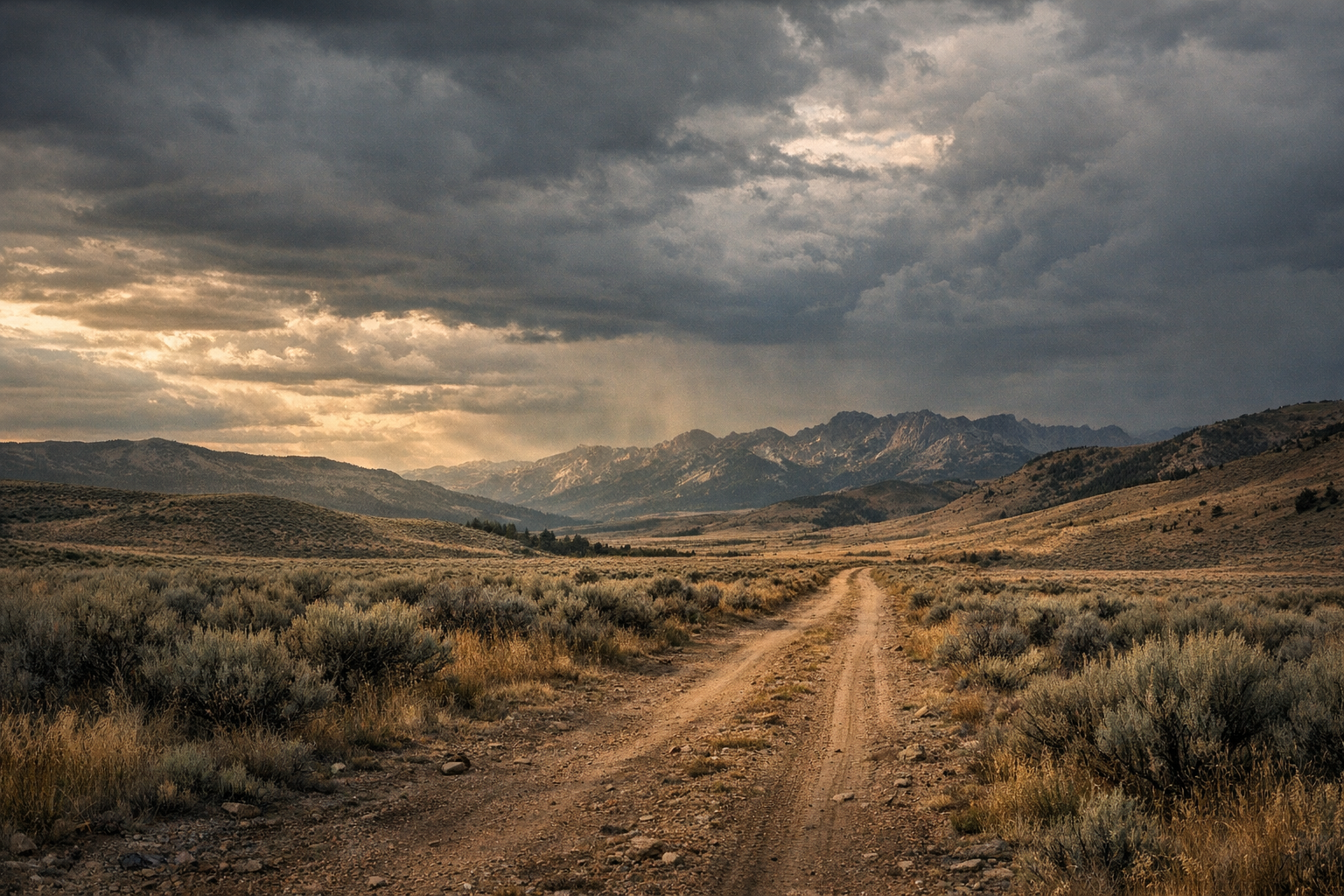
The road through Wyoming’s high country does something strange to your sense of distance. You can see forever, and yet it feels like there is nowhere to hide. The hills are open. The sky is huge. The sagebrush lies low against the ground. If a person starts running there on a clear summer afternoon, it seems impossible that she could simply vanish.
But on July 24, 1997, that is exactly what happened. Amy Wroe Bechtel, a gifted runner with Olympic ambitions, drove into the Wind River country near Lander to scout a race route. Her car was found. Her watch may have been found years later. The landscape remained. Amy did not.
What happened to Amy Wroe Bechtel?
Amy Wroe Bechtel is at the center of one of Wyoming’s most haunting unsolved disappearance cases. The 24-year-old runner and newlywed vanished after heading into open country near Lander, and the missing person case still matters because the setting feels so visible, yet the evidence trail collapsed almost immediately.
That tension is part of why this case still sticks. Like the eerie final phone-call uncertainty in the Brandon Swanson disappearance, Amy’s last known movements seem simple on paper until the timeline reaches the place where the trail should begin—and instead just stops.
Amy was not somebody who drifted through life unnoticed. She was disciplined, athletic, and deeply familiar with the outdoors. Born in California and raised in Wyoming, she became a standout distance runner at the University of Wyoming. People who knew her described her as focused, quiet, and driven. She loved photography. She loved running. She had married Steve Bechtel in 1996, and together they had recently bought a house in Lander.
By the summer of 1997, Amy was building the kind of life that looks sturdy from the outside. She taught fitness classes. She stayed active in the local running scene. She was helping organize a 10-kilometer race in the Shoshone National Forest area and reportedly planned to check part of the course that day. Nothing about July 24 seemed built for catastrophe. It looked like errands, planning, exercise, and home.
That morning, Amy left the apartment she shared with Steve at about 9:30. Through the day, she handled routine tasks tied to their move. One of the last confirmed sightings placed her at a local photo shop around 2:30 in the afternoon. Employees later said she seemed in a hurry and looked at her watch more than once, as if she was trying to stay on schedule.
Then she drove toward the Loop Road area near Burnt Gulch, southwest of Lander, where the terrain begins to play tricks on scale. On a map, it doesn’t look like a maze. In person, it becomes a rolling spread of dirt, brush, gullies, rock, and distance. There are no city edges to hold onto. No sidewalk cameras. No neighbor who hears a scream through an open window. Just open country so wide that once a person enters it, the land can seem to absorb sound, movement, and certainty all at once.
Amy’s white Toyota was found around 1 a.m. on July 25. It was unlocked. Inside were her keys, sunglasses, and a to-do list. Her wallet was reportedly missing. There were no obvious signs of a struggle. No broken glass. No blood. No clear message left behind by violence or panic. That detail matters because it fed the case’s central nightmare: whatever happened may have happened fast, quietly, and just beyond the tiny bubble where a clean answer could have been found.
Timeline of Events
- Morning, July 24, 1997: Amy leaves home in Lander after about 9:30 a.m. to run errands connected to the couple’s move.
- Afternoon: She is seen at a local photo shop around 2:30 p.m., appearing rushed.
- Later that day: Investigators believe she heads toward the Loop Road/Burnt Gulch area to scout or run part of a 10K route.
- 4:30 p.m.: Steve Bechtel returns home and Amy is not there.
- Late evening: Concern grows when she still has not returned.
- About 1 a.m., July 25: Searchers locate Amy’s white Toyota along the Loop Road.
- Following days: Massive searches of the area turn up no confirmed trace of Amy.
The scale of the search only made the disappearance feel stranger. Volunteers, law enforcement, and search teams moved through the area. Tips poured in. Planes were used. Lakes and remote spots were checked. Later, even satellite imagery was pursued in hopes of finding some overlooked clue in the terrain. Nothing resolved the basic question of what happened between Amy leaving town and Amy no longer being there.
The landscape itself becomes the mystery. In a city disappearance, readers often focus on hidden interiors—basements, alleys, garages, back rooms. Here, the fear works differently. Amy vanished in a place that looks too open for a person to disappear. That openness becomes its own form of claustrophobia. There are too many folds in the land, too many small distances that become enormous once a person drops out of sight, too many ways for a critical minute to go unwitnessed forever.
At first, people asked whether the wilderness alone could explain it. Had Amy been injured? Could she have fallen into a hidden ravine, been overcome by the elements, or encountered wildlife? Those theories have always had a certain grim logic because the country is rough and unforgiving. But the longer the searches went on without a body, clothing, or a clean physical trail, the harder it became to believe the environment alone had swallowed everything.
Then the case shifted, and suspicion moved closer to home.
Investigators became intensely interested in Steve Bechtel, Amy’s husband. Over time, reporting on the case pointed to journals and writings of his that alarmed investigators, including violent material that they believed might reveal something darker beneath the surface. Steve said the writings were song lyrics and creative expression, not confession. He denied involvement in Amy’s disappearance. Friends and acquaintances also gave mixed impressions of the marriage. Some described the relationship as normal or loving. Others suggested tension, control, jealousy, or belittling behavior.
That split is one reason the case has never settled into a single clean public theory. There is no final piece of evidence that locks the story. Steve had supporters. He also had critics. He reportedly stopped cooperating with law enforcement after investigators became accusatory, and he declined a polygraph on legal advice. To some people, that looked suspicious. To others, it looked like exactly what a defense attorney would tell any person to do once an investigation starts circling them.
What Doesn’t Add Up
- An experienced runner disappeared in daylight. Amy knew the outdoors and was comfortable in rugged terrain, making a simple disorientation theory feel incomplete for many observers.
- The car offered almost no answer. It was found, but it did not clearly point toward accident, abduction, or voluntary disappearance.
- The search produced almost nothing. In a case built around an outdoor route, the lack of recoverable evidence remains one of the hardest details to ignore.
- There were possible sightings but no solid chain. Reports involving vehicles and a blonde woman never hardened into proof.
- Public suspicion split in two directions. Some focused on someone close to Amy. Others looked at the possibility of an outside predator moving through open country.
Another name that entered the conversation was Dale Wayne Eaton, a convicted murderer long suspected in other violent crimes across the region. His brother reportedly claimed he was near the Lander area around the time Amy disappeared. That was enough to keep his name alive in the case, especially for people who believe Amy crossed paths with the wrong stranger in a landscape with few witnesses and too many escape routes. But again, the problem is the same one that haunts the whole story: suspicion is not resolution.
Years later, a watch similar to one Amy owned was found by a hiker near the Popo Agie River. For a moment, it looked like the kind of clue that might finally drag the case out of fog and into focus. But investigators could not determine whether it was actually hers. The watch joined the long list of almosts in this case—a maybe, a possibility, another object that seemed ready to speak and then didn’t.
And that may be the most unsettling part of Amy Wroe Bechtel’s story. Every version of what might have happened seems possible for a few minutes. Maybe she was attacked by someone she knew. Maybe she met an opportunistic predator in a remote stretch of road. Maybe she suffered an accident in terrain that can hide danger in shallow folds and sudden drop-offs. Maybe crucial evidence was missed in the first hours, when the difference between a solvable case and an unsolved one is often just a footprint, a tire mark, or a witness arriving ten minutes sooner.
Why This Case Still Gets Attention
The case still draws readers because it sits at the exact intersection of wilderness dread and human suspicion. If you are pulled toward route-collapse disappearances like Daniel Robinson’s unexplained vanishing in the desert or remote-location mysteries like the Kris Kremers and Lisanne Froon disappearance, Amy’s case feels like a brutal, stripped-down version of the same fear: a person enters a broad landscape and the normal rules of finding them stop working.
It also endures because Amy herself remains so vivid in the story. She was not an abstract missing-person headline. She was a runner with plans, a woman building a life, someone tied to a community and a future. Cases like this stay alive because readers keep returning to the same impossible image: a talented athlete moving through open Wyoming daylight, and then—nothing.
In many mysteries, time narrows the field. Evidence is re-tested. Witnesses talk. A suspect breaks. Here, time has mostly widened the silence. The farther we get from July 1997, the more the case seems defined by the thing that never happened: the moment the land gave Amy back, or the moment one decisive clue forced a confession, or the moment investigators could finally say with confidence whether this was a wilderness death, an abduction, or a murder.
That moment has never come.
So what happened to Amy Wroe Bechtel? The honest answer is that nobody has proved it. But the shape of the case suggests two realities that are hard to shake. First, Amy likely encountered something catastrophic in a very small window of time. Second, the Wyoming landscape did not just surround the mystery—it helped create it. The same openness that should have made the area readable may be exactly what made the case so difficult to solve. In a place where you can see for miles, investigators somehow lost sight of everything that mattered.
And that is why this story still lingers. Not because the country was dark or crowded or impossible to search, but because it looked almost simple. A road. A runner. A summer afternoon. Open land under a huge sky. The kind of place where nothing should disappear.
Except Amy did.
Continue exploring:
- The roadside disappearance that turned one New Hampshire night into a lasting obsession
- The Arizona desert case where the vehicle was found but the answers never were
- The Panama hike that became one of the internet’s most debated missing-person mysteries
More Disappearances stories: