By the time the house finally went quiet, the party should have been over.
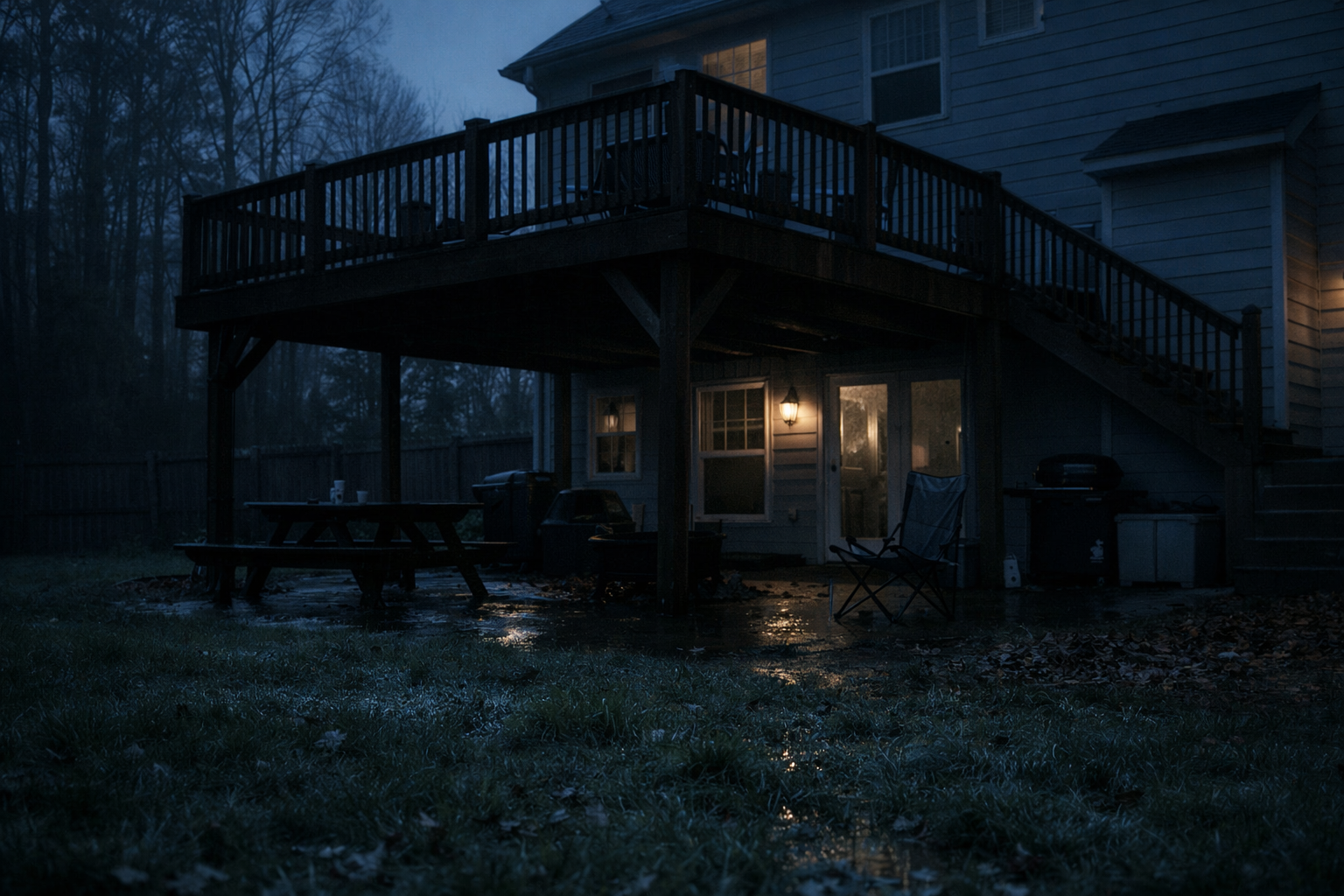
Inside, the women who had spent the night talking, drinking, laughing, and drifting between the kitchen and the deck were supposed to be winding down into sleep. Outside, beyond the railings and the dark yard below, nothing looked dramatic. It was just another suburban backyard in Forsyth County, Georgia. A deck. A lawn. A stretch of darkness that did not seem important until morning made it impossible to ignore.
Then daylight came, and Tamla Horsford was found dead in that yard.
What happened to Tamla Horsford?
Tamla Horsford was a 40-year-old mother of five whose death after an adult sleepover in Cumming, Georgia became a deeply debated suspicious-death story inside the broader true-crime world. Her case still matters because the official explanation—a fall from the backyard deck—never fully quieted the questions about witness statements, investigative choices, and what the scene itself was really saying.
That tension places her story beside other house-centered cases where the setting itself never stops feeling important, including these family murder cases where ordinary homes became crime scenes.
On the night of November 3, 2018, Tamla went to a birthday sleepover at a home on Woodlet Court in Cumming. She was the only Black woman in the group, a detail that later became impossible to separate from the public reaction to the case. The gathering was casual at first—food, drinks, football on television, women moving from one room to another the way people do when the night feels safe and ordinary. That normality matters, because it is the exact thing the story never gets back.
Some accounts said Tamla stayed outside on the back deck for part of the night, smoking and talking. Other women inside the house eventually went to sleep in different rooms. At some point, the party stopped being a party and became a timeline—one of those night-long timelines true-crime readers know too well, where every harmless detail suddenly matters later. Who went to bed first. Who last saw her. Whether a door was shut. Whether anyone heard anything. Whether silence itself means anything at all.
By the next morning, Tamla was in the backyard below the deck. The official conclusion was that she had fallen during the night. Authorities pointed to alcohol consumption, toxicology findings, and injuries they said were consistent with a fall. From the state’s point of view, the central shape of the story was simple: a tragic accident after a night of drinking.
But this case never lived as a simple story for very long.
The debate is not built around a long wilderness search, a vanished car, or years of no evidence. It is built around a contained setting. A backyard. A deck. A friend group. A dead woman. And a series of explanations that many people felt never settled into one clean, believable picture.
Timeline of Events
- Evening, November 3, 2018: Tamla Horsford arrives at an adult birthday sleepover in Cumming, Georgia.
- Late night: The women spend time talking, drinking, watching football, and moving between the house and the backyard deck.
- Overnight hours: Different attendees go to sleep at different times, leaving an uncertain final window for exactly when Tamla was last clearly seen.
- Morning, November 4: Tamla is found dead in the backyard below the deck.
- Initial investigation: Local authorities conclude her injuries are consistent with a fall and classify the death as accidental.
- After public pressure: The Georgia Bureau of Investigation reviews the case and later says the evidence still supports accidental death.
- Long after the file closes: Public debate continues around the witness accounts, the handling of the scene, and whether the investigation earned trust.
That final overnight window is where the case starts tightening. Tamla was not found miles away. She was not in another town, not on an empty highway, not in a place that demanded a huge imaginative leap. She was right there, in the yard of the same home where everyone had spent the night. That should have made the story easier to pin down. Instead, it made every inconsistency feel louder.
Her family pushed back hard against the official version. They did not believe the investigation had asked enough difficult questions, and public interest exploded around that same point. The dispute was never just about whether a fall was physically possible. It was about whether the case had been handled with the urgency and skepticism that any unexplained death inside a closed social setting should trigger. Once that doubt took hold, everything around the night became charged: text messages, recollections, timing, injuries, scene photos, and the relationship between what people said happened and what people believed could have happened.
That is why Tamla Horsford’s death still gets discussed as more than a closed file. It became one of those modern true-crime cases where the official ruling and the public narrative split apart and kept moving in different directions. One side said the evidence pointed to an accident. The other said the investigation never fully earned the right to sound that certain.
What doesn’t add up for many people?
- The house was full of people, but the final window still feels strangely empty. In a packed overnight setting, readers expect a cleaner last-seen narrative than this case ever produced.
- The debate is really about confidence. Many people do not argue that a fall was impossible; they argue that the investigation sounded too settled too quickly.
- The witness statements changed the emotional tone of the case. Even small differences in memory matter more when the entire story is trapped inside one night and one property.
- The social context never went away. Questions about race, trust, and whether Tamla’s death would have been handled differently in another setting kept the case from fading into a routine accident file.
The social context is impossible to ignore. Forsyth County already carried a reputation that made people suspicious of neat official answers in a case like this. Tamla’s family and many outside observers believed that history mattered. To them, the case was not only about forensic interpretation. It was about whose death gets treated as a crisis and whose death gets folded into administrative certainty before the public can even trust the process.
That does not mean every rumor should be treated as fact. It does mean the case sits in an uncomfortable middle ground that true crime returns to again and again: a file where officials say the physical evidence supports one answer, while a large part of the audience keeps staring at the social and narrative details around the case and feeling the story resist closure.
In that sense, Tamla Horsford’s case has something in common with the Missy Bevers case, where the available facts are concrete enough to build a timeline but not strong enough to stop argument. The evidence in each case exists. The problem is what that evidence can actually prove, and what it leaves behind.
One of the strongest reasons this story keeps resurfacing is that the scene never stops feeling cinematic in the worst possible way. Readers can picture it too easily: the upstairs deck, the dark yard, the women asleep inside, the morning discovery, the immediate collapse of any normal explanation. The physical setting is simple, but the emotional setting is not. Every statement after that morning either cools the room slightly or heats it back up again.
Authorities eventually maintained that the evidence supported accidental death, and the GBI’s later review did not reverse that conclusion. That matters. Any honest retelling has to say it clearly. But saying it clearly is not the same thing as pretending it ended the debate. It didn’t. The central public question was never only, “What was the ruling?” It was, “Did the ruling answer the human doubts this scene created?”
Why this case still gets attention
- It feels closed on paper but open in conversation.
- The entire mystery happened in one relatable suburban setting.
- The witness-account disputes keep the story alive.
- The racial and social context made the investigation itself part of the story.
That is the real reason Tamla Horsford’s death still divides people. Not because it lacks an official answer, but because the official answer never dissolved the unease. The house remains the central character. The deck remains the image. And the case remains trapped in that late-night shift from harmless sleepover to permanent suspicion.
If you strip the story down to its bones, it becomes brutally simple. A woman went to spend the night with friends. By morning, she was dead in the yard. The state says it knows how that happened. A lot of people still do not believe the emotional math of the case ever balanced.
That is why Tamla Horsford belongs in the site’s contradiction lane. She is not a traditional disappearance, and she is not a classic whodunit with a long suspect list. She is something more unnerving: a one-night case where the physical scene appears finite, but the argument around it never stops opening back up. The more closely people look at the statements, the timing, and the confidence of the investigation, the more the room seems to change temperature again.
And maybe that is the detail that keeps this case alive. In so many mysteries, the darkness is out in the woods, or down the road, or in some unknown last location. Here, the darkness stayed in the backyard of a house full of people. It stayed close. It stayed domestic. It stayed ordinary. Which means the story still lands with the kind of force readers never really shake.