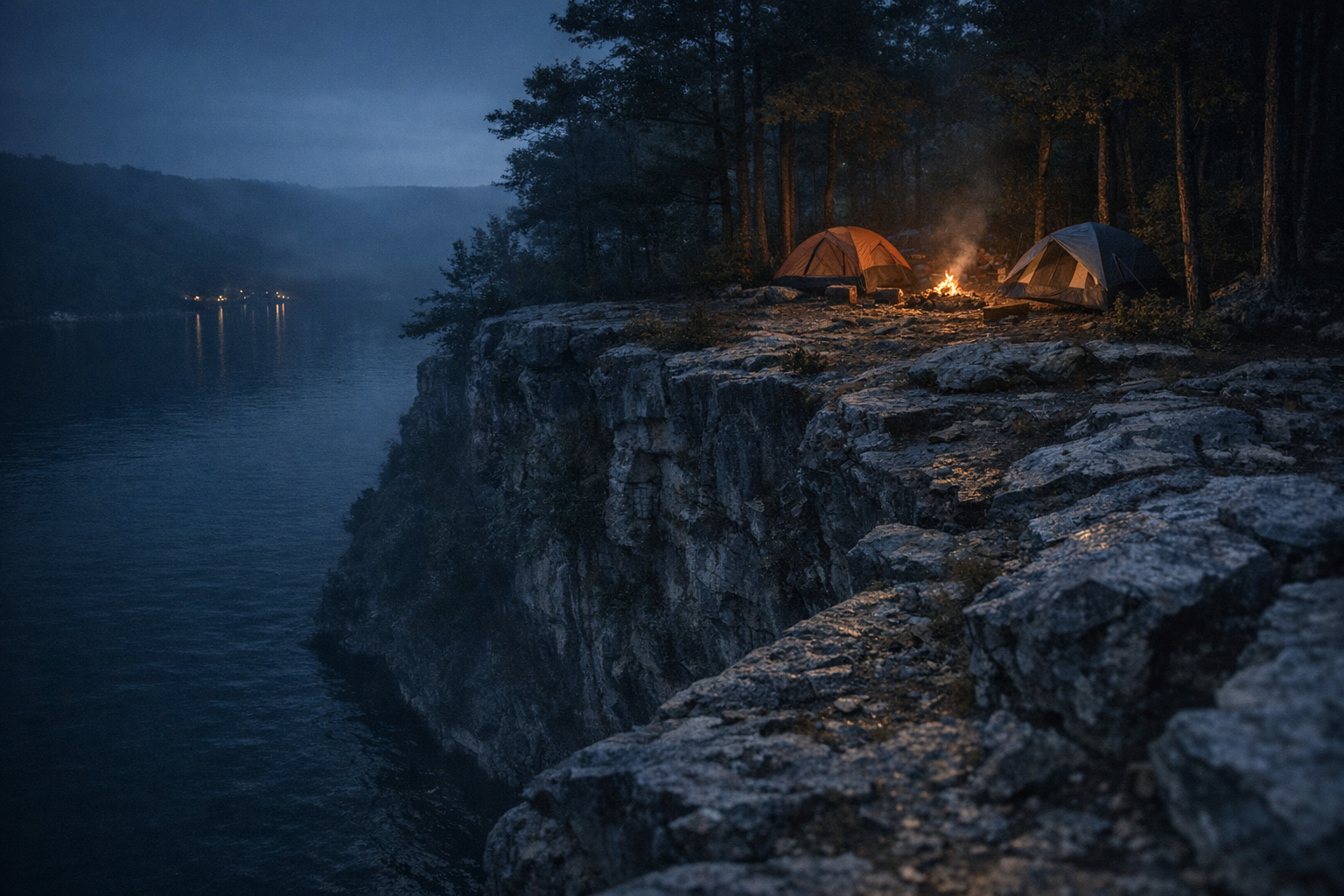
The lake was black by then, the kind of black that swallows distance and makes every shoreline look farther away than it really is. Somewhere above that water, on a rough campsite cut into a bluff at Center Hill Lake, a group of young people had settled in after a long WakeFest night of drinking, music, and dark water below. By the next afternoon, 21-year-old Lauren Agee was floating in the lake beneath them.
And almost from that moment on, the case refused to sit still.
Lauren Agee and the Tennessee case that still raises hard questions
Lauren Agee was a 21-year-old Tennessee woman whose death became one of the state’s most debated missing person case-adjacent mysteries, even though authorities did not classify it as an unsolved disappearance. Her story still matters because the official explanation of an accidental fall has never fully quieted the questions about the campsite, the bluff, the timeline, and the physical evidence left behind.
That tension is part of why readers who followed cases like Tamla Horsford’s disputed fall and the doubts that followed keep coming back to Lauren’s story. On paper, this case was closed. In public memory, it never really was.
In July 2015, Lauren traveled to WakeFest, a popular wakeboarding event near Smithville, Tennessee. It was supposed to be one of those hot, loud summer weekends that blur together later: friends, boats, drinks, music, the feeling that nothing serious can happen because everybody is young and the entire trip seems built around having a good time.
But the geography of the trip mattered more than it first appeared. This was not a simple campsite next to a parking lot or a cabin with a road leading out. According to later reporting, the group set up in a remote spot on a bluff overlooking Center Hill Lake, accessible only by boat and then by climbing up using a rope. That detail sits at the center of the case. Once you picture the location clearly, the whole story changes shape.
It meant every movement that night mattered. Every person at the campsite mattered. Every account of who slept where and when Lauren was last seen mattered even more.
Lauren attended with Hannah Palmer, Aaron Lilly and Christopher Stout. The civil complaint described a tent and two hammocks. Authorities ruled the death accidental; the family disputed that conclusion. Claims made in the lawsuit should not be treated as established events.
The bluff made every detail of the night more important
Most controversial death cases are argued through one big question: what happened? Lauren Agee’s case is stranger because the more immediate question may be where, exactly, did each part of this happen?
WakeFest was a public event, while the group’s campsite was on a bluff. That geography matters to the proposed accidental-fall account, but does not establish that anyone controlled or altered a death scene.
Accounts describe drinking and a return to camp in the early morning. A reported earlier cliff-diving injury and an exact 2 a.m. return have not been independently established by the records consulted here.
Even that part of the story carries tension. Intoxication can absolutely contribute to accidents. But it can also become a convenient explanation that flattens everything else. In disputed cases, the phrase she had been drinking often functions like a trapdoor. Once it appears, every contradiction risks being pushed through it.
Then morning came, and Lauren was gone.
Her belongings, including her phone, purse, wallet, and shoes, were reportedly still at the campsite. That is the kind of detail that sticks because it makes the scene feel unfinished. If someone leaves all of that behind in a precarious, isolated setting, it suggests either a sudden accident or a sudden interruption. Both possibilities are troubling. Neither feels casual.
Later that afternoon, fishermen found Lauren’s body in the lake below the cliff.
Timeline of Events
- July 25, 2015: Lauren Agee attends WakeFest at Center Hill Lake near Smithville, Tennessee, with friends.
- During WakeFest: The group attends the lake event. A separate earlier head injury is not established in the records consulted.
- Late night: The group goes out drinking, then returns to the bluffside campsite in the early morning hours.
- Overnight into July 26: At some point, Lauren is no longer at the campsite.
- Morning of July 26: Lauren’s belongings are reportedly found still at camp.
- Afternoon of July 26: Fishermen discover her body in the water below the bluff.
- Afterward: Authorities conclude her death was accidental, while Lauren’s family and independent investigators argue the evidence points to something more suspicious.
The timeline sounds short. That is exactly why it remains so unsettling. This was not a person who disappeared for weeks before clues began to decay. The gap between an ordinary summer night and a body in the water was brutally small. The questions began almost immediately.
What doesn’t add up for many people
The central dispute in Lauren Agee’s case is not whether she died at Center Hill Lake. It is whether the physical and forensic picture really supports the clean accidental-fall narrative that came to define the case.
- The location of the campsite: A hammock and sleeping setup near a steep drop turned the site itself into a major factor. Critics argue the danger was so obvious that a simple, unnoticed accident is harder to accept without more reconstruction.
- The injuries: The official cause was multiple blunt-force injuries. Civil-case opinions disputed their interpretation; the appellate opinion did not determine the manner of death.
- The drowning question: Officials listed possible drowning as a contributing factor. Disputed opinions about lung findings do not, by themselves, establish when or how Lauren died.
- The belongings left behind: Her phone, purse, wallet, and shoes reportedly remained at camp, reinforcing the sense that whatever happened was abrupt.
- The investigation itself: Family advocates and private investigators have criticized the original inquiry as incomplete, arguing that important evidence and follow-up opportunities were missed.
None of those points automatically proves homicide. That needs to be said clearly. But together, they explain why the official ruling never settled the emotional logic of the case. Too many people came away feeling that the conclusion arrived before the scene was fully understood.
That is where Lauren’s case differs from ordinary true-crime retellings. The haunting part is not just the death. It is the reconstruction. The bluff keeps forcing its way back into the story. Who was on which side of the campsite? How stable was the hammock? How would a fall from that spot actually play out? If Lauren had already been injured earlier in the day, what did that change? If she was trying to leave, as some later discussions have suggested, then the geography of the site becomes even more important.
Because that bluff was not just scenery. It was the mechanism through which the whole case was interpreted.
Sherry Smith hired investigator Sheila Wysocki and filed a wrongful-death lawsuit in July 2016. In January 2019, the Tennessee Court of Appeals reversed summary judgment for Hannah Palmer and remanded the civil case. It did not decide that homicide occurred or establish a defendant’s responsibility.
One of the reasons the case remains so sticky online is that it lives in the uncomfortable space between legal closure and emotional non-closure. The authorities had an answer. The family had a completely different one. And the public, looking at the same cliff and the same reported evidence, kept finding room for doubt.
Why this case still gets attention
Some stories stay alive because there is a named suspect. Others stay alive because there is surveillance footage, a confession, or a dramatic courtroom twist. Lauren Agee’s story stays alive because it combines three things that almost always grip people:
- A last normal night in an isolated setting that can be visualized with disturbing clarity.
- An official explanation that sounds possible but not fully satisfying.
- A family-led challenge that keeps asking whether key physical facts were interpreted too quickly.
It also taps into a broader category of true-crime cases that never stop circulating: deaths ruled accidental even though the scene feels wrong to a lot of people. That is why the case naturally connects to broader archive reads like the True Crime archive of cases shaped by evidence, false narratives, and unresolved doubt. Readers are not just searching for Lauren’s name. They are searching for a type of story: the official version versus the version people cannot stop questioning.
And the more you return to Lauren’s case, the more the geography keeps taking over. Center Hill Lake. The remote campsite. The rope climb. The hammock near the edge. The drop to the water below. The same details that make the story visually unforgettable are also the details that prevent it from ever feeling fully resolved.
That may be the most unsettling part of all. If Lauren died by accident, then the scene was a deadly trap waiting for one bad step in the dark. If she did not, then the bluff was not just dangerous terrain. It was the perfect place for certainty to fall apart.
More than eleven years after Lauren’s death, the accidental ruling and the family’s challenge remain distinct parts of the public record.
What happened to Lauren Agee? Officials ruled the death accidental. Her family’s objections and the civil litigation are documented, but they do not themselves establish homicide.
Research Sources
The following resources were consulted to verify and update this article.
- Tennessee Court of Appeals / Justia — Sherry Smith ex rel. Lauren Taylor Agee v. Hannah Nicole Palmer (January 30, 2019)
The appellate opinion records the case background, disputed affidavits and reversal of summary judgment; it remanded the civil case without deciding homicide. - ABC News — Tenn. mom on a mission to prove daughter’s mysterious death at lake event was no accident
Reporting sets out the accidental ruling, the family’s challenge and the sheriff’s statement that evidence did not support homicide. - WJLE Radio — No Further Local or State Investigation Expected in Agee Death
January2018 local reporting quotes the sheriff and district attorney on the accidental ruling, medical findings and possibility of reopening if new evidence emerged.