The Woman Who Was No One — Lori Erica Ruff, the Box of Secrets, and the Identity That Fell Apart After Death
9 min readAugust 21, 2025
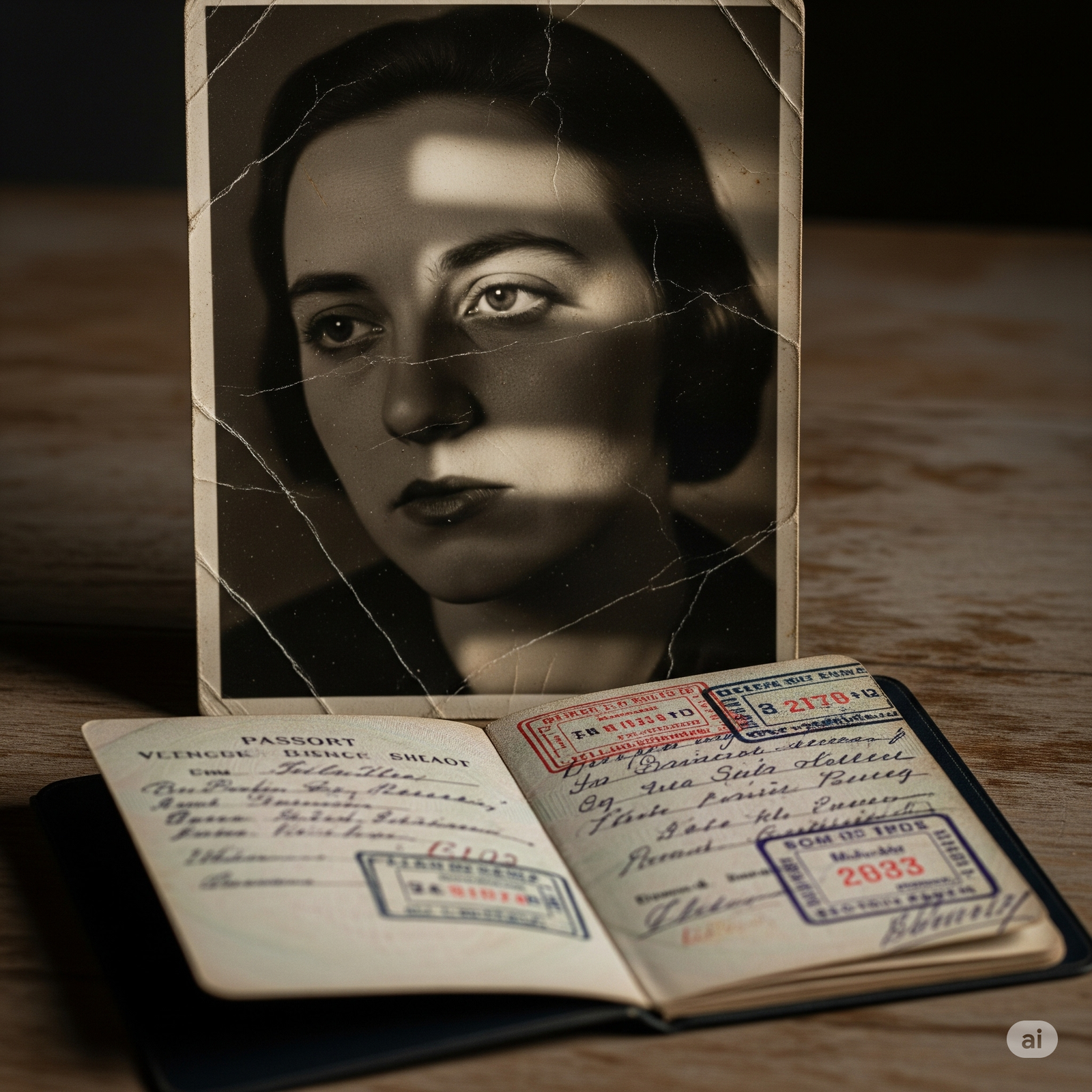
When Blake Ruff’s family opened the lockbox, they were not looking for a second life. They were looking for paperwork, maybe old receipts, maybe one more clue about the woman who had just died in their driveway on Christmas Eve. Instead, they found a dead child’s birth certificate, a legal name change, and the first hard proof that the woman they knew as Lori Erica Ruff had built herself out of someone else’s records.
The Lori Erica Ruff case is one of the strangest identity mysteries in modern true crime: a Texas wife and mother dies by suicide, and only afterward does her family learn she had spent decades living under a false name. What keeps the case alive is not just the stolen identity, but the colder question underneath it—what happened in Kimberly McLean’s real life that made erasing herself feel safer than being known?
That is part of why this story sits somewhere between a solved case and an unfinished one. The name was eventually recovered, but the motive behind the disappearance of the self never fully was. If cases like the Somerton Man mystery haunt people because a body arrives without a life attached, this one disturbs for the opposite reason: Lori built an ordinary life so successfully that nobody realized the original person had vanished years earlier.
For years, the Ruff family had lived with a version of Lori that never quite settled. She was private to the point of alarm. She guarded details about her childhood. She offered broad, slippery answers about where she came from. She said she was from Arizona. She suggested her family was either dead or gone from her life. The past, whenever it came up, felt less like a memory and more like a room she kept locked.
Still, from the outside, the shape of her life looked ordinary enough. She married Blake Ruff in 2004. They built a home in Texas. They had a daughter. There were family gatherings, domestic routines, church circles, and all the little public rituals that make a life appear stable. But stability can be a costume. Sometimes it is stitched together so tightly because the person wearing it is terrified of what happens if a single thread gives way.
By 2010, the marriage was collapsing. Lori had become increasingly controlling, withdrawn, and volatile. After the separation, her behavior reportedly grew more erratic. Then, on December 24, 2010, she drove to her former in-laws’ home in Longview, Texas, and died there from a self-inflicted gunshot wound.
Inside were documents tied to a little girl named Becky Sue Turner, a child who had died years earlier in Washington. There was also paperwork showing that someone using that identity later became Lori Erica Kennedy. From there, the trail led to the woman Blake knew as Lori Erica Ruff. It was not a loose suspicion anymore. It was documentary proof that the person at the center of the family’s grief had been living behind a constructed identity for most of her adult life.
Timeline of Events
1968: Kimberly Maria McLean is born in Pennsylvania.
1986: After turning 18, she leaves home and cuts off contact with her family.
1988: She obtains the birth certificate of Becky Sue Turner, a child who had died years earlier, then uses that identity as part of a legal transformation.
1988: In Dallas, she legally changes her name to Lori Erica Kennedy.
Late 1980s–2000s: She builds a new life under that identity, studying, working, and moving through several states.
2004: She marries Blake Ruff.
2008: She and Blake have a daughter.
2010: The marriage deteriorates, the couple separates, and Lori dies on Christmas Eve.
2010 onward: Her lockbox reveals the identity deception.
2016: Genetic genealogy helps identify her as Kimberly McLean.
How She Disappeared Inside Ordinary Life
The most unsettling part of the Lori Erica Ruff story is that she did not vanish into wilderness, into a city crowd, or into some criminal underground. She vanished into paperwork, routine, and suburban normalcy. That is what gives the case its strange emotional pressure. She did not become legendary while she was alive. She became legible only after death.
Once she had the documents she needed, she did what most people do when building a life: she got an education, formed relationships, and created a personal history that felt usable in conversation. The difference was that her story had been edited down to what was safe to reveal. Every question about family, childhood, old friends, or hometown memories risked exposing the void behind the performance.
People who knew her noticed the tension. She was often described as guarded, socially distant, even frightened. That detail matters because it shifts the case away from the fantasy version of identity theft. This was not a glamorous reinvention. It looked more like permanent emotional siege. However skillfully she remade herself on paper, she never seemed fully at ease inside the life she built.
She did not simply start over. She disappeared inside ordinary life. She became a wife, a mother, a neighbor, and still seemed to live as if exposure might come at any moment.
What Doesn’t Add Up
Why choose a dead child’s identity? It was a deliberate, high-risk act, not a casual attempt to drift away from family conflict.
Why never return, even indirectly? Many estranged people cut ties, but they do not erase themselves so completely that decades pass without even a trace back to home.
Why keep the documents? The lockbox suggests both caution and compulsion. She hid the evidence, but she also preserved it.
Why remain so secretive after building a stable life? If the new identity solved the practical problem, the emotional fear clearly remained.
Why leave no clear explanation? Her death answered the question of where the story ended, but not why it had to begin this way in the first place.
Those gaps are why the case still lingers. Identification solved the factual mystery, but it did not resolve the human one.
Aliases, Documents, and the Architecture of a New Self
On paper, the transformation followed a grim logic. Kimberly McLean disappears from her family life in Pennsylvania. In 1988, the birth certificate of Becky Sue Turner enters the picture. Soon after, the Becky Sue Turner identity is used in a legal process that leads to the new name Lori Erica Kennedy. From there, the invented self becomes durable enough to survive college records, licenses, employment, marriage, and motherhood.
That sequence matters because it shows the case was not impulsive. It had steps. It required patience. It required nerve. And it required a level of commitment that suggests the new identity was not meant to be temporary cover, but permanent shelter.
In that sense, Lori’s story shares a strange kinship with other identity and archive mysteries, from the coded unease of Markovian Parallax Denigrate to the unnerving blank spaces around John.com. The details are different, but the pull is similar: a person or signal appears in the world with no stable origin, and the absence itself becomes the obsession.
The Break That Finally Reached Backward
For years, investigators and online sleuths could push the case only so far. They could prove that Lori was not who she claimed to be. They could map the false identity. They could collect scraps of behavior, movement, and records. But the road backward kept dissolving.
The breakthrough came through genetic genealogy. By working through DNA relationships and family-tree analysis, investigators were eventually able to identify Lori Erica Ruff as Kimberly Maria McLean, a woman from Pennsylvania who had left home as a young adult and never came back.
That solved the central identification problem, but it also sharpened the tragedy. Kimberly had not been some unknowable phantom from nowhere. She had a birth family. She had a real name. She had a place where her life had started. And yet the emotional distance between that beginning and the identity she died with was so extreme that the two lives almost feel like parallel stories forced into one body.
What Likely Happened — and What We Still Cannot Claim
The most responsible reading of this case is also the most frustrating one. The evidence strongly supports that Kimberly McLean chose to sever herself from her early life, adopted a dead child’s identity, and built a long-term alias that became Lori Erica Kennedy and later Lori Erica Ruff. What the evidence does not fully prove is the inner cause.
There are signs of family rupture. There are reports of a difficult home life and serious emotional strain. There are reasons to think she may have been fleeing pain, shame, fear, or some private crisis she never trusted anyone enough to explain. But the line between informed inference and invented motive matters here. The case is haunting precisely because the strongest emotional answer is still missing.
So the most likely explanation is not a neat twist. It is that Kimberly left home carrying something she could not bear, found a way to become someone else, and then spent years trying to keep that reinvention from collapsing. The identity mystery was solved. The deeper personal mystery probably died with her.
That unfinished core is what keeps the story alive in the broader true crime archive. Some cases end when the name is found. This one only becomes sadder.
Why This Case Still Gets Attention
People keep coming back to the Lori Erica Ruff case because it hits several fears at once. It is about hidden identity, yes, but it is also about marriage, trust, family, memory, and the possibility that someone can sit beside you for years while protecting an entire secret history.
It also lands in a uniquely modern place. The solution came through the same genealogical tools that have reopened old crimes and restored names to the unknown. But unlike a typical cold case, this one did not just ask, “Who was she?” It asked, “How long can a person survive after turning their own life into a sealed file?”
FAQ
Who was Lori Erica Ruff?
Lori Erica Ruff was the name used by a Texas woman who was later identified as Kimberly Maria McLean of Pennsylvania. After her death in 2010, documents revealed she had been living under a false identity for decades.
How was Lori Erica Ruff identified?
Investigators and genealogists used DNA analysis and family-tree research to trace her back to her birth family. That work eventually confirmed that Lori Erica Ruff had been born Kimberly McLean.
Why did Lori Erica Ruff steal another identity?
No final explanation was ever proven. The evidence shows that she deliberately used the identity of Becky Sue Turner, a child who had died years earlier, but the deeper reason she chose to erase her original life remains unresolved.
Is the Lori Erica Ruff case solved?
It is solved in the sense that her real identity was recovered. But it still feels unfinished because the emotional motive behind her disappearance into a false life was never fully explained.
Why does this case still disturb people?
Because it turns an ordinary family story into something much darker. A husband, a child, and an entire extended family believed they knew the woman at the center of their lives, only to learn after her death that the foundation of that life had been constructed in secret.
🔎 If this story stayed with you, the author suggests these real cases next: