When the rescuers found the tent on the slope of Kholat Syakhl, the first thing that stood out was not the snow. It was the cut in the fabric. Someone inside had taken a knife to the wall and opened a way out into the dark.
Listen to “The Dyatlov Pass” on Spreaker.
That single slash turned a brutal mountain tragedy into one of the most debated mysteries of the twentieth century. The Dyatlov Pass incident still matters because nine experienced Soviet hikers died on a freezing mountain in February 1959, and even after decades of investigation, the evidence still refuses to settle into one explanation everyone accepts.
What happened on Dead Mountain belongs in the same haunted corner of the archive as the strangest unsolved mysteries people keep returning to when the facts seem real but the ending still feels impossible. Dyatlov is not remembered because the deaths were merely tragic. It is remembered because nearly every clue seems to point somewhere, but never all the way to certainty.
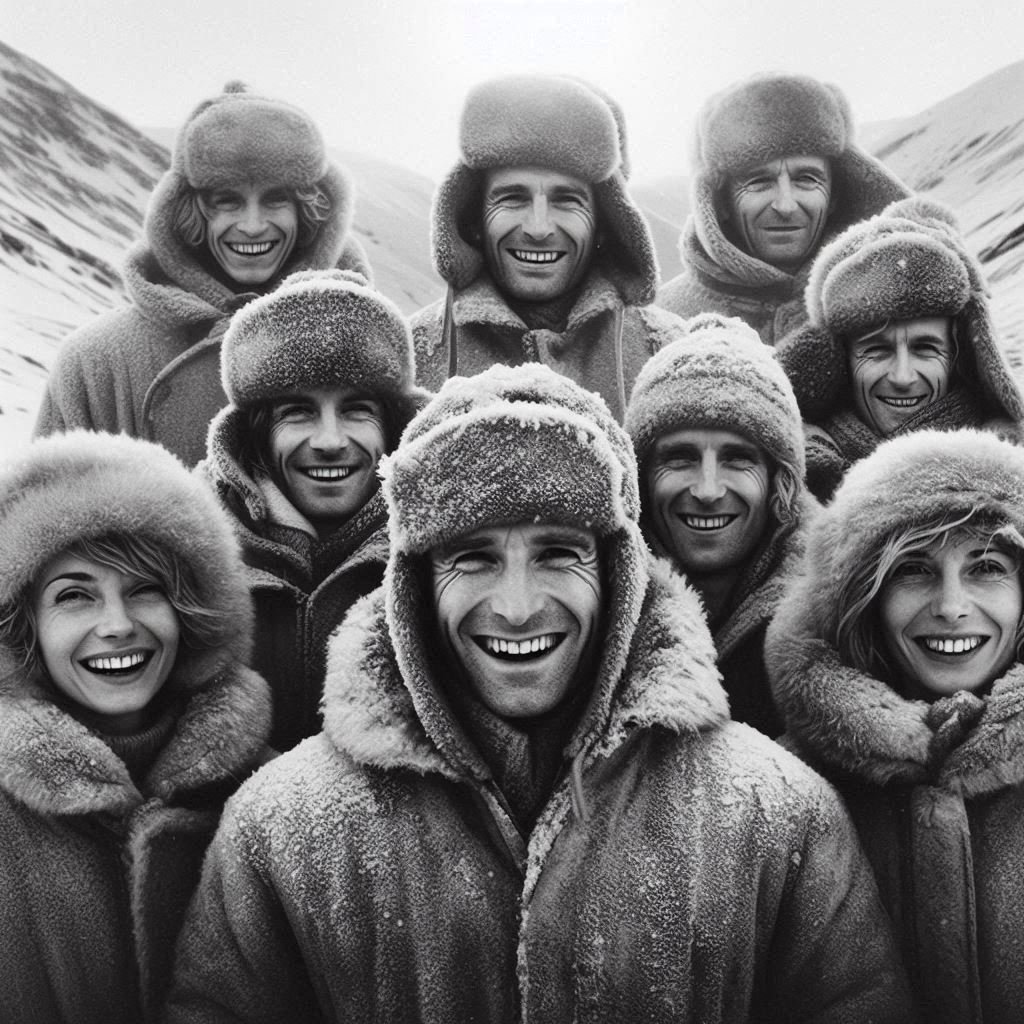
The group had set out from the Ural Polytechnical Institute on what was supposed to be a difficult expedition. Igor Dyatlov, twenty-three years old and already respected for his discipline in the outdoors, led a team of young hikers across the northern Urals toward Mount Otorten. They were trained, organized, and experienced enough that finishing the route would earn them top-level hiking certification. One member, Yuri Yudin, turned back early because of illness. That decision saved his life. The remaining nine kept going into worsening weather.
By February 1, 1959, the group had reached the eastern slope of Kholat Syakhl, a mountain whose Mansi name is often translated as Dead Mountain. They had already cached spare supplies lower down and planned to continue the crossing. Instead, in fading visibility and heavy snow, they pitched their tent on exposed ground rather than descending to the tree line for shelter. It is one of the earliest choices in the case that still draws scrutiny. Was it a careful decision to preserve elevation and direction in poor weather? Or was it the first small error in a chain that would soon become fatal?
Timeline of Events
- January 23-27, 1959: The expedition leaves Sverdlovsk, travels north, and begins the ski trek into the northern Urals.
- January 28: Yuri Yudin turns back because of health problems, leaving nine hikers on the route.
- January 31: The group reaches the highland approach and caches extra gear and supplies for the return trip.
- February 1: In worsening weather, the hikers lose direction and camp on the slope of Kholat Syakhl instead of reaching more sheltered forest.
- Night of February 1-2: Something causes the group to cut their way out of the tent and move downslope into extreme cold, many of them underdressed.
- February 26: Searchers find the tent, slashed from the inside, with boots, coats, food, and other gear still inside.
- Late February to March: The first five bodies are found between the tent and a cedar tree, or near the tree itself.
- May 1959: The final four bodies are discovered in a ravine under deep snow, with far more severe traumatic injuries.
Search teams found the tent partially collapsed, dusted with snow, and cut from within. Footprints led away from it toward the woods. Some of the tracks suggested socks. Some suggested bare feet. That detail alone still has the power to make the case feel unreal. The temperature that night may have plunged to around minus 25 to minus 30 degrees Celsius, with wind driving the cold even deeper. For experienced hikers to leave a tent like that without proper boots and outerwear, something must have felt more dangerous than the weather outside.
The first bodies found belonged to Yuri Doroshenko and Yuri Krivonischenko near a cedar tree almost a mile downhill. They were underdressed, close to the remains of a fire, with injuries to their hands suggesting frantic movement or an attempt to climb. Three more bodies were found between the cedar and the tent: Igor Dyatlov, Zinaida Kolmogorova, and Rustem Slobodin. Their positions made it look as though at least some of them had tried to go back uphill toward shelter and never made it.
Then the mystery deepened. Months later, when the snow began to loosen, the remaining four were found in a ravine beyond the cedar. Lyudmila Dubinina and Semyon Zolotaryov had severe chest injuries. Nikolai Thibeaux-Brignolles had a major skull fracture. Alexander Kolevatov was found alongside them. Some soft tissue damage, including Dubinina’s missing tongue and damage to the eyes of some victims, became some of the most repeated details in every retelling of the case. Those injuries helped turn Dyatlov from a harsh-weather tragedy into a permanent argument about what kind of force had struck the group.
Key Evidence and Clues
- The tent was cut from the inside: Whatever drove them out, it appears to have happened fast enough that a normal exit was abandoned.
- Clothing was left behind: Boots, coats, and supplies remained in the tent, which suggests urgency, fear, or a belief that they would return quickly.
- The group did not die in one place: The scene stretched from the tent to the cedar to the ravine, suggesting multiple phases of survival and decision-making.
- The injuries were uneven: Some died of hypothermia with comparatively minor trauma, while others suffered chest and head injuries severe enough to fuel debate for decades.
- Borrowed clothing mattered: Some of the later-discovered victims wore garments taken from those who died first, showing at least some survivors were trying to adapt and endure.
- Witness reports added unease: Accounts of strange orange lights in the sky and traces of radiation on some clothing gave conspiracy theories room to grow, even though neither point has ever settled the case.
Those clues do not point cleanly in one direction. They point in several at once. And that is the real engine of Dyatlov Pass. The case is not famous because there are no theories. It is famous because every theory explains part of the scene and leaves another part standing out in the snow.
The long-running argument over avalanches shows that perfectly. For years, critics dismissed the avalanche explanation because the slope did not look steep enough, because the tent did not appear deeply buried, and because the hikers were skilled enough that people assumed they would not choose an obviously unstable site. But the more modern version of the theory is narrower and more technical. Instead of a giant cinematic wall of snow, some researchers argue that a slab of snow may have shifted onto the tent after the group settled in, injuring some of them or making them believe a larger slide was imminent. In that version, the cut tent, the rushed exit, and the split between those who sought fire and those who tried to return all make more sense.
Even so, the avalanche theory does not end the debate. It explains urgency better than it explains why some people were found where they were, why the tracks seemed relatively orderly for part of the descent, or why the final injuries still feel so disproportionate to many readers. The ravine could account for some of that trauma. Snow compression and a fall into a hidden gully could account for more. But Dyatlov is one of those cases where emotional disbelief keeps pace with scientific explanation. People read the injury list and still feel that something is missing.
That gap is why military-testing theories never fully die. The Soviet investigation’s vague language about an “unknown compelling force,” the closure of the area, the reports of lights in the sky, and trace radioactive contamination on some clothing created the perfect conditions for suspicion. No evidence has shown that the hikers were killed by a weapons test, a cover-up operation, or a direct attack.
Why the Case Still Divides People
The Dyatlov Pass incident gets attention because it traps readers between two powerful instincts. One is the instinct to believe there must be a rational physical explanation. The other is the instinct to admit that the scene still feels wrong on a human level.
Look at the facts in sequence and the case can seem tragically explainable: worsening weather, a dangerous camp position, a sudden snow event or fear of one, a rushed evacuation, desperate attempts to survive in darkness, and fatal injuries made worse by the terrain. Look at the same facts emotionally, though, and the mystery reopens. Why cut the tent? Why not return for gear sooner? Why were some injuries so severe? Why did the official language sound so evasive? Why does the whole event still feel less like one accident and more like a night that spun out of reality?
That tension is what keeps Dyatlov alive in public memory. It has the hard edges of a forensic case, but it also has the eerie atmosphere of a legend. It sits beside stories like the Somerton Man mystery, where the evidence is real but the unanswered center keeps attracting new interpretations, and cases like the passenger flight that vanished so completely people still struggle to accept how little certainty survived. Dyatlov is not just about death on a mountain. It is about the uneasy distance between explanation and closure.
And maybe that is why Dyatlov Pass endures more than many other cold-weather tragedies. The mountain does not simply look dangerous in hindsight. It looks as if it forced a choice. Stay inside and face one threat, or run outside and gamble on another. The hikers chose the dark. Everything that happened after that has been argued over for generations.
Whatever the final explanation turns out to be, the case ends in frozen silence: a cut tent on an exposed slope, a trail leading into the trees, and nine people who seemed prepared for almost everything except the one thing that found them first.
FAQ
What happened at Dyatlov Pass?
The Dyatlov Pass incident refers to the 1959 deaths of nine experienced Soviet hikers in the northern Ural Mountains after they left their tent during the night in extreme winter conditions. The trigger remains disputed, though the leading explanation involves a snow-related emergency followed by exposure and injuries in the ravine area.
Why did the hikers cut their tent open from the inside?
That is one of the central mysteries here. The most accepted explanation is that the group believed they needed to get out immediately, possibly because of a snow-slide threat or another urgent danger affecting the tent. The cut suggests speed and desperation, not a normal planned exit.
Was the Dyatlov Pass incident caused by an avalanche?
An avalanche-related explanation is currently the strongest mainstream theory, especially in the form of a smaller slab event rather than a massive sweeping avalanche. It helps explain the sudden exit and some injuries, but many people still debate whether it accounts for every detail at the scene.
Why does the Dyatlov Pass case still get attention?
It still gets attention because it combines forensic evidence with an unsatisfying ending. The tent, the footprints, and the severe injuries make the case feel both scientifically arguable and uncanny.
Is the Dyatlov Pass mystery officially solved?
Not in the sense that everyone agrees. Russian authorities later endorsed an avalanche-related conclusion, but public debate continues because the evidence still leaves room for disagreement about what exactly happened in those final hours and whether the official answer fully explains the scene.
🔎 If this mystery pulled you deeper, the author suggests these related real cases next:
- The aircraft found drifting with no crew left to explain what went wrong
- The Siberian explosion so violent it flattened a forest and still resists a simple answer
- The sound some people swear never stops, even though nobody can prove where it comes from
- The real events so bizarre they sound like fiction until the evidence starts piling up
Explore more Unsolved Mysteries stories here: