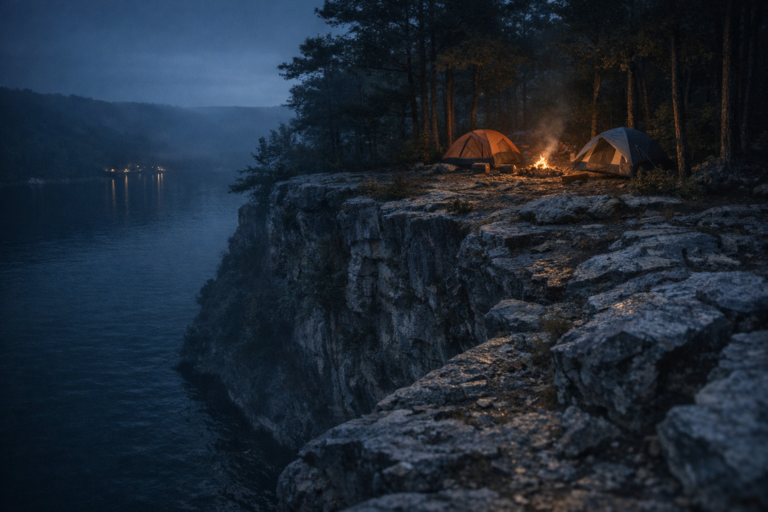
There’s a kind of silence in the Australian bush that feels almost peaceful at first.
The trees move slowly in the wind. Birds call from somewhere deep in the distance. Dry branches crack beneath your boots. But once daylight starts fading, the atmosphere changes. The quiet stops feeling calm and starts feeling heavy — like the land itself is holding its breath.
In September 2021, a 30-year-old hunter named Jayo Rivers disappeared into that silence.
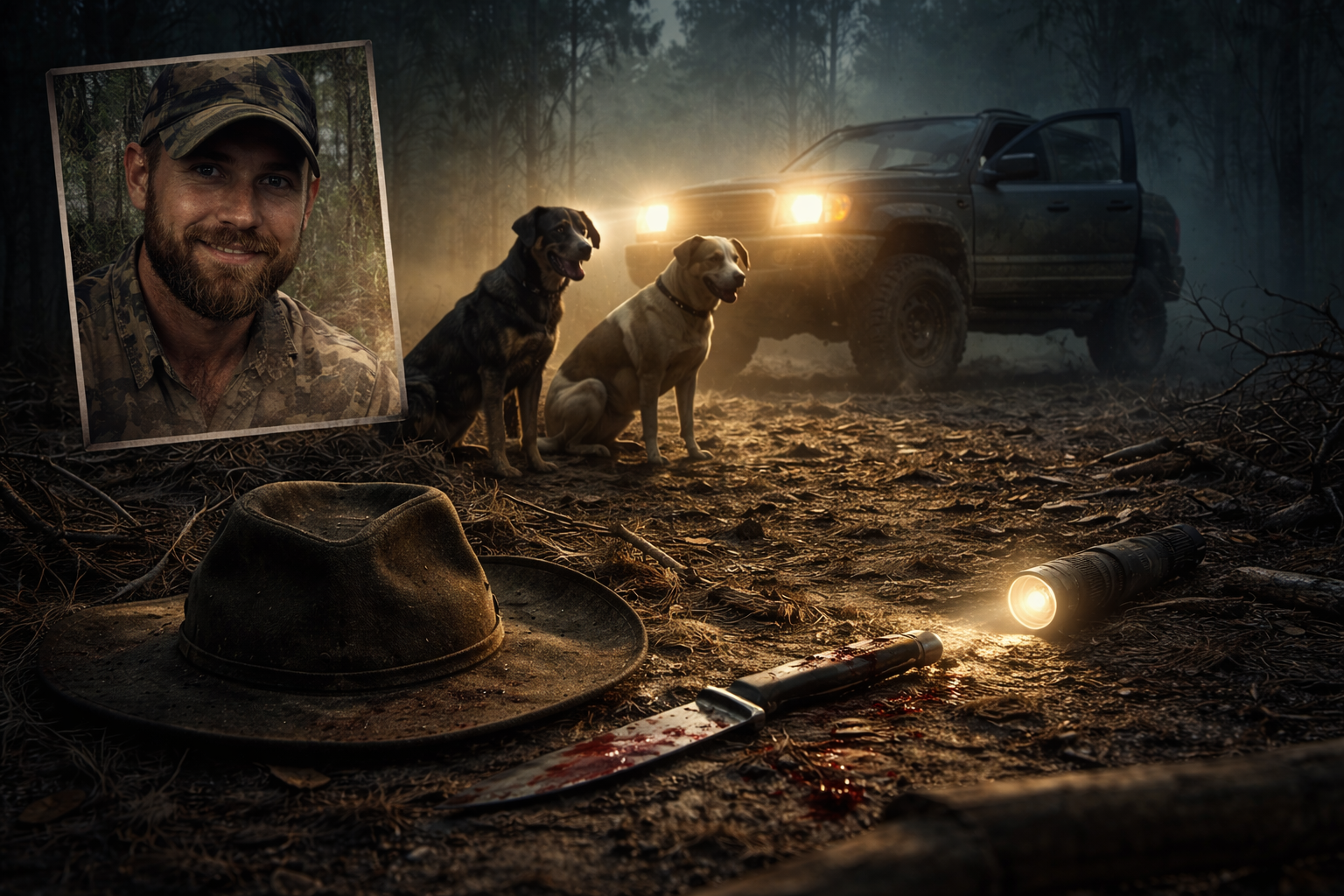
He wasn’t inexperienced. He wasn’t unprepared. He knew the bush well, carried hunting gear, brought his dogs, and headed into remote country near Tabulam in northern New South Wales expecting a normal pig-hunting trip.
Instead, he vanished.
And years later, despite searches, a coroner’s findings, and growing suspicion that someone else may have been involved, the truth about what happened to Jayo Rivers still hasn’t been uncovered.
Short answer: Australian authorities concluded that the death of Jayo Rivers was consistent with foul play after he disappeared during a pig-hunting trip near Tabulam, New South Wales, in 2021. Despite searches, public attention, and ongoing questions from his family, no arrests have been made and the case remains unresolved.
The kind of place where people can disappear
The area near Tabulam is rugged, isolated bushland. Dense trees, uneven terrain, and poor phone reception make it difficult to navigate even for experienced outdoorsmen.
For people unfamiliar with rural Australia, pig hunting isn’t some casual weekend hobby. It often involves tracking through rough country for hours while working alongside trained hunting dogs. Conditions can change fast, and a single wrong decision in remote terrain can quickly turn dangerous.
But Jayo Rivers wasn’t reckless.
People who knew him described him as capable outdoors, someone comfortable in difficult terrain and familiar with the realities of bush hunting. This wasn’t his first trip into remote country.
That matters because when experienced people suddenly vanish, investigators immediately start asking a different kind of question:
What happened that was outside the ordinary?
The trip that never ended
In September 2021, Jayo traveled to bushland near Tabulam for a hunting trip.
At some point during that trip, something went wrong.
Exactly when it happened remains unclear. Public details surrounding the timeline have always been limited. But investigators later confirmed that Jayo became separated from others in the area.
Then came the details that made the case deeply unsettling.
- His vehicle was found abandoned.
- His hunting dogs were discovered alive.
- Jayo himself was nowhere to be found.
For hunters, that last detail stands out immediately.
Well-trained hunting dogs typically stay close to their handler, especially in unfamiliar or stressful situations. If someone becomes injured or trapped, the dogs often remain nearby.
But in this case, the dogs were recovered without him.
And as hours turned into days, concern quickly shifted into fear.
The search through the bush
Friends and family knew something was wrong almost immediately.
Jayo wasn’t known for disappearing without contact. He had experience outdoors, understood the terrain, and had told people where he planned to be.
Search teams moved into the area.
Police, rescue crews, volunteers, and locals searched through difficult bushland while helicopters scanned overhead. But the environment itself worked against them at every step.
The terrain was thick and unforgiving.
Visibility was poor. Tracks disappeared quickly. Time and weather slowly erased anything investigators could use.
And then, several days later, the case took a devastating turn.
Human remains were discovered
Searchers located human remains in bushland near where Jayo had last been known to be.
For his family, the discovery ended one nightmare and began another.
At least now they knew he had not simply wandered away.
But investigators soon realized the circumstances surrounding his death raised serious questions.
Because according to authorities, the evidence did not fit a straightforward accident.
The finding that changed everything
As investigators examined the case further, authorities reached a disturbing conclusion:
The circumstances surrounding Jayo Rivers’ death were consistent with foul play.
That phrase changed the entire direction of the investigation.
This was no longer viewed as a simple bush accident.
It was no longer just a missing-person tragedy involving harsh terrain or exposure to the elements.
Investigators now believed another person may have played a role in what happened.
But despite that determination, no arrests followed.
No public suspect was identified.
And years later, the case remains unresolved.
What investigators could not explain
In cases involving remote disappearances, investigators usually start with the simplest explanations first.
Did the person suffer an injury?
Did they become disoriented?
Was there an animal attack?
Did exposure to the environment lead to death?
But according to authorities, the evidence in Jayo Rivers’ case didn’t fully support those scenarios.
If he had simply become lost or injured, there likely would have been signs showing an attempt to survive or move through the terrain.
If wildlife had been involved, forensic evidence would likely have pointed investigators in that direction.
Instead, investigators reportedly found circumstances serious enough to publicly reference foul play.
And once foul play enters the picture, the investigation changes completely.
Attention shifts away from the environment and toward human behavior.
A dangerous reality in isolated places
Remote bushland creates a unique challenge for investigators.
There are often few witnesses.
Little surveillance.
Limited phone data.
And almost no reliable timeline once people move deep into isolated terrain.
Pig-hunting regions are also areas where different groups sometimes cross paths unexpectedly. Arguments, misunderstandings, or conflicts can escalate quickly — especially far away from public view.
But proving exactly what happened in those environments is incredibly difficult.
Evidence disappears fast.
Scenes degrade.
Memories fade.
And if nobody talks, investigators can be left with suspicion but not enough proof to file charges.
The questions his family still carries
For Jayo Rivers’ family, the hardest part may be the uncertainty.
They know he died.
Authorities acknowledged possible foul play.
But the central questions remain unanswered.
- Who was with him that day?
- What exactly happened in the bush?
- Why has nobody been charged?
His family has continued pushing publicly for answers, refusing to let the case disappear quietly.
Because when authorities suggest foul play but no one is held accountable, families are left trapped between grief and suspicion.
There’s no true closure in that space.
Why no arrests have been made
One of the most frustrating realities in criminal investigations is that investigators can suspect foul play without having enough evidence to prove it in court.
That gap matters.
Police may believe something happened.
Coroners may raise serious concerns.
Families may feel certain someone knows more than they’re saying.
But criminal charges require evidence strong enough to survive a trial.
And in remote outdoor cases, that evidence can disappear quickly.
Weather damages scenes. Animals disturb remains. Witnesses leave. Physical evidence fades.
If the people involved stay silent, the truth can remain buried for years.
Sometimes forever.
Timeline of the Jayo Rivers case
- September 2021: Jayo Rivers travels near Tabulam, New South Wales, for a pig-hunting trip.
- Shortly after: He disappears during the outing.
- Search begins: Police, volunteers, and rescue teams search dense bushland.
- Vehicle discovered: Jayo’s vehicle is located abandoned.
- Dogs recovered: His hunting dogs are found alive without him.
- Human remains located: Searchers discover remains in bushland near the area.
- Authorities reference foul play: Investigators determine the circumstances are consistent with possible foul play.
- Present day: No arrests have been made and the case remains unresolved.
A case that still feels unfinished
Years later, the disappearance and death of Jayo Rivers continues to haunt people who follow unsolved cases in Australia.
Part of that is because the story never reached a clean ending.
Authorities acknowledged that something about the case did not fit a simple accident.
Yet no one has publicly been held responsible.
That leaves the case suspended in an uncomfortable place between suspicion and proof.
And somewhere in the vast silence of the Australian bush, the truth about what happened that day may still be waiting.
The final unsettling thought
When people disappear in remote places, it’s natural to blame the environment first.
The terrain.
The weather.
The isolation.
But the case of Jayo Rivers forces a darker possibility into the open:
What if the greatest danger in the bush wasn’t the land itself — but another person?
Until new evidence appears, until someone speaks, or until investigators uncover something that finally explains what happened, the story of Jayo Rivers remains unfinished.
A man went hunting in remote Australia.
He never came home.
And years later, the silence surrounding his death still hasn’t been broken.
If this case interested you, continue with these next:
- The mysterious disappearance of Brandon Lawson after a strange roadside 911 call
- The unanswered mystery behind Kenny Veach and the strange “M Cave” story
- The baffling disappearance of Daniel Robinson in the Arizona desert
Explore more disappearance cases here: