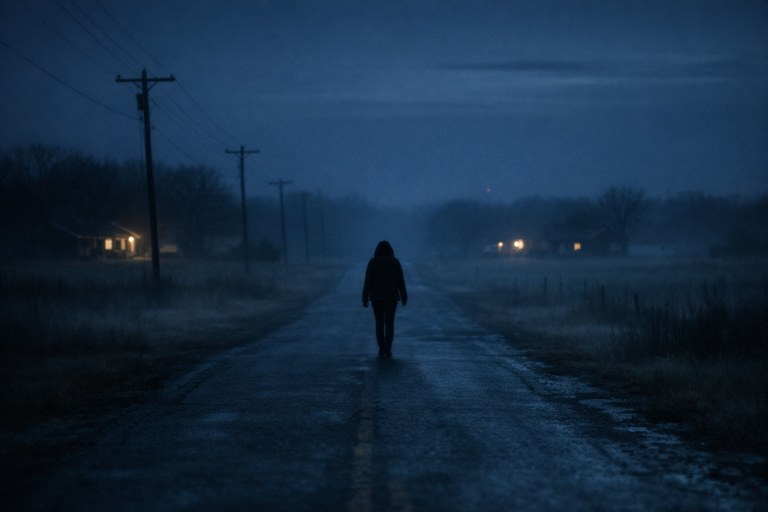
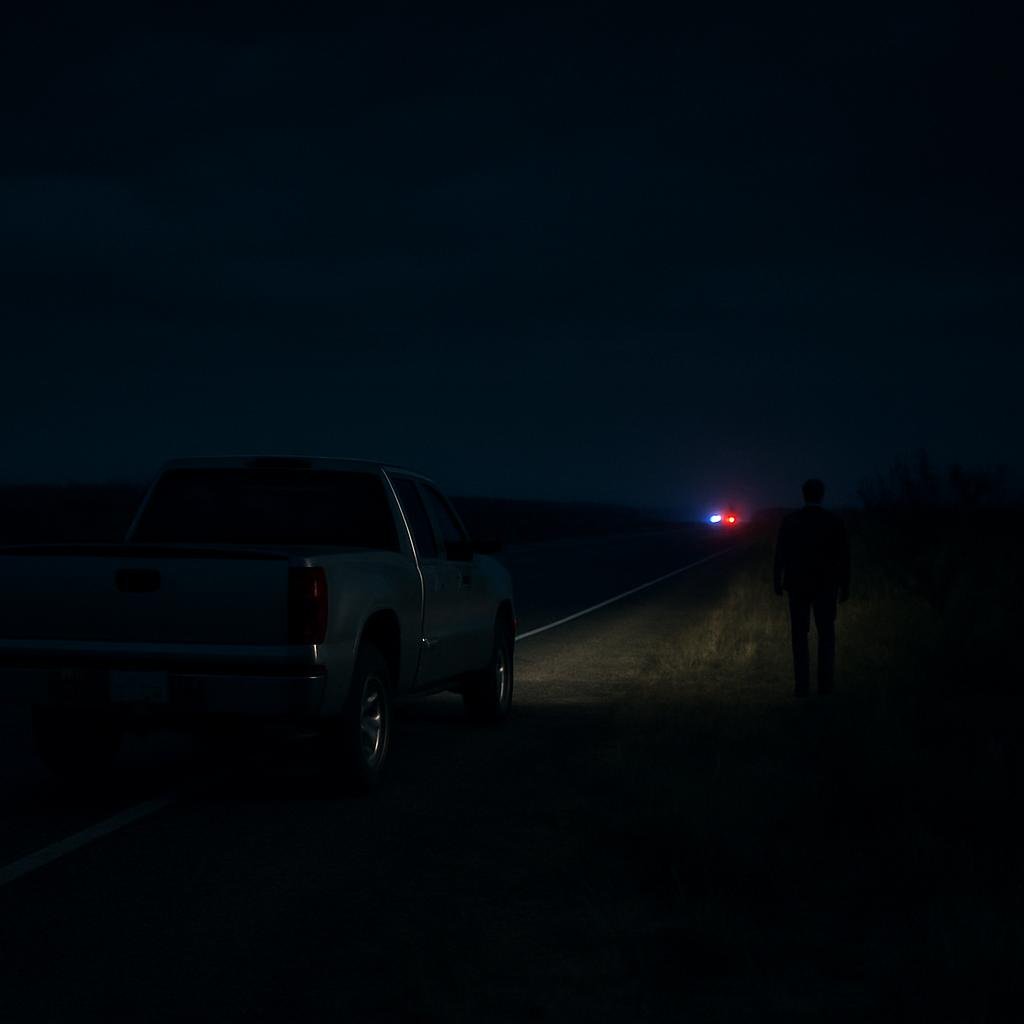
Just after midnight on a dark stretch of Highway 277, a silver pickup sat near the road, its fuel gone, its driver somewhere beyond the headlights. In the distance, West Texas opened into brush, fences, and black empty land. And through the static of a 911 call, Brandon Lawson sounded like a man who could see danger closing in even though no one else could.
By the time help reached the truck, Brandon was gone.
The Brandon Lawson disappearance became one of the internet’s most replayed mystery cases because it left behind something more unsettling than silence: a broken recording, a truck abandoned on the roadside, and a final sequence that never settled into one clean explanation. More than a decade later, people still return to the case because the facts are simple on paper and deeply unnerving in practice.
Cases like this often pull readers into the wider pattern of unsolved disappearances where the last phone call still doesn’t make sense, because the voice on the line feels close enough to understand until the details begin slipping away.
On the night of August 8, 2013, Brandon left his home in San Angelo, Texas after an argument with his longtime girlfriend, Ladessa Lofton. He was 26 years old, a father of four, and by every account he was carrying stress into that drive. He got into his Ford F-150 and headed out into the night, at one point telling family he was driving toward Fort Worth. Whatever he intended when he left, the drive ended in a far lonelier place than anyone around him could have imagined.
Sometime after midnight, Brandon called his brother Kyle and said he had run out of gas near Bronte. That part of the story should have been routine. A brother brings fuel. A stranded driver waits by the shoulder. A bad night turns into an inconvenience and then into a memory. But before Kyle reached him, the calls changed tone. Brandon sounded agitated. Frightened. He told Kyle there were people after him.
At about 12:50 a.m., Brandon called 911. The recording is muddy and fragmented, one of those pieces of evidence that seems like it should answer everything but somehow leaves the room darker. He said he needed the cops. He said he had run out of gas. He appeared to describe people in a field, movement off the road, and a situation that felt active and dangerous to him in that moment. Some listeners hear panic tied to a real external threat. Others hear a man who was disoriented, breathless, and struggling to describe what he thought was happening around him. The call sits right on that fault line, which is why it has never stopped being debated.
While that call was happening, the landscape mattered more than people sometimes realize. Highway 277 in that area does not behave like a neighborhood street. Once you step away from the pavement, fence lines vanish, the ground dips without warning, and what looks close from the shoulder can become dangerously confusing in the dark.
By the time law enforcement reached the truck, Brandon was not there. Kyle arrived with gasoline and waited near the pickup. The truck itself became the center of the mystery: visible, fixed, undeniable. Brandon had made it to that roadside spot. He had left the vehicle behind. And yet the person everyone was looking for was somewhere out in the dark beyond the beam of the patrol lights.
Even stranger, Kyle later said Brandon called again and told him he could see him. That detail has always felt like the hinge of the whole story. Brandon was close enough to watch his brother and the deputy near the truck, but neither of them could see him. If that memory is accurate, then Brandon was not miles away. He was somewhere nearby, hidden by the terrain, the darkness, or his own decision to stay out of view.
Timeline of Events
- Late evening, August 8, 2013: Brandon leaves home after an argument in San Angelo.
- After midnight: He tells family he has run out of gas near Bronte along Highway 277.
- Brother en route: Kyle heads toward the truck with fuel while Brandon’s calls become more urgent and confusing.
- About 12:50 a.m.: Brandon places the now-famous 911 call asking for help and describing a disturbing situation near a field.
- Shortly after: A deputy and Kyle arrive near the truck, but Brandon is no longer visible.
- Final contact window: Brandon reportedly says he can see Kyle from somewhere in the darkness.
- Years later: Search efforts continue until remains found near the area are eventually identified as Brandon’s.
That timeline is short, but what makes it so haunting is how quickly a normal roadside problem becomes a total disappearance. There is no long chain of travel to follow after the truck. No confirmed ride from a stranger. No surveillance footage showing him leaving town. The story narrows to a very small piece of geography and still refuses to become clear.
One of the most important details investigators and followers of the case have always had to weigh is Brandon’s legal situation at the time. He had an active warrant, something his family believed may have shaped his choices once he realized law enforcement was nearby. If he was already upset and suspicious, the sight or mention of a deputy could have pushed him to hide rather than walk toward help. That possibility does not solve the case, but it explains why someone who desperately needed assistance might also avoid the people trying to find him.
It also helps explain why this case belongs beside stories like The Found Vehicle Disappearances Archive and cases such as Daniel Robinson or Bryce Laspisa, where the vehicle remains behind like a marker saying the story definitely happened here even if the person seems to vanish just beyond it.
What Doesn’t Add Up
- The 911 call never resolves cleanly. It captures fear, but not a fully understandable scene.
- The truck was easy to find; Brandon was not. That contrast makes the geography feel both small and impossible.
- He may have been close enough to see Kyle. If true, he was within the search area and still somehow hidden.
- His own choices may have worked against rescue. Fear of police contact could have made him move deeper into danger instead of toward safety.
- The later discovery of his remains answered only part of the story. It told everyone where the case ended, not what happened in the minutes that mattered most.
For years, that uncertainty gave the case a strange double life. For Brandon’s family, it was private grief stretched across birthdays, holidays, and unanswered seasons. Online, it became one of those mysteries people replayed, hoping one sentence on the 911 call would unlock the rest. But the evidence only sharpened the unknown. The truck suggested he stayed close. The call suggested he felt threatened. The terrain suggested a person could get into serious trouble fast. The active warrant suggested he may have hidden from help at the worst possible moment. Each detail points somewhere plausible, but not far enough to make the whole night settle.
Key Evidence and Clues
- The truck location: His Ford F-150 was found near Highway 277, anchoring the final confirmed scene.
- The 911 audio: The call remains the most discussed piece of evidence because it captures urgency without clarity.
- Calls to Kyle Lawson: Those conversations support the idea that Brandon felt he was reacting to something happening around him.
- The terrain: Rough ground, brush, and darkness made search conditions difficult and may have contributed directly to the outcome.
- Later remains recovery: The discovery and identification of his remains near the area confirmed he had not traveled far from the place where the mystery began.
When Brandon’s remains were found years later and later identified, the case changed without fully closing. The biggest question was no longer whether he was alive somewhere under another name. That possibility ended. What remained was the harder question: what exactly happened between the truck, the 911 call, and his final moments in the brush?
The most grounded explanation is also the one many people resist because it feels smaller than the fear in his voice. Brandon may have become disoriented after leaving the truck, whether from stress, exhaustion, intoxication, paranoia, the terrain, or some combination of those things. If he believed danger was near, he may have kept moving deeper into the darkness instead of orienting himself back toward the road. In open country at night, even a short wrong turn can become fatal. That explanation fits the remains being found near the area and the terrible logic of a man close to rescue who never quite reaches it.
But the reason the case still lingers is that the 911 call refuses to sound ordinary. It sounds like a human being inside an immediate crisis. That does not automatically prove another person harmed him. It does mean the emotional truth of the moment was real to Brandon, whether the threat came from outside him, inside his perception, or from both meeting at once in the dark.
That is why Brandon Lawson’s story keeps drawing readers into larger disappearance analysis pieces like What Likely Happened in These 12 Disappearances?. The case sits right at the border between solvable and unknowable. The broad outline is there. The final emotional reality is there. But the missing middle never stops moving when you look at it.
In the end, the Brandon Lawson disappearance still feels less like a puzzle with one missing piece and more like a scene lit by flashes of lightning. For a second, you can see the truck, the field, the brother waiting by the road, the deputy arriving, the voice on the phone. Then the darkness closes again.
It began with an argument, a drive, and an empty gas tank. It should have ended with a ride home. Instead, it became one of the most unsettling roadside mysteries in the archive because the evidence feels close enough to touch and still just out of reach.
FAQ
What happened to Brandon Lawson?
Brandon Lawson disappeared in the early hours of August 9, 2013 after running out of gas near Bronte, Texas and making a disturbing 911 call. Years later, remains found near the area were identified as his, but the exact sequence of what happened after he left the truck is still debated.
What did Brandon Lawson say on the 911 call?
The call is hard to understand in full, but Brandon clearly asked for police help and appeared to describe people or movement in a field near him. The poor audio quality is one reason the case continues to attract so much debate.
Where was Brandon Lawson’s truck found?
His pickup was found along Highway 277 near Bronte, Texas. That roadside location became the central last confirmed scene in the case.
Was Brandon Lawson ever found?
Yes. Human remains discovered near the area years later were eventually identified as Brandon Lawson, confirming that he died not far from where his truck was left behind.
Why does the Brandon Lawson case still get attention?
It still draws attention because of the eerie 911 call, the abandoned truck, the confusing final timeline, and the fact that even after his remains were identified, the last minutes of the case never fully settled into one clear explanation.
🔎 If this story stayed with you, the author suggests these real cases next:
- Cases where the car stayed behind and the person never came back
- Disappearances haunted by one final phone call nobody can fully explain
- The Arizona desert case where the Jeep was found but the answers weren’t
- The 28-hour drive that ended with a wrecked car and a vanished son
- Twelve disappearances where the evidence seems to lean in one direction
Explore more Disappearances stories here: