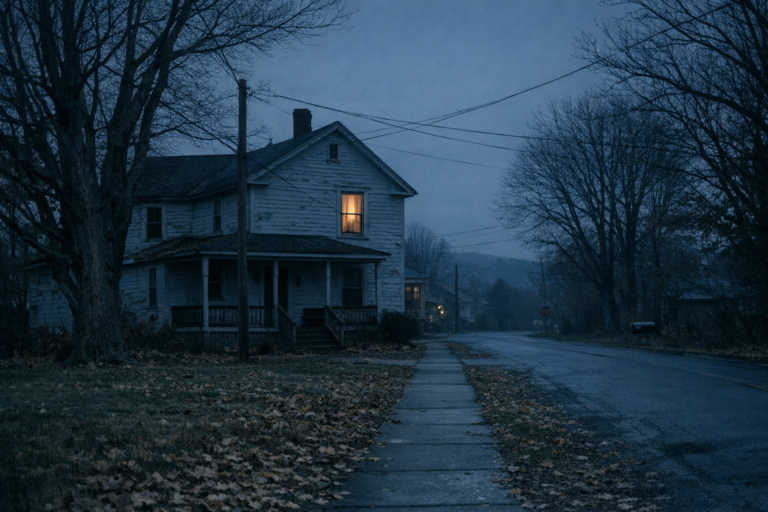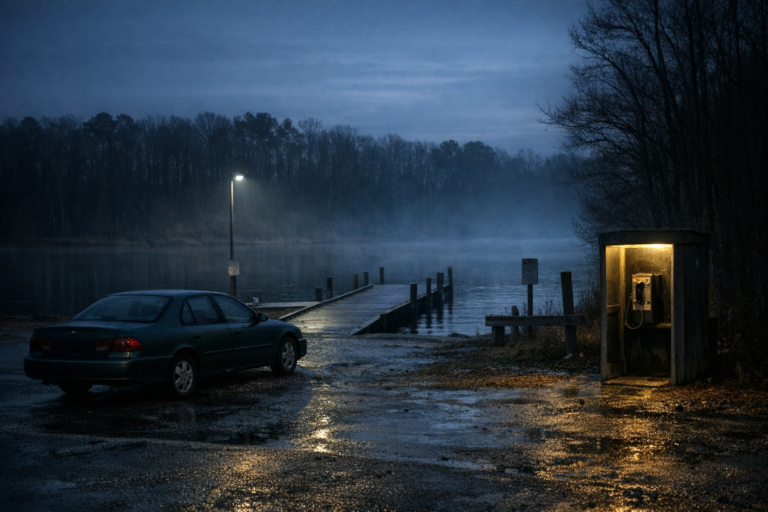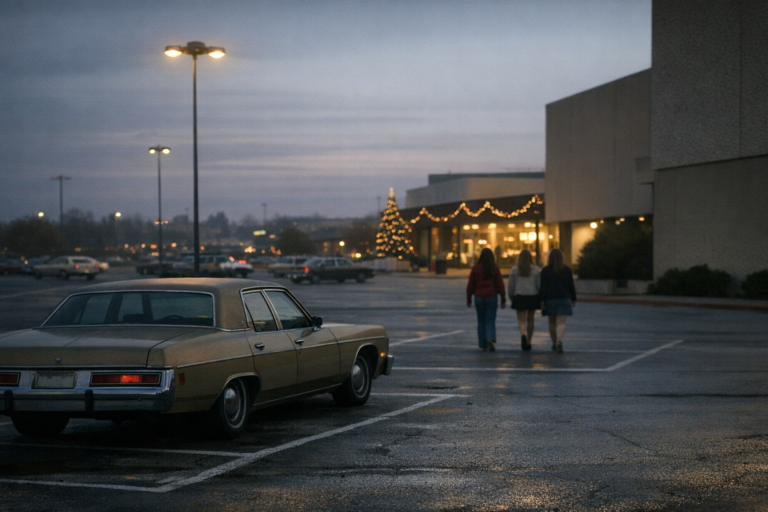
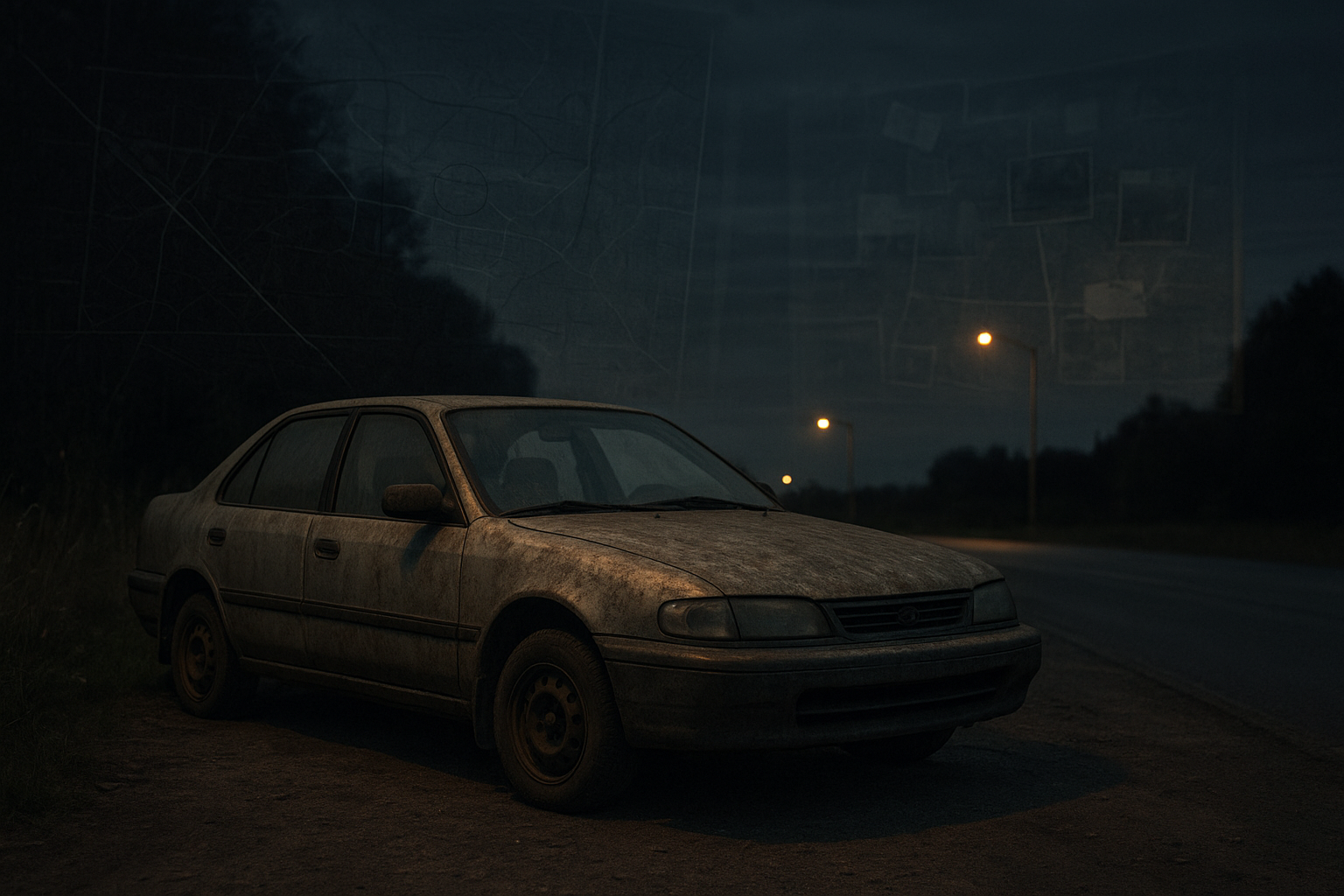
Disappearances disturb people differently when the world gives something back. A road shoulder. A parking lot. A locked car. A running SUV. A set of keys. A wallet still inside. A vehicle discovered where it should not have been, or discovered exactly where it should have been and somehow made even less sense there. In those cases, the public gets a terrible kind of almost-answer. The missing person is gone, but the machine they were using to move through the world remains behind like a witness that can’t finish its testimony.
That is why found-vehicle disappearances are one of the strongest binge patterns in the entire cluster. A recovered car should make a case smaller. It should anchor geography, force the timeline inward, and reduce theory space. Instead, these cases often do the opposite. The vehicle preserves the scene while destroying the illusion that the scene will explain itself. The route becomes visible. The person does not.
People return to these files because the recovered vehicle creates a fracture that feels impossible to leave alone. If the car was on the shoulder, why was it there? If it was parked cleanly, who walked away and under what state of mind? If it was left running, what interrupted the next minute? If there was damage, was it accident, staging, panic, or just noise inside the larger mystery? The car becomes the last physical witness, and like all bad witnesses, it tells the truth only in fragments.
Not as a generic list. Not as a click-driven roundup. This is a central archive room for disappearance cases where the vehicle remained behind and the human explanation did not. Some of the stories here are roadside abandonments. Some are parking-lot vanishings. Some revolve around long drives that ended in one dead stop. Some are urban disappearances where a car survived as the final stable object in a case now dominated by absence.
How This Archive Is Organized
This archive is organized by investigative lens, because found-vehicle disappearances do not all work the same way. A car recovered on a rural road triggers a different kind of reasoning than a vehicle left in a city lot. A car found after a last known argument pulls readers toward family pressure and timeline reconstruction. A car found near water or wilderness shifts the case toward search geography. A vehicle parked in an ordinary place with ordinary items still inside creates a colder kind of fear: not that the scene is dramatic, but that it is mechanically incomplete.
The deeper rooms already exist. What Happened After the Car Was Found? 6 Real Disappearances Where the Vehicle Was Recovered but the Person Was Not is the focused branch readers can enter first. The Final Timelines That Still Don’t Close: 9 Disappearances Reconstructed Minute by Minute widens the pattern into minute-by-minute reconstruction. Last Seen on Surveillance: 6 Disappearances Where the Final Footage Only Deepened the Mystery handles cases where cameras preserved the last known motion. Unsolved Disappearances With Witness Sightings That Only Made the Mystery Stranger takes readers into sightings that expanded the mystery rather than narrowing it. And The Unsolved Disappearances Archive — Timelines, Surveillance Footage, Witness Sightings, Found Vehicles, and Cases That Still Refuse to Close remains the main vault above the cluster as a whole.
This page is the room specifically for vehicle recovery logic: keys left behind, crash scenes without a body, parking-lot silences, cars on embankments, roads that terminate in theory, and vehicles that became more memorable than the last confirmed human movement. Readers who enter through Maura Murray often want Brandon Lawson next. Readers who start with Bryce Laspisa tend to move naturally toward Maya Millete or Steven Koecher. Jennifer Kesse, Phoenix Coldon, and Mitrice Richardson create a more urban version of the same unease. One scene leads to the next because the same question keeps surviving: how can the car be here when the story is not?
In a strong archive, the vehicle is never treated as a gimmick. It is treated as a structural break in the case. That is the lens guiding every section below.
Roadside Abandonments Where the Scene Stayed Intact but the Person Did Not
Some found-vehicle disappearances become foundational because the roadside itself feels like a place where the truth should have collapsed inward. There is a shoulder, a ditch, a curve, a quiet road, maybe a passing witness, maybe one brief conversation, maybe evidence of impact or distress. The geography looks finite. The explanation refuses to stay finite with it.
What Happened to Maura Murray? Inside the Unsolved 2004 Disappearance remains one of the clearest examples in the entire genre because Maura Murray’s Saturn fixed the case to one brutal stretch of road without ever fixing what happened after the stop. The crash scene feels close enough to understand, which is exactly what keeps people returning to it. Brandon Lawson Disappearance — The 911 Call That Still Makes No Sense belongs in the same room because Brandon Lawson’s case twists the roadside pattern into something more volatile: vehicle, darkness, 911 confusion, and a landscape that should have yielded clarity but kept widening instead. The Leah Roberts Road Trip Mystery That Still Doesn’t Make Sense fits here as well because Leah Roberts left behind a wrecked vehicle and a patch of Washington terrain that should have converted scene evidence into certainty. It never did.
These cases are addictive because they create the illusion of containment. The reader feels that the answer must be near the car, near the embankment, near the last sighting, near the route the person had no reason to leave. That illusion matters. It drives searchers, investigators, web forums, and true-crime readers back into the same radius again and again, hoping that enough repetition will finally make the scene confess.
The deeper support branch for this logic is Disappearance Cases Where One Small Clue Rewrote the Entire Timeline, because roadside cases so often turn on one reinterpreted clue, one revised movement, or one small detail that reorders the entire known sequence. But the emotional truth lands earlier than that. In roadside disappearances, the car remains like an accusation. It tells everyone the last ordinary plan failed right here.
Long Drives That Ended in a Dead Stop
There is a special kind of tension in disappearance cases built around an extended drive. The person is not stationary. They are moving through gas stations, calls, rest points, exits, freeways, family conversations, and changing moods. Every mile should add context. Sometimes it only adds dread. By the time the vehicle is found, readers are no longer looking at a single location. They are looking at a journey that kept signaling something was wrong before vanishing into one fixed endpoint.
Bryce Laspisa Disappearance — The Strange Drive Before He Vanished belongs near the center of this section because Bryce Laspisa’s disappearance is impossible to separate from the drive itself. The route is the story’s pressure system: the pauses, the calls, the odd decisions, and then the car found after the last clean line of intention broke apart. What Happened to Maya Millete? The Final Days That Still Don’t Add Up fits because Maya Millete’s case carries a domestic and digital complexity around it, but the vehicle question remains part of why the case feels so unresolved at a practical level. What Happened to Tiffany Valiante? The Evidence Trail That Still Doesn’t Add Up also belongs here because Tiffany Valiante’s case keeps pulling readers back to movement, route, and scene interpretation — the exact way a vehicle-centered disappearance traps a case between travel logic and something far darker.
Long-drive disappearances keep readers hooked because they preserve momentum. The person was going somewhere. They had direction, destination, context, even if that context was unstable. When the vehicle is recovered, all that movement hardens into one unbearable question: at what exact point did travel become disappearance?
That is why these files naturally route readers into The Final Timelines That Still Don’t Close: 9 Disappearances Reconstructed Minute by Minute. The car is not just evidence in these cases. It is the end of the known journey, which means the timeline itself becomes a kind of second vehicle carrying the investigation forward after the physical one stopped.
Parking-Lot Silences and Ordinary Places That Should Have Been Safer Than This
Some of the most unnerving found-vehicle disappearances do not happen on remote roads at all. They happen in apartment complexes, business lots, suburban neighborhoods, and other ordinary spaces that look too watched, too public, too routine to permit this level of uncertainty. That contrast is what makes them linger. The environment seems built to retain answers. It does not.
Jennifer Kesse Disappearance — The Woman Who Vanished in Broad Daylight belongs here because Jennifer Kesse’s case remains one of the strongest examples of a vehicle-centered disappearance becoming inseparable from urban routine. She should have remained visible to the system around her — workday, apartment complex, parking areas, nearby movement — and yet the car emerged as one of the coldest objects in the case, preserved without giving back enough truth. What Happened to Phoenix Coldon? The Driveway Exit, the Running SUV, and the Hours That Still Don’t Add Up belongs here as well because Phoenix Coldon’s running SUV turned an ordinary residential departure into one of the most compelling scene-based mysteries in the cluster. Steven Koecher Disappearance — The Man Who Walked Into a Neighborhood and Vanished fits this room because Steven Koecher’s disappearance combines road logic, neighborhood visibility, and a last known route that should have converged more cleanly around his vehicle than it did.
Parking-lot and neighborhood vehicle cases are especially powerful because the vehicle does not merely survive. It survives inside a world of cameras, residents, schedules, and normal human traffic. When that environment still fails to explain the disappearance, the fear becomes less romantic and more procedural. It suggests that even ordinary visibility has limits people do not like thinking about.
Readers who enter through this room often move naturally into Last Seen on Surveillance: 6 Disappearances Where the Final Footage Only Deepened the Mystery and Unsolved Disappearances With Witness Sightings That Only Made the Mystery Stranger, because urban and suburban vehicle recoveries almost always lean on the same secondary pressures: who saw what, what the camera missed, what timing changed, and which small ordinary gap became permanent.
Vehicles Found After Distress, Confusion, or a Scene That Refused to Settle
Not every car in these files looks like a simple abandonment. Some scenes feel unstable from the beginning. Maybe the vehicle position suggests distress. Maybe there are signs of prior emotional pressure. Maybe the surrounding story already contains stalking, fear, erratic behavior, or a release into darkness that should never have happened. In those cases, the recovered vehicle becomes less of a static clue and more of a pressure point that keeps forcing the same terrible possibilities back into view.
Dorothy Jane Scott Disappearance — The Woman Who Vanished After Being Stalked belongs here because Dorothy Jane Scott’s disappearance cannot be separated from fear, vulnerability, and the predatory context that surrounded the final known period of her life. The vehicle remains part of why the case still feels so physically close and morally unresolved. The Malibu Disappearance of Mitrice Richardson Still Raises Chilling Questions fits here because Mitrice Richardson’s case keeps pulling readers back into a sequence of decisions, geography, and recovery logic that never formed a stable ending. Emma Fillipoff Disappearance — The Barefoot Vanishing also belongs because Emma Fillipoff’s disappearance carries the same volatile feeling of a person in visible distress brushing up against a world that somehow failed to convert concern into rescue.
These are some of the hardest cases to read in succession because the vehicle is not simply evidence of where someone stopped. It becomes evidence that something in the story was already tilting. That does not make the explanation simple. If anything, it makes the emotional pull worse, because the reader begins to feel that intervention should have been possible one step earlier than it was.
This is where found-vehicle archives overlap most strongly with the site’s larger disappearance spine. What Happened to Them? 25 Disappearances Where the Final Timeline, Last Call, Car, or Camera Footage Still Wasn’t Enough matters here because these are not just car scenes. They are cases where final timeline, clue pressure, witness behavior, and the recovered scene all refuse to align into one stable narrative.
Why a Recovered Vehicle Can Make a Disappearance Harder, Not Easier
The instinctive public belief is that a found car should help. Sometimes it does. But in the disappearance cases gathered here, the vehicle often deepens uncertainty because it proves three things at once. First, the missing person definitely reached a certain point in the world. Second, that point matters enough to dominate the case. Third, that point was still not enough to preserve the explanation. The result is an investigation anchored to a place but not resolved by it.
A vehicle is also uniquely intimate evidence. It carries route intention, personal habits, travel urgency, comfort level, and fragments of daily life all at once. Unlike a phone ping or a witness account, a car is physical and inhabited. It contains the shape of a person’s movement. When it is recovered empty, the gap between object and owner feels immediate in a way the public understands instinctively.
People do not just look for a name. They look for what happened after the car was found, why the vehicle was abandoned, whether the keys were left behind, why the route changed, what the crash scene meant, whether foul play was likely, how far the person could have walked, whether someone moved the vehicle, and why the search radius failed. All of those questions are variations on the same obsession: the car survived the moment the story did not.
They naturally connect multiple existing archive branches. A recovered car can feed into a last-seen timeline page, a witness-sighting page, a surveillance page, a clue-analysis page, or a broader disappearance archive without feeling forced. That makes the found-vehicle pattern one of the cleanest crawl corridors on the entire site. One reader can enter through Maura Murray, move to Brandon Lawson, branch into Jennifer Kesse, then into Phoenix Coldon, and finally land in the broader archive without ever feeling like they left the same documentary room.
It also helps that found-vehicle disappearances come with built-in narrative architecture. There is almost always a before, a scene, and an after. Before: the person was driving, planning, arguing, escaping, returning, or simply moving through an ordinary day. Scene: the vehicle is recovered and the timeline hardens. After: every theory must now pass through that fixed object. The scene becomes a bottleneck. If a theory cannot explain the vehicle convincingly, it begins to collapse.
That bottleneck is what turns readers into analysts. They start comparing fuel level, damage, location, item placement, weather, traffic, witness range, and search maps. They become absorbed not only in the fate of the person, but in the mechanics of the scene. It is the same reason strong cold-case documentaries keep returning to rooms, roads, and layouts. A scene that survives invites reconstruction. A recovered vehicle is one of the most reconstructable scenes in the entire disappearance genre.
And still, even with all that structure, the vehicle can remain mute in the ways that matter most. Was it left deliberately? Was someone else there? Was the scene interrupted? Did the driver leave on foot voluntarily, under pressure, in panic, injured, or already unable to control what happened next? These are not just forensic questions. They are emotional ones. They are the reason readers keep opening one more case inside the same cluster.
That is why the found-vehicle angle is not redundant with the site’s other disappearance hubs. It is a distinct investigative room. It captures a recurring pattern where the last physical anchor in the case becomes the source of the deepest instability. Seen together, these cases do more than tell separate stories. They teach readers how one object — one recovered car, truck, or SUV — can become the entire emotional engine of a mystery.
🔎 Related Investigation:
If this case pulled you deeper into the mystery, continue into:
The Investigative Patterns That Repeat Across Found-Vehicle Cases
The first pattern is scene preservation without scene resolution. The car remains, but the meaning of the scene does not settle. Maura Murray, Leah Roberts, and Brandon Lawson all show different versions of this. The second pattern is route interruption. The person was not supposed to stop there, or at least not supposed to disappear from there, and that broken route becomes the center of the case. Bryce Laspisa and Steven Koecher make that pattern especially clear.
The third pattern is ordinary-space betrayal. Jennifer Kesse and Phoenix Coldon remain so compelling because the surrounding world looks too normal to permit this kind of collapse. The fourth pattern is evidentiary intimacy. A recovered vehicle invites a uniquely personal reading — where the person sat, what they took, what they left, whether anything in the scene feels rushed, staged, or impossible to reconcile with the official line.
The fifth pattern is overlap. Found-vehicle disappearances rarely stay in one subcluster. They overlap with final hours, family pressure, suspicious sightings, surveillance gaps, witness contradiction, water-adjacent searches, and scene reconstruction. That overlap is exactly what makes them perfect master-hub material. They do not sit at the edge of the cluster. They touch almost every strong disappearance branch already built on the site.
The sixth pattern is emotional incompletion. Readers can accept that a disappearance is unsolved. What they struggle with is the feeling that the last major physical clue should have yielded more than it did. A recovered vehicle feels like progress. When that progress stalls, obsession takes its place.
A seventh pattern is scene overconfidence. The public, and sometimes investigators, instinctively believe the car scene must contain the decisive answer because it feels concrete and photographable. But found-vehicle disappearances often punish that confidence. A car can be meaningful without being self-explanatory. It can narrow the map while leaving motive, coercion, timing, and human intent maddeningly open. That tension is exactly why these cases keep generating theories long after the initial search fades.
An eighth pattern is the way recovered vehicles split audiences into competing investigative camps. One group sees voluntary departure, confusion, or flight. Another sees interruption, foul play, or staging. Another becomes fixated on one technical detail — damage, location, item placement, timeline drift, witness timing, or whether the car itself was moved. Strong archive pages need to acknowledge that pull instead of flattening it. The vehicle does not end debate. It creates a structured debate with real recurring fault lines.
A ninth pattern is cluster gravity. Vehicle cases do not stay isolated because each one teaches the reader how to read the next. Once someone understands why Maura Murray, Jennifer Kesse, or Brandon Lawson became so enduring, they begin recognizing the same architecture elsewhere: the route that should have continued, the scene that should have broken open, the object that should have preserved explanation and somehow didn’t. That recognition is what turns a single mystery into an archive habit.
Authority comes from recognizing those repeating structures instead of treating each case as isolated shock. It understands one of the most magnetic investigative patterns inside them.
Conclusion
Some disappearances vanish into open darkness. The cases gathered here do something worse. They leave behind an object that should have narrowed the truth: a car on the shoulder, an SUV in a driveway pattern that makes no sense, a vehicle recovered after a route failed, a scene that preserved everything except the missing person.
That is why found-vehicle disappearances have such lasting power. The world did not go blank. It gave back one hard piece of the story and then refused to explain it. The car became the last stable witness, and stability itself became the thing that made the case unbearable.
Because once a recovered vehicle becomes the center of the mystery, readers almost never stop at one file. They keep following the roads where the machine stayed behind and the human story did not.
🔎 Related Investigation:
🔎 Related Investigation:
🔎 If this investigation pulled you deeper into the mystery, continue with these next archive files:
- The Unsolved Disappearances Archive — Timelines, Surveillance Footage, Witness Sightings, Found Vehicles, and Cases That Still Refuse to Close
- What Happened After the Car Was Found? 6 Real Disappearances Where the Vehicle Was Recovered but the Person Was Not
- The Final Timelines That Still Don’t Close: 9 Disappearances Reconstructed Minute by Minute
Explore more Disappearances investigations here: