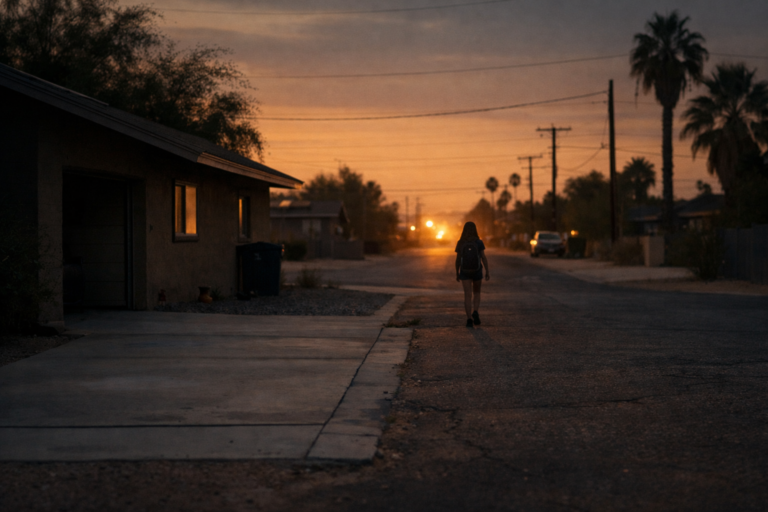
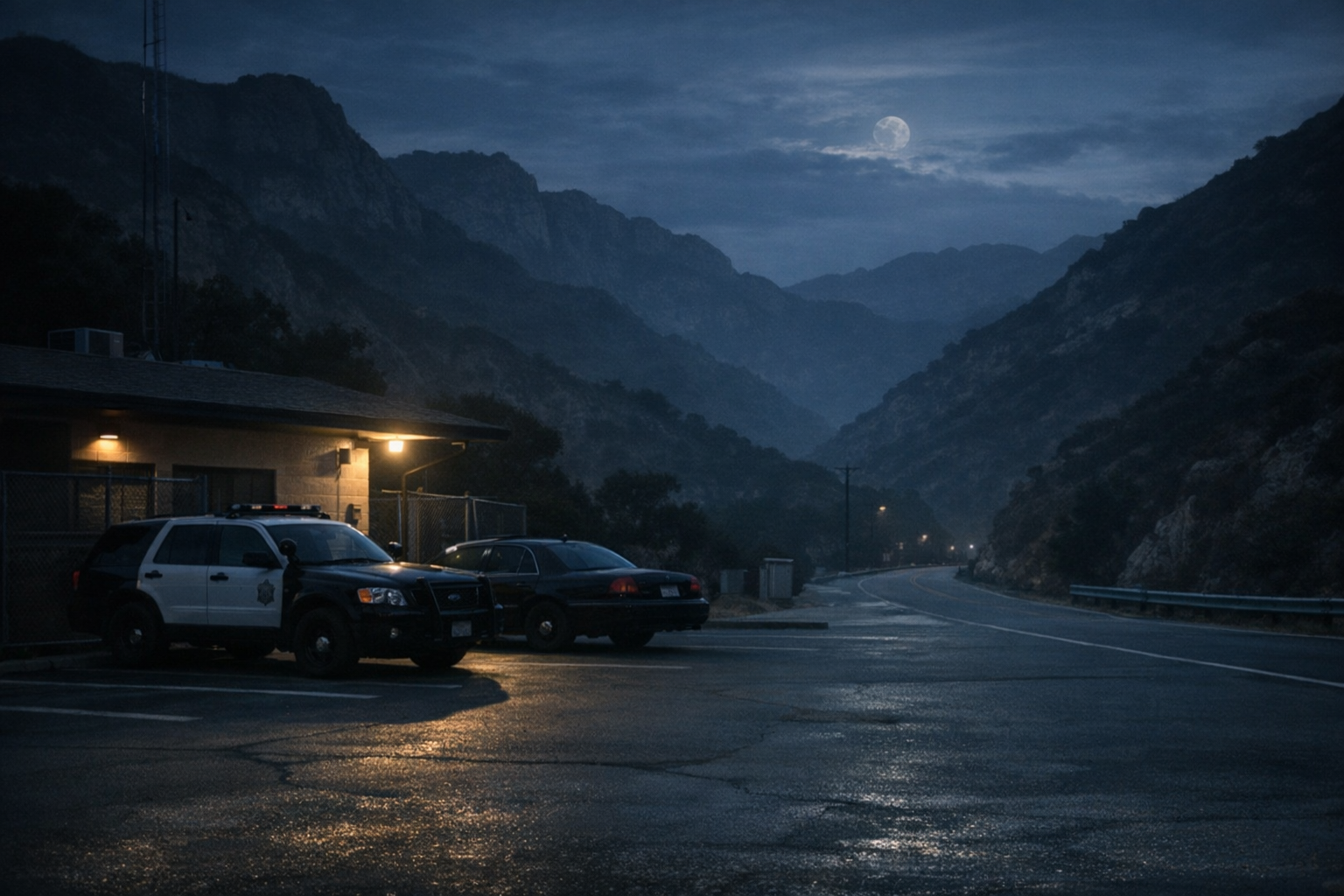
At 12:28 in the morning, the station door opened, and Mitrice Richardson walked out into the dark alone.
No car. No phone. No wallet. No ride waiting outside. Behind her sat the Lost Hills sheriff’s station. Ahead of her were the black hills above Malibu, empty roads, and miles of canyon country that looked even less forgiving after midnight. The last truly certain moment in her story was not a scream, or a chase, or a witness seeing her vanish. It was a release timestamp.
And that is what makes this case so hard to forget. The mystery did not begin with Mitrice disappearing into the wild. It began with officials deciding she was safe enough to face that darkness alone.
Mitrice Richardson remains one of California’s most disturbing unsolved disappearance cases because the facts never settled cleanly into one explanation. Her case still matters because it is not only about how a 24-year-old woman vanished after a night of erratic behavior in Malibu, but also about why public distrust only grew after her remains were later found in a remote canyon.
Mitrice was 24 years old, bright, college-educated, and by every account someone whose life held momentum. She had studied psychology at Cal State Fullerton. She had family, a girlfriend, plans, and people who knew when she was not acting like herself. On September 16, 2009, something was clearly wrong. That part is not seriously disputed. What happened next is why her story never stopped haunting people.
That evening, Mitrice drove to Geoffrey’s, an upscale restaurant in Malibu. Staff and customers later described her behavior as strange and unsettling. She reportedly spoke in ways that did not make sense, said she was from Mars, and acted so erratically that people became alarmed. She also could not pay her bill. Deputies were called.
By the time Mitrice was taken into custody, the central fact of the night should have been obvious: she was not in a normal state. Whether that was caused by a mental-health crisis, exhaustion, emotional instability, or something else, the warning signs were there. Even more troubling, her mother had reportedly called the station and expressed concern that her daughter was not well and should not be released alone. The family later said they were reassured she would not be put out in the middle of the night.
But she was.
That decision is why the case still belongs beside stories like the Maura Murray disappearance, where the final known timeline leaves a gap nobody has ever been able to close. In both cases, the official record contains a clean sequence of events. But when people look closer, that sequence begins to feel less like closure and more like the beginning of the real mystery.
According to the sheriff’s department, Mitrice showed no signs requiring a psychiatric hold and was released shortly after midnight on September 17. She declined the option to remain in the lobby until morning. On paper, that sounds procedural. In real life, it meant a vulnerable woman stepped out into a place where even a calm, fully equipped person would have been stranded. Malibu at night is not one neighborhood block with open stores and lights everywhere. It is distance. It is canyon roads. It is isolation.
And Mitrice did not have the things most people would need to get home. Her purse, phone, and money were reportedly locked in her car after it was impounded. So the moment she was released, the case became something more than a missing-person event. It became a question of judgment.
Timeline of Events
- Evening of September 16, 2009: Mitrice Richardson arrives at Geoffrey’s in Malibu and begins behaving erratically, alarming staff and diners.
- Later that night: Deputies respond, determine she is not intoxicated enough for a DUI-style hold, and arrest her over the unpaid restaurant bill and a small amount of marijuana.
- Late night booking: Mitrice is taken to the Lost Hills/Malibu sheriff’s station while her belongings remain tied to her impounded car.
- 12:28 a.m., September 17: She is released from custody alone.
- Roughly 6:30 a.m.: A resident in Monte Nido, miles away, encounters Mitrice in his backyard; she reportedly says she is “resting.” Police are called.
- After sunrise: The trail goes cold, and Mitrice is reported missing.
- August 2010: Her remains are found in a remote area of Malibu Canyon, shifting the case from disappearance to a second, darker mystery.
Two mysteries layered on top of each other. First, how did Mitrice move through those hours after release? Second, once her remains were found, why did the answers still feel so incomplete?
The six-hour gap between the station release and the backyard sighting has always felt like a tunnel with no light at either end. Somehow, Mitrice traveled through rugged terrain into Monte Nido. Somehow, she ended up on private property at dawn. Somehow, after that sighting, she disappeared again.
Those facts are important because they complicate the easy version of the story. This was not simply a woman released from jail who immediately wandered out of sight and was never seen again. There was at least one later contact point. Someone saw her alive in the early morning. That means the final window of her case did not close at the station door. It stretched onward into the canyon.
Then the case took another devastating turn. In August 2010, nearly eleven months after Mitrice vanished, her remains were found in a remote creek bed area in Malibu Canyon. That discovery should have answered the case’s central question. Instead, it created a new one.
Because when remains are found, people expect the mystery to narrow. With Mitrice, it widened.
Her family did not see the recovery as the end of a tragic search. They saw a fresh wave of disturbing issues. Questions were raised about the condition of the remains, the location, whether the area had been previously searched, and how the scene was handled. There was also anger over reports that detectives moved the remains before the coroner had fully documented the site. Even for people who had not followed the case closely, that detail hit hard. If true, it suggested the possibility that evidence was compromised in a case already drowning in distrust.
🔎 Related Investigation:
If this case pulled you deeper into the mystery, continue into:
What Doesn’t Add Up
- The release decision: The most obvious question has never gone away—why was a woman who had clearly been behaving irrationally released alone into an isolated area after midnight?
- The belongings problem: Mitrice reportedly left custody without the practical means to call for help, drive away, or safely reach home.
- The Monte Nido sighting: Her appearance miles away at dawn proves she survived the release, but it does not explain what happened between those two points or after she was seen.
- The remains discovery: Instead of settling public doubts, the recovery raised new arguments about search effectiveness, scene integrity, and whether every forensic question was properly preserved.
- Official confidence versus public doubt: The more firmly authorities seemed to defend their handling, the more many observers felt the case still lacked a believable, complete narrative.
This is why the Mitrice Richardson story stayed in the public imagination. It touches a nerve deeper than mystery alone. People can accept that the wilderness is dangerous. They can accept that adults sometimes make tragic choices. What they struggle to accept is the possibility that a vulnerable person was put into danger by the very system that had temporary control over her.
That is where the second mystery begins. Once Mitrice’s remains were found, the story was no longer only about disappearance. It became about trust: trust in police judgment, trust in investigative handling, trust in whether the public had been given the full truth.
Her family’s pain was sharpened by the feeling that the first disaster may have been preventable. Had Mitrice been held until daylight, had she been allowed to leave with access to her car or phone, had her mother’s concerns been taken more seriously, maybe the story ends differently. Those are impossible questions to prove. But they are not irrational questions. They sit at the center of the case because the timeline makes them unavoidable.
The debate over Mitrice’s state of mind has also remained complicated. Some accounts framed the night as a mental-health emergency. Others, including people close to her, pushed back against simple labels and argued that reducing the case to one explanation erased the bigger failures around her release and the unanswered details after she disappeared. That tension matters. Too often, once a case is linked to mental distress, institutions treat the uncertainty as solved even when the evidence is not.
And that is exactly why this case keeps resurfacing whenever people talk about mishandled disappearances and police decision-making. It has the shape of an institutional failure story, but it also has the emotional force of a missing-person mystery. Those two threads feed each other. The more the public focuses on her final hours, the more the release looks alarming. The more they focus on the remains recovery, the less the official handling feels settled.
Why This Case Still Gets Attention
Mitrice Richardson’s disappearance continues to come up because it sits at the intersection of several issues people never stop arguing about:
- how police should handle adults in visible distress
- whether “technically legal” decisions can still be reckless
- how public confidence collapses when recovery scenes are disputed
- why some missing-person cases never feel closed even after remains are found
It also remains a California case with a strong emotional footprint. Malibu is usually marketed as wealth, beauty, cliffs, ocean light, and celebrity calm. That image makes the darkness of this story feel sharper. Mitrice did not vanish in a place people instinctively imagine as lawless. She vanished after moving through one of the most photographed landscapes in America, which makes the isolation of her final known path feel even more chilling.
By the time lawsuits followed and the family’s battle with the county became public, the case had already taken on a larger meaning. Yes, people still wanted to know the direct answer to what happened in those canyon hours. But they also wanted to know how many points along the way the system had failed before that question even became necessary.
And that is the part of the story that makes it feel so modern. Mitrice’s case is not remembered only because it is unsolved. It is remembered because people look at the timeline and see avoidable risk, broken trust, and a young woman who seems to have fallen into a blind spot between policy and common sense.
Maybe the simplest explanation is still the correct one—that Mitrice, disoriented and alone, wandered into dangerous terrain and died there. That possibility cannot be ignored. But even if that is what happened, it does not erase the deeper reason this case still hurts. If a person in obvious distress is released into darkness without the basics needed to get home, then the mystery did not start in the canyon. It started at the station.
That is why the discovery of her remains did not calm the story down. It made the distrust heavier. People were not only asking where Mitrice had gone. They were asking whether the official system had helped create the conditions for her disappearance and then failed to give the public a fully satisfying account of what followed.
More than a decade later, that is still the shadow hanging over Malibu Canyon.
Not just what happened to Mitrice Richardson after she walked into the night.
But why so many people believe the night never should have been hers to face alone in the first place.
🔎 Related Investigation:
🔎 Related Investigation:
🔎 If this story stayed with you, the author suggests these real cases next:
- The disappearance where the final hours still feel like a locked room with no answer
- The broad-daylight vanishing that turned one missing woman into a lasting obsession
- The college-town mystery where one last night still refuses to make sense
Explore more Disappearances stories here: