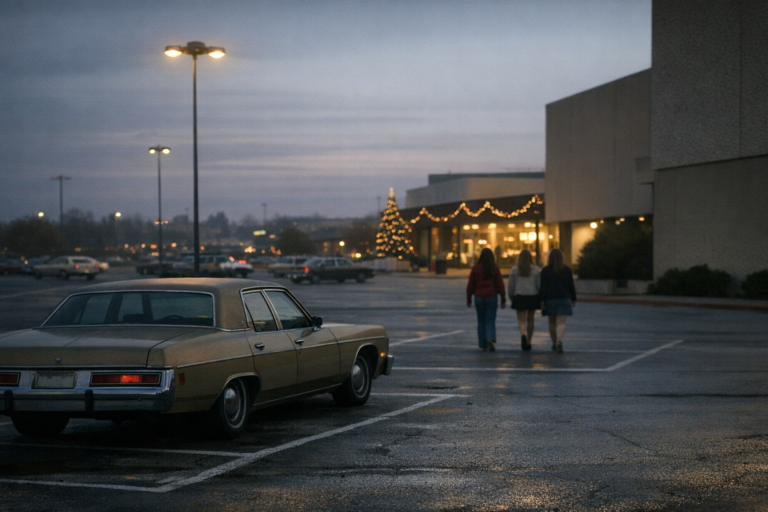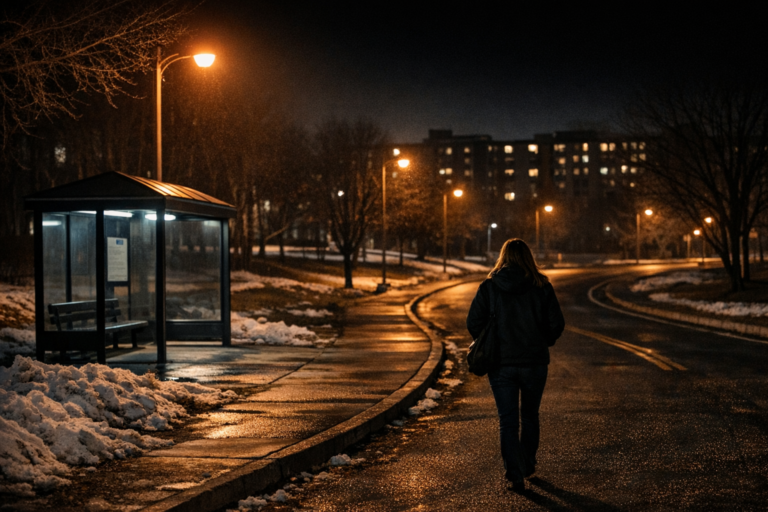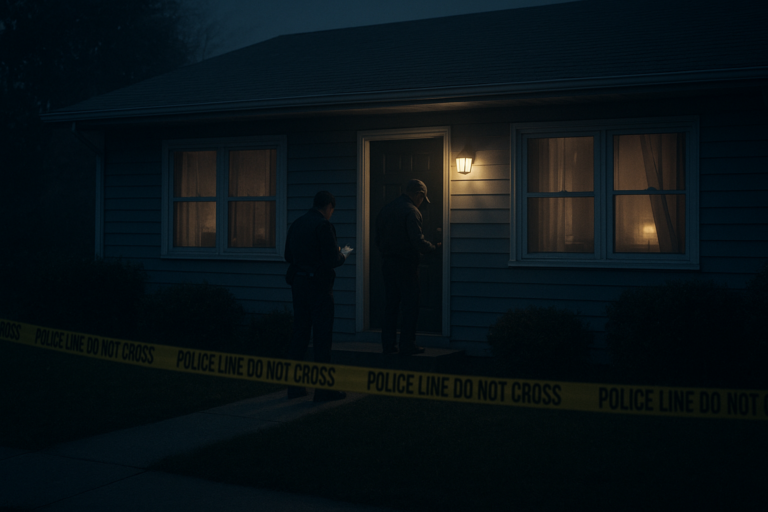
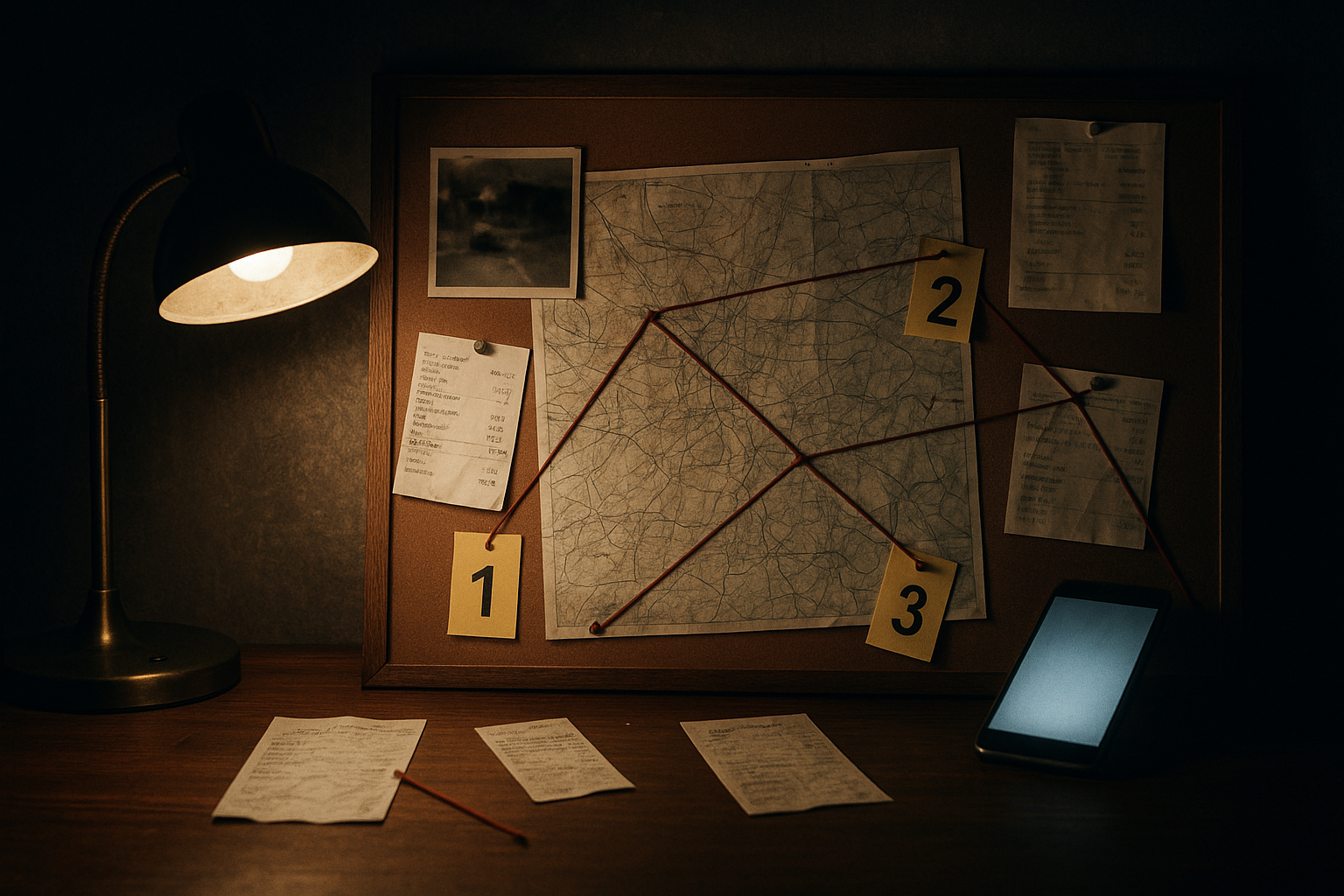
Most disappearances that lodge themselves in the mind begin in places that already feel dangerous — isolated highways, storm water, dense woods, a bar at closing time, the edge of the sea. But some of the hardest cases start somewhere far more intimate and far more unnerving: a parking lot after work, the walk from a dorm, the drive to meet someone familiar, a short stop that should have taken minutes, a route so ordinary that nobody would have remembered it if the woman had simply made it home.
That is what gives these cases their particular sting. They do not begin in obviously cinematic settings. They begin in routines. They begin in the thin strip of normal life where people buy coffee, leave work, return a call, cross a lot, lock an apartment, get into a car, or follow the same path they have followed before. Then something breaks. The timeline goes soft. The expected arrival never happens. A vehicle is found where it should not be, or a witness remembers something too late, or the last known movement becomes the most overstudied patch of ordinary ground in the whole story.
What This Page Covers — and Why These Cases Matter
Leaving a party and driving home, stepping out of daily life for what should have been a short stretch, crossing a campus, moving through a workday, or disappearing during a narrow window of domestic normalcy. The cases vary in details, but they belong together because the emotional architecture is the same. Nothing about the opening movement looks grand enough to swallow a life. That is exactly why the mystery lands so hard.
People do not only look for missing-person stories in the abstract. They search for the disappearance that happened in broad daylight, the one after a shift ended, the one from the apartment complex, the one during the short walk, the one where a normal errand turned into a permanent rupture. That is why pages such as Jennifer Kesse Disappearance — The Woman Who Vanished in Broad Daylight, The Morning Jodi Huisentruit Vanished, and Dorothy Jane Scott Disappearance remain so compulsively readable. They are not only about absence. They are about the sudden contamination of ordinary space.
RTRS already has strong hubs around surveillance footage, found vehicles, witness sightings, and final timelines. It also has single-case stories like Angela Hammond and Jason Jolkowski, where a mundane route becomes the center of an enduring obsession. What it has not had, until now, is a documentary-style authority page built specifically around routine movements that should have been forgettable and instead became the opening frame of an unsolved disappearance.
The result is a different kind of fear than the classic wilderness or highway case. These stories do not ask readers to imagine a remote threat far away. They ask them to imagine the final five minutes of a normal day — and how easily those five minutes can become unknowable.
Case Files: Women Who Vanished During Ordinary Routines
Kiely Rodni
Kiely Rodni’s disappearance entered the public eye through a setting that felt familiar to millions of readers: a teenage night out, a drive afterward, a return trip that should have been routine in the ordinary sense of small-town summer life. Even when the circumstances were emotionally charged, nothing about the basic movement — leaving, getting in a car, trying to get home — seemed rare enough to predict what followed. That is what makes Kiely a strong fit for this page’s angle. The case begins not with an obviously impossible landscape, but with a transition most people have made in some form countless times.
She belongs in this hub because ordinary routines do not have to be quiet or domestic to feel familiar. Sometimes the routine is simply the assumed end of the night: one final departure, one vehicle, one route, one expectation that the person will be home soon. When that expectation collapses, the whole case develops a terrible closeness. The public does not only ask what happened. It asks how such a familiar last movement could have hidden the decisive turn so completely.
The key mystery point is that the case kept returning readers to the gap between a recognizable departure and the unresolved emotional aftermath. Read the full case here: What Happened to Kiely Rodni? The Party, the Car in the Water, and Why the Case Still Doesn’t Feel Settled.
Alicia Navarro
Alicia Navarro’s disappearance fits this collection because it began in the most intimate territory possible: home, family routine, and the assumption that the next morning would arrive normally. Cases like Alicia’s haunt people differently from highway vanishings because they do not begin out in the world. They begin against the backdrop of everyday domestic structure, where the missing person should be easiest to account for. When that structure fails, the unease is immediate and lasting.
The case also matters here because routine-based disappearances often create a false sense of interpretive confidence. If the starting point is close to home, readers assume the timeline must be cleaner. If the person is young, people assume the likely options narrow quickly. But in Alicia’s story, the ordinary frame around the disappearance never produced the kind of certainty people wanted from it. Instead it left behind years of questions about vulnerability, agency, unseen contact, and what the earliest known movements actually meant.
The key mystery point is that a disappearance starting from an ordinary domestic environment should feel easier to understand than it does. Instead, the case remained unstable long after the first shock. Read the full case here: What Happened to Alicia Navarro? The Teen Who Vanished, Reappeared, and Still Left Haunting Questions.
Susan Powell
Her disappearance is one of the starkest examples of how a woman can vanish from what looks like ordinary life without the surrounding routine ever becoming trustworthy again. Home, marriage, family explanation, and the daily rhythm around the final timeline should have created clarity. Instead they created one of the most scrutinized and emotionally corrosive domestic disappearance cases in modern memory.
Routine itself became contaminated. In some cases the unsettling space is a parking garage or a road. In Susan’s case it is the family frame around the final known period. That is arguably even more disturbing. The opening movement of the case does not feel exotic or remote. It feels like a household sequence people think they understand — until every detail starts bending under suspicion, contradiction, and the sense that the decisive truth was hidden inside an environment that should have produced the cleanest answers.
The key mystery point is that the familiar setting did not reduce uncertainty. It trapped the case inside a routine that readers can replay without ever feeling they have reached solid ground. Read the full case here: What Happened to Susan Powell? The Missing Mother, the Final Timeline, and the Family Story That Kept Getting Darker.
Crystal Rogers
Crystal Rogers’ disappearance carries the same closeness for a different reason. The case is not remembered as a remote wilderness mystery. It is remembered as the disappearance of a woman whose life was woven into ordinary community space — family, work, local roads, familiar relationships, and the kind of movements people assume would leave enough traces to reconstruct. Yet the deeper the case went, the more those familiar edges seemed to widen instead of narrowing.
That makes Crystal a natural fit for this page. Ordinary-routine disappearances often produce a local sense that somebody must know what happened, must have seen the right vehicle, must remember the right stretch of time, must be able to explain the missing gap. In Bardstown, that pressure became part of the case itself. The familiar setting made the unresolved silence feel even more accusatory.
The key mystery point is that the disappearance remained painfully close to everyday life while still resisting the clean sequence that such closeness appears to promise. Read the full case here: What Happened to Crystal Rogers? The Bardstown Disappearance, the Missing Mother, and the Kentucky Mystery That Still Won’t Let Go.
Kristin Smart
Kristin Smart may be the purest campus version of the ordinary-routine disappearance. A walk home is one of the most ordinary motions a young woman can make. It belongs to that category of last-known movement people barely mark as an event while it is happening. That is precisely why Kristin’s case still lands with such force. The distance involved was not supposed to be epic. The setting was not supposed to erase her. Yet the final stretch of ordinary ground became one of the most haunting unresolved spaces in the American disappearance canon.
Kristin belongs here because the case shows how small a routine can be and still become unknowable. The transition is almost insultingly mundane: one route, one late-night return, one expectation that the next checkpoint would come naturally. Instead the walk home became the center of years of speculation, scrutiny, memory conflict, and later investigative movement. It is difficult to imagine a clearer example of why “ordinary routine disappearance” is its own distinct emotional category.
The key mystery point is that once an everyday route becomes the last stable point in the story, every step beyond it feels charged forever. Read the full case here: What Happened to Kristin Smart? The Walk Home, the Silence on Campus, and the Break That Came 26 Years Later.
Patrice Endres
Patrice Endres belongs in this collection because her case compresses the ordinary-routine terror into a brutally narrow window. She was at work. She should have been exactly where the day suggested she would be. The salon setting is not cinematic in any conventional sense. It is practical, public-facing, structured by appointments and expected movement. And yet that very structure is what makes the disappearance feel so impossible. When someone vanishes inside a routine that measured, the missing minutes seem louder than in almost any other kind of case.
This is also where the documentary value of the hub becomes clearest. Cases like Patrice’s reveal that routine can create the illusion of control. Readers assume that workday settings, customers, timestamps, and familiar surroundings ought to protect the timeline from collapse. Instead, the case demonstrates the opposite. A normal day can produce a mystery every bit as severe as a remote-road disappearance — and sometimes worse, because the ordinariness of the frame makes the unanswered interval feel even less forgivable.
The key mystery point is that a woman vanished in the middle of a highly legible day and still left behind a story that refuses to settle. Read the full case here: What Happened to Patrice Endres? The 13-Minute Salon Disappearance That Still Feels Impossible.
Why These Disappearances Still Don’t Make Sense
What these cases have in common is not one offender profile or one investigative failure. It is the betrayal of expectation built into ordinary life. Each story begins with a movement that should have stayed beneath memory’s threshold: a drive home, a workday interval, a campus walk, a family routine, a local route, a night ending the way nights usually end. The disappearance happens not in a place the mind is prepared to fear, but in a place it is prepared to overlook.
They overlap naturally with the site’s found-vehicle hub, its last-sighting archive, and its broader timeline-driven collections, including The Unsolved Disappearances Archive. But they deserve their own authority page because the central obsession is slightly different. Readers are not only trying to solve a disappearance. They are trying to understand how routine failed so completely.
There is another pattern here too: ordinary-routine disappearances produce unusually intense self-projection. People can imagine themselves in Jennifer Kesse’s parking-lot transition, in Jodi Huisentruit’s commute window, in Dorothy Jane Scott’s return to a familiar place, in Angela Hammond’s brief pause during an everyday interaction, or in the short, almost invisible route that made The Walk to Nowhere so unforgettable. That makes this subcluster emotionally sticky in a way even some famous unsolved cases are not. The reader can place themselves inside the opening frame too easily.
And that is the deeper reason these stories stay alive. When a disappearance begins in obvious danger, the mind at least has a dramatic explanation to wrestle with. When it begins in routine, the mind has to confront something colder: the idea that a life can leave the rails in the exact spaces people use every day without thinking.
There is also a structural reason these cases keep resurfacing in search and discussion. Routine-based disappearances tend to generate layered evidence rather than one dramatic clue. A car is left behind. A witness remembers a familiar vehicle. A work shift ends. A phone goes quiet. CCTV captures part of a route but not the decisive crossing point. Family members can account for most of a day but not the one interval that matters. That evidence pattern keeps the stories alive because it creates just enough traction for readers to believe the truth is near, even when the final answer remains out of reach.
Readers who arrive through a case like Jennifer Kesse naturally move toward Jodi Huisentruit, Patrice Endres, Kristin Smart, or the site’s broader timeline and witness-sighting hubs because the logic of the obsession is the same. They are not simply consuming another missing-person article. They are following a recurring investigative shape: ordinary movement, incomplete interruption, and a final gap that feels too narrow to have swallowed someone whole.
In other words, the mystery is not only who did it or where the missing woman went. The mystery is why routine proved so fragile. Why did a familiar setting fail to leave a stable record? Why did a short route become unreadable? Why did witnesses, vehicles, timestamps, and ordinary geography still fail to produce the one clean transition investigators needed?
Conclusion
The women in these cases did not vanish out at the edge of the map. They vanished inside ordinary movement — the kind of movement most people would never think to record in detail because it should have ended with an arrival, a callback, a door opening, a car parked at home, a normal next morning. Instead those routine minutes became the most overstudied stretch of ground in each story.
It organizes a specific disappearance pattern the site needed: women who vanished during ordinary errands, short routes, workday transitions, and domestic routines that felt too small to fail. The cases connect because they all force the same question. If the last known movement was so normal, so public, so familiar, then where exactly did the world stop making sense?
The answer never arrives cleanly in stories like these. What remains is the ordinary setting itself — parking lots, apartment spaces, workdays, campus walks, local roads — permanently altered by what failed to happen next. The return home never came. The routine did not complete. And the mystery stayed close enough to everyday life that readers cannot stop imagining how easily it might have looked, at first, like nothing at all.
🔎 If this story stayed with you, the author suggests these deeper investigations next:
- The disappearance archive built around the final witness, ride, call, or companion readers can never stop replaying
- The documentary-style breakdown of disappearances where the evidence keeps pushing the likely ending in different directions
- The wider disappearance hub where the final timeline, the last call, the car, or the camera footage still was not enough
Explore more Disappearances stories here: