Most missing-person cases begin with one question.
Where did they go?
The disappearance of Susan Powell became something darker than that.
Because every time investigators found a new detail, the story did not become clearer.
It became worse.
A husband claimed he took two little boys camping after midnight during a snowstorm.
A house had fans blowing on a wet spot in the living room.
Susan’s purse, wallet, and identification were still inside.
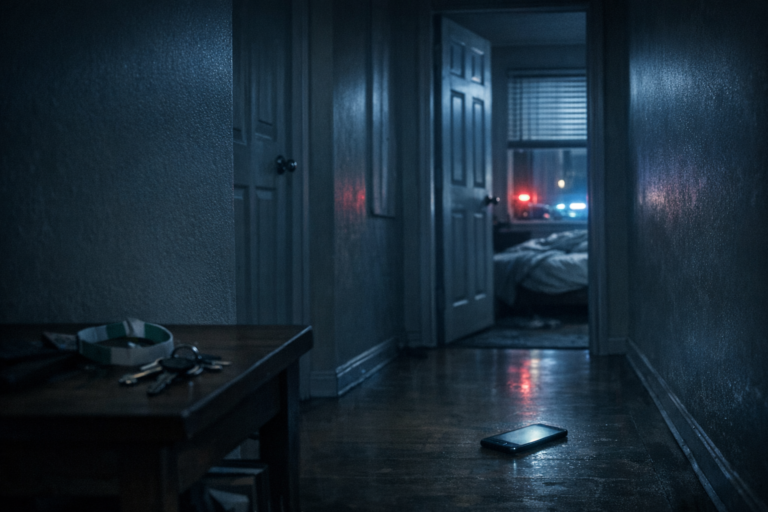
Her phone was later found in the family minivan.
Her children made comments that investigators could not easily ignore.
And the family around her husband seemed to grow more disturbing the deeper people looked.
Susan Powell vanished from West Valley City, Utah, in December 2009.
She has never been found.
But the reason her case still haunts people is not just that she disappeared.
It is that the case kept moving in one direction, getting darker and darker, until the final tragedy made the whole story feel almost unbearable.
Susan Powell disappeared from her home in West Valley City, Utah, in December 2009. Her husband, Josh Powell, claimed he took their two young sons on a late-night camping trip during a snowstorm while Susan stayed home. Investigators found many suspicious details, including evidence inside the house, Susan’s belongings left behind, troubling statements from the children, and signs of serious problems in the marriage. Susan has never been found. Josh Powell was never charged in her disappearance and died in 2012 after killing himself and the couple’s two sons during a supervised visit.
If you’ve read our breakdown of what happened to Maya Millete, you already know how disturbing it can be when a family story slowly turns into something much darker than anyone first understood.
The Last Day Susan Was Seen
On Sunday, December 6, 2009, Susan Powell was still doing normal things.
She went to church with her two sons.
She spent time at home.
A friend and neighbor saw her later that day.
There was no public scene.
No obvious goodbye.
No sign that this would become the last confirmed day anyone outside the house would see Susan alive.
That is one of the hardest parts of the case.
Disaster did not announce itself.
It slipped into an ordinary weekend.
By evening, Susan was reportedly not feeling well. According to the later timeline, she rested at home while her husband, Joshua “Josh” Powell, was there with their two young boys.
Then came the story that would define the investigation.
Josh said that after midnight, he loaded the boys into the family minivan and drove into Utah’s western desert for a camping trip.
It was winter.
It was freezing.
A snowstorm had moved through the area.
The children had daycare the next morning.
Josh had work.
Susan, he said, stayed behind at home.
That explanation sounded strange immediately.
It sounded even worse the longer investigators looked at it.
The Midnight Camping Story
Josh Powell’s explanation was simple, but almost impossible to accept as normal.
He said he took his two little boys camping around 12:30 in the morning.
Not on a warm summer night.
Not during a planned family weekend.
Not with Susan.
He claimed he did it in the middle of a freezing December night, with snow on the ground, while his wife stayed home sleeping.
For investigators, that story raised immediate questions.
Why would a father take two very young children into the desert after midnight?
Why leave without telling anyone?
Why not call work or daycare the next morning?
Why would Susan stay behind without her phone, purse, wallet, or identification?
And why did the story seem to appear only after people started looking for the family?
Josh eventually returned with the boys later on December 7.
Susan was not with them.
He told police the camping story.
From that point forward, the case was no longer just a missing-person report.
It was an investigation into whether the story being told matched the evidence left behind.
The House on Sarah Circle
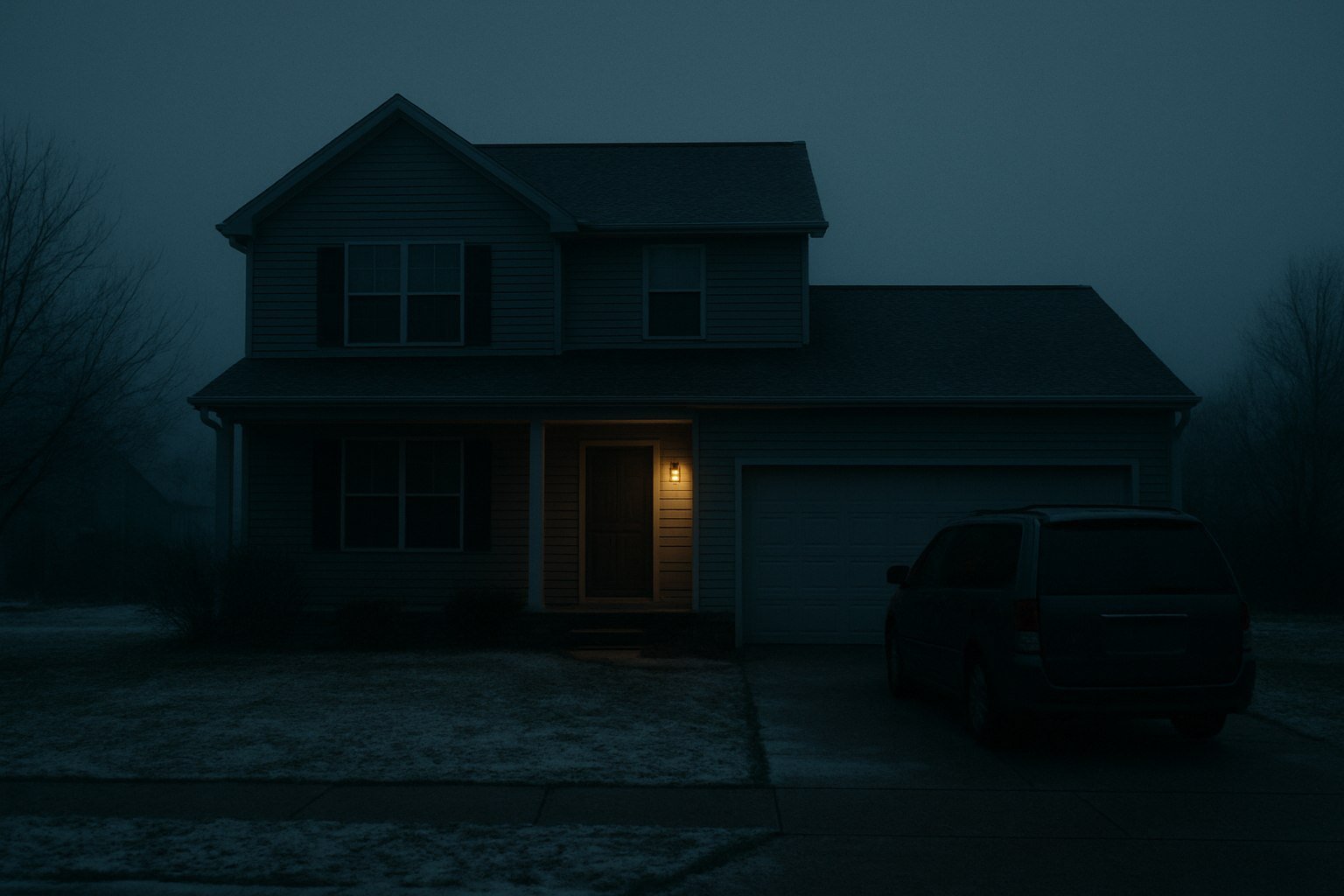
When police entered the Powell home, the details were unsettling.
Susan’s purse was still there.
Her wallet was still there.
Her identification was still there.
Those are not things people usually leave behind when they choose to disappear.
There were also two fans blowing on a wet spot in the living room.
That detail became one of the most discussed parts of the case because it suggested the house had not simply been left in the middle of normal life.
Something may have happened there.
Something may have been cleaned.
Susan’s phone was later found in the minivan Josh had driven.
That made the idea of her leaving voluntarily even harder to understand.
If Susan walked away, why leave behind her purse and ID?
If she left with someone else, why was there no clear trace?
If she was home asleep when Josh left, how did she vanish before anyone could reach her?
The house did not answer those questions.
It created more of them.
Timeline of the Susan Powell Disappearance
- December 6, 2009, daytime: Susan attends church with her sons and is later seen at home by a friend.
- Evening of December 6: Susan reportedly feels sick and rests at the house.
- Around 12:30 a.m., December 7: Josh Powell later claims he takes the boys camping in Utah’s western desert while Susan stays home.
- Morning of December 7: The children are not dropped off at daycare. Family members and others cannot reach Susan or Josh.
- December 7: Police enter the Powell home and find Susan’s belongings still there, along with fans blowing on a wet spot.
- Late afternoon, December 7: Josh returns with the boys and tells police about the overnight camping trip.
- Following days: Investigators question Josh, search areas tied to his story, and begin uncovering more troubling details.
- 2010–2011: The investigation expands into Josh’s behavior, family dynamics, financial issues, evidence, and statements from the children.
- February 5, 2012: During a supervised visit in Washington, Josh Powell kills himself and the couple’s two sons in a house explosion.
- Today: Susan Powell remains missing, and her case remains one of America’s most haunting unsolved disappearances.
The Evidence That Made the Case Darker
Investigators eventually found blood evidence in the Powell home.
Reports later identified one sample as Susan’s DNA. Another involved an unknown male contributor.
That kind of evidence did not automatically solve the case.
But it made the house feel much less ordinary.
Then there were Susan’s own words.
Before she vanished, Susan had documented fear and problems in her marriage. She had written about concerns that something might happen to her. She had also left behind materials that made it clear she did not want her death, if it happened, to be treated as accidental.
Those details matter because they change the emotional shape of the case.
Susan did not vanish out of a peaceful, stable home.
She vanished from a life where serious warning signs already existed.
That does not prove exactly what happened on the night she disappeared.
But it does show that the danger around her may not have arrived suddenly.
It may have been building.
Josh Powell’s Behavior After Susan Vanished
After Susan disappeared, Josh’s behavior did not calm suspicion.
It increased it.
Investigators looked at his actions in the days after Susan went missing and found more questions.
He reportedly canceled or handled matters that Susan would have needed if she were simply away temporarily.
He rented a car during an important early window of the investigation and put hundreds of miles on it.
Investigators also became interested in statements he had made before Susan disappeared, including reported comments about hiding a body in a mineshaft.
Each one of those details could be debated on its own.
But together, they created a pattern.
The story Josh told did not become stronger with time.
It became harder to believe.
That is one of the reasons the case still feels so chilling.
It was not one strange detail.
It was one strange detail after another.
The Children’s Statements
One of the most heartbreaking parts of the case involves the Powell boys.
They were very young when Susan disappeared.
That means investigators had to be careful with anything they said.
Children can misunderstand, repeat, imagine, or explain things in ways adults struggle to interpret.
But their statements were still impossible to ignore.
One of the boys reportedly said Susan had gone with them on the camping trip.
That directly challenged Josh’s claim that she had stayed home asleep.
There were also later reports of statements and drawings that suggested something terrible had happened to Susan.
Those fragments did not become the final proof needed in court.
But they deepened the suspicion around Josh’s timeline.
And they made the case feel even more tragic.
Because if the boys saw or heard something that night, they were too young to fully explain it.
The Powell Family Secrets
As investigators looked deeper, the case expanded beyond Josh.
Attention also turned to his father, Steven Powell.
What came out about Steven was deeply disturbing.
Investigators found evidence of an obsessive fixation on Susan, including voyeuristic images and recordings.
That changed the way many people understood the environment around Susan.
This was no longer just a troubled marriage.
It was a family system filled with secrecy, obsession, and behavior that looked increasingly alarming from the outside.
Josh’s brother, Michael Powell, also drew investigative interest.
Investigators later focused on a vehicle he had disposed of after Susan vanished. A cadaver dog reportedly alerted to the trunk, though testing did not provide the clear answer investigators needed.
Again, the pattern repeated.
Another lead.
Another shadow.
Another detail that did not close the case, but made the story darker.
The 2012 Tragedy
By 2012, Susan was still missing.
Josh Powell had not been charged in her disappearance.
But the case had followed him.
He was living in Washington state, and custody issues involving the boys had become part of the aftermath.
On February 5, 2012, Josh had a supervised visit scheduled with his sons.
When the boys arrived, Josh pulled them inside the house and blocked the social worker from entering.
Minutes later, the house exploded.
Josh had killed himself and the two boys.
It was a horrific ending to an already devastating case.
It did not solve Susan’s disappearance.
It did not reveal where she was.
It did not give her family the answer they had been waiting for.
But for many people, it confirmed something they had feared for years:
The danger surrounding Susan had been real.
And it had not ended when she vanished.
What Doesn’t Add Up?
The biggest problem is the camping story.
A father taking two small children camping after midnight in freezing winter conditions, on a work and daycare night, is hard to explain as normal.
Then there is the house.
Susan’s belongings were still there.
Her phone was in the minivan.
Fans were blowing on a wet spot.
Blood evidence was found.
Then there are the children’s statements.
They did not cleanly support Josh’s version of events.
Then there is Josh’s behavior after Susan vanished.
The rental car.
The mileage.
The financial and personal actions.
The lack of a believable explanation.
And finally, there is the broader Powell family environment.
Instead of making the case easier to understand, each new discovery made it feel more disturbing.
That is why the Susan Powell case does not feel like a normal mystery.
It feels like a story where the answer was always casting a shadow, even though the legal system never got to fully prove it in court.
The Most Likely Explanation
The most likely explanation is that Susan Powell did not leave voluntarily.
The evidence strongly suggests she disappeared because of something that happened inside or around her home.
Josh Powell was the central suspect in the public understanding of the case, but he was never charged before his death.
That distinction matters.
Suspicion is not the same thing as a conviction.
But when you look at the camping story, the house scene, the children’s statements, Susan’s own fears, and Josh’s later actions, it becomes difficult to treat her disappearance as a simple unknown event.
The most likely explanation is that Susan was harmed and her body was hidden somewhere that has never been found.
What remains unknown is exactly when she died, where she was taken, whether anyone else helped, and where her remains are today.
Those missing answers are why the case still feels unfinished.
Why Susan Powell’s Case Still Gets Attention
Susan Powell’s disappearance keeps resurfacing because it has no clean ending.
There is no body.
No trial.
No confession that solved everything.
No final courtroom moment where all the evidence was tested and judged.
Instead, the case became a slow reveal.
First came the bizarre camping story.
Then the house scene.
Then the blood evidence.
Then Susan’s private fears.
Then the children’s statements.
Then the Powell family revelations.
Then the 2012 murder-suicide that took the lives of the two boys.
Each development made the case feel less like a disappearance and more like a tragedy that had been forming for a long time.
That is why people still come back to it.
They are not only asking where Susan is.
They are asking how many signs were there before everything collapsed.
🔎 Related Investigation:
If this case pulled you deeper into the mystery, continue into:
🔎 Related Investigation:
If this case pulled you deeper into the mystery, continue into:
FAQ
Who was Susan Powell?
Susan Powell was a young mother from West Valley City, Utah, who disappeared in December 2009. She was married to Josh Powell and had two young sons.
When did Susan Powell disappear?
Susan Powell was last seen on December 6, 2009. She was reported missing after she could not be reached on December 7.
What was Josh Powell’s camping story?
Josh claimed he took the couple’s two young sons camping in Utah’s western desert after midnight during freezing winter weather while Susan stayed home asleep.
Was Susan Powell ever found?
No. Susan Powell has never been found.
Was Josh Powell charged in Susan’s disappearance?
No. Josh Powell was never charged before his death in 2012.
What happened to Susan Powell’s sons?
In February 2012, Josh Powell killed himself and the couple’s two sons during a supervised visit by setting off an explosion at his home in Washington state.
Why is the Susan Powell case still unsolved?
The case remains unresolved because Susan’s body has never been recovered, Josh Powell died before facing charges, and investigators never obtained enough public evidence for a final criminal trial.
Closing Thoughts
The Susan Powell disappearance is haunting because it does not feel like a clean mystery.
It feels like a warning that kept getting louder after it was too late.
A strange midnight trip.
A house that did not look right.
A missing mother’s belongings left behind.
Children with fragments of memory.
A husband whose story never made sense.
A family background that grew more disturbing with every new discovery.
And finally, a second tragedy that took the lives of the two boys who should have grown up with answers.
Susan has never been found.
That means there is still no place where the story fully ends.
No grave her family can visit.
No final explanation that answers every question.
No moment where justice was fully spoken in court.
What remains is the outline of a life interrupted, a home filled with warning signs, and a disappearance that still feels unfinished more than a decade later.
Susan Powell did not simply vanish from a map.
She vanished from a family, from a future, and from two little boys who would later become victims themselves.
That is why the case still hurts.
Because the mystery is not only where Susan is.
It is how much darkness had to gather before everyone finally saw it.
🔎 Related Investigation:
?? Related Investigation:
If this disappearance case stayed with you, continue with these next:
- The Kentucky disappearance of Crystal Rogers and the pressure that never lifted
- Disappearance timelines that still refuse to close even after every minute is rebuilt
- Cases where the evidence seems to point in one devastating direction
Explore more Disappearances stories here: