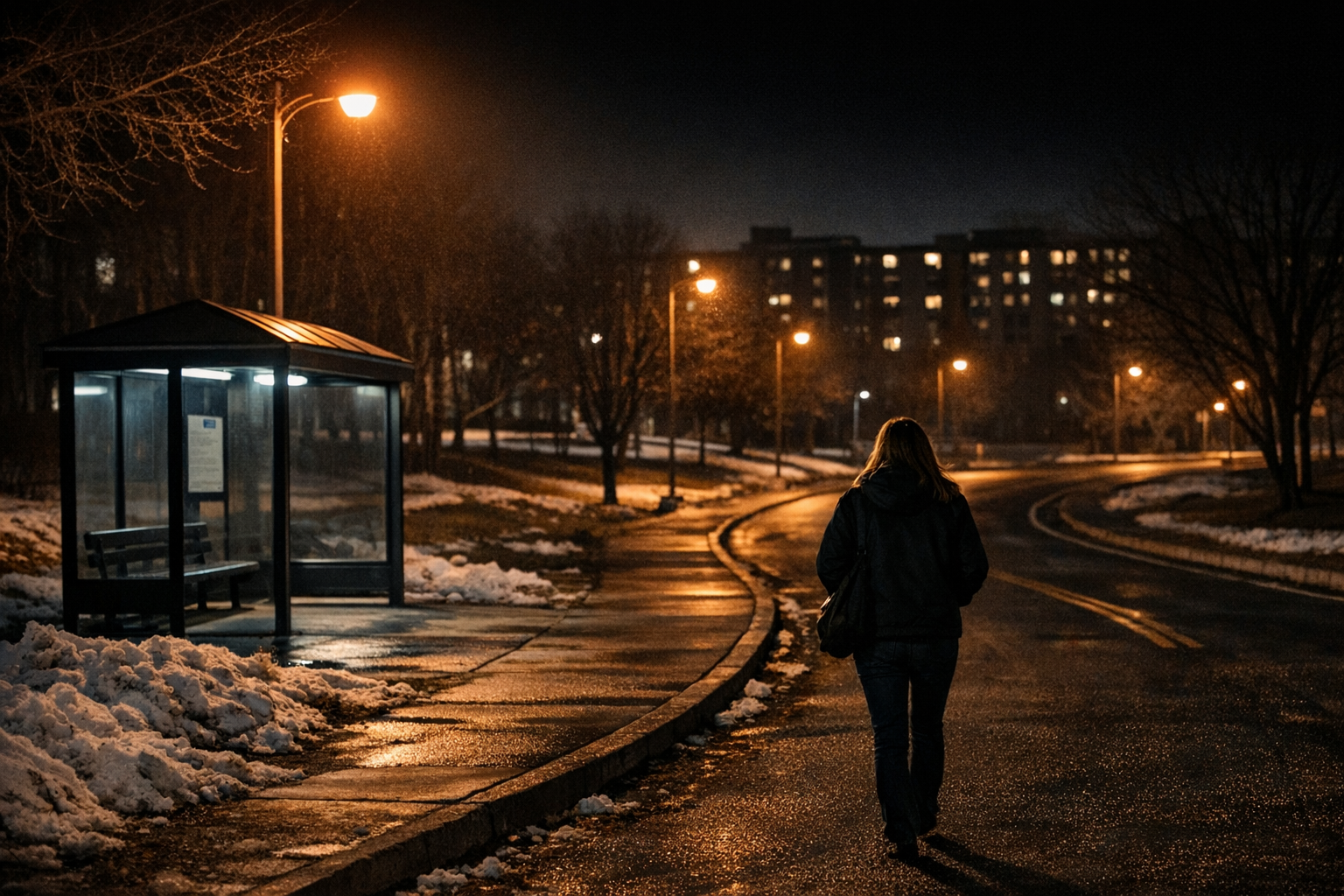
The bus doors opened into the kind of cold March night college students barely notice.
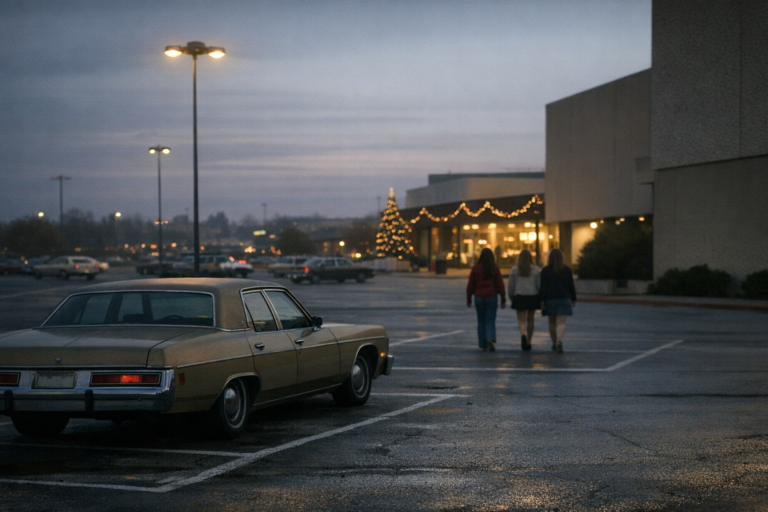
Lights glowed across campus. The path back to the dorms was familiar. A shift at the mall was over, classes were done, and Suzanne Lyall was only a short walk from the room she was supposed to reach in minutes. There was no scream anyone remembers. No struggle preserved on tape. Just a nineteen-year-old student stepping off a bus near home—and then, almost impossibly, slipping out of the story.
What makes Suzanne Lyall’s disappearance so haunting is how ordinary the last known scene feels. Not a highway shoulder at midnight. Not a remote trail. Not a vacation abroad. A bus stop. A campus. A routine. And then silence.
What Happened to Suzanne Lyall? The Campus Disappearance That Still Haunts Albany
Suzanne Lyall was a 19-year-old SUNY Albany student whose unsolved disappearance began with a final sequence that should have ended normally: a shift at Babbage’s, a bus ride back to campus, and a short walk toward her dorm. The case still matters because it sits at the intersection of campus safety, last-seen timeline mysteries, and the terrifying idea that someone can vanish in the small gap between being seen and simply getting home.
That is part of why Suzanne Lyall’s case belongs in the same disturbing conversation as Lauren Spierer’s final-night disappearance: both stories begin in places full of people, routines, and expected next steps—then break apart anyway.
In early 1998, Suzanne Lyall was the kind of student whose life still looked like it was just beginning to come into focus. She had grown up in Ballston Spa, loved computers, wrote poetry, and had a reputation for being smart, quiet, and careful. She studied computer science at the State University of New York at Albany and worked part time at Babbage’s in Crossgates Mall. She called or emailed family and her boyfriend regularly. She wasn’t known for impulsive disappearances, dramatic detours, or vanishing acts.
That matters, because the strongest disappearance cases are often built around the last ordinary moment. With Suzanne, that last ordinary moment may have been more than a moment. It may have been a route: leave campus, work a shift, ride back, step off the bus, walk home, call as usual. When a routine has that many fixed points, people expect the truth to be easier to find.
Instead, Suzanne Lyall became one of those cases where the path looks simple right up until it snaps.
March 2, 1998 had already been a full day. Suzanne had classes. She had an exam she was reportedly worried about. Then she went to work her evening shift at Babbage’s, the software store in Crossgates Mall. By all accounts, there was nothing in her behavior dramatic enough to signal that the night would become historic in the worst possible way. No public breakdown. No explosive argument. No obvious decision to run. Nothing that clean.
After her shift ended, she boarded a Capital District Transportation Authority bus back toward the SUNY Albany campus. That detail has always given the case its eerie structure. Suzanne was not disappearing into some vague untracked zone. She was taking a known route back to a place where she lived. The bus driver later confirmed he saw her board. A fellow student later reported seeing her get off at Collins Circle, a stop near campus housing.
That is the image the case has never escaped: Suzanne stepping off the bus into a place that should have been safe enough, public enough, close enough to count as almost home.
But “almost home” can be a dangerous phrase in missing person cases. It creates false certainty. People hear it and imagine there was almost no room left for something to go wrong. In reality, those final minutes can be the most exposed part of the night. Routine makes people less alert. Paths become automatic. If somebody was watching, following, or waiting, that brief stretch could have been the only opening they needed.
Timeline of Suzanne Lyall’s Final Known Movements
- March 2, 1998, daytime: Suzanne attends classes at SUNY Albany and takes a midterm she had been stressed about.
- Late afternoon to evening: She goes to her part-time job at Babbage’s in Crossgates Mall.
- About 9:00–9:20 p.m.: Suzanne leaves work and boards a CDTA bus back toward campus.
- Roughly 9:40–9:45 p.m.: A classmate later says she saw Suzanne get off at the Collins Circle bus stop on the SUNY Albany campus.
- Later that night: Suzanne never makes her usual call or contact after getting back.
- March 3, 1998: She is reported missing.
- About 4:00 p.m. that afternoon: Her ATM card is used to withdraw $20 from a Stewart’s store in Albany.
- Two months later: Suzanne’s Babbage’s name tag is found near a visitors’ parking lot area close to Collins Circle.
The next piece of the story is what gives the case its special unease. Suzanne was expected to make contact after getting in. She often called or emailed. That night, she did not. Calls to her room went unanswered. By the next morning, her absence no longer looked like a college student staying out late. It looked wrong.
And then came the ATM withdrawal.
On March 3, the day after Suzanne vanished, someone used her ATM card at a Stewart’s store in Albany and withdrew twenty dollars. The correct PIN was entered on the first try. That one fact has haunted the case for decades because it feels like both a clue and a wall. If Suzanne made the withdrawal herself, then at least for a brief time after disappearing she was alive and moving. If someone else made it, then that person either knew her PIN or got it from her somehow. Neither possibility feels small.
This is where becomes the real engine of the story. Suzanne’s case is not only about a missing student. It is about final ordinary movements: the ATM, the bus stop, the expected ride home, the last stretch of routine before the entire map goes dark. The case keeps pulling people back because the route is so short and yet the answers are still so far away.
What Doesn’t Add Up
- She vanished near home, not far from help. Suzanne was not last seen in a remote place. She was near her campus, in a routine zone she likely knew by memory.
- The timeline is narrow—but not narrow enough. If the classmate’s sighting is correct, something happened after she got off the bus and before she reached her dorm.
- The ATM use creates two troubling possibilities. Either Suzanne was alive after the disappearance and never resurfaced, or someone else had both her card and the ability to use it immediately.
- The correct PIN was entered on the first try. That suggests familiarity, coercion, or prior knowledge rather than random theft.
- Her name tag turned up later near campus. It was found close enough to her last known area to feel important, but not clear enough to resolve anything.
- No confirmed public explanation ever closed the route. Not the bus stop, not the dorm path, not the ATM, not the next-day silence.
There were other unsettling fragments. A co-worker reportedly said Suzanne had mentioned being stalked by an unidentified man before she disappeared. She did not seem terrified, which makes the detail somehow worse, not better. In many cases, danger does not arrive with flashing signs. It arrives disguised as annoyance, persistence, or somebody being around too often. Whether that detail mattered here has never been proved. But it remains one of those pieces that readers cannot stop circling.
Then there is the issue of who knew enough about Suzanne to exploit her routine. College disappearances often generate a tension between stranger-danger logic and closer-to-home explanations. The campus setting pushes people toward the first. The PIN entry, the routine, and the absence of obvious chaos push some back toward the second. If this was random, it was precise. If it was personal, it was hidden well enough to stay unresolved for decades.
That is why the case still sits so heavily beside stories like Brian Shaffer and Kristin Smart. In each one, the setting is busy enough to feel protective right up until it isn’t. With Suzanne, the final image is even more compact. She did not vanish somewhere abstract. She vanished between known points.
Why Suzanne Lyall’s Disappearance Still Gets Attention
The case survives because it hits several fears at once.
- It is a campus case. Parents and students can imagine the route immediately.
- It involves a last-seen routine. Those stories are always harder to shake because the victim was doing something so normal.
- It includes a banking clue without a clean answer. The ATM use feels like a breakthrough that never became one.
- It exposed larger institutional gaps. Suzanne’s disappearance helped drive later safety and missing-person reforms connected to colleges and young adults.
That last point matters. Suzanne Lyall did not just become the center of a cold case. Her disappearance changed policy conversations. Her parents became advocates, and Suzanne’s Law became tied to how missing young adults are entered into national systems. Another law bearing her name focused on campus safety planning. That does not solve the case. But it does show how deeply the disappearance cut into the people left behind.
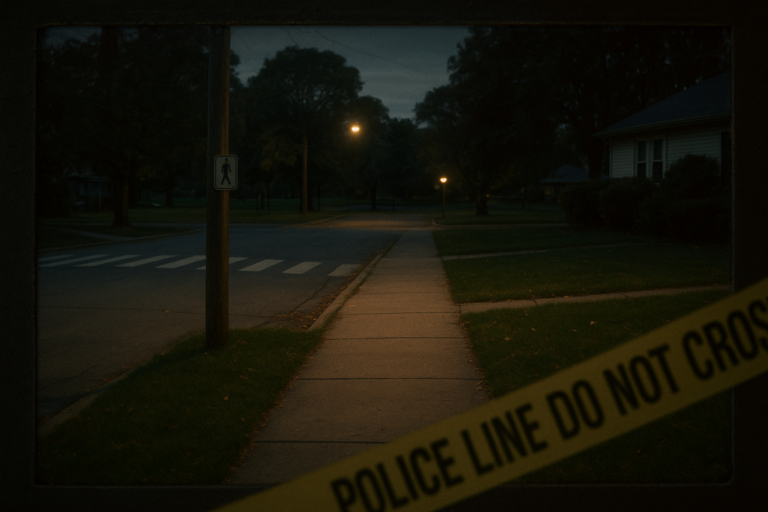
There is something brutal about that part of the story. Families of missing people often get trapped between public memory and private repetition. Every detail has to be said again. Every theory has to be reconsidered. Every anniversary reopens the same unfinished route. In Suzanne’s case, even the setting keeps the wound fresh. A bus stop near a dorm is the kind of place people pass every day without thinking. Until they know the story. Then it becomes the kind of place they can’t stop seeing.
The most likely explanation has always depended on which clue a person thinks deserves the most weight. Some people focus on the short walk from Collins Circle and believe Suzanne was intercepted almost immediately after getting off the bus. Others believe the ATM use means the window was wider and the disappearance did not fully unfold at the stop itself. Some see the case as pointing toward someone who knew her patterns. Others still think a stranger encountered her in the exact wrong place at the exact right moment.
But the real reason the case remains powerful is that none of those theories can fully absorb every detail. The route is ordinary. The vanishing is not. The ATM clue is concrete. Its meaning is not. The name tag feels suggestive. It does not settle anything. Even the location of the disappearance resists narrative comfort. A lonely road lets people imagine danger. A campus bus stop near home makes danger feel unfairly close.
That is the emotional center of Suzanne Lyall’s case. Not just that she disappeared, but that she disappeared at the exact point where most people would stop worrying. She had finished work. She had made it back. She was almost there.
And for more than two decades, “almost there” has been the last thing anyone can say with confidence.
🔎 If this story stayed with you, the author suggests these real cases next:
- The bar-exit disappearance where one missing student seemed to vanish in plain sight
- The campus walk home that turned into decades of silence and buried suspicion
- Nine disappearance timelines that still refuse to close, even minute by minute
Explore more Disappearances stories here: