It was the kind of summer night that should have disappeared into memory without leaving a mark.
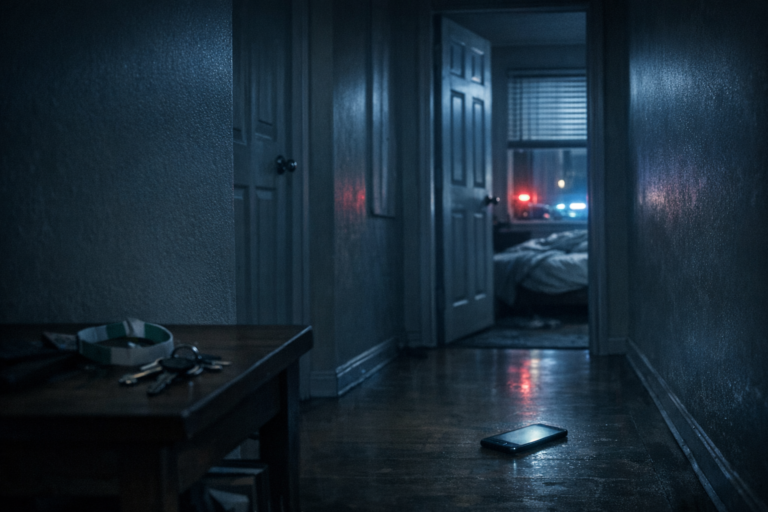
Windows were open across Burlington. People were settling down. Somewhere in a small apartment on Brookes Avenue, 24-year-old Rita Curran was home alone, still early in the adult life she had only just begun to build. By the next morning, that apartment had turned into one of Vermont’s most haunting crime scenes, and the silence around what happened there would last more than fifty years.
Rita Curran’s murder is one of those cold cases that never really goes cold in the public imagination. She was a young Burlington schoolteacher killed in her own apartment in July 1971, and for decades the case seemed trapped in that terrible space between obvious violence and no answer. What kept it alive was not just the brutality of the crime, but the feeling that the room itself had held onto a clue the investigators of that era were not yet able to unlock.
Cases like Rita’s still sit at the center of the Cold Cases Solved Years Later Archive, because this is exactly the kind of story where time did not bury the truth so much as delay it.
The Apartment on Brookes Avenue
Rita Curran was 24 years old, a second-grade teacher, and by most accounts deeply ordinary in the best way. She had recently moved into an apartment at 17 Brookes Avenue in Burlington with roommates. She was taking graduate classes, working during the summer, and doing the quiet adult work of building a life that still felt new.
That ordinary quality matters because it is part of what makes the story so disturbing. Nothing about Rita’s life suggested she was drifting toward the kind of case that would haunt a city for half a century. She was not standing at the edge of some reckless spiral. She was home.
During the early hours of July 20, 1971, one of Rita’s roommates came back to the apartment and found her dead. Investigators would determine that she had been beaten, sexually assaulted, and strangled. The violence inside the apartment was not subtle. This was not a scene that left much doubt about the killer’s intent, and there were signs that Rita had fought hard to survive.
The First Investigation and the Long Dead End
Police worked the case in an era when a murder scene could still preserve the answer without giving investigators a practical way to read it. Detectives interviewed neighbors, ran down tips, and examined the people around the apartment building. One of the most important early details was a cigarette butt found near Rita’s body, along with biological evidence on her torn housecoat.
Today, that sounds like the kind of clue that should solve a case quickly. In 1971, it was more like a locked box with no key.
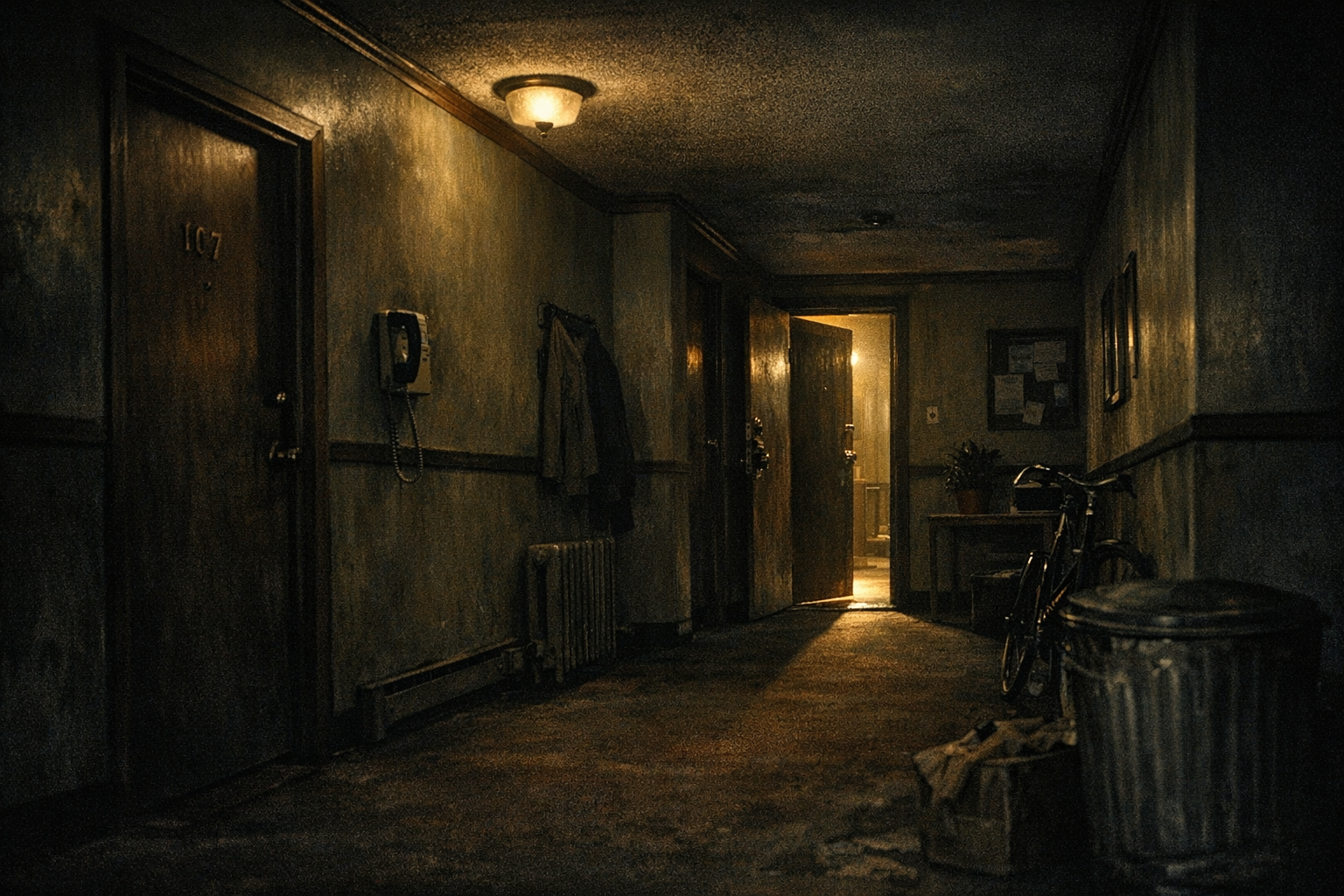
Investigators did speak with a neighbor named William DeRoos, who lived two floors above Rita with his new wife. At the time, he and his wife said they had been in their apartment all night and had not heard or seen anything unusual. Without the science to break through the physical evidence, that answer held. The case drifted into the long, punishing rhythm of a true cold case: files stored, leads revisited, theories raised, theories abandoned, and a family forced to live with a question that never stopped following them.
A Timeline That Never Fully Let the City Move On
The timeline itself is not crowded with dramatic public sightings or a maze of travel stops. In one sense, that makes the case simpler. In another, it makes it more chilling. There was no long trail to follow. The fracture point was the apartment.
- Summer 1971: Rita Curran is living in Burlington, teaching, working, and taking graduate classes while sharing an apartment on Brookes Avenue.
- Night of July 19 into early July 20, 1971: Rita is alone in the apartment. At some point, an intruder enters and attacks her.
- Early morning, July 20: A roommate returns home and finds Rita dead.
- 1971 investigation: Police collect physical evidence, including a cigarette butt and material from Rita’s clothing, and interview neighbors including William DeRoos and his wife.
- 2014: Evidence from the case is sent for modern DNA testing, producing a profile that does not match criminal databases.
- 2019 onward: Investigators reopen the case with a team approach and use forensic genetic genealogy to build a path toward the killer’s identity.
- 2023: Burlington police announce they have identified Rita’s killer as William DeRoos, who had died decades earlier.
What Changed the Case
The biggest shift did not come from a confession, a forgotten witness, or some dramatic deathbed revelation. It came from patience and preserved evidence.
By 2014, investigators were finally able to generate a DNA profile from material collected at the scene, including the cigarette butt. But that still was not enough. A profile only helps if it has somewhere to land, and law-enforcement databases did not produce a match. For a while, Rita’s case sat in a newer kind of limbo: scientifically closer, but still not solved.
Then detectives changed how they handled the file. Rather than leave it as another lonely cold case waiting for occasional review, they treated it like an active investigation again. That choice mattered. It opened the door to forensic genetic genealogy, the same broad investigative method that has helped crack other long-frozen murders and that also shapes pages like the DNA Cold Case Archive.
Instead of asking whether the DNA matched a known suspect, investigators asked whose family tree the unknown sample might belong to. That process pointed them toward relatives connected on both sides of William DeRoos’ family. Public records then helped place him exactly where he mattered most: in Rita’s building at the time of the murder.
The case tightened further when investigators obtained a DNA sample from DeRoos’ living half-brother. According to reporting on the case, that comparison strongly supported the conclusion that the unknown DNA belonged to William DeRoos. Detectives also connected DNA from Rita’s torn housecoat to the same man. Suddenly the old room was no longer silent.
What Didn’t Add Up for So Long
Part of the reason this case stayed haunting is that the answer seems, in hindsight, both close and unreachable.
- The killer was nearby. He was not some distant phantom passing through town. He was a neighbor in the same building.
- He had already been interviewed. That is the kind of detail that always gives old murder cases an extra sting.
- The physical evidence was collected early. Investigators did preserve the clues that eventually mattered most.
- The original alibi helped freeze suspicion. DeRoos’ wife told police he never left their apartment that night.
Years later, after the genetic genealogy work pointed back at him, DeRoos’ former wife gave detectives a different account. She said the two had argued that night, that he left the apartment to cool off, and that he later told her to lie to police because his criminal history would make him look guilty. That detail does not turn the case into a melodrama. If anything, it makes it colder. A lie that may have sounded small in the moment helped keep a murder unanswered for decades.
There were also later reports from a woman who married DeRoos after he left Vermont, describing sudden violence in his behavior. Those accounts did not solve the case on their own, but they changed the shape of the man who had once seemed like just another neighbor behind a thin wall.
How the Case Was Solved Half a Century Later
The solution to Rita Curran’s murder did not look like justice in the dramatic sense people usually imagine. William DeRoos died in 1986. By the time Burlington police publicly identified him in 2023, there was no arrest to make, no trial to prepare for, no courtroom where Rita’s family could watch the evidence laid out in front of a jury.
What they got instead was something quieter and, in its own way, devastating: certainty.
That certainty matters in cold cases. It matters to families who spend decades replaying one night in their minds. It matters to investigators who inherit old files and wonder whether the truth is still reachable. It matters to readers because cases like this show how many murders from the pre-DNA era were never truly beyond solving; they were just waiting for science to catch up.
That is why Rita Curran’s story fits so naturally alongside cases like Michelle Martinko, William Talbott II, and Craig Coley. The connective tissue is the eerie way old evidence can sit in storage for years and then, almost abruptly, start speaking.
Rita never got the ordinary future that was waiting for her in that apartment. But the man who killed her also did not get to erase himself completely. The case outlasted him. The evidence outlasted him. And more than fifty years after Rita Curran’s last night, the truth finally reached back through all that time and attached itself to a name.
Why Rita Curran Still Gets Attention
Some cases stay with people because they are sprawling and complicated. Rita Curran’s case stays with people for the opposite reason. It is tight, intimate, and brutally close to home. A young teacher is killed inside her apartment. The killer appears to have been living just floors away. The answer exists physically in the room from the start, but the world is not yet advanced enough to read it.
That structure is almost unbearable. It turns the case into more than a crime story. It becomes a story about delay, about how justice can miss its moment and still leave behind a form of truth. It is also why the case remains such a strong anchor inside the site’s true-crime cluster: it has the emotional weight of a personal tragedy and the investigative pull of a forensic breakthrough.
FAQ
What happened to Rita Curran?
Rita Curran, a 24-year-old schoolteacher in Burlington, Vermont, was murdered in her apartment in July 1971. She was beaten, sexually assaulted, and strangled inside her Brookes Avenue home.
Was the Rita Curran case ever solved?
Yes. In 2023, Burlington police announced that forensic genetic genealogy had identified Rita Curran’s killer as William DeRoos, a neighbor who lived in the same building at the time of the murder.
How was Rita Curran’s killer identified?
Investigators used preserved crime-scene evidence, including a cigarette butt and DNA from Rita’s torn clothing. Modern DNA testing and forensic genetic genealogy linked that evidence to William DeRoos’ family line and ultimately to DeRoos himself.
Was anyone arrested for Rita Curran’s murder?
No. William DeRoos had died decades earlier, in 1986, before investigators were able to identify him publicly as the killer.
Why does the Rita Curran case still get so much attention?
The case still resonates because it combines a deeply personal apartment murder with one of the clearest examples of preserved evidence finally solving a decades-old crime. It feels both tragic and unsettlingly close: the killer was nearby, the clues were there, and the answer came far too late.
Continue exploring:
- Cold cases that only started talking again decades later
- Murders solved when family trees and preserved evidence finally lined up
- The Iowa killing that stayed frozen until DNA reopened the room
- The double-murder case that genetic genealogy helped break wide open
- A wrongful-conviction case where old evidence changed everything years later
More True Crime stories: