The Bunker Girl: How Elizabeth Shoaf Left Clues in Captivity and Found a Way Out
9 min readJuly 29, 2025
By the time the text messages reached Elizabeth Shoaf’s family, she had already spent days under the ground.
Somewhere in the woods outside Lugoff, South Carolina, a 14-year-old girl was trapped in a bunker so well hidden that searchers could pass within yards of it and never know she was there. The case of Elizabeth Shoaf still gets remembered because it was not only a kidnapping story. It was a story about control, deception, and the tiny decisions that helped her leave a trail back to the surface.
On September 6, 2006, Elizabeth was doing something painfully ordinary. She was walking home from school. It was the kind of routine that feels too small to be dangerous. One road. One afternoon. One stretch of time her family probably never thought twice about.
Then a man stepped into her path.
He wore camouflage. He carried authority like a costume. He flashed a badge and claimed she was under arrest for marijuana possession. For an adult, maybe that lie sounds flimsy. For a frightened teenager facing a grown man with a weapon, it was enough. He did not need her to believe every word. He only needed her confused long enough to obey.
That man was Vinson Filyaw. And from the beginning, what made the attack so chilling was how prepared he was. This was not an impulsive snatch-and-run. He had already carved out the place where he meant to hide her. He had already imagined the silence, the isolation, and the fear he would use to keep her under control.
He led Elizabeth away from the road and into the woods. The farther they walked, the more the normal world seemed to disappear behind them. Houses gave way to trees. The path narrowed. Any sound of traffic faded. Then he showed her the trapdoor.
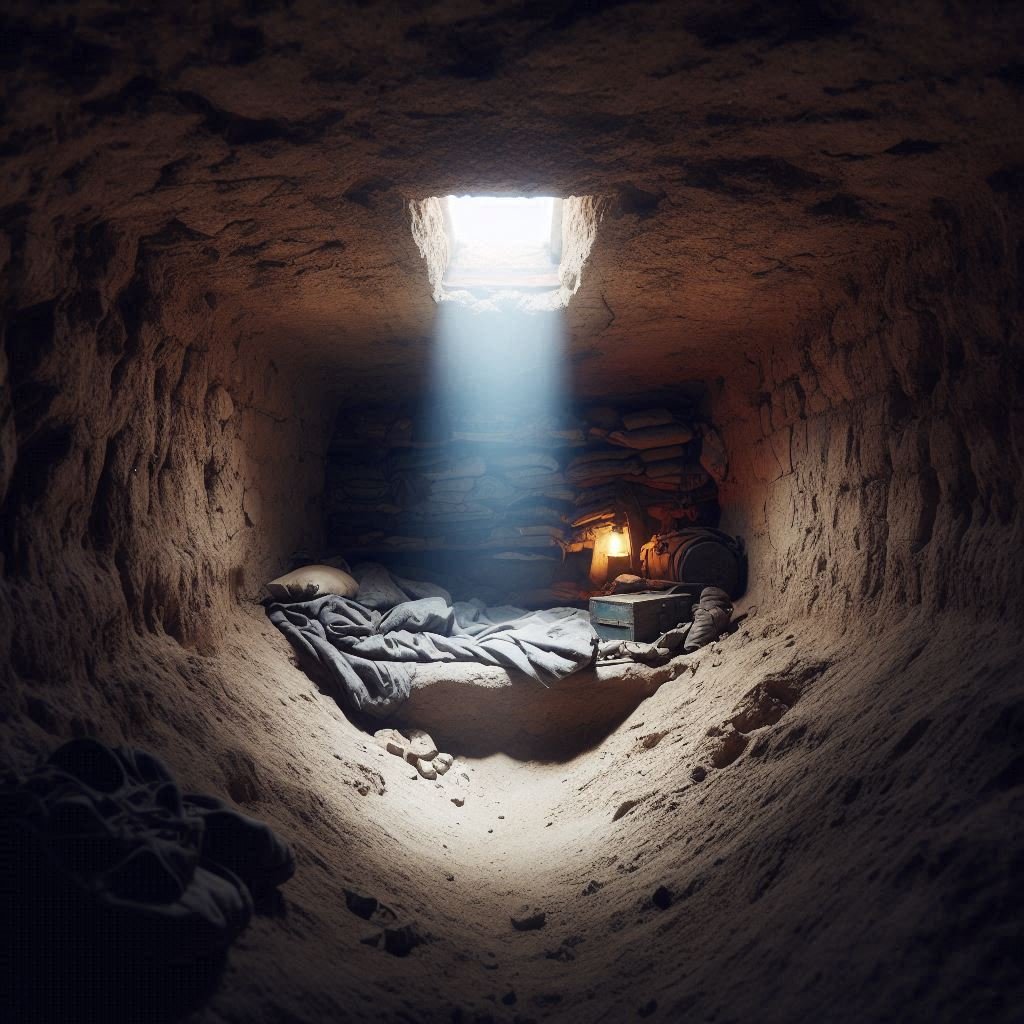
Beneath the ground was a crude underground bunker, part hole, part box, part prison. It was lined with wood and dirt. It had just enough room to keep someone alive and just little enough room to make them feel buried. This was where he intended to keep her. Not for an hour. Not for a night. For as long as he thought he could.
That is the moment this case becomes hard to shake. She was swallowed by the earth and still found a way to think past the panic.
September 6, 2006: Elizabeth Shoaf is abducted while walking home from school in Lugoff, South Carolina.
Same day: Vinson Filyaw forces her into a hidden underground bunker in the woods.
Following days: Search teams, law enforcement, and the community look for Elizabeth as she remains captive underground.
During captivity: Elizabeth studies her captor, leaves subtle clues when possible, and looks for any opening that could help searchers find her.
Texts become critical: Suspicious messages connected to Elizabeth help confirm she is alive and give investigators a direction.
September 16, 2006: Police locate the bunker and rescue Elizabeth after 10 days underground.
Inside that bunker, Filyaw tried to rule everything: movement, light, sound, hope. He chained Elizabeth by the neck. He kept weapons nearby. He used threats and lies to make the outside world feel unreachable. Like many captors, he understood that physical restraints were only part of the prison. The rest had to be built in the mind.
He told her things meant to shrink her choices. He made escape sound impossible. He made resistance sound pointless. He wanted the bunker to become the whole world, a sealed place where fear did the work for him even when he was not speaking.
That kind of control shows up in other captivity stories too, whether it is the long nightmare endured by Jaycee Dugard during her 18 years in captivity or the psychological domination at the center of Colleen Stan’s “Girl in the Box” case. The pattern is often the same: isolate the victim, distort reality, make survival depend on reading the captor better than the captor reads you.
Elizabeth did exactly that.
She was young, terrified, and trapped, but she did not stop observing. She paid attention to his routines. She watched for moments when he relaxed. She tried to understand how he moved, what he believed, and where his confidence made him careless. That matters, because rescue stories are often told as if survival is pure luck. In reality, survival can look a lot more like concentration.
And concentration was one of the strongest weapons she had.
Above ground, her family was living through a different kind of nightmare. A teenager does not simply vanish on a walk home without leaving a hole in the whole town around her. Searchers moved through the area. Investigators chased leads. Every hour without proof felt heavier than the one before it. When there is no body, no clear witness, and no obvious destination, a disappearance becomes its own cruel machine. It creates rumors. It creates false hope. It creates the fear that time is already running out somewhere you cannot see.
One reason the case still stands out is the clue element. Elizabeth was trying, in small and dangerous ways, to leave signs that said someone was here, someone is still here, someone needs you to keep looking.
What Doesn’t Add Up About the Captor’s “Perfect” Plan
He relied on fake authority: Filyaw’s use of a badge shows he needed confusion, not strength alone, to take control.
He built a bunker but still made mistakes: Hidden spaces create secrecy, but they also force routine—and routine gives victims chances to study patterns.
He underestimated a teenager: His plan assumed fear would make Elizabeth stop thinking. Instead, fear sharpened her attention.
Control created evidence: The more tightly he tried to manage her world, the more important every small clue and every communication became.
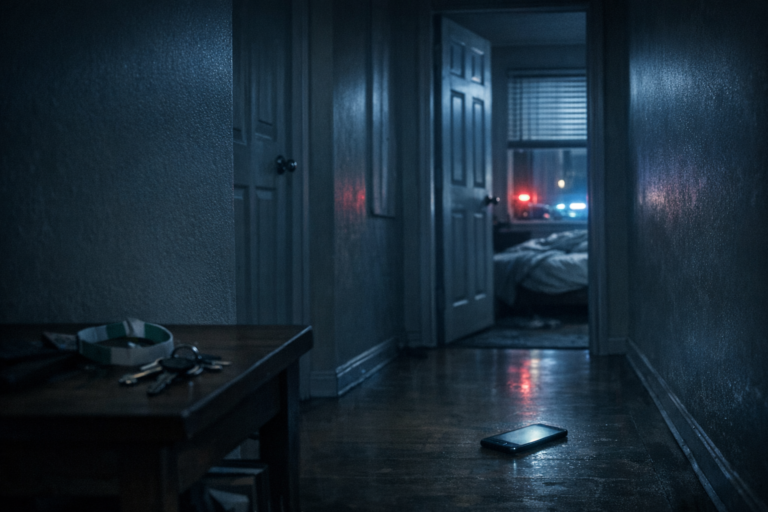
The text messages became one of the most haunting parts of the case. In many stories, the break comes from an investigator’s sudden insight or a piece of forensic evidence nobody noticed at first. Here, the break also carried Elizabeth’s presence inside it. Communication from captivity is never simple. It has to pass through fear. It has to survive the captor’s attention. It has to sound ordinary enough to be allowed and strange enough to raise alarm.
That tension is what makes her messages so gripping. They were not just words. They were a way of reaching through the underground dark and touching the investigation above her. They told the people searching for her that the story was not over yet.
Once law enforcement had reason to tighten their focus, the search became more precise. Cell phone information helped narrow the area. Officers worked through the woods looking for something disturbed, something covered, something that should not have been there. In a case like this, the landscape becomes part of the suspect. Dirt can hide a body. It can hide a room. It can hide ten days of terror under what looks like ordinary ground.
Then they found the entrance.
It was disguised, the kind of place your eye could skim past if you did not already believe something unnatural might be beneath it. But once discovered, the illusion was gone. The hidden world Filyaw had built for himself became what it really was: a prison.
On September 16, 2006, police rescued Elizabeth Shoaf from the bunker after 10 days in captivity. She came out alive. Dirty. Traumatized. Exhausted. But alive. That word matters more than anything else in a case like this.
Alive means the story did not end where he meant it to end. Alive means the bunker failed to become a tomb.
Investigators later uncovered more of what Filyaw had prepared. The bunker, the restraints, the isolation, the planning—all of it pointed to a crime meant to last. That is part of what continues to unsettle people. This was not a rash act that spiraled out of control. It was a deliberate attempt to take a child out of the visible world and keep her there.
That is also why the case belongs in the same reader path as stories like the Turpin family escape from years of hidden abuse. These stories stay with people because they expose how horror can exist behind normal surfaces.
Key Evidence and Clues That Changed the Case
The fake badge and staged authority: This explained how Filyaw was able to seize control so quickly in daylight.
The bunker itself: Its existence proved planning, long-term intent, and a hidden location built to delay discovery.
Elizabeth’s own actions: Her ability to leave clues and communicate under pressure disrupted the isolation Filyaw was counting on.
Phone-related investigative leads: Those leads helped turn a broad disappearance search into a focused rescue operation.
Afterward, the legal outcome brought its own anger. Many people felt the sentence Filyaw received was nowhere near the weight of what he had done. Solved does not always mean satisfying, and rescue does not erase trauma.
But even inside that frustration, Elizabeth’s story holds onto something powerful. Not in a cheap inspirational way. Not in the kind of language that tries to polish pain into a lesson. What stays with people is something simpler and more human than that.
She kept thinking.
She kept looking for cracks in the trap.
She kept leaving pieces of herself where someone else might find them.
That is why “The Bunker Girl” remains such a hard title to forget. A teenage girl was hidden underground in South Carolina, close enough to the world to hear it going on above her, far enough away that every hour without discovery mattered.
And still, the case is not remembered only for what was done to her. It is remembered for the way she resisted disappearance from inside the dark.
Elizabeth was not taken in some distant wilderness. She was walking home from school. That detail is what makes the case linger: one minute she was on a familiar road, and the next she was under the ground, trying to leave a signal that the world could still reach her.
That is why people still search for the Elizabeth Shoaf case. Not only because it was solved, but because it came terrifyingly close to ending another way. Instead, the ending became a rescue. Not a clean ending. Not a happy ending. But a rescue.
FAQ
What happened to Elizabeth Shoaf?
Elizabeth Shoaf was abducted in 2006 while walking home from school in Lugoff, South Carolina. Vinson Filyaw forced her into a hidden underground bunker in the woods, where she was held for 10 days before police found and rescued her.
How was Elizabeth Shoaf found?
Investigators were able to narrow their search through key leads, including communication connected to Elizabeth during captivity. Police eventually located the disguised bunker entrance in the woods and rescued her alive.
Why is Elizabeth Shoaf called the Bunker Girl?
The nickname comes from the underground bunker where she was hidden during the kidnapping. The phrase stuck because the location itself was one of the most shocking parts of the case.
Who kidnapped Elizabeth Shoaf?
Elizabeth Shoaf was kidnapped by Vinson Filyaw, a man who used a fake badge and threats to take control of her before leading her into the woods.
Why does the Elizabeth Shoaf case still get attention?
The case still gets attention because it combines a deeply disturbing captivity story with a real rescue. People also remember Elizabeth’s calm thinking, the clues she left behind, and how close the case came to ending very differently.
🔎 If this story stayed with you, the author suggests these real cases next: