The Turpin Family Escape — Inside the House of Horror That Looked Ordinary From the Street
9 min readJuly 31, 2025
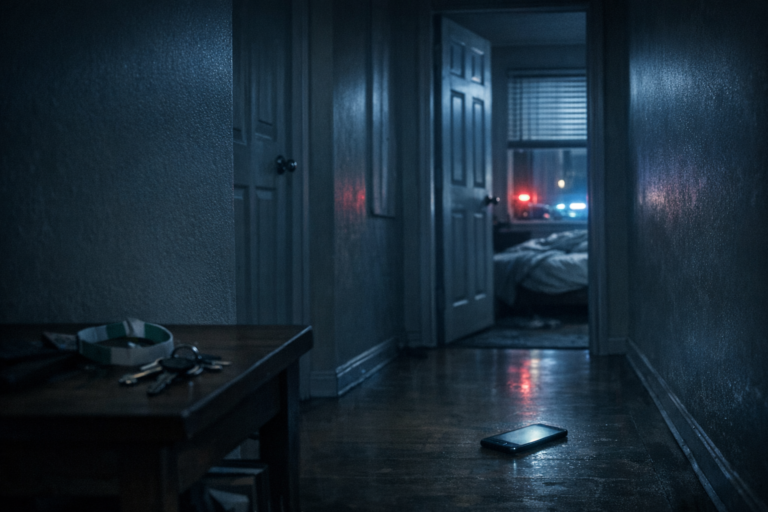
At 5:49 in the morning, a teenage girl stepped out of a house in Perris, California, carrying a phone she barely knew how to use and a secret so grotesque it almost sounded impossible. The street was quiet. The houses looked normal. Nothing about that neighborhood suggested that, behind one of those walls, children had been sleeping in chains, starving in the dark, and learning to fear the outside world.
Listen to “Turpin Family” on Spreaker.
The Turpin family case became one of the most shocking child abuse stories in modern America because it revealed how David and Louise Turpin kept thirteen children trapped inside a suburban home for years while almost no one understood what was happening. What finally broke the case open was the escape of 17-year-old Jordan Turpin, whose 911 call exposed a hidden captivity story that still feels hard to believe.
That sense of hidden horror is part of what makes this case linger. It belongs in the same painful corner of the archive as Colleen Stan’s captivity story and other cases where control worked through fear, isolation, and the slow destruction of a victim’s sense of what normal looks like.
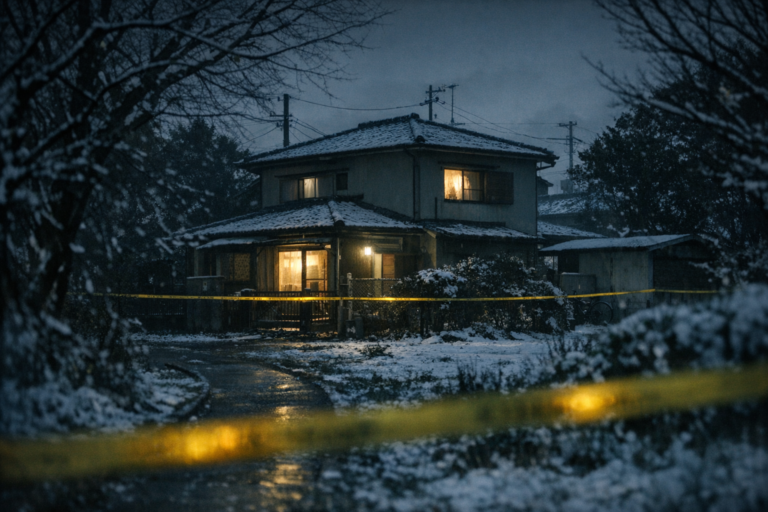
From the outside, the Turpin home did not announce itself as a crime scene. It looked like a private, somewhat odd family home in a quiet neighborhood. There were no dramatic warning signs visible from the sidewalk, no scene that screamed for intervention. What neighbors noticed, if they noticed anything at all, was mostly strangeness.
David and Louise Turpin had thirteen children. The family eventually settled in Perris, California. The children were often seen together, dressed alike, heavily controlled, and rarely interacting with anyone. The parents claimed they homeschooled them, which helped explain their isolation and kept outsiders at a distance.
But inside the house, ordinary life had been replaced by a system of domination. Food was restricted. Bathing was severely limited. Several of the children were malnourished. Some were restrained with chains and padlocks. They lived in fear of the total power their parents held over every movement, every meal, and every hour of the day.
That is what makes the Turpin case more than a story about a bad home. It was a closed world. And closed worlds are hard to break from the inside, because the people trapped there are taught that escape is impossible, outsiders are dangerous, and silence is safer than hope.
Timeline of the Turpin Family Case
Years before 2018: David and Louise Turpin maintain extreme control over their children while moving between states and keeping the family isolated.
At the Perris home: The children allegedly endure long-term abuse, food deprivation, poor hygiene conditions, and in some cases physical restraints.
Jordan Turpin plans in secret: She gets access to an old phone, learns more about the outside world, and begins gathering the courage to leave.
January 14, 2018: Jordan escapes through a window and calls 911, telling dispatchers that her siblings are being abused and that some are chained up.
Police respond: Deputies meet Jordan, enter the house, and discover conditions that quickly turn the case into national news.
2018: David and Louise Turpin are arrested and charged with torture, child abuse, false imprisonment, and related crimes.
2019: Both plead guilty and are sentenced to 25 years to life in prison.
Afterward: The Turpin siblings begin the long and uneven process of recovery, public healing, and rebuilding life outside captivity.
Jordan Turpin and the Escape That Changed Everything
The emotional center of this story is Jordan Turpin, because she became the one person who forced the outside world to look directly at what had been hidden.
By the time she escaped, Jordan had spent years living inside a reality designed by her parents. The children had been isolated socially and educationally. They were not living under unusual rules. They were living under a regime.
Jordan reportedly found an old cellphone and used it to see fragments of ordinary life online. That detail matters too, because it explains the psychological turn in the story. She was not simply fleeing abuse in a single desperate burst. She was comparing two realities: the one inside the house and the one everyone else seemed to live in. Once that gap became impossible to ignore, escape stopped feeling like fantasy and started feeling necessary.
When she finally got out and called 911, one of the haunting details was how unfamiliar the outside world still was to her. She had trouble describing where she was. She sounded frightened not just of being caught, but of the entire act of asking for help. That call is chilling because it captures the moment captivity collides with reality. A teenager stood in public freedom and still sounded like someone stepping onto another planet.
Police responded, and Jordan showed them photographs she had taken of conditions inside the house. Those images, combined with her account, gave deputies reason to act. Once investigators entered the home, the full scale of the abuse became impossible to dismiss.
What Authorities Found Inside
The Perris house did not just contain evidence of neglect. It contained evidence of long-term control. Investigators found children and adult siblings living in severe deprivation. Some were shackled. The home was dirty and foul-smelling. Several of the children showed signs of malnourishment. The age range inside the home made the discovery even more disturbing: these were not only small children with no chance to resist, but also adult children who had allegedly been raised in such profound isolation that ordinary independence had been almost erased.
That detail is one of the hardest parts of the Turpin story for people to understand. Captivity inside a family system does not work like a locked room in a movie. It works by shrinking the victim’s world until the unthinkable begins to feel normal and the outside begins to feel terrifying.
Investigators also learned that the children had allegedly been denied basic experiences most people absorb without noticing: regular schooling, normal friendships, routine medical care, freedom of movement, and a basic understanding of how the world functions. It was not just a story of punishment. It was a story of developmental theft.
What Authorities May Have Missed
Homeschooling as a shield: The private-school setup and isolation helped reduce outside oversight and gave the parents a cover story that discouraged deeper scrutiny.
Odd behavior mistaken for eccentricity: Neighbors saw a strange family, not necessarily an active emergency. In many abuse cases, visible weirdness gets dismissed because people fear overreacting.
Control hidden behind family privacy: Abuse inside a home often escapes attention because outsiders assume strict parenting is still parenting, not imprisonment.
No consistent institutional contact: Teachers, doctors, counselors, and other adults who might have recognized red flags had limited or no access to the children.
How Control Was Maintained Without Constant Physical Force
One of the most disturbing questions in the Turpin family case is how David and Louise Turpin maintained control for so long. Physical punishment was only one layer of the system. The deeper mechanism was psychological domination.
Isolation made the parents the children’s only real reference point. If you are denied school, friendships, and outside conversation, your sense of reality begins to depend on the people controlling you. Food restriction and humiliation add to that pressure. Over time, the victim begins to police themselves because punishment feels inevitable and escape feels impossible.
That is why this case connects so naturally to other captivity stories like Elizabeth Shoaf’s escape. In both stories, survival depended on enduring a system built not only to confine the body, but to break the victim’s confidence in their own ability to leave.
The Turpin children were also trapped inside a family hierarchy, which made resistance even harder. Parents are supposed to be protectors. In this case, the people holding power over food, safety, praise, punishment, and access to the world were the very people the children had been taught to obey. That kind of betrayal produces a different kind of captivity. It is physical, yes, but it is also moral and psychological. It scrambles trust at the deepest level.
The Aftermath: Freedom Did Not End the Damage
When the Turpins were arrested, the story quickly became a national spectacle. In court, David and Louise Turpin eventually pleaded guilty. They were sentenced in 2019 to 25 years to life in prison. On paper, that looks like the clean ending people want from a true-crime story: villains exposed, victims rescued, justice delivered.
But the aftermath was not clean.
The siblings had to learn how to live in a world they had been trained to fear. They had to process trauma while becoming public symbols of survival. Some later reports raised concerns about how support systems failed portions of the family even after the rescue, which only deepened the tragedy. Freedom removed the chains. It did not erase the damage done by years of deprivation and control.
Jordan Turpin’s decision to act gave her siblings a future they might never otherwise have had. Some of the Turpin children spoke during sentencing about wanting normal lives, work, education, and peace. Those hopes sound ordinary, but in this case they were enormous.
If this case unsettles you, it probably will sit beside stories like Sherri Papini for a different reason: both forced the public to think hard about credibility and coercion. But the Turpin case lands harder because the suffering inside that house was real, prolonged, and inflicted on children who depended completely on the people hurting them.
Why the Turpin Family Case Still Gets Attention
The Turpin family story still gets attention because it violates a deeply held assumption: that large-scale horror cannot hide inside an ordinary suburban household for long. But it did. It survived behind curtains, paperwork, routine, and the social instinct not to pry.
It also stays with people because Jordan’s escape created one of those true-crime turning points that feels cinematic without losing its human weight. A girl walks into the dark with an old phone, dials 911, and speaks for an entire house that has been silent for years. That image is hard to forget.
FAQ
What happened to the Turpin family children?
The Turpin children were rescued in January 2018 after 17-year-old Jordan Turpin escaped the family home in Perris, California, and called 911. Investigators later said the children had endured severe abuse, neglect, isolation, and in some cases physical restraints.
How were the Turpin parents caught?
David and Louise Turpin were exposed after Jordan Turpin escaped through a window, contacted emergency services, and told dispatchers that her siblings were being abused. Police responded, entered the home, and found evidence that led to the parents’ arrest.
What sentence did David and Louise Turpin receive?
In 2019, both David and Louise Turpin pleaded guilty and were sentenced to 25 years to life in prison for crimes connected to the abuse and false imprisonment of their children.
Why didn’t the older Turpin children just leave?
That question comes up often, but the case involved long-term psychological control, extreme isolation, fear, and dependency. Several of the older siblings had allegedly been denied normal education, independence, and outside contact for years, which can make escape far more difficult than it appears from the outside.
Why does the Turpin family case still shock people?
Because it combined prolonged captivity, child abuse, starvation, and total family control inside a house that looked ordinary from the street. The gap between the normal exterior and the reality inside is what continues to haunt people.
🔎 If this story stayed with you, the author suggests these real cases next: