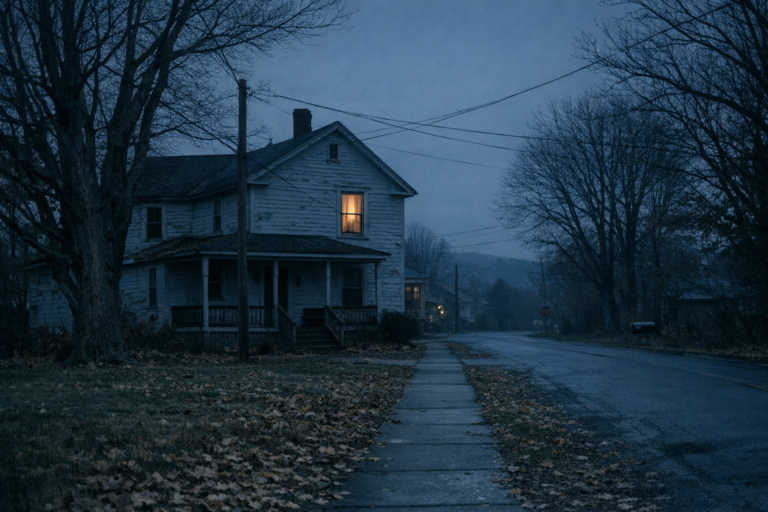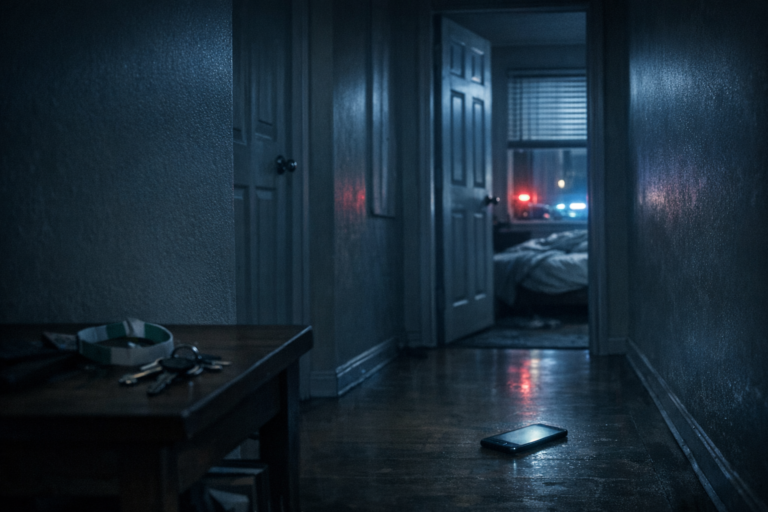
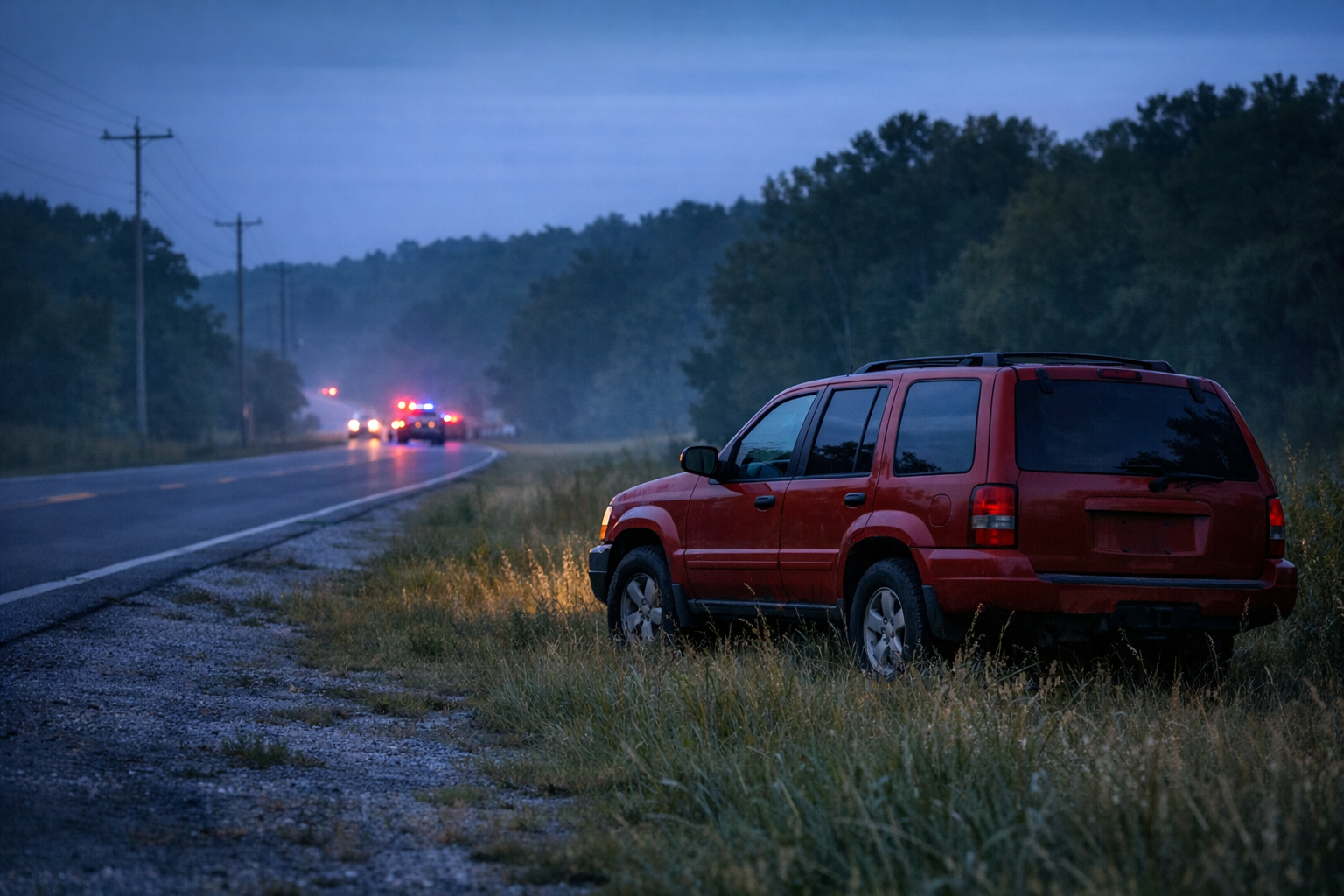
Crystal Rogers was last seen in Bardstown, Kentucky, on July 3, 2015. The 35-year-old mother of five was reported missing two days later. Her abandoned car would become one of the case’s enduring images.
What makes that disappearance so unnerving is not just that Crystal vanished. It is that Bardstown never really seemed to exhale again. Her empty car appeared on the Bluegrass Parkway. Her phone and purse were still inside. Her young son had been left behind. And over the years, the case grew into something larger than one missing person report — a cloud of fear, suspicion, and unfinished grief hanging over an entire community.
Crystal Rogers is at the center of one of Kentucky’s most haunting missing person cases, a disappearance that led to murder and conspiracy convictions that reshaped Bardstown and kept drawing investigators back for years. Even after arrests, indictments, and a murder conviction tied to her case, Crystal’s body has never been found — which is exactly why the story still grips people far beyond Nelson County.
Cases like this tend to stay alive because one unanswered disappearance can infect every detail around it, the same way the Jennifer Kesse disappearance never stopped haunting people after a few ordinary moments suddenly became a permanent mystery. Crystal’s case carries that same feeling, but with something heavier layered on top: in Bardstown, it started to feel like the whole town was keeping score with fear.
The Night Crystal Rogers Was Last Seen
Crystal Rogers was last seen on July 3, 2015, in Bardstown, Kentucky. By then, she was a mother of five, deeply tied to her family, and closely connected to the rhythms of local life. On paper, that sounds like the kind of background that should make a disappearance easier to unravel. People know your routines. They know your car. They know who you talk to. They know where you usually go.
But in real life, sometimes that familiarity only makes the hole feel stranger.
The FBI dates Crystal’s last contact to the evening of July 3. The prosecution’s later account disputed Brooks Houck’s description of their movements that night; those trial arguments should not be confused with an independently witnessed, complete account of her final hours.
That matters because these cases often divide almost immediately into two competing stories. In one version, the missing person chose to leave. In the other, something interrupted ordinary life so suddenly that the person never got the chance to explain anything. Crystal’s case has always leaned hard toward the second version.
She did not leave behind the kind of clean, deliberate exit that would suggest planning. Instead, what surfaced in the days that followed looked more like a scene that had stopped halfway through itself.
Timeline of Events
- July 3, 2015: Crystal Rogers is last known to have been seen in Bardstown, Kentucky.
- July 5, 2015: Her mother reports her missing after not hearing from her and realizing something is seriously wrong.
- July 5, 2015: Crystal’s car is found abandoned with a flat tire on the Bluegrass Parkway, the same day she is reported missing.
- Inside the vehicle: Her purse, phone, and other personal belongings are reportedly still there.
- Following months and years: Searches, interviews, public suspicion, and repeated investigative attention keep the case in the spotlight.
- 2020–2021: The FBI intensifies the investigation with major searches tied to the case.
- 2025: Brooks Houck is convicted of murder and evidence tampering; he receives a life sentence in September. Joseph and Steven Lawson are convicted of conspiracy to commit murder and evidence tampering.
- 2026 appeal: Houck challenges his conviction; the Commonwealth files its response in May. The search for Crystal remains a separate question from the verdict.
That timeline is one reason this story refuses to loosen its grip. It is not a clean arc. It does not move neatly from disappearance to discovery to closure. It keeps lurching forward in fragments — a missing woman, an abandoned car, a grieving family, a father later shot to death, years of silence, then major courtroom developments without the one thing people still want most: Crystal herself coming home.
That is where the case’s wider impact starts to show. The disappearance did not just devastate a family. It became the emotional center of a wider atmosphere — fear, rumor, unresolved violence, and a town whose name started sounding less like a place and more like a warning.
Why Bardstown Felt Different
Most missing person cases spread outward in concentric circles. First the family feels it. Then friends. Then investigators. Then local media. But Bardstown seemed to absorb Crystal Rogers’ disappearance in a different way. The case did not stay contained. It bled into the identity of the place.
Part of that is because Bardstown was not dealing with just one painful story. Over time, the name became associated with several disturbing cases, and that changed how Crystal’s disappearance was understood. Instead of feeling like an isolated tragedy, it started to feel like the center of a larger knot — one that involved power, local relationships, fear of retaliation, and a public sense that answers were taking far too long to arrive.
That wider atmosphere matters because it explains why people still search for this case so intensely. They are not only asking what happened to Crystal Rogers. They are asking how a mother of five could vanish from a close-knit Kentucky community, why the trail seemed to stall for so long, and whether the truth was buried under ordinary local familiarity from the start.
In other words, this is not just a disappearance story. It is a community-haunting story.
And when a case becomes that, every object inside it starts to feel loaded with extra weight. A parked car is no longer just a car. A missed call is no longer just a missed call. Silence stops feeling passive and starts feeling active, like something in the town is holding its breath on purpose.
What Doesn’t Add Up
- The abandoned car: Finding Crystal’s vehicle on the Bluegrass Parkway made the case feel staged, interrupted, or both. It did not read like a normal departure.
- Her belongings were still there: A phone and purse left behind almost always harden public suspicion that the person did not willingly walk away for long.
- No meaningful evidence of a planned disappearance: There was never a convincing public picture of Crystal deciding to leave her children and life behind.
- The case lived in a climate of fear: Bardstown’s wider tension made every delay feel more suspicious to the public.
- Even major legal movement did not create full closure: A murder conviction is significant, but with no body recovered, the emotional center of the case remains painfully open.
This last point is what keeps the story lodged in people’s heads. Some cases stay unsolved because investigators have nothing solid. Crystal Rogers’ case is more maddening than that. It has generated years of attention, visible law-enforcement effort, and major prosecutorial action. Yet it still feels unfinished because the physical absence at the center of it never changed.
That absence is everything.
It is the reason her mother’s public fight for answers mattered so much. It is the reason Bardstown never stopped circling back to the story. And it is the reason the case sits naturally beside stories like the archive of disappearances where the final timeline still wasn’t enough, because the same pattern keeps surfacing: people can reconstruct hours, identify tensions, and even secure major breakthroughs, but the center of the case still refuses to come fully into view.
The Car on the Parkway and the Shape of Fear
If you want to understand why this case never faded, start with the car.
An abandoned vehicle on a highway shoulder has a way of freezing a story in the public imagination. It is a perfect visual shorthand for interruption. Someone was supposed to continue from here. Someone was supposed to call for help, head home, pick up a child, answer a text, explain the delay. Instead, the road just keeps going without them.
In Crystal Rogers’ case, the car became more than evidence. It became the picture people carried in their heads whenever Bardstown came up. That empty vehicle represented the exact point where ordinary life snapped in two.
And once that image locked in, everything around the case grew more emotionally charged.
Her family kept pushing. Searches continued. Public suspicion hardened around people close to the case. Then, in 2016, Crystal’s father, Tommy Ballard, was shot and killed while hunting with a grandson. His murder remains unsolved. Even when people try to discuss only Crystal Rogers, that second tragedy hangs nearby like another door that never opened.
It deepened the sense that Bardstown was not just mourning a missing woman. It was living inside a story where violence, silence, and unfinished grief seemed to keep touching the same family.
That is the part many articles flatten too quickly. They reduce Crystal Rogers to a headline and Bardstown to a setting. But the real reason the case still gets attention is emotional architecture. One missing mother became the center of a local atmosphere so heavy that every later development seemed to echo backward into the night she vanished.
🔎 Related Investigation:
If this case pulled you deeper into the mystery, continue into:
🔎 Related Investigation:
If this case pulled you deeper into the mystery, continue into:
Why This Case Still Gets Attention
- Crystal Rogers was a mother of five: That detail never leaves the story. It keeps the case grounded in a human loss that feels immediate.
- The disappearance never looked voluntary: Public interest stays high when a case appears to involve interruption rather than escape.
- Bardstown developed a broader reputation for unresolved violence: The unresolved cases drew continued public attention.
- Investigative movement continued for years: FBI involvement, searches, indictments, and courtroom developments kept renewing national curiosity.
- Closure never fully arrived: Even after major legal developments, Crystal’s body has not been found.
Search behavior tends to follow that exact pattern. People return to cases when there is a mixture of emotional gravity and incomplete resolution. Crystal Rogers has both in unusually high amounts. The case gives readers the haunting structure of a classic disappearance mystery, but it also carries the ongoing weight of a real family that never got the one answer that matters most.
The Most Likely Explanation
The courtroom outcome goes beyond a likely explanation: Houck was convicted of murder and evidence tampering, and two other men were convicted of conspiracy and evidence tampering. Those verdicts establish criminal responsibility in court while leaving the family’s search for Crystal unresolved.
That does not solve the deeper emotional question, though. The legal system can establish responsibility, but it cannot automatically repair what a disappearance breaks. It cannot return the missing person. It cannot erase the years a family spent living inside uncertainty. And it cannot fully calm a town that learned to associate one summer weekend with a decade of dread.
So when people ask what happened to Crystal Rogers, they are asking at least two separate questions.
The first is literal: what happened in those final known hours, and where is she now?
The second is wider: how did one disappearance spread out far enough to change the emotional weather of an entire community?
That second question is why this case still won’t let go. Even with a stronger legal picture than many older disappearance cases ever get, the story still feels like it has a missing room in the middle of it. Until that room is opened, Crystal Rogers will remain not just a case file or a headline, but a presence — the missing mother at the center of Kentucky’s most haunted modern mystery.
🔎 Related Investigation:
?? Related Investigation:
Research Sources
The following resources were consulted to verify and update this article.
- FBI Louisville — FBI Louisville Now Leads Search for Crystal Rogers
Documents the July 2015 disappearance, car discovery and FBI takeover. - Lexington Herald-Leader — Brooks Houck receives life in prison for murder of KY mother Crystal Rogers
Reports Houck’s life sentence and the convictions of Joseph and Steven Lawson. - Kentucky Attorney General — Commonwealth of Kentucky brief in Brooks Houck appeal, May 6, 2026
Summarizes the prosecution’s trial evidence and arguments on appeal. - FBI — Tommy Ballard
Records the November 2016 killing of Rogers’ father and the request for information.
🔎 If this story stayed with you, the author suggests these real cases next:
- A lonely crash scene and the disappearance of Maura Murray
- The child disappearance of Asha Degree that still unsettles investigators
- Lauren Spierer’s final night and the timeline that still breaks apart
Explore more Disappearances stories here: